
Resume Examples for Every Industry: Professional Samples & Writing Guides
- What this page gives you: A resume example library plus writing guides so you stop guessing and start copying proven structure.
- What a strong example contains: Clear contact info, A tight summary, Impact bullets with numbers, A job-matched skills section, And relevant education or certifications.
- How to use examples correctly: Study the layout, Adapt the language not the content, Quantify your own work, And tailor to the exact role.
- What successful resumes share: Clarity over creativity, Relevance over volume, Results over duties, Natural keywords, And error-free writing.
- How to get results faster: Pick your industry example, Borrow the patterns, Then refine until it reads like your story and scans cleanly for ATS.
Why Resume Examples Are Your Secret Weapon
Staring at a blank document is the fastest way to waste three hours of your life. You know what you’ve done, but turning it into a polished, professional resume feels like translating your career into a foreign language.
That’s where resume examples come in. They’re not templates you blindly copy – they’re blueprints that show you what works. A good example reveals how to structure your experience, which details matter, and how to make your accomplishments sound impressive without exaggerating.
This page is your resume library. Whether you’re a software engineer, nurse, teacher, or making a career switch, you’ll find industry-specific resume examples that match your field. Each one shows real formatting, bullet points, and sections that have helped job seekers land interviews.
The best part? You don’t need to reinvent the wheel. See what works, adapt it to your story, and move forward with confidence.
The Anatomy of a Great Resume Example
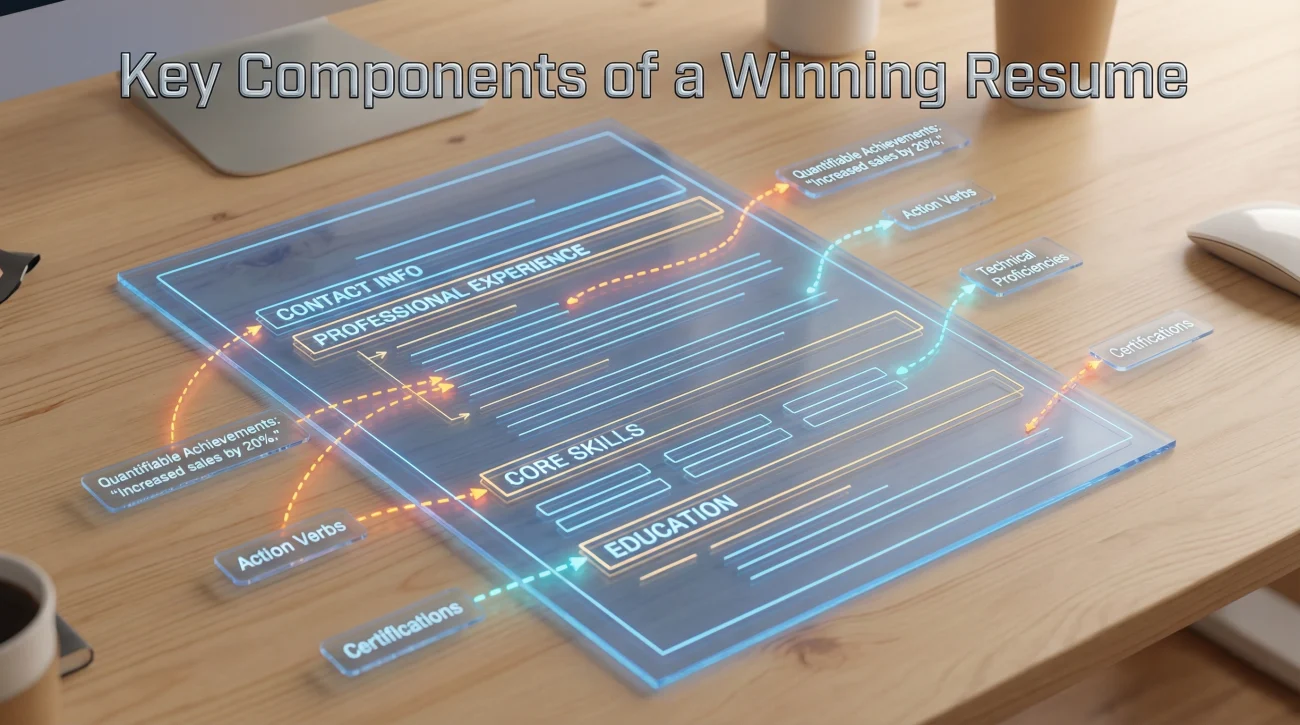
Before diving into the library, let’s break down what makes a resume example actually useful. Not all examples are created equal – some are outdated, overly creative, or stuffed with buzzwords that recruiters skip right over.
Here’s what to look for in a strong example:
Clear Contact Information
Your name, phone number, email, and LinkedIn (if relevant). No full address needed – city and state are enough. Skip the headshot unless you’re in modeling or acting.
Compelling Summary or Objective
Two to three sentences that immediately tell the reader who you are and what you bring. Think of it as your elevator pitch in writing. A great summary highlights your experience level, key skills, and what you’re looking for.
Good example: “Marketing professional with 5+ years driving digital campaigns for SaaS companies. Increased lead generation by 40% through SEO and content strategy. Seeking a senior role focused on growth marketing.”
Weak example: “Hardworking individual seeking opportunities to leverage my skills in a dynamic environment.”
Experience Section With Measurable Impact
This is where most resume samples for job seekers either shine or fall flat. Strong examples use bullet points that show results, not just responsibilities. They answer: What did you do? How did you do it? What was the outcome?
Look for the XYZ formula: “Accomplished [X] as measured by [Y] by doing [Z].” It’s Google’s approach, and it works because it forces you to quantify your contributions.
Strong bullet: “Reduced customer response time by 30% by implementing a new ticketing system and training a team of 8 support reps.”
Weak bullet: “Responsible for customer service and managing team tasks.”
Skills Section That Matches the Job
A skills section should reflect what employers in your field actually care about. Look at examples in your industry to see which hard skills and soft skills appear most often. For tech roles, that might be Python, SQL, or cloud platforms. For healthcare, it could be patient care, EMR systems, or clinical documentation.
Education and Certifications
Keep this straightforward: degree, institution, graduation year (optional if you’re 10+ years into your career). Add certifications that are relevant and current. If you’re entry-level, this section can go near the top. If you’ve been working for years, it moves down.
The best professional resume bullet points examples don’t waste space on outdated certifications or unrelated coursework. They focus on what strengthens your case for the specific job you want.
Resume Examples Library: Find Your Industry
Below is a comprehensive directory of resume examples organized by industry, format, and career stage. Click to expand and explore available templates and guides.
Examples with links are live and ready to view. Others are coming soon – bookmark this page as we continue adding more best resume examples for entry-level and seniors across every field.
This library covers everything from healthcare to tech, trades to creative fields. If you’re switching careers, check out the career change examples. If you’re just starting out, the student and entry-level samples will give you a strong foundation.
How to Use These Examples Without Copying

Here’s the thing about resume examples: they’re meant to guide you, not give you a fill-in-the-blank template. If you copy word-for-word, you’ll sound generic. If you ignore them completely, you might miss proven structures that work.
The goal is to learn from the example, then make it your own. Here’s how:
Study the Structure First
Look at how the example organizes information. Where does the summary go? How are bullet points formatted? How much space is given to each section? These structural decisions matter because they affect readability and flow.
For instance, a software engineer resume might lead with technical skills because that’s what recruiters scan for first. A nurse resume might prioritize certifications and clinical experience. Notice these patterns and apply the same logic to your field.
Adapt the Language, Not the Content
Pay attention to the action verbs and how accomplishments are framed. Words like “implemented,” “optimized,” “led,” and “increased” are stronger than “responsible for” or “helped with.” But don’t just copy the exact phrasing – use it as a model for how to talk about your own work.
If an example says, “Increased sales by 25% through targeted email campaigns,” and you ran a similar initiative, write your version: “Boosted customer retention by 18% by launching a personalized email strategy.”
Quantify Your Own Achievements
One of the biggest lessons from strong examples is the use of numbers. Percentages, dollar amounts, timeframes – they all make your impact tangible. If the example shows metrics, ask yourself: What are my metrics?
You don’t need exact figures for everything. Approximations work too. “Managed a team of 5” is better than “Managed a team.” “Processed 50+ invoices weekly” is more concrete than “Handled invoicing.”
Tailor to the Job You Want
No single resume example will perfectly match your background. That’s fine. The key is to pull elements from multiple examples and customize them for the specific role you’re applying to.
Read the job description carefully. Which skills are they emphasizing? Which experience matters most? Then look at examples in that field and see how those same elements are highlighted. For more on this process, check out our guide on how to write a resume that matches what employers actually want.
Keep Formatting Clean and Consistent
Notice how professional examples use consistent fonts, spacing, and alignment. They don’t mix five different font styles or cram too much onto one page. Clean formatting isn’t flashy, but it makes your resume easier to read – and easier for applicant tracking systems (ATS) to parse.
Stick to standard fonts like Arial, Calibri, or Times New Roman. Use 10-12pt for body text, 14-16pt for your name. Keep margins around 0.5 to 1 inch. If you’re unsure whether your resume will pass ATS, use tools from our list of best resume builders that include ATS-checking features.
Common Traits of Successful Resumes
After reviewing hundreds of resumes that led to job offers, certain patterns emerge. These aren’t tricks or hacks – they’re fundamentals that strong candidates consistently get right.

Clarity Over Creativity (Unless You’re in Design)
Recruiters spend an average of six seconds scanning a resume. If they can’t quickly find your job title, company, and key accomplishments, you’re out. Clarity wins.
Creative resumes work for graphic designers, marketers, and artists – industries where visual presentation is part of the job. For everyone else, clean and straightforward beats elaborate every time.
Relevance Over Volume
You don’t need to list every job you’ve ever had. Focus on the experience that’s most relevant to the role you’re applying for. If you’re a project manager now, your summer job as a camp counselor from ten years ago probably doesn’t add value.
Strong resumes are selective. They show depth in the right areas rather than spreading thin across irrelevant details.
Results Over Responsibilities
Anyone can list what they were supposed to do. The resumes that stand out show what they actually achieved. Instead of “Managed customer accounts,” write “Grew account portfolio by 30% in six months by identifying upsell opportunities.”
This shift from tasks to outcomes is what separates average resumes from compelling ones.
Keywords That Match the Industry
Applicant tracking systems scan for specific terms. If the job posting mentions “project management,” “budget oversight,” and “cross-functional teams,” those phrases should appear in your resume – naturally, not stuffed awkwardly into every sentence.
The best examples incorporate keywords in context. They read smoothly while still hitting the terms recruiters and ATS are looking for.
Error-Free Writing
Typos and grammar mistakes are resume killers. They suggest carelessness, and hiring managers notice. Proofread your resume multiple times. Read it out loud. Have someone else review it. Use tools like Grammarly if needed.
A polished resume signals professionalism before you even get to the interview.
Real-World Success: What Happens When You Use Strong Examples
Examples aren’t just theoretical – they produce real results. Here are a few stories from job seekers who used resume examples to improve their applications and land interviews.

From Generic to Specific: A Marketing Manager’s Turnaround
Sarah had been applying to marketing roles for three months with no callbacks. Her resume listed vague responsibilities like “managed campaigns” and “collaborated with teams.” After reviewing marketing manager examples, she rewrote her bullets to include metrics and specifics.
One bullet changed from “Managed social media accounts” to “Increased Instagram engagement by 45% in four months through targeted content strategy and influencer partnerships.” Within two weeks, she had three interview requests.
Career Switcher: From Teacher to Corporate Trainer
James wanted to transition from teaching high school to corporate training. His resume read like a typical teacher’s CV – focused on classroom management and curriculum development. He looked at examples for trainers and learning & development roles, then reframed his experience.
Instead of “Taught AP Biology to 150 students,” he wrote “Designed and delivered training programs for groups of 30+, adapting content for diverse learning styles and measuring comprehension through assessments.” The language shift made his experience relevant to corporate roles. He landed a corporate trainer position within two months.
Entry-Level Graduate: Standing Out With No Experience
Mia graduated with a degree in computer science but had limited work experience. She felt stuck because every posting asked for 2-3 years of experience. After reviewing entry-level and student resume examples, she realized she could highlight academic projects, internships, and freelance work.
She added a “Projects” section showcasing a web app she built, including technologies used and user feedback. She also quantified her internship contributions: “Debugged 50+ code issues, reducing app crashes by 20%.” Her resume went from generic to evidence-based, and she received her first offer as a junior developer.
These stories illustrate a simple truth: strong examples don’t just show you what to write – they show you how to think about your own experience differently.
FAQ
No. Examples are meant to guide you, not replace your unique experience. Use them to understand structure, formatting, and how to phrase accomplishments, but always customize the content to reflect your actual work. Copying an example verbatim will make your resume generic and easy to spot.
Start by matching your industry and experience level. If you’re a nurse, look at healthcare examples. If you’re entry-level, focus on student or internship samples. If you’re switching careers, check out career change examples that show how to reframe transferable skills. The closer the example aligns with your background, the easier it will be to adapt.
Absolutely. In fact, that’s often the best approach. You might take the summary style from one example, the bullet point format from another, and the skills layout from a third. The goal is to create a resume that represents you, pulling the strongest elements from different sources.
Most examples on this site are designed with ATS in mind, meaning they use standard formatting, clear section headings, and avoid graphics or tables that confuse parsing software. If you’re concerned about ATS compatibility, stick to simple, text-based formats and avoid overly creative designs unless you’re in a visual field.
Update your resume whenever you gain new experience, switch industries, or apply for a role that requires different emphasis. Checking updated examples every six months to a year is a good practice, especially as hiring trends and expectations evolve. Your resume should grow with your career, not stay static.
Start With the Right Example, Then Make It Yours
The difference between a resume that gets ignored and one that lands interviews often comes down to structure, clarity, and evidence of impact. Strong resume examples give you a head start by showing what works in your industry.
Browse the library above, pick an example that aligns with your field and experience level, and use it as a foundation – not a template. Adapt the structure, refine the language, and most importantly, make it reflect your actual accomplishments.
If you need more help tailoring your resume to specific jobs, read our ultimate cover letter guide to pair your resume with a compelling application. And once your resume is ready, you’ll want to know how to present it – our guide on best resume builders will help you choose the right tool to create a polished final version.
Your next job starts with a resume that clearly shows what we bring to the table. Choose an example, adapt it, and move forward with confidence.