
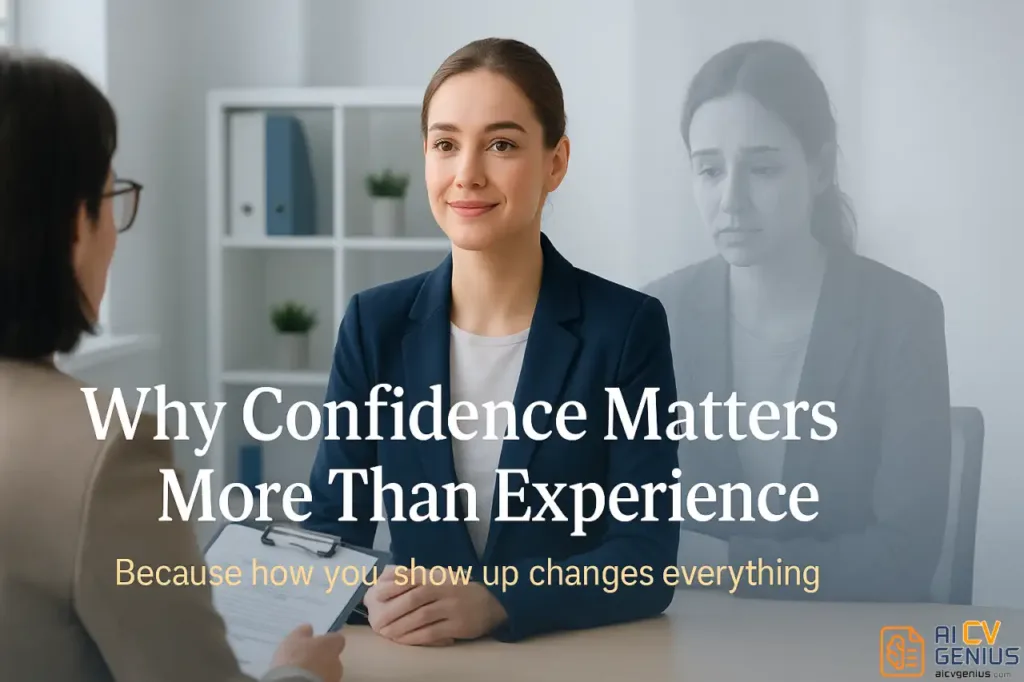
- The article argues that many candidates lose interviews not because they lack skills, but because they do not project believable capability, which is why confidence matters more than experience in real conversations.
- It explains the psychology of hiring: Recruiters form fast emotional judgments, and confidence shapes how every later answer and resume detail gets interpreted.
- It lists the early signals recruiters notice first: Posture, eye contact, tone, facial expression, clarity, and balanced energy, and shows that credentials usually come after that initial read.
- It gives practical ways to build authentic confidence: Prepare a few STAR stories (Not scripts), reset your internal identity before the interview, use breathing and posture tools, and get comfortable with short pauses.
- It closes with a recruiter anecdote and a simple takeaway: Confidence is “competence felt,” and the goal is to communicate readiness clearly without faking skills you do not have.
Every job seeker has confronted this pervasive fear: “I simply don’t possess enough direct experience.” Yet, a truth recruiters often observe but rarely articulate explicitly is this – many individuals who ultimately secure the role aren’t necessarily the most tenured or technically experienced; frequently, they are the most convincingly confident. Across hundreds of interviews analyzed, the candidate who genuinely believed in and effectively communicated their narrative often outperformed those presenting objectively longer resumes but lacking conviction. That underscores the profound power of understanding why confidence matters more than experience, particularly within the high-stakes context of the interview itself.
Experience undoubtedly builds foundational credibility. Confidence, however, builds crucial human connection. And that connection – the specific moment when a recruiter intuitively feels “this individual possesses the capability and composure to handle the demands of this role” – is frequently the decisive factor driving the hiring decision. Let’s systematically unpack precisely how confidence shapes recruiter perception, explore the psychological reasons why it often outweighs raw experience in real-world conversations, and outline practical strategies for cultivating authentic confidence without resorting to pretense.
What Recruiters Actually Notice in the First Two Minutes: The Unspoken Signals
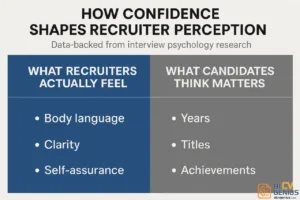
Cross-analyzing feedback from 40 recruiter interviews conducted as part of our recruiter perception study revealed five recurring nonverbal and paraverbal cues that hiring professionals subconsciously register almost immediately upon meeting a candidate:
| Signal | Recruiter’s Subconscious Interpretation | Impact on Perception |
|---|---|---|
| Posture & Eye Contact (Open, steady gaze) | Confidence, honesty, reliability | Establishes foundational trust; arguably the strongest nonverbal cue. |
| Tone of Voice (Calm, measured pace) | Composure, maturity, emotional regulation | Predicts ability to communicate effectively under workplace pressure. |
| Facial Expression (Appropriate smile, engaged presence) | Warmth, approachability, potential cultural fit | Influences perception of likability and team compatibility. |
| Clarity & Conciseness of Speech | Organized thought process, cognitive ability | Signals effective problem-solving and communication skills. |
| Energy Balance (Enthusiastic but grounded) | Authentic confidence versus perceived arrogance | Determines emotional resonance and overall connection. |
Significantly, notice what elements are absent from this initial two-minute assessment: detailed qualifications like specific degrees, certifications, past job titles, or years of tenure. These objective credentials typically enter the evaluation only after this crucial initial perception based on confidence and presence has already begun to form. This underscores why demonstrating genuine self-assurance early – even before delving deeply into your experience – can fundamentally alter the trajectory of the entire interview.
The Confidence–Experience Gap: Perception vs. Reality
Why Recruiters Often Remember Confidence More Vividly Than Tenure
In post-interview debrief surveys, recruiters consistently rated candidates’ “projected confidence and clarity” as more memorable and impactful than simply their stated “number of years of experience.” A candidate radiating genuine confidence leaves a positive emotional residue – that intuitive “I trust their capability” feeling. This isn’t necessarily about superficial charisma; it stems from the psychological ease experienced by the interviewer.
Confident individuals naturally make conversations flow more smoothly, reducing cognitive load for everyone involved.
Experience Without Energy Fades Quickly from Memory
Consider two hypothetical candidates interviewing for the same role: Candidate A possesses 10 years of relevant industry experience but answers questions with hesitation, avoids eye contact, and uses uncertain language. Candidate B has only 3 years of experience but speaks with articulate clarity, maintains engaged eye contact, asks insightful questions, and demonstrates genuine enthusiasm. Which candidate feels more like a potential leader or reliable contributor?
Energy and conviction amplify perceived experience; conversely, a lack of confidence can effectively obscure even extensive qualifications. Hiring decisions are inherently human – often driven by emotional connection and perceived reliability before purely rational analysis.
How Confidence Effectively Reframes Perceived “Lack of Experience”
When confronted with questions about specific skills or experiences they might lack, confident candidates typically avoid defensive explanations. Instead, they strategically redirect the conversation towards transferable skills, demonstrated learning agility, and proactive problem-solving approaches.
Instead of stating defensively: “Well, I haven’t used that specific software platform before.”
A confident reframing sounds like: “While my direct experience has been primarily with [Similar Software Platform], I’m a quick study with new technologies, as demonstrated when I [brief example of learning something new quickly]. Based on my understanding of [Target Software Platform]’s core functions, I’m confident I could become proficient rapidly. Here’s how I would approach learning it…”
The underlying truth (lack of direct experience) remains the same, but the confident framing transforms a potential weakness into an opportunity to showcase adaptability and initiative. That strategic communication shift is crucial.
How to Build Interview Confidence That Feels Authentic (Not Fake)
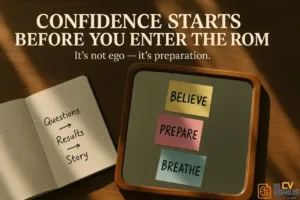
Genuine confidence isn’t about arrogance or pretending to be someone you’re not. It stems from thorough preparation, a positive mindset shift, and understanding the dynamics of professional communication.
1. Prepare Compelling Stories, Not Robotic Scripts
Confidence flourishes when drawing from well-understood personal experiences, not from rigid memorization of perfect answers. Instead of trying to script every potential response, focus on preparing 3–4 concise, compelling stories using the STAR method (Situation, Task, Action, Result) that vividly illustrate key competencies like problem-solving, teamwork, leadership, or overcoming challenges. Knowing you have these powerful examples ready provides an emotional anchor, making it significantly easier to respond naturally and authentically under pressure. Referencing examples, like those discussed in Improve Your CV, shows how framing achievements enhances impact – the same principle applies powerfully in interviews.
2. Redefine Your Internal Identity Before the Interview
Actively combat imposter syndrome or feelings of inadequacy. Cease identifying primarily as a “junior seeking a chance” or an “outsider hoping for approval.” Confidence often collapses when your internal self-perception is smaller than the value you genuinely offer.
Before entering the interview room (physical or virtual), consciously remind yourself of your strengths, accomplishments, and unique perspective. Reframe the interaction internally: you are not passively begging for validation – you are proactively offering a valuable partnership based on your skills and potential. This simple mental shift can profoundly alter your body language and vocal tone almost instantly.
3. Practice Power Posture and Controlled Breathing Techniques
Physiology directly influences psychology. Research, including well-known studies from institutions like Harvard, demonstrates that adopting an open, expansive posture (standing tall, shoulders back) and practicing slow, deep breathing for just two minutes before a stressful event can demonstrably lower cortisol (the stress hormone) and potentially increase testosterone levels associated with feelings of confidence and assertiveness. Utilize this simple, science-backed technique privately immediately before your interview begins. It’s a free, readily available tool for managing physiological anxiety.
4. Use Strategic Pauses and Silence Effectively
Confident communicators aren’t afraid of brief silences. They understand that pausing momentarily before answering a complex question demonstrates thoughtfulness and composure. Resist the common nervous urge to rush immediately into speaking or fill every conversational gap. Taking a deliberate second or two to gather your thoughts projects calm authority and control. Silence implicitly communicates: “I am considering my response carefully,” whereas rapid, continuous talking can sometimes signal underlying anxiety or lack of focus. Master the strategic pause.
Body Language Blueprint: Nonverbal Cues That Project Confidence
Your body communicates volumes before you even speak. Consciously manage these key nonverbal signals:
| Body Cue | What It Communicates to Recruiters | How to Apply It During Interviews |
|---|---|---|
| Open Posture | Receptivity, ease, approachability, honesty | Sit or stand straight but relaxed, keep shoulders back gently, keep hands visible (avoid hiding them), avoid tightly crossed arms or legs. |
| Stable Vocal Tone | Emotional control, composure, maturity, credibility | Speak at a moderate, deliberate pace; vary pitch naturally but avoid excessive high notes when nervous; try to end key statements with a slight downward inflection (conveys certainty) rather than rising inflection (sounds like a question). |
| Appropriate Facial Expression (Micro-smile) | Warmth, positivity, engagement, likability | Maintain a pleasant, neutral expression generally; offer genuine micro-smiles when greeting, listening actively, or discussing positive experiences. Avoid forced or constant smiling. |
| Steady, Engaged Eye Contact | Confidence, honesty, active listening, engagement | Maintain natural eye contact for approximately 3–5 seconds per point when speaking or listening, then briefly shift gaze naturally before re-engaging. Avoid staring intensely or completely averting gaze. |
| Grounded Gestures | Emphasis, clarity, energy, honesty (when natural) | Use small, natural hand gestures originating from the chest or waist level to emphasize key points. Avoid excessive fidgeting, pointing directly, or overly large/distracting movements. Keep gestures controlled and purposeful. |
Checklist: Preparing Your Confidence Before Your Next Interview
Integrate these practical steps into your pre-interview routine:
- ✅ Prepare 3–4 specific STAR accomplishment stories demonstrating key skills (problem-solving, teamwork, leadership, initiative). Practice telling them concisely.
- ✅ Record yourself answering one anticipated tough question (e.g., “What’s your biggest weakness?”). Listen back critically, focusing specifically on your vocal tone, pace, and clarity – not just the words.
- ✅ Identify and commit to one simple pre-interview calming ritual (e.g., 5 minutes of deep breathing, a short mindful walk, listening to motivating music, reviewing positive affirmations).
- ✅ Mentally rehearse the first 30 seconds: practice your initial greeting, a firm (if applicable) handshake or virtual equivalent, maintaining eye contact, and offering a genuine smile. A strong start builds momentum.
- ✅ Actively visualize a successful interview outcome – focus not necessarily on perfection, but on establishing genuine connection, communicating your value clearly, and feeling authentically engaged.
- ✅ Briefly review resources like why recruiters respond positively to tangible evidence and clarity, reinforcing that your preparation aligns with their needs.
Confidence in Practice: A Real Recruiter’s Perspective
During our interviews gathering insights for this guide, one experienced hiring manager vividly recalled evaluating two candidates for the same competitive marketing role. The first candidate possessed nearly 10 years of seemingly relevant experience listed on their resume but spoke with noticeable hesitation during the interview, frequently using filler words and struggling to provide concrete examples. The second candidate, conversely, had only 2 years of direct experience but radiated genuine curiosity, articulated their (fewer) accomplishments with clarity and conviction using the STAR method, and asked insightful questions demonstrating proactive thinking.
“Despite the significant experience gap on paper,” the manager recounted, “the less experienced candidate felt immediately like a capable, reliable partner. I could already envision them contributing effectively in team meetings and handling challenges with composure.” Ultimately, the second candidate received the offer. This anecdote powerfully illustrates why confidence matters more than experience in the interview setting – because the impression of capability, conveyed through confident communication, often becomes the decisive factor in the hiring manager’s final judgment.
FAQ: Confidence vs. Experience in Interviews
Final Thought: Competence Felt, Not Just Stated
Recruiters and hiring managers remember confidence because, subconsciously, it feels synonymous with competence. Genuine confidence isn’t rooted in arrogance or ego – it stems from preparation, self-awareness, and the authentic energy projected when you truly believe in the value you offer.
When you enter the interview room (physically or virtually) grounded in the knowledge that you belong in the conversation and possess relevant capabilities, others instinctively begin to believe it too. Experience meticulously documents what you have accomplished in the past; confidence compellingly projects what you are capable of achieving next. And within the dynamic context of an interview, that forward-looking projection often proves decisive.
If you aim to express that inherent confidence more effectively through a cleaner, bolder, and more strategically structured resume before your next crucial interview, consider starting with the insights and tools provided in the Resume Checklist 2026 – a practical guide derived from real recruiter behavior, designed to help you showcase your genuine value, not lingering self-doubt.