

- Culture lives in the gap: Written policies say one thing, daily behavior shows what is actually rewarded.
- Meeting signals: Watch punctuality, who speaks, whether debate is safe, and if attention is expected.
- Communication signals: Identify the real channel, after hours responsiveness, tone, and expected reply speed.
- Power and decisions: Learn if choices are top down or collaborative, fast or slow, and data driven or narrative driven.
- Fit without losing yourself: Match core norms like responsiveness and decision process, personalize the rest, and address real mismatches early.
Written Rules vs. Unwritten Norms
The employee handbook tells you official policies: work hours are 9-5, dress code is business casual, PTO accrues at 15 days per year. These are the written rules.
But real company culture lives in the unwritten norms: does anyone actually leave at 5pm? What do people actually wear? Do people actually take all their PTO without guilt?
The gap between written rules and unwritten norms is where culture lives. New employees who ignore this gap violate invisible expectations and damage their credibility without understanding why.
Learning culture isn’t about reading the handbook – it’s about observing behavior patterns and decoding what’s actually rewarded versus what’s officially stated. Here’s how to read those signals in your first 30 days.
Clue 1: Observe Meeting Behaviors
Meetings reveal power dynamics, communication norms, and decision-making processes more clearly than any policy document.
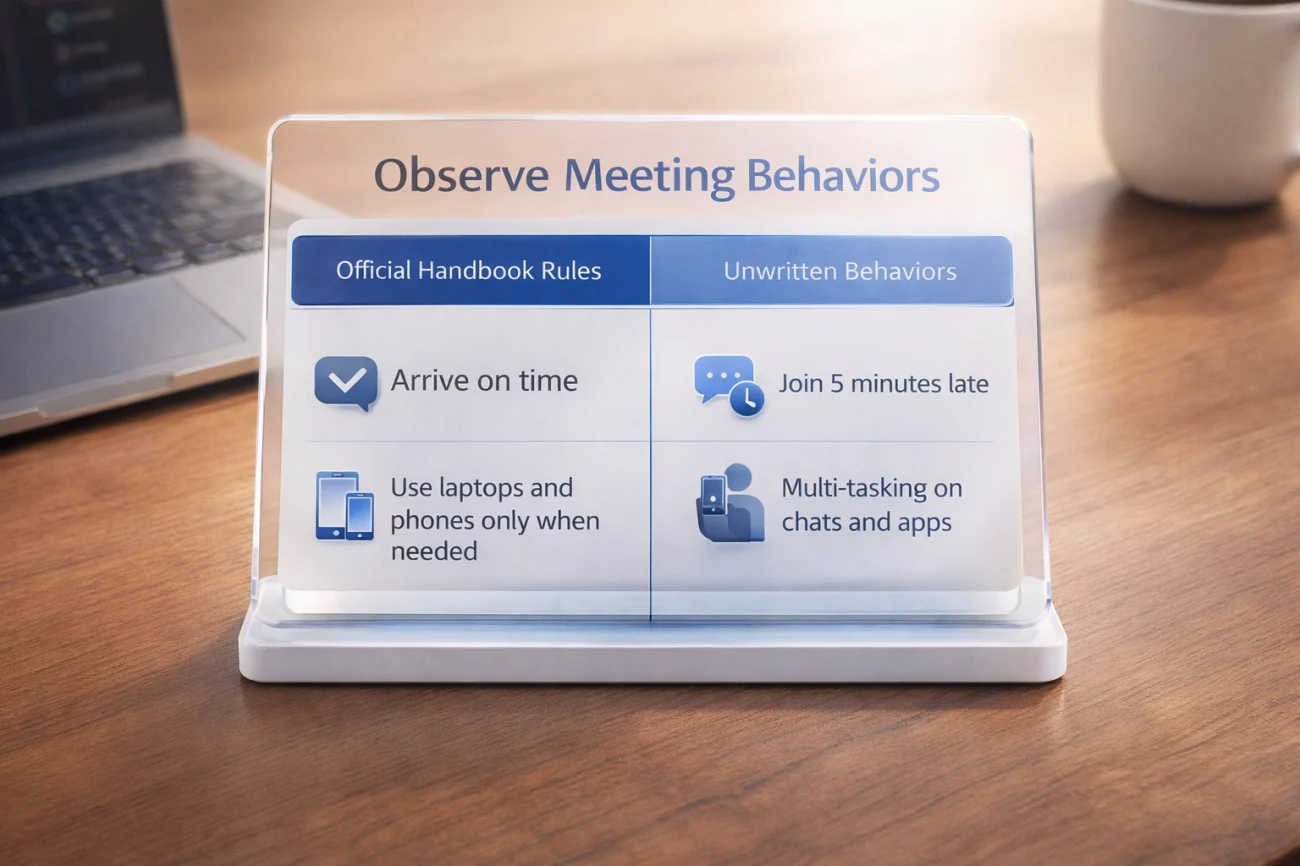
Do Meetings Start on Time?
If meetings consistently start 5-10 minutes late and no one seems bothered, punctuality isn’t really valued despite what the handbook says. If meetings start precisely at the scheduled time, being on time matters.
What this tells you: Whether the culture values efficiency and respects time, or operates more flexibly.
Who Actually Speaks?
Watch who dominates conversations. Is it always the most senior person? Do junior people contribute freely? Are certain departments always silent?
What this tells you: Whether hierarchy is strict or flat, and which roles have actual influence versus nominal authority.
Is There Real Debate or Just Agreement?
Do people challenge ideas and disagree constructively? Or does everyone nod along with the senior-most person’s opinion?
What this tells you: Whether dissent is welcomed or discouraged. In healthy cultures, people debate respectfully. In toxic ones, disagreement is seen as insubordination.
Are People on Devices During Meetings?
If everyone is on laptops and phones during meetings and nobody cares, multitasking is normalized. If people put devices away, focused attention is expected.
What this tells you: What level of engagement is standard.
For comprehensive onboarding strategies, see our complete new job guide.
Clue 2: Decode Communication Patterns
How people communicate reveals expectations about responsiveness, formality, and work-life boundaries.
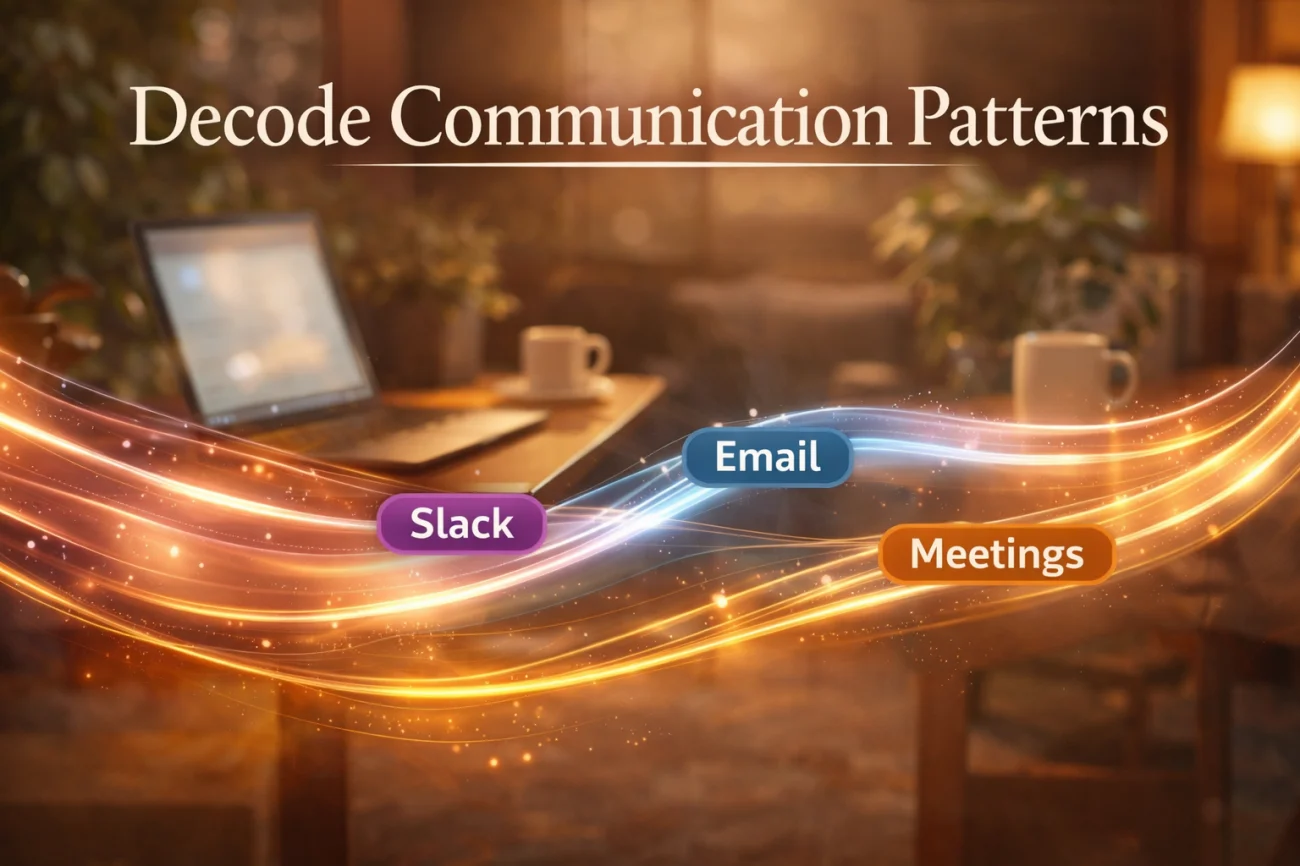
What’s the Primary Channel?
Is it Slack? Email? In-person conversations? Teams?
What this tells you:
- Slack-dominant cultures value speed and casual communication
- Email-dominant cultures value documentation and formality
- In-person cultures value face-to-face interaction and spontaneity
Match the dominant channel. If everyone Slacks and you send formal emails, you’ll seem out of touch.
Do People Respond After Hours?
If your Slack lights up at 10pm and people respond immediately, after-hours work is normalized. If messages sit until morning, boundaries are respected.
What this tells you: Whether work-life balance is real or just stated policy. Watch what senior people do, not what they say.
What’s the Communication Tone?
Are messages casual with emojis and GIFs? Or formal and professional? Do people use first names or titles?
What this tells you: The formality level expected. Start slightly more formal than average, then adjust down if appropriate.
How Fast Do People Respond?
If messages get responses within minutes, instant responsiveness is expected. If replies come hours later, considered responses are valued over speed.
What this tells you: The urgency level and whether constant availability is required.
Clue 3: How Decisions Get Made
Decision-making processes reveal power structures and whether the culture values consensus or hierarchy.
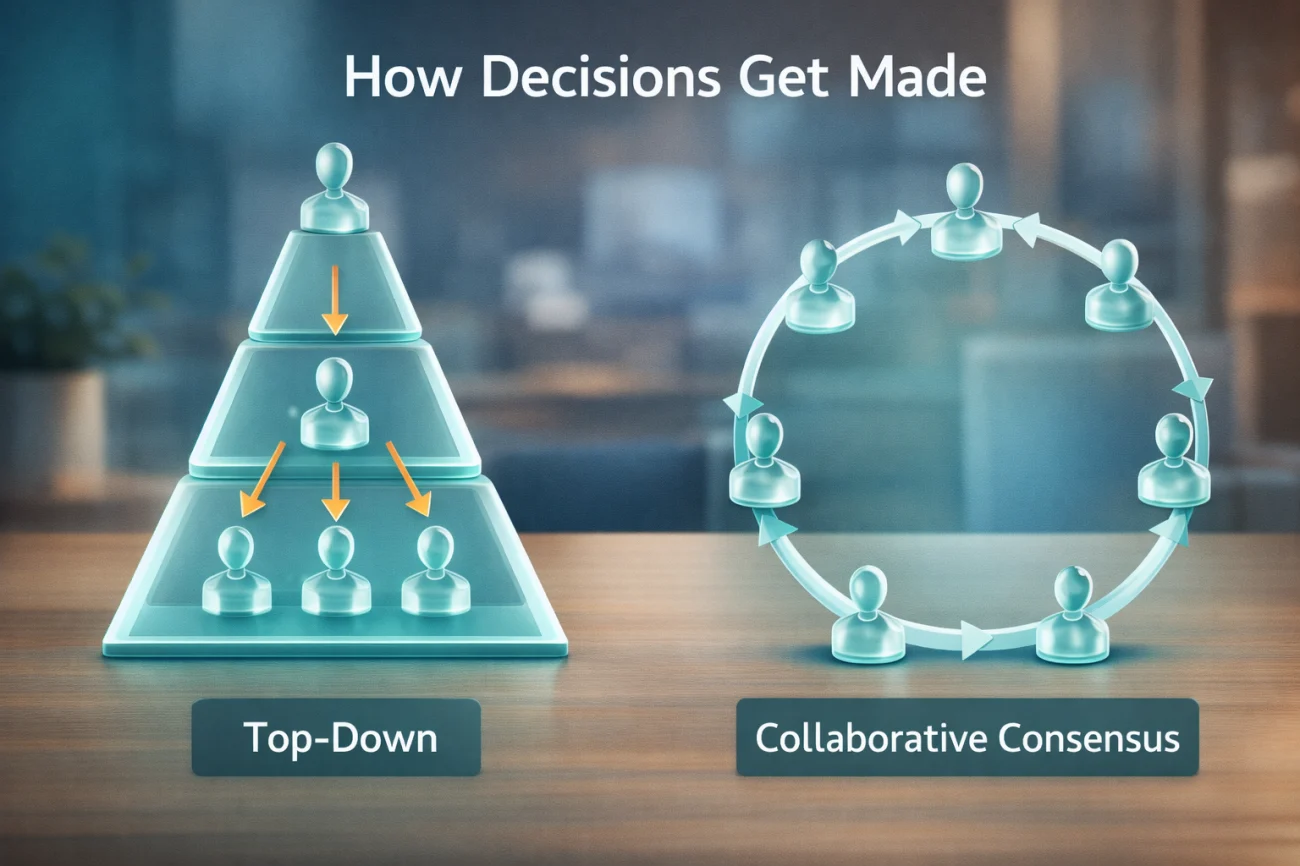
Top-Down or Collaborative?
Do executives make decisions and announce them? Or are decisions made collaboratively with input from multiple levels?
What this tells you:
- Top-down: hierarchy matters, follow the chain of command
- Collaborative: your input is valued regardless of level
Fast or Slow?
Do decisions happen in one meeting, or does everything require multiple rounds of discussion and consensus?
What this tells you:
- Fast cultures: bias toward action, tolerate some mistakes
- Slow cultures: value thoroughness, minimize risk
Neither is better – but you need to know which one you’re in so you don’t move too fast (and seem reckless) or too slow (and seem indecisive).
Data-Driven or Intuition-Based?
Do people expect data and analysis to back up proposals? Or do they value experience and gut instinct?
What this tells you: How to frame your ideas. Data-driven cultures want numbers. Intuition-based cultures want narratives and experience.
Consensus Required or Individual Authority?
Can one person make a decision, or does everything need buy-in from multiple stakeholders?
What this tells you: Whether to seek approval from multiple people before proceeding, or just get your manager’s sign-off.
Clue 5: How Failure Is Handled
Nothing reveals culture faster than how people respond to mistakes and failures.
Learning Moment or Blame Game?
When something goes wrong, do people focus on what to learn and how to prevent it next time? Or do they look for someone to blame?
What this tells you:
- Learning culture: safe to take risks and admit mistakes
- Blame culture: hide mistakes, minimize risk-taking
Are Failures Discussed Openly?
Do teams hold retrospectives where they openly discuss what went wrong? Or are failures swept under the rug and never mentioned?
What this tells you: Whether transparency and continuous improvement are valued, or whether image management matters more.
How Do Senior Leaders Handle Their Own Mistakes?
Do executives acknowledge when they’re wrong and adjust course? Or do they double down and deflect?
What this tells you: Whether humility and accountability are genuine values or just corporate jargon.
How Much Grace Do New Employees Get?
Are people patient with new employee mistakes, or is there zero tolerance for errors even during onboarding?
What this tells you: The actual grace period you have versus the stated one.
Adapt, Don’t Assimilate – How to Fit In Without Losing Yourself
Understanding culture doesn’t mean you have to become a different person. It means understanding the norms so you can navigate them strategically.
Core vs. Peripheral Norms
Some cultural norms are core (violate them and you’ll struggle). Others are peripheral (nice to match but not critical).
Core norms to match:
- Communication responsiveness expectations
- Decision-making processes
- Meeting punctuality and engagement standards
- How work gets prioritized and completed
Peripheral norms you can personalize:
- Social event attendance (attend some, not all)
- Communication style (be yourself while using the right channels)
- Personal sharing (share what you’re comfortable with)
Stay Authentic While Adapting
You can match core professional norms without changing who you are:
- If the culture values speed, work efficiently – but use your own methods
- If relationships matter, build them in ways that feel natural to you
- If after-hours events are expected, attend sometimes in your own style
When Culture Is a Serious Mismatch
If core values conflict (you value work-life balance, culture expects 60-hour weeks), you have three options:
- Adapt fully (sustainable only if you’re okay with the trade-off)
- Negotiate boundaries (works in some flexible cultures)
- Exit strategically (better to leave than burn out)
Don’t ignore fundamental mismatches hoping they’ll resolve themselves.
FAQ
Culture Is Behavior, Not Buzzwords
Company culture isn’t what’s written in the handbook or painted on the office walls. It’s what actually happens every day: how meetings run, how people communicate, how decisions get made, how failures are handled, and what behaviors get rewarded.
The five clues – meeting behaviors, communication patterns, decision-making processes, social dynamics, and failure handling – reveal the real culture faster than any official documentation.
Observe these patterns systematically in your first 30 days. Watch what senior people do, not what they say. Notice what gets rewarded and what gets punished. Pay attention to unwritten rules about time, formality, and boundaries.
Then adapt strategically. Match core professional norms while staying authentic in peripheral areas. You don’t need to become a different person – you need to understand the environment so you can navigate it effectively.
If you discover serious mismatches between your values and the culture, address them early. Some gaps can be navigated; others indicate fundamental incompatibility that won’t improve over time.
Culture fit matters for long-term success. Invest the time to understand it properly, then decide how to engage with it authentically.
For additional workplace culture resources, check out our comprehensive career guide.