

- What Google screens for: GCA, Leadership, Role knowledge, And Googliness.
- Resume gate: Use the X Y Z accomplishment format, Match keywords exactly, And keep it 1 to 2 pages.
- Interview flow: Recruiter screen, Role specific interviews, Then behavioral rounds using STAR with clear results.
- Decision reality: Hiring committee reviews written feedback, So one weak round can sink an otherwise strong set.
- Prep that wins: Go deep on fewer questions, Use recent examples, And stay specific instead of generic traits.
Google Interviews Test Four Things
Getting hired at Google isn’t about being the smartest person in the room. It’s about demonstrating four specific attributes they obsessively screen for:
- General Cognitive Ability (GCA): Problem-solving and learning capability
- Leadership: Taking ownership and driving results even without authority
- Role-Related Knowledge: Technical or functional expertise for the specific job
- Googliness: Cultural fit, humility, collaboration, comfort with ambiguity
Every interview question, every evaluation criterion, maps back to one of these four areas. Understanding this framework helps you prepare strategically rather than guessing what they want.
Here’s the complete process from resume submission to offer, with specific tips from people who’ve successfully navigated it.
Step 1: The Resume (Beating the ATS)
Google receives millions of applications annually. AI screening filters most resumes before humans see them. Your resume needs to pass automated systems first.
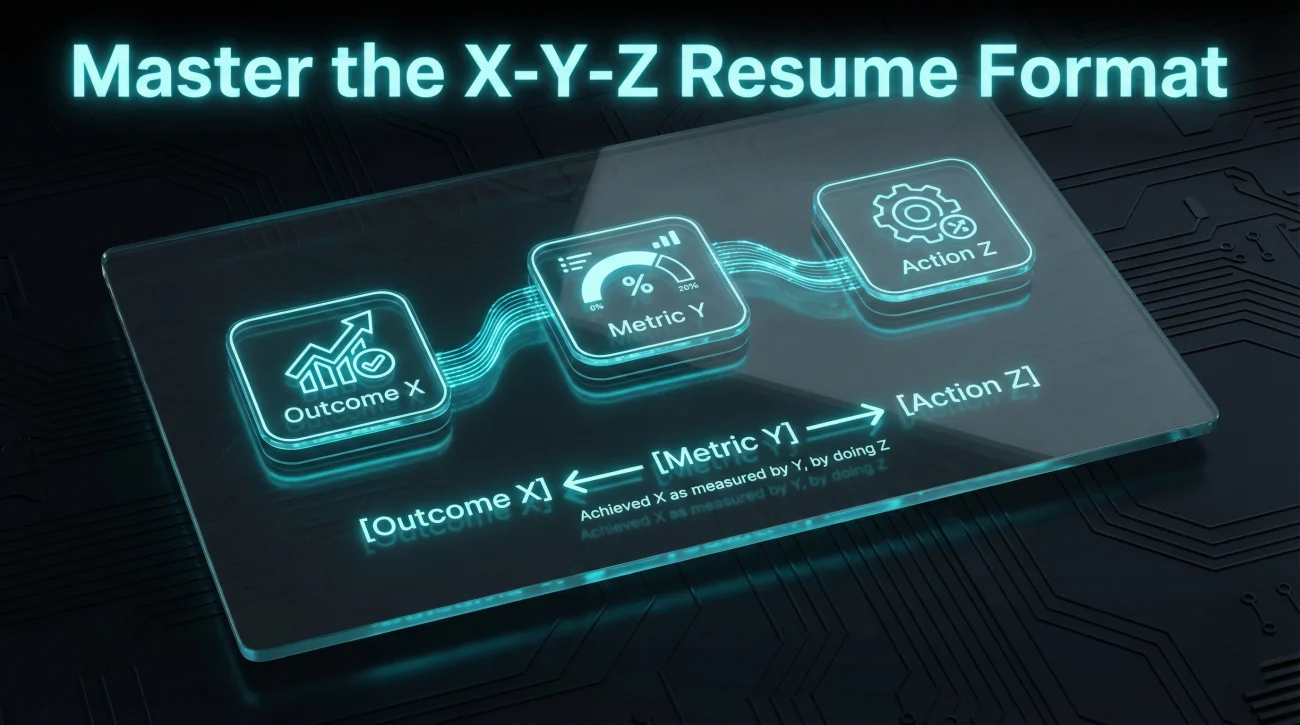
Use the X-Y-Z Format
Google’s recruiting team explicitly recommends this structure for accomplishments:
Accomplished [X] as measured by [Y] by doing [Z]
Examples:
❌ Bad: “Improved user engagement on website”
✅ Good: “Increased user engagement by 35% as measured by daily active users by redesigning onboarding flow and implementing personalized recommendations”
❌ Bad: “Led marketing campaigns”
✅ Good: “Generated $2M in revenue as measured by attributed sales by launching targeted email campaigns to 100K users across 5 segments”
The X-Y-Z format forces specificity and quantification – exactly what ATS systems and recruiters look for.
Include Relevant Keywords
Match job description language exactly:
- If they say “machine learning,” don’t say “AI”
- If they mention “cross-functional collaboration,” use that exact phrase
- Include technologies, tools, and frameworks from the posting
Education and Achievements
Include:
- University GPA if above 3.5
- Relevant coursework for recent grads
- Honors, awards, or publications
- Certifications relevant to the role
Keep It Concise
One page for early career, two pages maximum for experienced roles. Google recruiters spend 6 seconds on initial screening – make accomplishments immediately visible.
For comprehensive resume optimization strategies, see our complete resume guide.
Step 2: The Recruiter Screen
If your resume passes ATS, a recruiter schedules a 30-45 minute phone screen. This isn’t just administrative – it’s an evaluation.
What to Expect
- Discussion of your background and experience
- Why you’re interested in Google and this specific role
- Explanation of interview process and timeline
- Preliminary questions about technical skills or experience
- Your questions about the role and team
How to Prepare
Research the role thoroughly:
- Understand the team’s projects and priorities
- Know what the role actually does (don’t just read the job description)
- Prepare specific examples of relevant experience
- Have thoughtful questions ready about the team
Red Flags That End Your Process
- Not knowing why you want to work at Google specifically
- Inability to explain your resume clearly
- Salary expectations far outside the role’s range
- Appearing unprepared or uninterested
Step 3: Technical/Role-Related Interviews
For technical roles (engineering, data science, etc.), expect coding and system design. For non-technical roles, expect case studies and functional expertise tests.

For Engineers
Coding interviews (2-3 rounds):
- Data structures and algorithms questions
- Live coding in a shared document or whiteboard
- Focus on problem-solving process, not just correct answers
- Expect follow-up questions that increase complexity
System design (1-2 rounds for senior roles):
- Design scalable systems (e.g., “Design YouTube”)
- Discuss trade-offs and architectural decisions
- Demonstrate understanding of distributed systems concepts
For Product Managers
- Product design questions: “How would you improve Google Maps?”
- Analytical questions: metrics, data interpretation
- Technical understanding: work effectively with engineers
- Strategy questions: market analysis, competitive positioning
For Marketing/Sales
- Case studies: “How would you launch X product?”
- Analytical scenarios: budget allocation, ROI analysis
- Strategy questions: market segmentation, competitive analysis
- Role-specific exercises: ad copy, campaign planning
Universal Tips
Think out loud – they want to see your problem-solving process:
“I’m thinking about this problem in terms of [framework]. Let me break it down into [components]. The key trade-offs I see are…”
Ask clarifying questions before diving in. Show structured thinking, not just gut instinct.
Step 4: Behavioral Interviews (GCA & Googliness)
These evaluate how you work, lead, and fit Google’s culture. Expect 2-3 behavioral rounds.

General Cognitive Ability Questions
Test learning ability and problem-solving:
“Tell me about a time you had to learn something completely new quickly.”
“Describe a complex problem you solved. Walk me through your thinking.”
“How would you approach a situation where you don’t know the answer?”
Leadership Questions
Leadership at Google doesn’t require formal authority:
“Tell me about a time you led a project without formal authority.”
“Describe a situation where you had to influence people who disagreed with you.”
“Give an example of when you took ownership of a problem that wasn’t your responsibility.”
Googliness Questions
Cultural fit and collaboration style:
“Tell me about a time you worked with a difficult team member.”
“Describe a situation where you had to admit you were wrong.”
“How do you handle ambiguity and changing priorities?”
How to Answer Using STAR
Structure every response:
- Situation: Brief context (1-2 sentences)
- Task: Your specific responsibility
- Action: What you did (focus here – 60% of answer)
- Result: Quantified outcome and what you learned
Keep answers under 2 minutes. Be specific, not vague.
For more interview preparation strategies, explore our interview preparation guide.
Step 5: The Hiring Committee (Why Interviewers Don’t Decide)
Here’s what most candidates don’t know: your interviewers don’t make the hiring decision. A separate hiring committee reviews interview feedback and makes recommendations.
Why This System Exists
Reduces bias. Prevents hiring managers from making emotional or political decisions. Ensures consistency across the company.
How It Works
- Interviewers submit written feedback immediately after each interview
- Feedback goes to hiring committee (people who haven’t met you)
- Committee reviews all feedback and makes hiring recommendation
- Senior leaders approve or reject the recommendation
- Offer extended if approved at all levels
Timeline
2-4 weeks after your final interview. Sometimes longer. Google moves deliberately, not quickly.
What This Means for You
You need unanimous strong feedback. One weak interview can tank your candidacy even if others went well. Be consistent across all rounds.
3 “Survival” Tips From Former Google Employees
Tip 1: Go Deep, Not Broad
Don’t prepare for 100 types of questions superficially. Master 20 questions deeply with exceptional answers. Google interviewers probe deeply – shallow knowledge gets exposed.
Tip 2: Use Recent, Relevant Examples
Don’t reach back to college projects if you’ve been working for 5 years. Use recent examples from the last 1-2 years that directly relate to the role you’re interviewing for.
Tip 3: Be Specific, Not Generic
Bad answer:
“I’m a team player who works well with others and always meets deadlines.”
Good answer:
“When launching the mobile app redesign, I coordinated with 5 engineers, 2 designers, and 3 PMs across time zones. We shipped on time by implementing daily 15-minute syncs and creating a shared decision log that prevented miscommunication.”
Specificity signals real experience versus coached answers.
FAQ
It’s a Process, Not a Lottery
Getting hired at Google isn’t about luck or being the smartest person. It’s about systematically demonstrating the four attributes they screen for: general cognitive ability, leadership, role-related knowledge, and Googliness.
Optimize your resume using X-Y-Z format with quantified accomplishments. Prepare thoroughly for technical/functional interviews in your domain. Develop strong STAR-format stories for behavioral questions that showcase problem-solving, leadership, and collaboration.
Understand that interviewers don’t decide – hiring committees review all feedback and make recommendations. This means every interview matters. One weak round can derail your candidacy even if others went well.
The process takes months from application to offer. Be patient. Use the time between stages to continue preparing. If rejected, wait 12 months, improve systematically, and try again.
Thousands of people get hired at Google every year. Most weren’t the smartest applicants – they were the best prepared and most persistent ones.
For additional interview preparation resources, check out our comprehensive career guide.