
- The article shows how a strategic CV rewrite can unlock a career pivot, using three real stories as career change CV examples that prove reframing beats “starting over.”
- Story 1 (Teacher to Instructional Designer): The rewrite translated classroom work into corporate L&D language, tightened the resume to one page, and swapped passive phrasing for strong action verbs.
- Story 2 (Café operations to Digital Marketing): The CV turned hospitality duties into measurable marketing signals like audience growth, review lift, and promotion impact, plus a sharp summary that names the direction confidently.
- Story 3 (Accountant to UX Research): The resume kept the analytical backbone, added projects for credibility, and moved UX keywords into the top third so recruiters could instantly see fit.
- The closing takeaway ties the three together: Clear theme, translation into target-role language, quantified proof, and a clean layout, supported by a checklist and a short FAQ for common career-change doubts.
Can one strategically rewritten CV genuinely pivot a career? For many contemplating a professional shift, the idea might seem overly simplistic – until they witness its transformative power firsthand. Over the past year, FreeResumeHub has collaborated with hundreds of individuals navigating significant job transitions. Among these diverse journeys, three distinct stories consistently resonated, vividly illustrating how reframing a professional narrative can unlock previously inaccessible opportunities. Their experiences serve as powerful, real-world career change CV examples – tangible proof that when you learn to articulate your transferable value effectively, the right opportunities begin to emerge.
Each narrative showcases a unique transformation: a dedicated teacher who successfully transitioned into instructional design, a charismatic café worker who pivoted into digital marketing, and a meticulous accountant who found fulfillment as a UX researcher. Let’s delve into their journeys, dissect the specific CV rewrite strategies they employed, and understand precisely how a well-crafted document catalyzes career reinvention.
Story 1: The Teacher Who Became an Instructional Designer
Meet Hannah – The Educator Seeking a New Canvas
For eight years, Hannah excelled as an English teacher at a bustling secondary school. While passionate about communication and pedagogy, she felt constrained by the classroom routine and yearned to apply her skills in a corporate learning environment. She aspired to become an Instructional Designer, leveraging her deep understanding of learning principles and content development, fields she had explored academically but never pursued professionally. Her existing CV meticulously detailed lesson plans, classroom management successes, and student assessment metrics – highly relevant for educational roles but completely misaligned with the language and priorities of corporate L&D recruiters. They saw a teacher, not a potential designer of engaging adult learning experiences.
The Rewrite Moment: Reframing Expertise
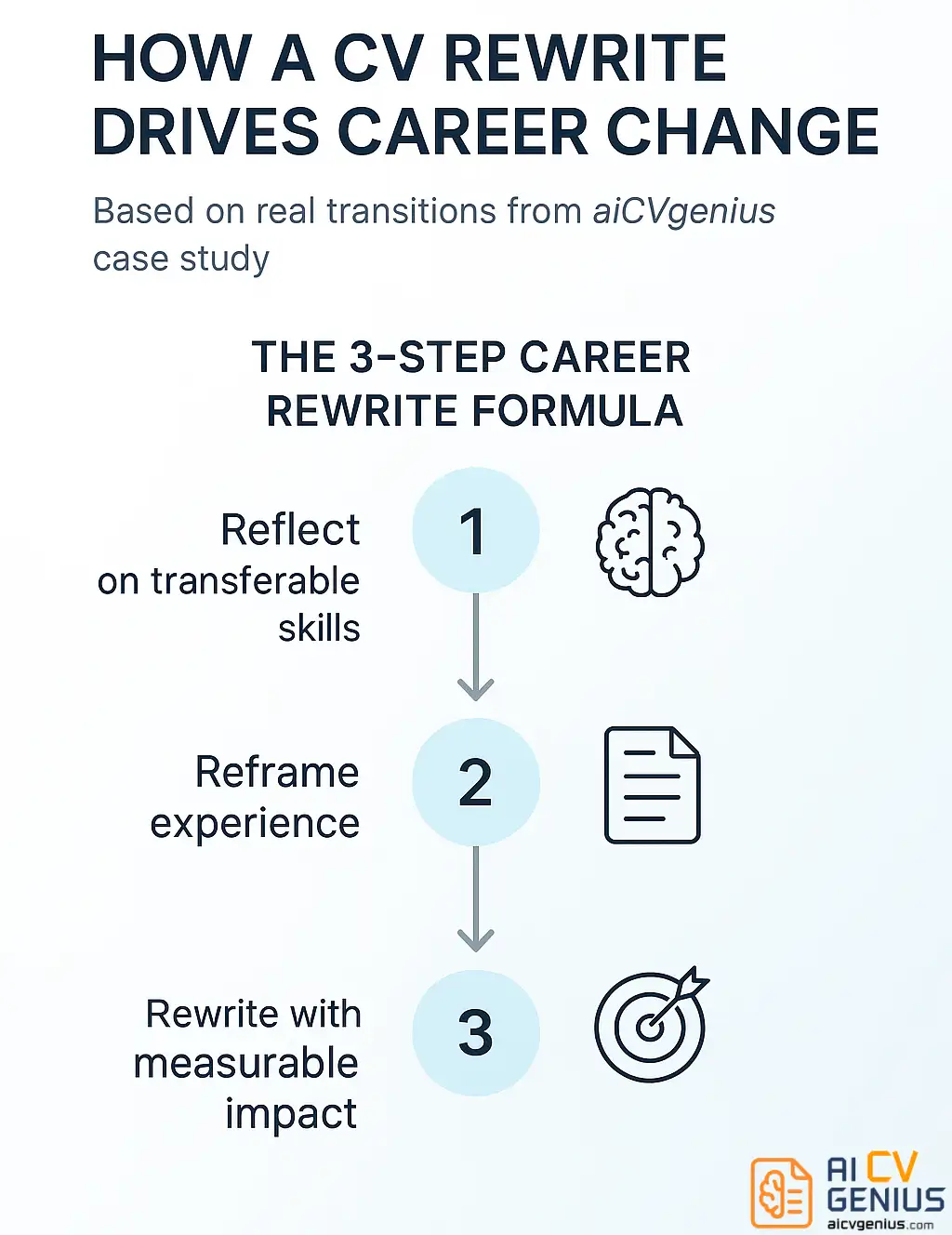
Embarking on the rewrite, Hannah embraced a core principle: reframe, don’t erase. She didn’t discard her teaching experience; instead, she strategically translated it. She meticulously highlighted instructional design-adjacent elements inherent in her teaching role: developing engaging visual learning materials (PowerPoints, infographics), designing curriculum modules aligned with learning objectives, and creating digital assessments.
Instead of stating, “Planned daily lessons for diverse groups of 30+ students,” she articulated it as, “Designed and delivered differentiated learning modules incorporating visual aids and interactive elements, utilized by over 1,000 students annually.” Suddenly, her existing experience began speaking the language of instructional design.
She condensed her CV from two cluttered pages to a single, focused page, adopting a clean, minimalist layout from Resume Templates Finder known for ATS compatibility. Crucially, she replaced passive educational jargon with dynamic action verbs common in corporate settings: “Created,” “Designed,” “Implemented,” “Assessed,” “Collaborated,” moving decisively away from phrases like “Responsible for.”
The Result: Landing the Target Role
Within three weeks of deploying her reframed CV, Hannah secured her first interview at a prominent education technology company. The feedback from the hiring manager was illuminating: “Your CV immediately stood out because it didn’t read like a standard teacher’s resume – it clearly demonstrated instructional design thinking grounded in practical teaching insight.”
She is now thriving as a Junior Instructional Designer, developing e-learning courses. Her classroom expertise wasn’t discarded; it was successfully repositioned as a unique asset.
Takeaway: Translation is Key
Your past professional title doesn’t immutably define your future potential – strategic framing does. Skills are inherently transferable, but they require deliberate translation into the language and context of your target field. Hannah’s success vividly illustrates that the bridge between seemingly disparate careers is constructed through carefully chosen verbs, relevant examples, and a clear vision for applying existing skills in a new domain.
Story 2: From Café Operations to Digital Marketing
Meet Luis – The Barista with Untapped Business Acumen
Luis dedicated four years to managing operations at a popular local café. He enjoyed the fast-paced environment and customer interaction but found himself increasingly fascinated by the underlying business drivers – observing the impact of seasonal menu promotions, managing the café’s burgeoning Instagram presence, and analyzing customer feedback patterns. When he attempted to transition into entry-level marketing assistant roles, his applications met with silence. His CV simply stated “Barista” and listed operational duties, failing entirely to signal his latent marketing instincts.
The Rewrite Moment: Highlighting Transferable Marketing Skills
Luis began by immersing himself in understanding what recruiters prioritize in marketing resumes (drawing insights from resources like What Top Candidates Have in Common). He then meticulously re-evaluated his café experience through a marketing lens, translating operational tasks into relevant competencies:
- “Responsible for customer order accuracy and service” became “Enhanced customer experience through proactive engagement and personalized service, contributing to a 15% increase in positive online reviews (Google, Yelp).”
- “Handled social media updates” transformed into “Managed and grew the café’s Instagram presence from 400 to over 1,800 followers organically by creating engaging visual content (photos, stories) and responding actively to customer comments.”
- “Assisted with promotions” evolved into “Developed and executed seasonal chalkboard promotional campaigns that demonstrably increased average weekly sales of featured items by approximately 18%.”
He also added a concise, confident professional summary – two impactful lines articulating his ambition and relevant skills:
“Aspiring Digital Marketing professional with proven real-world experience engaging local audiences and driving measurable business growth through creative promotions and social media content strategy.”
The Result: Securing the Marketing Interview
Just two weeks after submitting his strategically reframed CV, Luis landed his first interview at a boutique digital marketing agency. The recruiter’s feedback affirmed his approach: “Your CV didn’t read like typical hospitality experience; it clearly demonstrated core marketing principles – customer engagement, content creation, and measuring results.” Luis now successfully manages social media campaigns for agency clients – applying the same fundamental instincts he honed in the café, but now within his desired professional context.
Takeaway: Focus on Expression, Not Just Experience
Career transition success often hinges less on acquiring entirely new experiences and more on learning to express existing experiences in a new, relevant language. Luis didn’t fabricate marketing credentials; he skillfully reframed his authentic café achievements with clarity and quantifiable impact. This is the essence of every strong career change CV example: revealing valuable skill patterns hidden within seemingly unrelated roles by focusing on universally understood outcomes.
Story 3: The Accountant Who Transitioned to UX Researcher
Meet Priya – Analytical Rigor Seeking Human Connection
Priya spent five years excelling in corporate finance, meticulously analyzing spreadsheets, managing budgets, and scrutinizing KPIs. While adept with data, she found herself increasingly drawn to understanding the human behavior behind the numbers – why users interacted with financial software in certain ways, what frustrated them, what delighted them.
When she discovered the field of User Experience (UX) Research, it resonated deeply – a perfect blend of rigorous data analysis and empathetic user understanding. The immediate challenge: her existing CV unequivocally screamed “Accountant,” filled with financial jargon and compliance terminology.
The Rewrite Moment: Repurposing Core Strengths
Priya strategically deconstructed her CV, stripping it down to its foundational, transferable strengths: meticulous research methodologies, strong data analysis capabilities, structured thinking, and clear communication of complex findings. She then proactively built evidence for her new direction by adding a dedicated “Projects” section showcasing relevant volunteer UX case studies completed through online bootcamps and personal initiatives. Each bullet point deliberately translated her financial background into UX terms:
- “Responsible for monthly financial reporting” became “Analyzed quantitative user survey data from 120+ participants using Excel and basic statistical methods to identify key friction points in a mobile banking app prototype.”
- “Audited internal processes for compliance” transformed into “Conducted heuristic evaluations and usability testing sessions for three different web applications, documenting findings and presenting actionable design recommendations to stakeholders.”
She studied typical recruiter scanning patterns (informed by resources like What Happens When a Recruiter Opens Your Resume) and ensured the critical top third of her resume featured relevant keywords like “User Research,” “Data Synthesis,” “Usability Testing,” “Qualitative Insights,” and “Prototyping Feedback.”
The Result: Landing the UX Internship
Priya secured her first UX Research internship interview within one month of applying with her completely repositioned CV. Her future manager later shared critical feedback: “Your CV stood out because it didn’t try to hide your analytical background; it convincingly reframed it as a unique strength for UX. It read like a well-structured research report – logical, evidence-based, yet focused on user understanding.” She now works full-time at a leading digital agency, successfully blending her analytical rigor with newfound user empathy daily.
Takeaway: Build on Your Foundation
Successful career transitions rarely require erasing your past; instead, they often involve strategically repurposing your existing core skills and applying them within a new framework. Priya didn’t discard her meticulous accounting mindset – she effectively reapplied its logical rigor to the process of understanding user behavior. Recruiters value this kind of coherent narrative arc: demonstrating consistent underlying strengths while confidently pivoting towards a new professional direction.
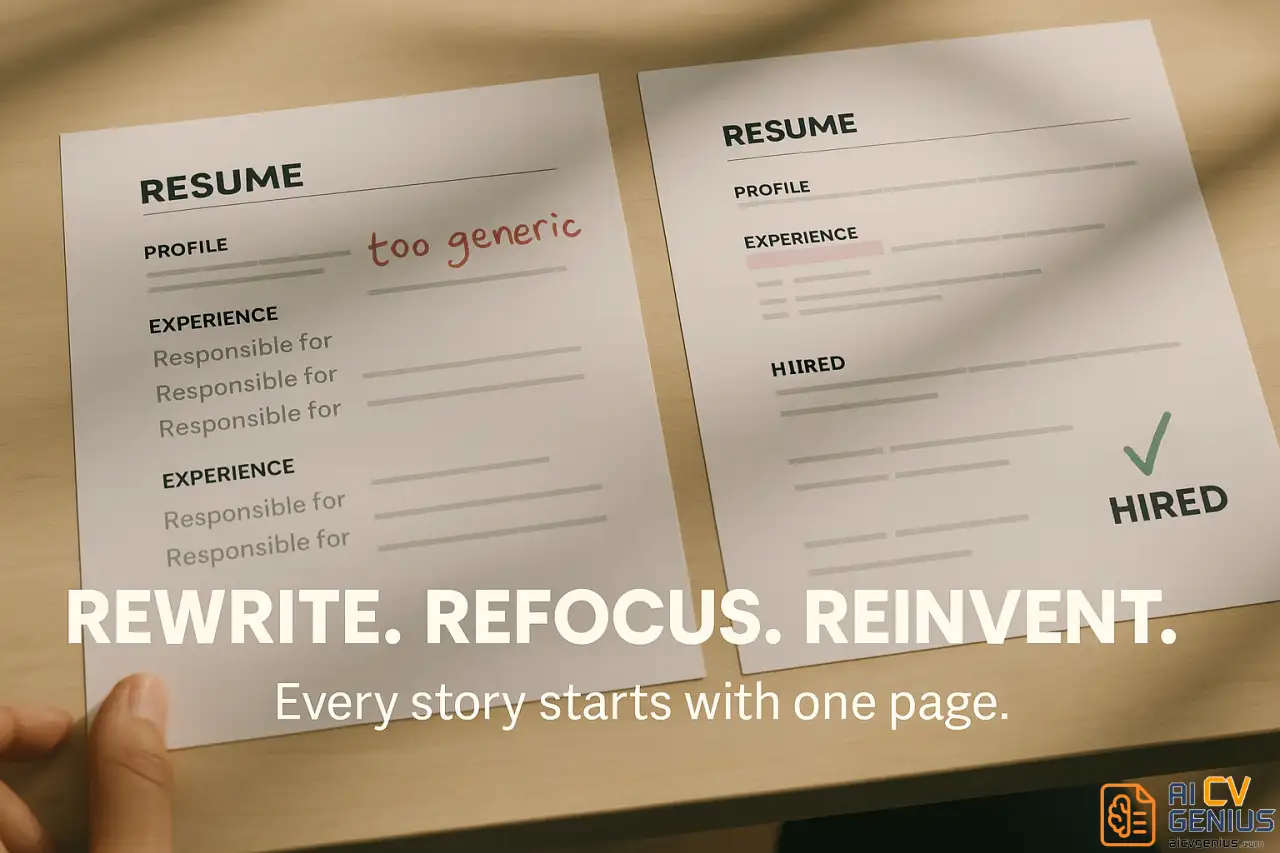
Analyzing these distinct transformations revealed three recurring strategic patterns – consistent with findings from broader data studies (like What Top Candidates Have in Common):
| Core Trait | How It Manifested in the CVs | Why It Proved Effective |
|---|---|---|
| Strategic Clarity & Conciseness | Each CV distilled complex histories into a single, focused page telling one coherent story aligned with the target role. | Recruiters universally prioritize clear, easily scannable messaging; brevity signals confidence and respect for their time. |
| Skillful Reframing & Translation | Experiences from previous, seemingly unrelated roles were explicitly rewritten using the language and context of the new target field. | Demonstrates adaptability, highlights transferable skills, and proactively bridges the perceived experience gap. |
| Confident Presentation | Utilized strong action verbs, clean professional layouts, quantifiable achievements where possible, and avoided apologetic or hesitant language. | Signals genuine readiness for the change, projects professionalism, and builds credibility even without direct industry experience. |
These elements aren’t superficial resume “tricks” or embellishments. They represent fundamental shifts in mindset – transforming a passive job history document into an active, persuasive career narrative. Once you learn to articulate your value proposition from the recruiter’s specific perspective, every line on your CV becomes purposeful evidence, not mere filler.
Checklist: Building Your High-Impact Career-Change CV
Follow these actionable steps to craft a CV that effectively bridges your past experience to your future aspirations:
- ✅ Identify Core Transferable Skills: Analyze your past roles (even non-traditional ones) to pinpoint universally valuable skills like communication, problem-solving, project management, data analysis, leadership, customer engagement, or technical proficiencies.
- ✅ Define Your Single, Consistent Theme: Your CV’s narrative shouldn’t primarily focus on your past job title, but rather clearly articulate your future target role and how your skills align with it. Maintain this focus throughout.
- ✅ Quantify Achievements Rigorously: Even within unrelated roles, find opportunities to measure impact (e.g., increased efficiency by X%, managed budgets of $Y, trained Z number of people, improved customer satisfaction scores by N points). Numbers provide concrete proof.
- ✅ Eliminate Outdated Industry Jargon: Remove technical terms, acronyms, or processes specific only to your old industry that would be meaningless or confusing to recruiters in your new target field. Replace with universally understood language or terminology relevant to the new role.
- ✅ Master the “Action Verb + Specific Context + Measurable Result” Pattern: Ensure every significant bullet point follows this structure to demonstrate clear cause and effect, showcasing your direct contribution.
- ✅ Prioritize Brevity – Aim for One Page: Especially crucial for career changers. A concise, focused one-page CV forces you to highlight only the most relevant qualifications, making it easier for recruiters to quickly grasp your potential fit. Clarity consistently outperforms exhaustive completeness.
- ✅ Include a Dedicated “Projects” or “Relevant Skills” Section: Use this space strategically near the top to showcase coursework, certifications, volunteer work, freelance gigs, or personal projects undertaken specifically to build skills and demonstrate commitment to your new field.
Final Thought: Your Story, Reimagined
Successfully changing careers isn’t merely about acquiring new skills; it’s fundamentally about mastering the art of rewriting your professional language. The individuals who navigate transitions effectively don’t invent entirely new professional identities; they skillfully reframe their existing stories, highlighting the inherent connections between past experiences and future aspirations. Whether your background lies in teaching, customer service, finance, or any other field, your accumulated experience already contains the valuable seeds required for your next professional chapter. Your primary task is to find the right words – and the optimal structure – to make those transferable skills clearly visible and compelling to potential employers in your desired new domain.
That focus on clarity through strategic rewriting is the core philosophy behind FreeResumeHub. If you’re prepared to embark on your own career transformation and need a structured foundation to tell the story of your next chapter, not just recount your last, explore the Resume Templates Finder – featuring layouts meticulously designed to help you articulate your potential and bridge the gap to your future role.