
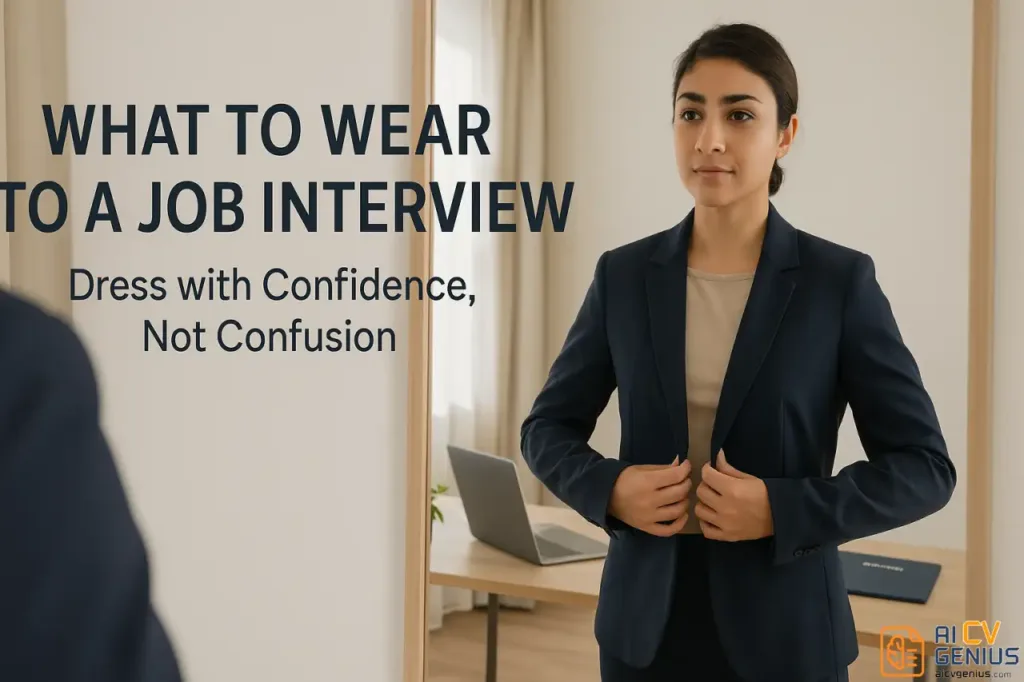
- Core idea: Interview outfit is a judgment signal, it shows self awareness and respect before you even speak.
- Best rule: Match the company’s vibe, then go one notch more polished so you look like a confident colleague.
- Zero stress timeline: Research the company look, build the full outfit, then prep everything the day before so the morning stays calm.
- Common mistakes: Overdressing for casual teams, new shoes, loud patterns, bulky pockets, noisy accessories, all of these steal focus.
- Final check: Do a quick mirror audit for fit and wrinkles, then fix posture and breathing so your confidence leads the conversation.
Introduction: The Strategy of Interview Attire
The First Five Seconds Still Decide the Next Thirty Minutes
Before the interviewer hears your voice, they read your visuals. Knowing what to wear to a job interview is not about vanity; it is about strategic alignment. Your clothing is a non-verbal signal, a form of professional communication that conveys respect, self-awareness, and cultural fit before you have spoken a single word.
Think of it as cognitive fluency. When your outfit aligns with their expectations, you create a sense of ease. You signal that you “get” their world and belong in it. This subconscious alignment makes the interviewer comfortable, allowing them to focus on the substance of your answers, not the distraction of your aesthetics. An outfit that is misaligned – too formal, too casual, too sloppy – creates immediate friction, forcing you to work twice as hard to prove your competence.
This is not about expensive brands or high fashion. It is about intention. It is about proving you understand the context of the role and the environment. This guide will strip away the anxiety and guesswork, providing a clear, strategic system you can rely on for any industry, interview format, or professional setting.
“Your interview outfit is a silent handshake. Its job is to convey respect and alignment, so your skills can do the talking.”
Core Principles: The Foundation of Your Interview Wardrobe
Forget fleeting trends. Two core principles will solve 99% of your interview outfit anxiety.
The Two-Rule Method: Fit First, One-Notch-Up Next
1. Fit Beats Fashion (Every Single Time): A $50 blazer that has been tailored to your shoulders and sleeves looks infinitely more professional than a $500 designer suit that is baggy or tight. “Fit” is the most important element. It signals attention to detail, precision, and self-respect. Before you buy anything new, see if you can tailor what you already own. Ensure trousers have a clean break, sleeves end at the wrist bone, and collars lie flat.
2. The “One-Notch-Up” Rule: This is the golden rule of cultural alignment. Your goal is to dress one level above the company’s everyday dress code. This shows respect for the occasion without making you look out of touch.
- If the office is Casual (jeans, t-shirts), you wear Smart Casual (chinos, dark jeans, a crisp shirt or blouse).
- If the office is Smart Casual, you wear Business Casual (trousers/skirt, a blazer or knit sweater).
- If the office is Business Casual, you wear Business Professional (a full suit or equivalent).
This small elevation signals that you understand their culture but are serious about the opportunity.
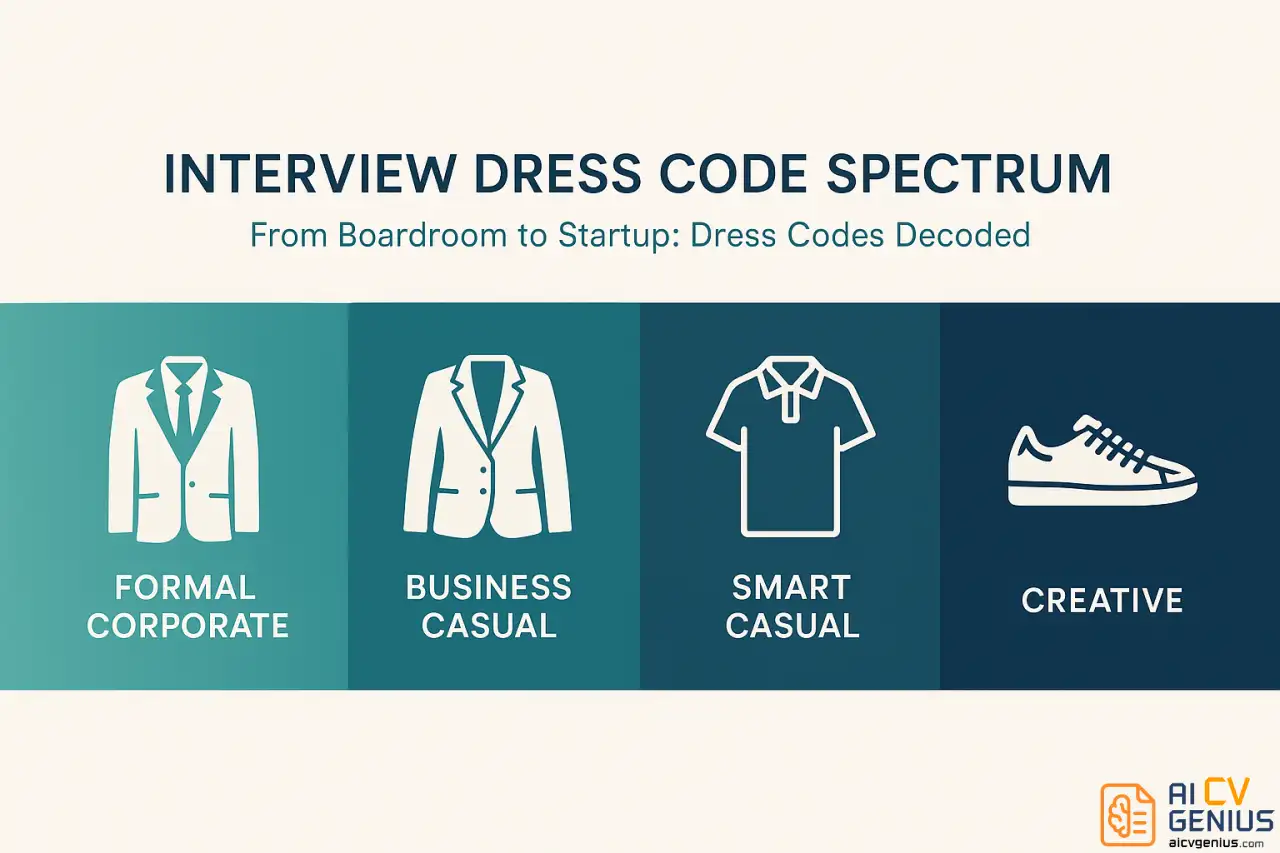
Reading the Room: The Four Dress Code Zones
Before you plan, you must research. Spend 10 minutes “reading the room” digitally. Look at the company’s “About Us” or “Team” page. Check their recent LinkedIn photos or Instagram feed. This will tell you which zone they live in.
| Environment | Everyday Look | Interview Upgrade (One-Notch-Up) | Why It Works |
|---|---|---|---|
| Zone 1: Corporate (Finance, Law, Consulting, C-Suite) | Business formal (suits, ties) | A perfectly tailored suit (navy or charcoal), classic leather shoes, minimal jewelry. | Signals discipline, sobriety, and trustworthiness. The uniform conveys respect for tradition. |
| Zone 2: Business Casual (Most Tech, Marketing, Ops) | Smart casual (chinos, dark jeans, polos) | Blazer + chinos/trousers, crisp collared shirt or blouse, polished leather or suede shoes (e.g., loafers, oxfords). | Looks polished and intentional, but not stiff. “Approachable authority.” |
| Zone 3: Startup / Creative (Design, Media, Small Tech) | Casual (jeans, hoodies, sneakers) | Smart Casual: Clean dark-wash jeans or chinos, a structured shirt, a casual blazer or clean overshirt, minimalist sneakers. | Shows personality and cultural fit, but proves you understand this is a professional meeting. |
| Zone 4: Remote / Hybrid (Any Industry) | Camera-facing polish | A well-fitted top in a solid color, professional neckline, soft lighting, and a tidy, neutral background. | Your upper-body and background become your entire “outfit.” Signals organization. |
Outfit Guidance by Role and Context
Wardrobe & Role-Specific Guidance
Once you have identified your “zone,” building the outfit becomes simple. Focus on creating a reliable “capsule” wardrobe you can deploy on short notice.
A Capsule Wardrobe You Can Reuse for Years
You do not need a massive wardrobe. You need a few high-quality, interchangeable anchors that project confidence. Investing in these five pieces will cover you for 90% of all professional scenarios:
- A Tailored Blazer: This is the ultimate professional tool. A well-fitting blazer (navy or charcoal) instantly adds structure and authority to any outfit.
- Crisp Shirts/Blouses: Two or three well-pressed, neutral-colored shirts (white, light blue) form the foundation of your look.
- Dark Trousers or Skirt: A pair of dark grey or navy trousers (or a knee-length pencil skirt) in a quality material.
- Polished Closed-Toe Shoes: A classic pair of leather or high-quality vegan leather shoes (oxfords, loafers, simple flats, or a conservative heel). Ensure they are clean and scuff-free.
- A Smart Layer: A fine-knit merino wool sweater or vest. This is perfect for layering under a blazer for warmth or wearing on its own for a smart casual look.
From these five anchors, you can build dozens of job interview outfit ideas without panic shopping the night before. These pieces are timeless and signal maturity.
Corporate Roles (Zone 1): Quiet Authority
For finance, law, or top-tier consulting, the standard is unwavering. Your outfit must be conservative and restrained. It is a uniform of trust.
- The Suit: A two-piece suit in solid navy or charcoal grey. Black can be too severe.
- The Shirt: White or light blue solid-color dress shirt or blouse.
- The Details: A conservative tie (if worn), dark socks, and polished dress shoes. Jewelry should be minimal and classic (e.g., small studs, a simple watch).
- ✅ Do: Ensure your trouser hem has a slight “break” over the shoe and that 1/4 inch of shirt cuff shows past the blazer sleeve.
- ❌ Don’t: Wear loud patterns, novelty ties, flashy belts, or anything that distracts.
Tech and Startups (Zones 2 & 3): Business Casual Without the Slouch
This is the trickiest zone. Many candidates misinterpret a “relaxed” culture as a “sloppy” one. This is a fatal error. Your goal is to look polished, approachable, and intentional. This is where business casual interview attire shines.
- The Core: Smart trousers or chinos in a neutral color (grey, navy, beige).
- The Top: A collared shirt (polo or button-down) or a quality blouse.
- The Layer: This is what elevates the look. Add a structured blazer, a smart cardigan, or a clean knit sweater. This instantly makes the outfit look “intentional.”
- The Shoes: Clean leather loafers, oxfords, or minimalist (solid white or black, leather) sneakers are often acceptable. When in doubt, leather is safer.
- ❌ Don’t: Wear your favorite hoodie, a graphic t-shirt, or distressed jeans. You are aiming for “polished colleague,” not “weekend brunch.”
Creative Roles (Zone 3): Taste, Not Theatrics
For design, media, or marketing, recruiters are judging your taste. The interview dress code for creative roles allows for more personality, but it must be anchored in structure. They want to see that you understand aesthetics.
- The Strategy: Wear a “statement” piece, not a “costume.” Anchor one unique item (e.g., a structured jacket in an interesting texture, a bold color-blocked blouse, unique but clean footwear) with a monochrome base (e.g., all black or neutrals).
- The Goal: You want them to think, “That person has good taste.” One creative accent is stylish; three or more become distracting noise. Think “art gallery opening,” not “music festival.”
Remote Interviews (Zone 4): The Upper-Body Rule
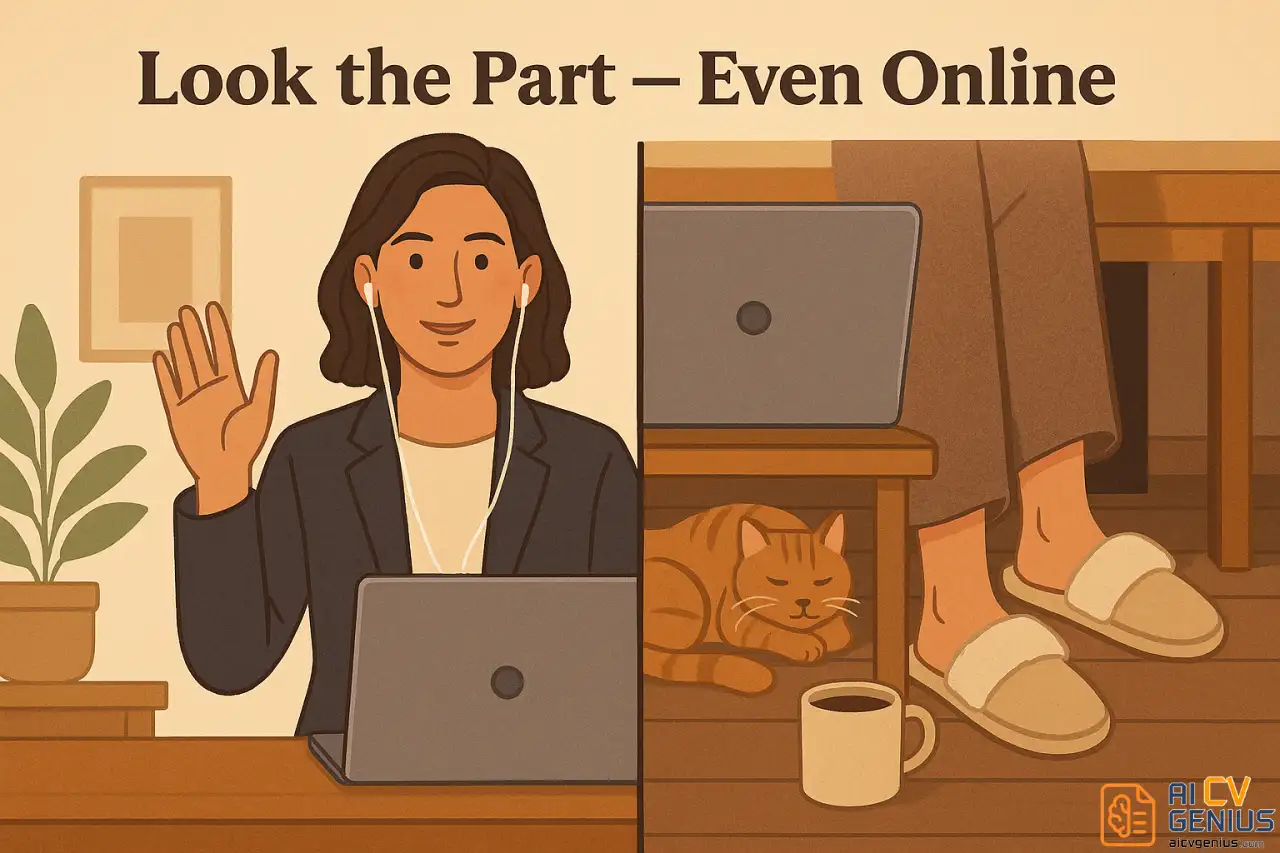
In a virtual setting, your screen is a tiny frame. The interviewer’s focus is magnified on your face, shoulders, and background. Knowing what to wear for a virtual interview is about optimizing this frame.
- Color is Key: Solid colors are your best friend. They read clearly and professionally. Avoid busy patterns (like small checks or stripes) which can “moiré” or flicker on camera. Avoid bright white (blows out highlights) or all-black (can lose detail). Blues, greys, and earth tones are excellent.
- The Neckline: A collar (button-down, polo) or a high, structured neckline (e.g., crew neck, mock neck) frames your face well.
- The Background: A cluttered or distracting background is part of your outfit. It signals disorganization. Curate a simple, tidy background (a clean wall, a bookshelf) or use a subtle, professional blur.
- Pro-Tip: Dress fully (including trousers and shoes). It seems silly, but it changes your posture and psychology. You will sit up straighter and feel more professional, which comes across in your voice.
Gender-Neutral Guidance That Always Lands
Professionalism is not gendered; it is about precision, respect, and intention. These practices work for everyone, regardless of presentation:
- ✅ Fit is King: Tailor at least one blazer and one pair of trousers/skirt. This is the single best investment you can make.
- ✅ Fabric Matters: Choose natural, breathable fabrics (wool, cotton) when possible. They hang better and keep you composed under pressure (and lights).
- ✅ Always Prepared: Steam or iron everything the night before. Wrinkles read as “rushed” and “unprepared.”
- ❌ Avoid Distractions: Over-accessorizing (loud jewelry, flashy watches) pulls attention from your face – and your words.
Style Psychology & The “Quiet Details”
The small things are never small. They are what separate a “good” outfit from a “professional” one.
Color Psychology in Interviews
Color is subconscious communication. It carries subtext before you even speak.
- Navy Blue: The ultimate interview color. It suggests trust, calm, and authority. It is almost universally positive.
- Charcoal/Grey: Implies balance, sophistication, and analytical thinking. It is a strong, neutral alternative to navy.
- Black: Can signal authority and power, but be careful – it can also read as severe, unapproachable, or even arrogant, especially on camera.
- Earth Tones (Olive, Beige, Brown): Feel warm, grounded, and personable. Excellent for creative or team-focused roles.
- Red/Orange: Use with extreme caution. They convey energy and passion but can also be perceived as aggressive or distracting. Best used as a very small accent, if at all.
When in doubt, lean on navy or soft grey. They behave well under all lighting and pair with everything.
Grooming, Fragrance, and the “Quiet Details”
These details complete the story your outfit starts.
- Grooming: Clean, trimmed nails. Controlled, neat hair.
- Fragrance: The rule is simple: wear none. You never know if your interviewer has an allergy or sensitivity. Your scent should be neutral.
- The “Bookends”: Your shoes and your bag (or portfolio) matter more than you think. They are often the last things you check and the first things an interviewer notices. Ensure shoes are clean, polished, and scuff-free. Your bag should be simple, structured, and organized.
- The Lint Roller: Your best friend. A final pass with a lint roller (especially on navy or black) is non-negotiable.
Practical Planning and Troubleshooting
Planning & Checklists
Confidence comes from preparation. Removing last-minute panic is a strategic advantage.
Outfit Planning Timeline (Zero-Stress)
| Timing | Action | Why It Helps |
|---|---|---|
| 3 Days Before | Research the company’s visual culture (LinkedIn, team page). Decide on your “Zone” and “One-Notch-Up” target. | Sets your strategy and prevents guessing. |
| 2 Days Before | Assemble the full outfit. Try everything on, including shoes and accessories. Check for fit, stains, or missing buttons. | Removes all surprises. Gives you time for tailoring or quick fixes. |
| 1 Day Before | Steam or iron everything. Set out the complete outfit, shoes, bag, and lint roller. For remote, test your camera, lighting, and background. | Protects your morning focus for mental prep, not outfit panic. |
| Morning Of | Dress early. Do a final 10-minute mirror audit (see checklist below). Take ten deep breaths and check your posture. | Confidence beats perfection. You are ready to focus on the conversation. |
Common Mistakes and Clean Fixes
- ❌ The Mistake: Overdressing (e.g., full suit) for a casual startup.
- ✅ The Fix: Choose one formal piece. Pair a blazer with smart chinos/dark jeans, not the full suit.
- ❌ The Mistake: Brand-new, unbroken-in shoes.
- ✅ The Fix: Comfort equals poise. Wear them around the house the day before. Discomfort is distracting.
- ❌ The Mistake: Loud patterns or bright whites that look harsh on camera.
- ✅ The Fix: Stick to solid colors in soft blues, greys, or earth tones.
- ❌ The Mistake: Bulky pockets (phone, keys) or jangly accessories.
- ✅ The Fix: Empty your pockets. Keep lines clean and hardware quiet.
Build Your Personal Formula
Memorize one go-to look per zone so you never start from zero. This is your “professional uniform.”
| Zone | Your Go-To Formula |
|---|---|
| Corporate | Navy suit + white shirt/blouse + black/oxblood shoes + minimal watch |
| Business Casual | Blazer + knit sweater or collared shirt + chinos/trousers + loafers |
| Startup/Creative | Structured jacket + monochrome base (e.g., black shirt, dark jeans) + clean sneakers |
| Remote | Solid-color crew neck sweater + soft key light + tidy background |
Checklist: Ten-Minute Mirror Audit
Before you leave (or log on), run this final check.
| Check | Pass? |
|---|---|
| Wrinkle-free, lint-free, stain-free? | ⬜ |
| Fit is sharp? (Shoulders, sleeve length, hem) | ⬜ |
| Colors are neutral/conservative with one intentional accent (at most)? | ⬜ |
| Shoes clean? Bag simple? Hardware quiet? | ⬜ |
| Hair neat? Nails clean? Scent neutral (none)? | ⬜ |
| (Remote) Camera exposure, shadows, and background clean? | ⬜ |
Troubleshooting & Edge Cases
How Recruiters Actually Perceive Appearance
I have asked dozens of recruiters what they really see in those first six seconds. The answer is consistent: posture, polish, and alignment. They do not notice labels or price tags. They notice intention. Your outfit is a frame; your answers are the art. The frame’s job is to disappear. When your clothes support your story, the conversation moves faster to your actual impact and value.
Packing a Backup Plan
Confidence comes from having a contingency. Carry or prep these three failsafes: a lint roller, a spare top (if you are commuting and accident-prone), and a discreet stain-remover stick. For remote calls, add a “panic kit” on your desk: a microfiber cloth for glasses/camera lens, lip balm, and a glass of water (not in a distracting bottle). Small comforts prevent small spirals.
Edge Cases: Weather, Commutes, and Cultural Nuance
- Weather: If it is raining or snowing, protect your silhouette. Wear appropriate boots for the commute, but bring your interview shoes in your bag to change into. A classic trench coat looks professional over a suit; a sleek rain shell works for business casual.
- Commutes: If you bike or have a long commute, pack your shirt/blazer and change on arrival. Arriving sweaty and rumpled is a terrible first impression.
- Cultural Nuance: When interviewing across cultures (especially internationally), default to the most conservative standard (Zone 1 – Corporate). It is always safer to be slightly overdressed than underdressed. Research local business norms beforehand.
Conclusion & FAQs
Putting It All Together
Your outfit will not win you the job. But it removes an unnecessary barrier, allowing your preparation and personality to shine. If you want to dive deeper into what happens after the visuals are set, explore what happens when a recruiter opens your resume, or use the practical edits in how to improve your CV. The principle is exactly the same: make the first glance effortless so the substance can take center stage.
In-Depth FAQs: Your Toughest Outfit Questions
Final Thoughts
Choosing what to wear to a job interview is not about costume; it is about clarity and respect. It is a strategic act of alignment. Fit that flatters, colors that calm, and details that disappear – these elements create a presence that says, “I’ve done the work, and I am ready.”
Dress one notch up, prepare your mind, breathe, and let the conversation carry the rest. If you want to polish the “paper” side of your first impression next, browse our guides on presentation and substance across roles in the career resources hub. Look the part, then prove it.