

- What a personal brand is: Your reputation at work, shaped either intentionally or by random impressions.
- Step 1, get specific: Define one “superpower” you want to be known for, then develop and use it on real projects.
- Step 2, be consistent: Reliability, clear communication, and steady values create trust faster than occasional big wins.
- Step 3 to 4, be visible without bragging: Share progress, document your work, use metrics, and contribute in meetings or written channels.
- Step 5, build it through generosity: Help others, connect people, solve ignored problems, and avoid pitfalls like humble-bragging or stealing team credit.
Your Personal Brand Is What People Say About You When You’re Not There
You already have a personal brand at work whether you actively manage it or not. It’s the reputation you’ve built through your actions, contributions, and how you show up every day.
The question isn’t whether you have a brand – it’s whether you’re intentionally shaping it or letting it form randomly based on other people’s perceptions.
Strong personal brands open doors: you get invited to important projects, considered for promotions, and recommended for opportunities. Weak or unclear brands mean you’re overlooked even when you’re qualified.
Building a personal brand doesn’t require self-promotion or bragging. It requires being consistently good at something specific, making your work visible, and helping others succeed. Here’s how to do it authentically.
Step 1: Define Your “Superpower”
Strong personal brands are specific, not general. You can’t be known for “being good at everything.” You need to be known for being exceptionally good at something specific.
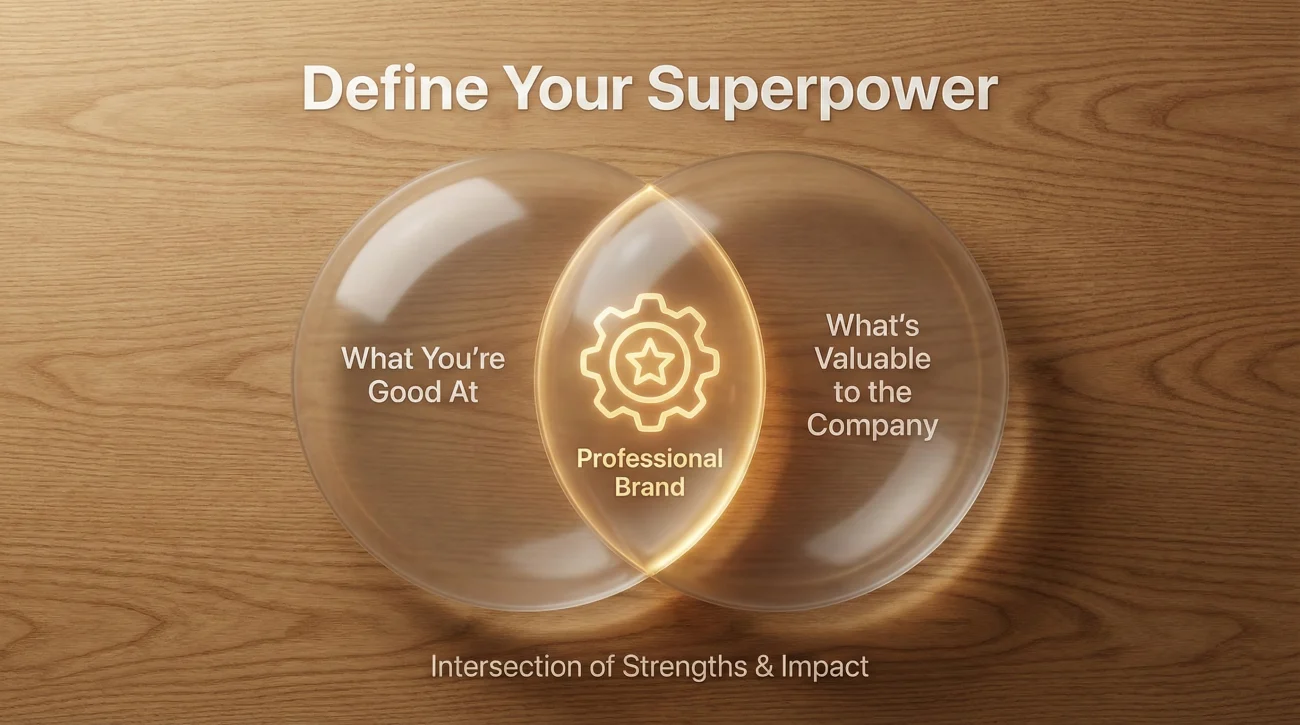
How to Identify Your Superpower
Ask yourself:
- What do people consistently come to me for help with?
- What tasks do I do better or faster than most people?
- What do I naturally gravitate toward in projects?
- What unique combination of skills do I have?
Your superpower is at the intersection of what you’re good at and what’s valuable to your organization.
Examples of Specific Superpowers
- “The person who turns complex data into clear executive presentations”
- “The Excel wizard who automates tedious processes”
- “The calm problem-solver during crisis situations”
- “The bridge between technical teams and business stakeholders”
- “The person who makes projects actually ship on time”
These are specific and memorable. “Good at marketing” is too vague.
Develop It Deliberately
Once you identify your superpower:
- Seek out opportunities to use it
- Get better at it through practice and learning
- Volunteer for projects that showcase this strength
- Share what you learn with others
Deliberate focus makes you the obvious expert in this area.
For comprehensive career positioning strategies, see our complete career guide.
Step 2: Be Consistent (Reliability Builds Reputation)
Personal brands are built through consistent behavior over time, not one-off impressive moments.

Consistent Delivery
Always deliver on commitments:
- Meet deadlines (or communicate early if you can’t)
- Follow through on promises
- Maintain quality standards
- Show up prepared to meetings
Reliability might sound boring, but it’s the foundation of strong professional reputations.
Consistent Communication Style
Develop a recognizable professional voice:
- Clear, concise emails
- Thoughtful questions in meetings
- Data-backed recommendations
- Constructive rather than critical feedback
People should be able to recognize your contributions even without your name attached.
Consistent Values
Stand for something. Maybe you’re known for:
- Always considering the customer perspective
- Advocating for sustainable pace over crunch time
- Pushing for data-driven decisions
- Supporting junior team members’ development
Consistency in values makes you predictable in a good way – people know what you stand for.
Step 3: “Show Your Work” (Not Bragging)
Making your work visible isn’t bragging – it’s professional communication. Your manager and colleagues can’t advocate for you if they don’t know what you’re accomplishing.
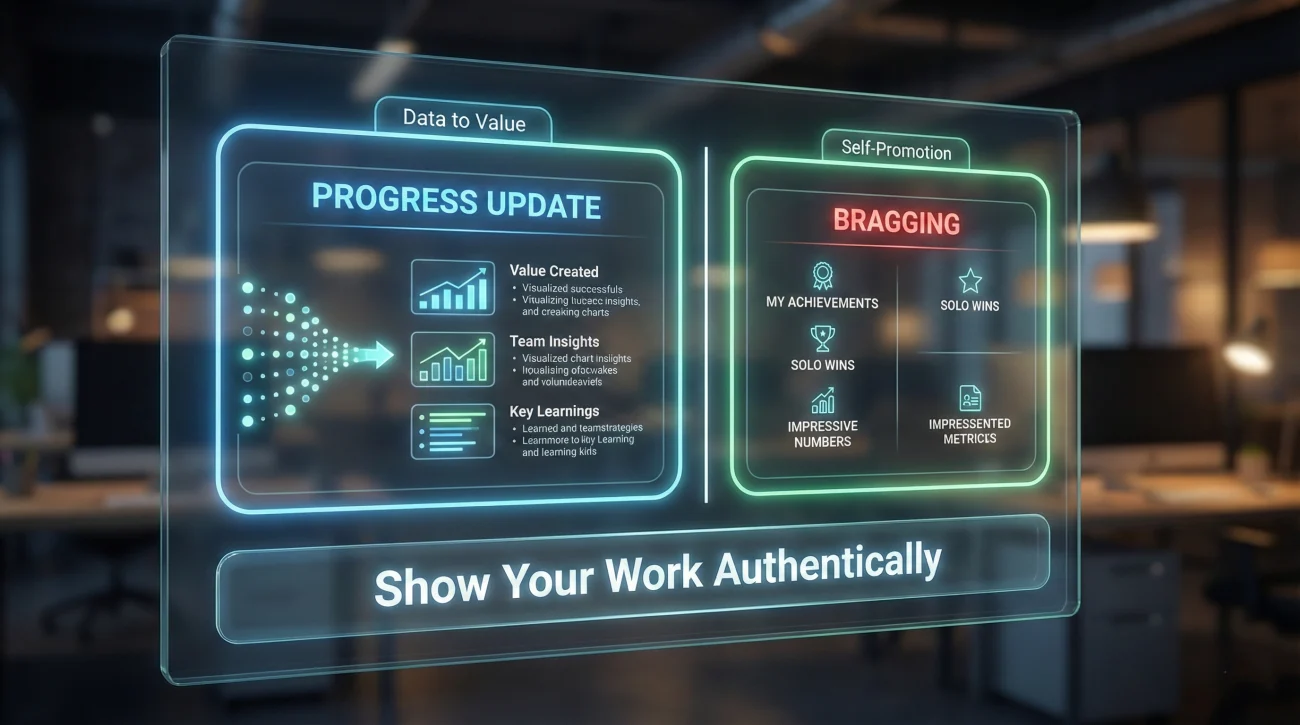
Share Progress Updates
Frame accomplishments as information sharing, not self-promotion:
“I’m amazing at project management and just crushed another deadline.”
Better approach:
“Quick update: The Q3 launch shipped on schedule. We hit all milestones by implementing daily standups and weekly stakeholder check-ins. Happy to share the process with anyone working on similar projects.”
This shares the accomplishment while offering value to others.
Document Publicly
Create visible artifacts of your work:
- Write internal blog posts about problems you solved
- Create templates or frameworks others can use
- Give presentations at team meetings or lunch-and-learns
- Contribute to documentation and knowledge bases
These create lasting visibility beyond the moment you share them.
Give Credit, Take Responsibility
Strong personal brands credit others for wins and take responsibility for failures:
“The project succeeded because Sarah’s design work was exceptional and Mike’s technical implementation was flawless. I just kept us organized.”
This makes you look generous and team-oriented, which strengthens rather than weakens your brand.
Use Metrics Without Ego
Share impact with data, not adjectives:
“The new onboarding process reduced time-to-productivity from 30 days to 14 days. Three new hires this quarter reached full productivity faster than previous cohorts.”
Facts speak louder than self-praise.
Step 4: Speak Up (Even If You’re an Introvert)
Visibility requires being heard, not just doing good work quietly. You don’t need to be the loudest voice – you need to contribute meaningfully.
Strategic Meeting Contributions
You don’t need to talk constantly. Contribute strategically:
- Ask clarifying questions that help the group
- Connect ideas that others have shared
- Offer solutions to problems being discussed
- Share relevant experience or data
Quality over quantity. One insightful comment beats ten mediocre ones.
Prepare Contributions in Advance
For introverts or those uncomfortable speaking up spontaneously:
- Review the meeting agenda beforehand
- Prepare 2-3 points you want to make
- Write down your thoughts before the meeting
- Practice phrasing key contributions
Preparation makes speaking up less stressful and more effective.
Pick Your Moments
You don’t need to contribute to every discussion. Choose topics where you have genuine expertise or insight.
Being known for thoughtful, well-timed contributions is better than being known for constant talking.
Use Written Communication Channels
If meetings aren’t your strength, build visibility through:
- Thoughtful Slack responses to team questions
- Well-written project updates
- Helpful documentation or guides
- Comments on proposals or documents
Written contributions count as visibility too.
For more visibility strategies, explore our professional development guide.
Step 5: Help Others (The Fastest Path to Credibility)
The most powerful personal brand strategy: be genuinely helpful to others without expecting immediate returns.

Share Knowledge Freely
- Mentor junior team members
- Answer questions in team channels
- Create guides for common problems
- Offer to review others’ work
- Share resources and articles relevant to the team
Generosity builds reputation faster than self-promotion.
Be a Connector
Introduce people who could help each other:
“Sarah, you mentioned you’re working on improving our onboarding process. Mike dealt with similar challenges last quarter – you two should connect.”
Connectors become known as valuable network hubs.
Solve Problems Others Ignore
Volunteer for work that helps the team but isn’t glamorous:
- Improve documentation everyone complains about
- Organize knowledge that’s scattered across tools
- Streamline processes that waste everyone’s time
- Take meeting notes so others don’t have to
People remember and appreciate those who make their lives easier.
Recognize Others’ Contributions
Publicly acknowledge good work by teammates:
“I want to call out Alex’s customer research – it completely changed our approach and led to much better outcomes.”
People who shine spotlights on others build strong reputations as team players and leaders.
Common Personal Branding Pitfalls to Avoid
The Humble Brag
“I’m so exhausted from working weekends again, but that’s what it takes to deliver excellence.”
This comes across as inauthentic. Share accomplishments directly or not at all.
Taking Credit for Team Work
Using “I” when you should use “we” damages your brand quickly. Always credit collaborators.
Creating Drama or Controversy
Being “the person who always pushes back” or “the contrarian” might feel like a brand, but it’s usually negative. Challenge ideas constructively, not reflexively.
Being Too Generic
Brands like “hard worker” or “team player” are too vague. Everyone claims these. You need something specific and differentiated.
Inconsistency
If you’re brilliant one week and sloppy the next, people won’t know what to expect. Consistency matters more than occasional excellence.
FAQ
Your Brand Is Your Biggest Career Asset
Your personal brand determines which opportunities come to you, whether you get promoted, and how much influence you have in your organization. It’s not optional – you already have one. The question is whether you’re managing it intentionally.
Building a strong brand doesn’t require bragging or self-promotion. It requires five deliberate strategies: define your specific superpower and develop it, be consistently reliable in delivery and values, share your work as information not boasting, contribute strategically in meetings and discussions, and help others succeed generously.
The most effective personal brands are specific (known for something concrete), consistent (reliable over time), and generous (helpful to others). They’re built through daily actions more than big moments.
Start today by identifying your superpower – the specific thing you want to be known for. Then look for opportunities to demonstrate it, share what you learn, and help others develop the same skills.
Remember: your personal brand is what people say about you when you’re not in the room. Make sure they’re saying what you want them to say by consistently being that person.
For additional career positioning resources, check out our comprehensive career guide.