
- Core distinction: Toxicity is a repeated system problem, not a frustrating week or one tough meeting.
- 7 warning signs: Drama politics, micromanagement, always-on expectations, high turnover, blame culture, secrecy, fear-based management.
- If you cannot leave yet: Set boundaries, document behavior and wins, keep outside networks, and get support so you do not internalize it.
- When to quit: Health declines, growth stops, ethics are crossed, or nothing changes after raising concerns, then exit with a plan and a cushion.
- Career strategy: Keep the role on your resume, focus on results not bitterness, and treat “trust your gut” as a signal to start planning.
A Bad Day Is Different From a Toxic Environment
Everyone has bad days at work. A frustrating meeting, a missed deadline, a disagreement with a colleague – these are normal workplace challenges.
A toxic work environment is different. It’s systematic dysfunction where bad behavior is normalized, people are consistently unhappy, and the culture actively undermines wellbeing and performance.
The distinction matters because occasional problems are manageable. Systemic toxicity requires either significant change or departure.
These seven signs help you identify whether you’re experiencing normal workplace friction or genuine toxicity that’s damaging your career and mental health.
Sign 1: Constant Drama (Gossip and Backstabbing)
Healthy workplaces have occasional interpersonal conflicts that get resolved directly. Toxic workplaces run on gossip, rumors, and people undermining each other behind closed doors.
What This Looks Like
- Information is weaponized – people withhold knowledge to maintain power
- Decisions happen in secret conversations, not transparent meetings
- Credit-stealing is common and rarely addressed
- People talk negatively about colleagues constantly
- Cliques form and exclude others deliberately
- Backstabbing is rewarded or at least tolerated
Why This Is Toxic
You spend more energy navigating politics than doing actual work. Trust erodes completely. Collaboration becomes impossible when everyone’s watching their back.
The Test
In a healthy workplace, you can have honest conversations and disagree respectfully. In toxic environments, honesty gets you targeted and disagreement is seen as disloyalty.
For comprehensive workplace navigation strategies, see our complete career guide.
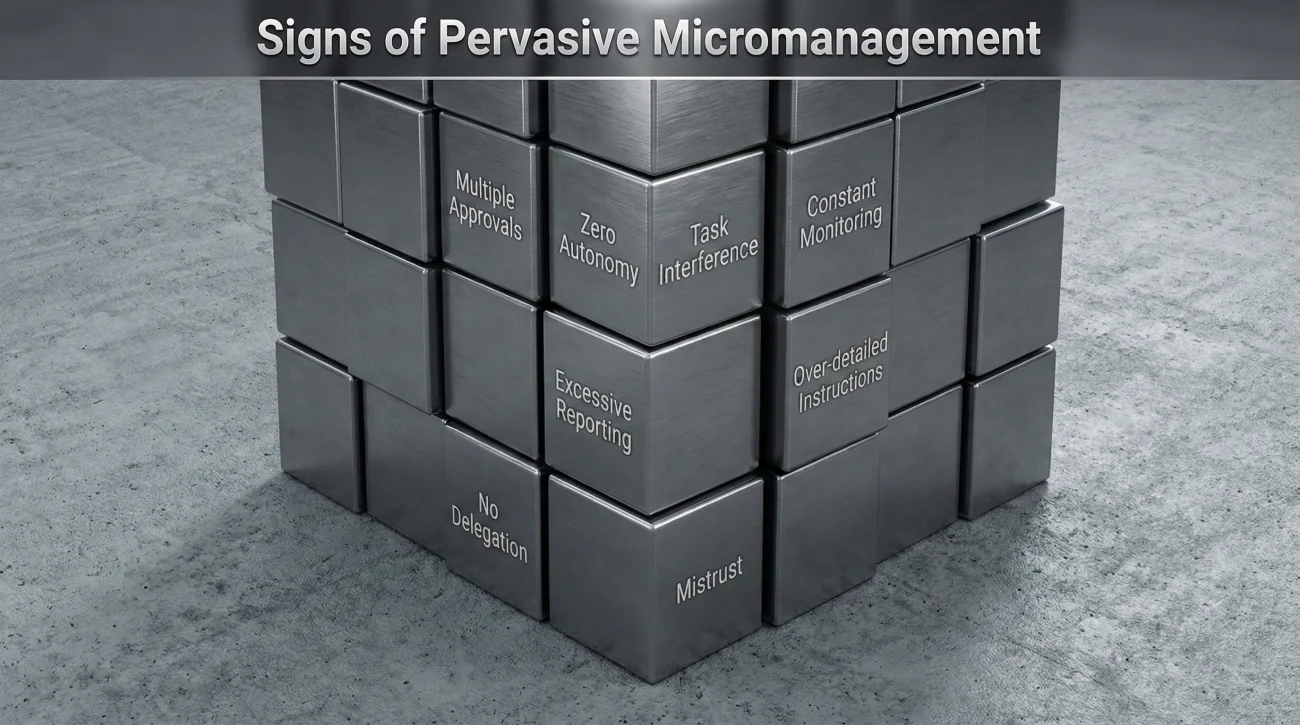
Sign 2: Pervasive Micromanagement
Some managers micromanage specific projects or new employees. That’s different from an entire culture built on distrust and excessive oversight.
What This Looks Like
- Every decision requires multiple approvals
- Managers check in constantly on simple tasks
- People can’t take initiative without permission
- Email CC culture is out of control – everyone copies everyone
- Meetings to prepare for meetings to prepare for actual meetings
- No autonomy even for experienced employees
Why This Is Toxic
Micromanagement signals fundamental distrust. It’s exhausting, infantilizing, and prevents people from developing judgment and skills. Good employees leave because they’re treated like children.
The Test
Can you make routine decisions without approval? Do you have clear authority over your work? If every small choice requires sign-off, that’s toxic micromanagement culture.
Sign 3: No Work-Life Balance (Always-On Expectation)
Occasional crunch times are normal. Permanent expectation of constant availability is toxic.
What This Looks Like
- People regularly work 60+ hour weeks without extra compensation
- Emails and Slack messages expected to be answered at 10pm or weekends
- Taking vacation is discouraged or creates guilt
- Leaders brag about not taking time off
- Burnout is worn as a badge of honor
- Using sick days is seen as weakness
Why This Is Toxic
Unsustainable pace destroys health, relationships, and long-term performance. Companies that glorify overwork have fundamentally broken systems that require heroic effort to function.
The Test
Can you take vacation without working during it? Can you disconnect evenings and weekends without fear? If not, boundaries don’t exist.
Sign 4: High Turnover (People Keep Leaving)
Some turnover is normal. Constant departures, especially of good performers, signals systemic problems.
What This Looks Like
- Multiple people quit within 6-12 months of starting
- Entire teams turn over within a year or two
- Exit interviews reveal similar complaints that never get addressed
- Leadership dismisses departures as people “not being the right fit”
- Positions are constantly open and hard to fill
- Long-tenured employees are miserable but stuck
Why This Is Toxic
High turnover isn’t coincidence – it’s people voting with their feet. If good employees consistently leave, the environment is pushing them out.
The Test
Look at tenure. If most people leave within 1-2 years and those who stay are either leadership or too burned out to job search, that’s a red flag.
Sign 5: Blame Culture (Never Leadership’s Fault)
Healthy organizations see failures as learning opportunities and take collective responsibility. Toxic ones need scapegoats.

What This Looks Like
- When projects fail, leadership blames individual employees publicly
- Mistakes are punished rather than used as learning opportunities
- People hide problems instead of raising them early
- No one takes accountability for systemic issues
- Employees are thrown under the bus to protect leadership
- Risk-taking is discouraged because failure is career-ending
Why This Is Toxic
Blame culture creates fear and prevents innovation. People spend energy covering themselves instead of solving problems. Learning stops.
The Test
When something goes wrong, does leadership ask “what can we learn?” or “whose fault is this?” The latter is toxic.
For more workplace culture insights, explore our professional development guide.
Sign 6: Lack of Transparency (Information Hoarding)
Some information is appropriately confidential. Toxic workplaces hide everything and communicate poorly.
What This Looks Like
- Major decisions are announced suddenly with no context
- Leadership doesn’t explain the “why” behind changes
- Financial information is secret even when employees should know
- People find out about layoffs or restructures through rumors
- Information flows inconsistently – some people know, others don’t
- Questions are discouraged or met with vague non-answers
Why This Is Toxic
Lack of transparency creates anxiety and breeds distrust. People can’t make good decisions without information. Opacity enables dysfunction.
The Test
Does leadership regularly communicate strategy, challenges, and reasoning? Or do you learn about important changes through the grapevine?
Sign 7: Fear-Based Management (People Are Scared)
The clearest sign of toxicity: people are afraid – of their managers, of making mistakes, of speaking up.
What This Looks Like
- Employees are afraid to disagree with leadership
- People avoid bringing up problems or concerns
- Managers use threats (explicit or implied) to motivate
- Asking questions is seen as challenging authority
- Performance reviews are weapons, not development tools
- People feel they could be fired at any moment without cause
Why This Is Toxic
Fear paralyzes organizations. People don’t innovate, don’t share bad news early, and don’t collaborate honestly. Fear-based cultures fail eventually – it’s just a question of when.
The Test
Can you respectfully disagree with your manager without fear of retaliation? If not, you’re in a fear-based culture.
How to Cope If You Can’t Leave Immediately
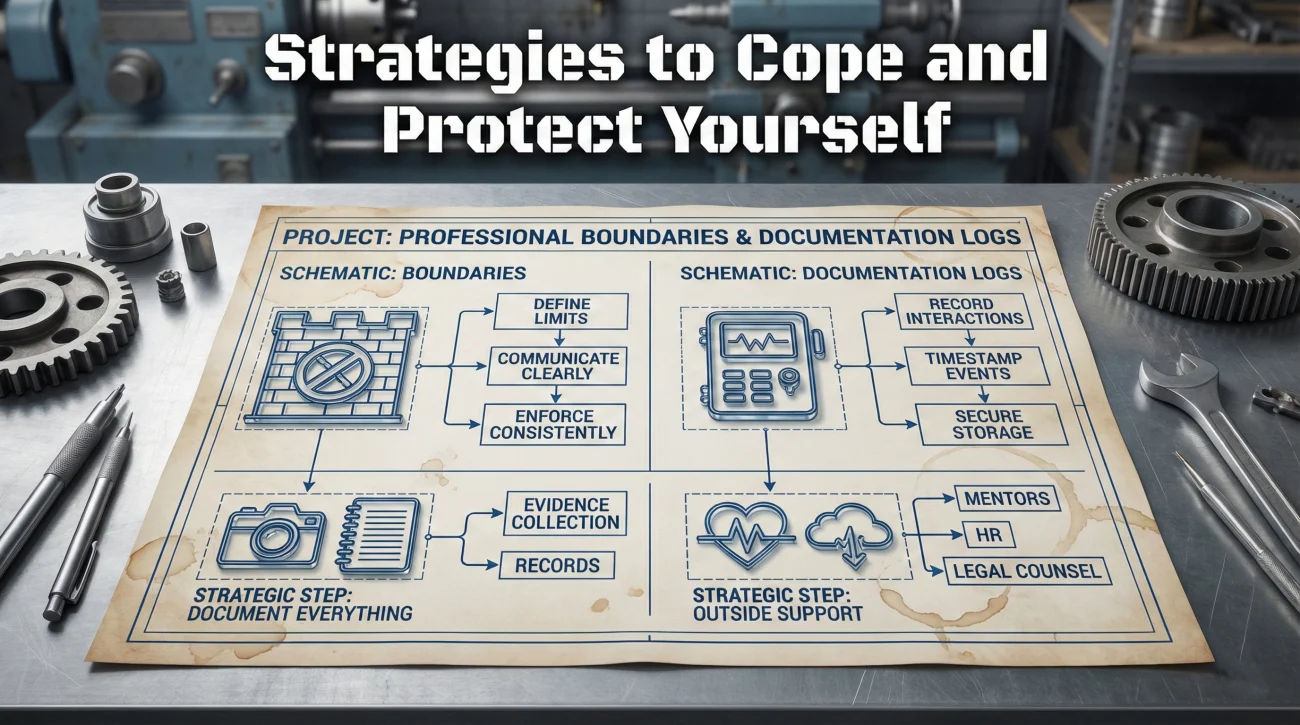
Sometimes you need to stay in a toxic environment temporarily – financial constraints, market conditions, or other factors. Here’s how to protect yourself:
Set Firm Boundaries
- Define work hours and stick to them
- Don’t check email on weekends unless truly urgent
- Take your vacation time
- Say no to unreasonable requests
You may face pushback, but boundaries preserve your mental health.
Document Everything
- Keep records of accomplishments and positive feedback
- Save emails showing unreasonable demands or toxic behavior
- Document instances of harassment or discrimination
- Build evidence in case you need to defend yourself or file complaints
Maintain Outside Networks
- Don’t let toxic workplace consume your identity
- Stay connected to former colleagues and industry contacts
- Keep your resume updated
- Continue developing skills outside work
Get External Support
- Talk to friends, family, or therapist about the stress
- Join professional groups outside your company
- Consider career coaching to plan your exit
- Don’t internalize the toxicity – the environment is broken, not you
When to Quit (Red Lines You Shouldn’t Cross)
Your Physical or Mental Health Is Suffering
If you’re experiencing:
- Anxiety or panic attacks about work
- Insomnia or stress-related physical symptoms
- Depression or feelings of hopelessness
- Substance use to cope with work stress
No job is worth destroying your health. Start planning your exit immediately.
You’re Not Learning or Growing
If toxicity prevents skill development, you’re regressing. Staying too long in stagnant toxic environments creates resume gaps that are hard to explain.
The Work Involves Unethical Behavior
If you’re asked to lie, deceive customers, or participate in illegal activities, leave. Your reputation and potentially legal liability are at stake.
Nothing Changes Despite Complaints
If you’ve raised concerns through appropriate channels (HR, management) and nothing improves, leadership either can’t or won’t fix the culture. Staying longer won’t help.
Have a Plan Before You Quit
- Save money for a financial cushion
- Start job searching while employed
- Network and line up opportunities
- Leave professionally even if the environment was terrible
FAQ
Trust Your Gut – It’s Probably Right
If you’re reading this article wondering whether your workplace is toxic, it probably is. Normal workplaces have problems, but they don’t make you question your sanity or dread Monday mornings consistently.
The seven signs – constant drama, pervasive micromanagement, no work-life balance, high turnover, blame culture, lack of transparency, and fear-based management – indicate systematic dysfunction, not temporary challenges.
You have options. Set boundaries while you’re there to protect your mental health. Document everything. Maintain outside networks and keep skills current. Start planning your exit strategically.
Know when to quit: when your health suffers, when you stop growing, when ethics are compromised, or when nothing changes despite raising concerns. Have a plan, but don’t stay indefinitely hoping toxic cultures will magically improve – they rarely do.
Your career is 40+ years long. A few months or even a year in a toxic environment won’t define you, but staying too long can. Recognize the signs, protect yourself, and move on to healthier environments where you can actually thrive.
For additional career transition resources, check out our comprehensive career guide.