
- Core idea: The old career ladder is too linear for modern work, the career lattice is a better model for long term growth.
- What a lattice means: You can move up, sideways, diagonally, or even step down temporarily to gain skills and options.
- Why it wins: It builds transferable skills, increases resilience when industries change, and prepares you for leadership across functions.
- How it looks in real life: Paths like Engineer to Product to Leadership show how mixed experience creates unique advantage.
- How to use it: Map skills not titles, take strategic lateral moves or cross functional projects, and explain the story behind non linear choices.
The Career Ladder Is Dead – The Career Lattice Is the Future
For decades, career advice focused on climbing the ladder: get promoted to the next level, then the next, moving steadily upward in a single field until you reach the top.
This model is obsolete. Industries change too fast. Skills become outdated. Vertical progression often means hitting ceilings where there simply aren’t enough senior roles for everyone climbing.
The modern career path looks less like a ladder and more like a lattice – a framework where you can move up, across, and diagonally, building diverse skills and experiences that create multiple pathways to success.
Understanding the lattice model changes how you think about career development, lateral moves, and long-term growth.
What Is a Career Ladder?
The traditional career ladder is linear, vertical progression:
- Start as Junior Engineer
- Promote to Engineer
- Promote to Senior Engineer
- Promote to Staff Engineer
- Promote to Principal Engineer
Each step is upward in the same specialty. Success means climbing higher in a single discipline.
Limitations of the Ladder Model
Limited positions at the top: Not everyone can be a VP. The pyramid narrows as you climb.
Narrow skill development: Deep expertise in one area, but little breadth across functions.
Vulnerability to disruption: If your specialty becomes less relevant, you have few transferable skills.
Binary success metric: Either you’re moving up, or you’re stagnating. Lateral moves feel like failure.
Ignores changing interests: Assumes you’ll want to do the same type of work your entire career.
The ladder worked when industries were stable and careers lasted 40 years in one company. That world no longer exists.
For comprehensive career development strategies, see our complete career guide.
What Is a Career Lattice?
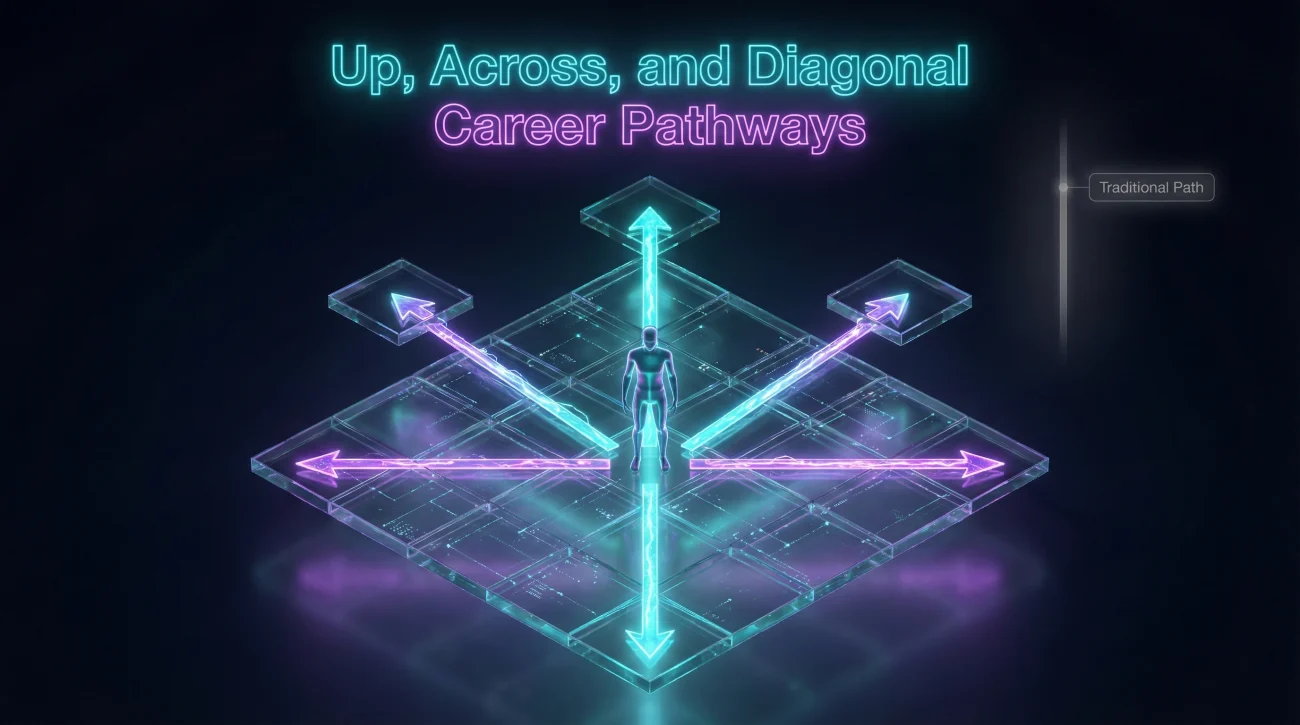
A career lattice allows movement in multiple directions:
- Vertical: Traditional promotions upward
- Lateral: Moves across to different functions or specialties at similar levels
- Diagonal: Moves that combine upward progression with function changes
- Even downward temporarily: Strategic moves to learn new skills or enter new fields
Visualizing the Difference
Career Ladder:
Junior → Mid-level → Senior → Lead → Director
(all in same function)
Career Lattice:
Junior Engineer → Engineer → Product Manager (lateral) → Senior PM (up) → Director of Product (up) → VP of Engineering (diagonal)
The lattice creates multiple pathways to leadership through diverse experiences.
The Lattice Mindset
Success isn’t just upward movement – it’s skill acquisition, experience diversity, and career resilience:
- A lateral move to learn new skills is progress
- Breadth of experience creates leadership capability
- Multiple specialties make you adaptable
- Non-linear paths often lead to unique opportunities
Why the Lattice Is Better Than the Ladder
1. Builds Diverse, Transferable Skills
Moving across functions develops capabilities you’d never gain going straight up:
- An engineer who spends time in product management understands customer needs better
- A marketer who moves to sales learns what actually drives conversions
- A designer who works in research develops deeper user empathy
These cross-functional skills make you more valuable and versatile.
2. Creates Career Resilience
If your primary specialty becomes less relevant, you have alternatives:
- A data analyst with product management experience can pivot to product roles
- A journalist with marketing skills can transition to content strategy
- An accountant with operations exposure can move into finance operations
The lattice protects against obsolescence.
3. Prepares You for Leadership Better
Senior leaders need to understand multiple functions. The lattice builds this naturally:
Someone who’s been an engineer, then product manager, then engineering manager understands both technical execution and product strategy. They’re better equipped for director or VP roles than someone who only climbed the engineering ladder.
4. Eliminates the Ceiling Problem
If there’s no room to move up in your current function, the lattice offers lateral options:
- Stuck at Senior Engineer? Move to Solutions Engineering or Technical Product Management
- Plateaued in Finance? Try Financial Planning & Analysis or Business Operations
- No room in Marketing? Explore Customer Success or Business Development
This maintains momentum when vertical progression stalls.
5. Accommodates Changing Interests
People’s interests evolve. The lattice lets you explore without starting over:
A software engineer who discovers they love teaching can move into developer relations or technical training. A lawyer who gets interested in business can transition to legal operations or compliance management.
The ladder forces you to either stay in your lane or completely restart your career.
For more career flexibility strategies, explore our professional development guide.
Real Career Lattice Examples
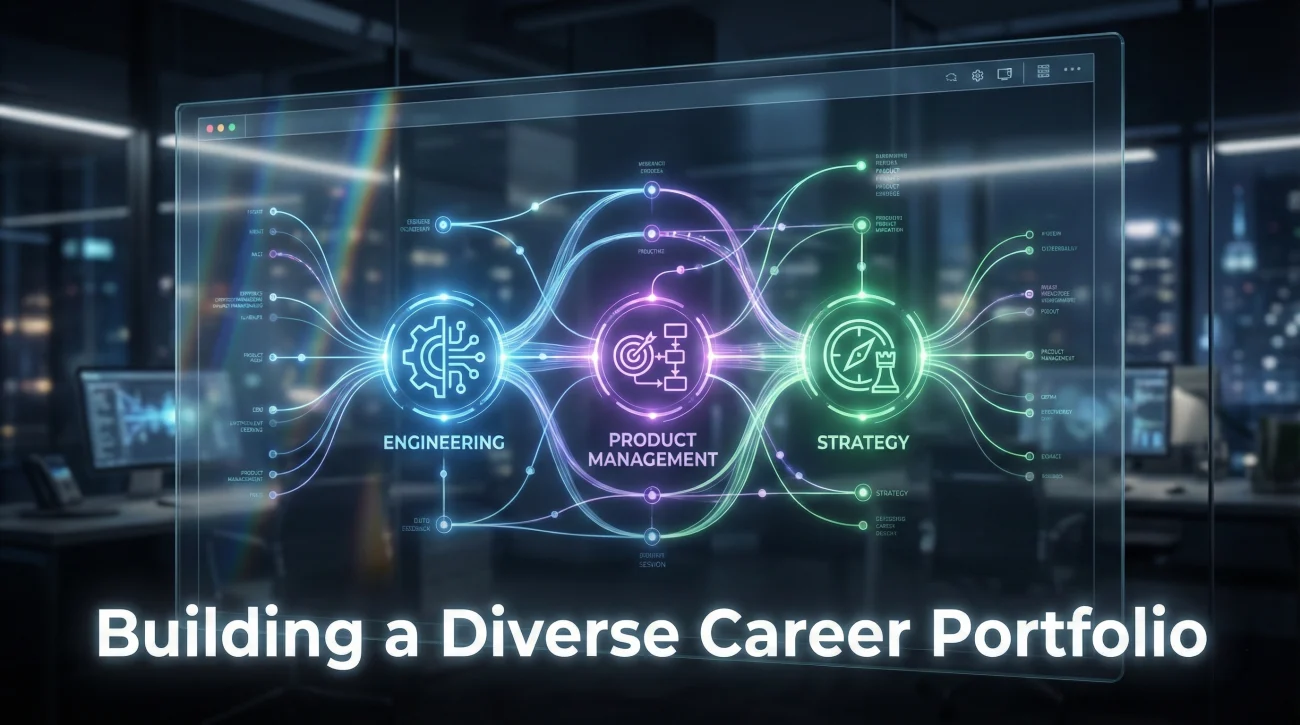
Example 1: Engineer to Product Leader
Year 1-3: Software Engineer (building technical skills)
Year 4-5: Senior Engineer (technical depth)
Year 6-7: Product Manager (lateral move – learning product strategy)
Year 8-9: Senior Product Manager (up)
Year 10-12: Director of Product (up)
Year 13+: VP of Engineering (diagonal – combining technical and product leadership)
Why it works: Engineering background provides technical credibility. Product experience develops business acumen. The combination creates a uniquely qualified technical leader.
Example 2: Marketer to Business Operations
Year 1-3: Marketing Coordinator (learning fundamentals)
Year 4-5: Marketing Manager (up)
Year 6-7: Marketing Operations Manager (lateral – learning systems and analytics)
Year 8-9: Business Operations Manager (lateral – expanding beyond marketing)
Year 10-12: Director of Business Operations (up)
Year 13+: VP of Operations or Chief of Staff (up)
Why it works: Marketing experience develops customer understanding. Operations experience builds process and analytical skills. Together they create strategic business leadership capability.
Example 3: Designer to UX Research to Product Design Lead
Year 1-3: UI Designer (craft skills)
Year 4-5: UX Designer (broader scope)
Year 6-7: UX Researcher (lateral – understanding users deeply)
Year 8-9: Senior UX Designer (diagonal – combining research and design)
Year 10-12: Lead Product Designer (up)
Year 13+: Director of Design (up)
Why it works: Research experience makes design work more strategic and user-informed. The combination differentiates them from designers who never left the craft.
How to Apply Lattice Thinking to Your Career
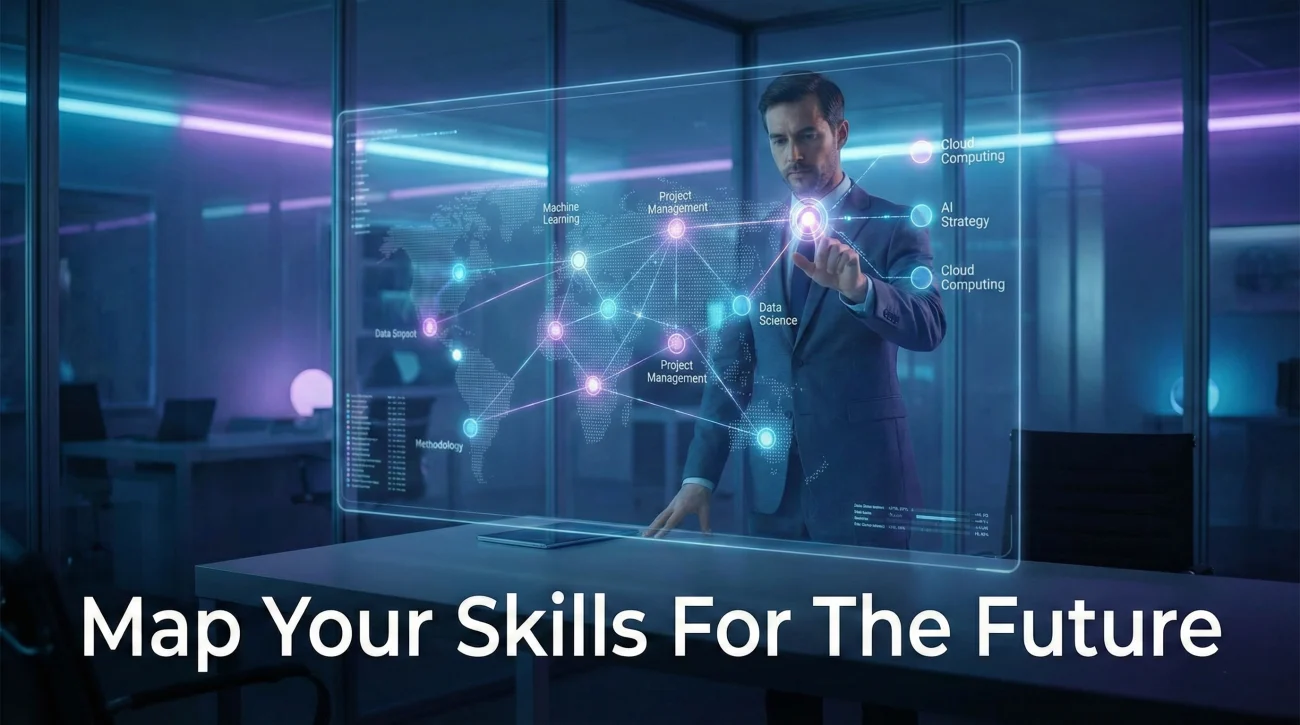
Map Your Skills, Not Just Your Title
Instead of thinking “I’m a Marketing Manager,” think about your skill portfolio:
- Campaign execution
- Data analysis
- Cross-functional coordination
- Stakeholder management
- Budget management
Which skills translate to other roles? Where are the gaps you’d like to fill?
Consider Strategic Lateral Moves
Don’t dismiss lateral opportunities as “not promotions.” Ask instead:
- What skills would I learn?
- How would this expand my capabilities?
- Does this open new career pathways?
- Will I be more valuable afterward?
A lateral move that builds critical skills can be more valuable than a minor promotion in your current function.
Seek Cross-Functional Projects
Before making formal moves, get exposure through projects:
- Volunteer for cross-functional initiatives
- Shadow people in adjacent roles
- Take on responsibilities that span functions
- Build relationships across departments
This tests whether you actually want to move and builds bridges for transitions.
Identify Your Skill Gaps
Where is your resume too narrow?
- All technical, no business exposure?
- All individual work, no people management?
- All internal operations, no customer-facing experience?
- All execution, no strategy?
Strategic lateral moves fill these gaps.
Learn to Explain Non-Linear Moves
When interviewing or explaining your career path, tell the narrative:
“I started in engineering to build technical depth. I moved to product management to understand customer needs and business strategy. Now I’m pursuing engineering leadership because I can combine technical expertise with product thinking to build better solutions.”
Non-linear paths are strengths when you articulate the strategic thinking behind them.
FAQ
Build a Career Portfolio, Not a Single Path
The career ladder assumes your goal is climbing as high as possible in one specialty. The career lattice recognizes that success comes from building a diverse portfolio of skills and experiences.
Lattice thinking changes your perspective: lateral moves aren’t failures or detours – they’re strategic skill-building. Non-linear paths aren’t confusing – they’re differentiating. Breadth isn’t shallow – it’s essential for leadership.
The most successful modern careers rarely follow straight lines. They move up to build seniority, across to gain new capabilities, and diagonally to combine experiences in unique ways.
Start thinking lattice today: identify skills you want to develop that require moving laterally, look for cross-functional projects that expose you to adjacent work, and stop viewing every career decision through the lens of “is this a promotion?”
Your career is a 40+ year journey. A few strategic lateral moves that build critical skills will serve you better than relentlessly climbing a ladder that might not lead where you actually want to go.
For additional career development resources, check out our comprehensive career guide.