

- What Meta hires for: Builders who ship fast, iterate with data, and take initiative instead of overplanning.
- The interview pillars: Product Sense for PM, design, marketing, Execution for data and ops, Technical for engineering, plus behavioral for everyone.
- Behavioral is values based: Tie stories to Move Fast, Focus on Impact, Be Bold, Be Open, and Build Social Value using STAR with measurable results.
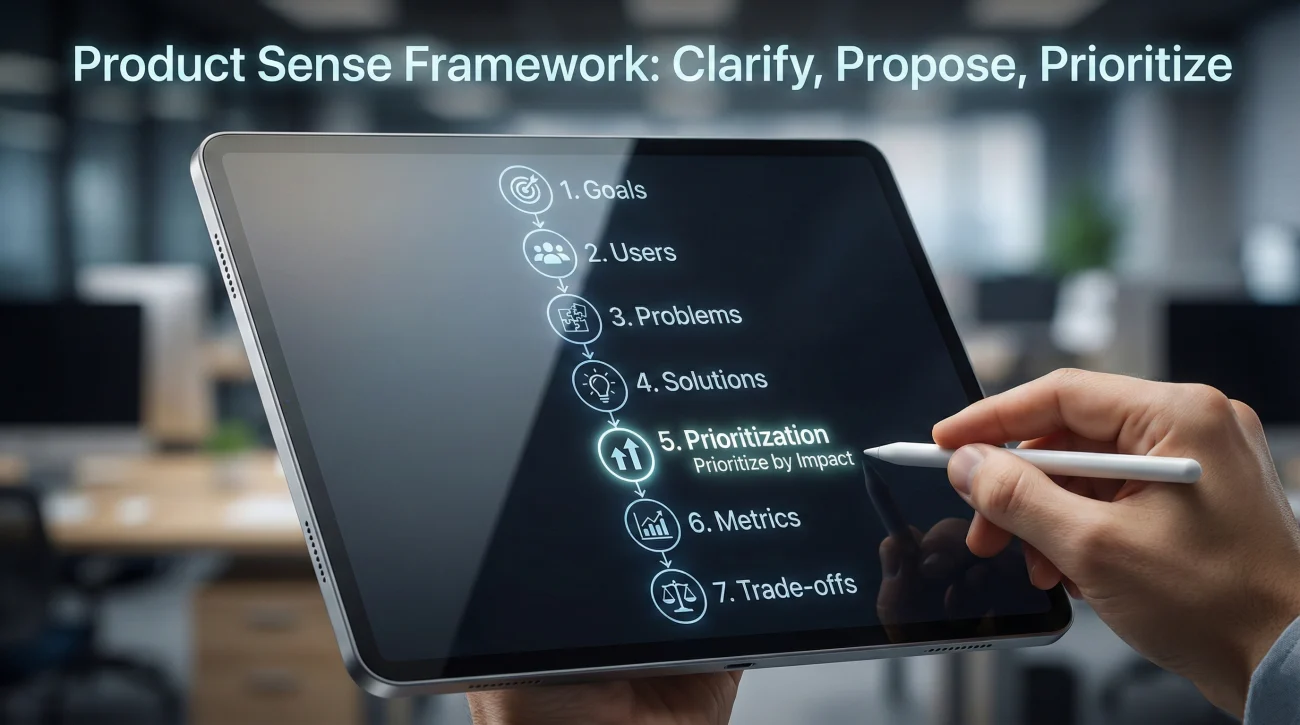
- Product questions have a structure: Clarify goal, define user, identify problems, propose options, prioritize, set success metrics, and discuss trade offs.
- What Meta dislikes and how to avoid it: Analysis paralysis, playing it safe, and weak user focus, so answer with action, experiments, and real metrics.
Meta Looks for “Builders” Who Move Fast
Meta’s interview process centers on one core belief: they want builders who ship products quickly and iterate based on data, not people who overthink and plan endlessly.
The famous motto “Move Fast and Break Things” has evolved to “Move Fast with Stable Infrastructure,” but the bias toward speed and action remains fundamental to Meta’s culture.
Every interview question – whether behavioral, technical, or product-focused – evaluates whether you’re a builder who takes initiative, moves quickly, and learns from shipping products to real users.
Understanding this bias helps you frame answers in ways that resonate with Meta’s values.
The 3 Interview Types (Depending on Role)
Meta structures interviews differently based on function, but all roles include behavioral assessment.
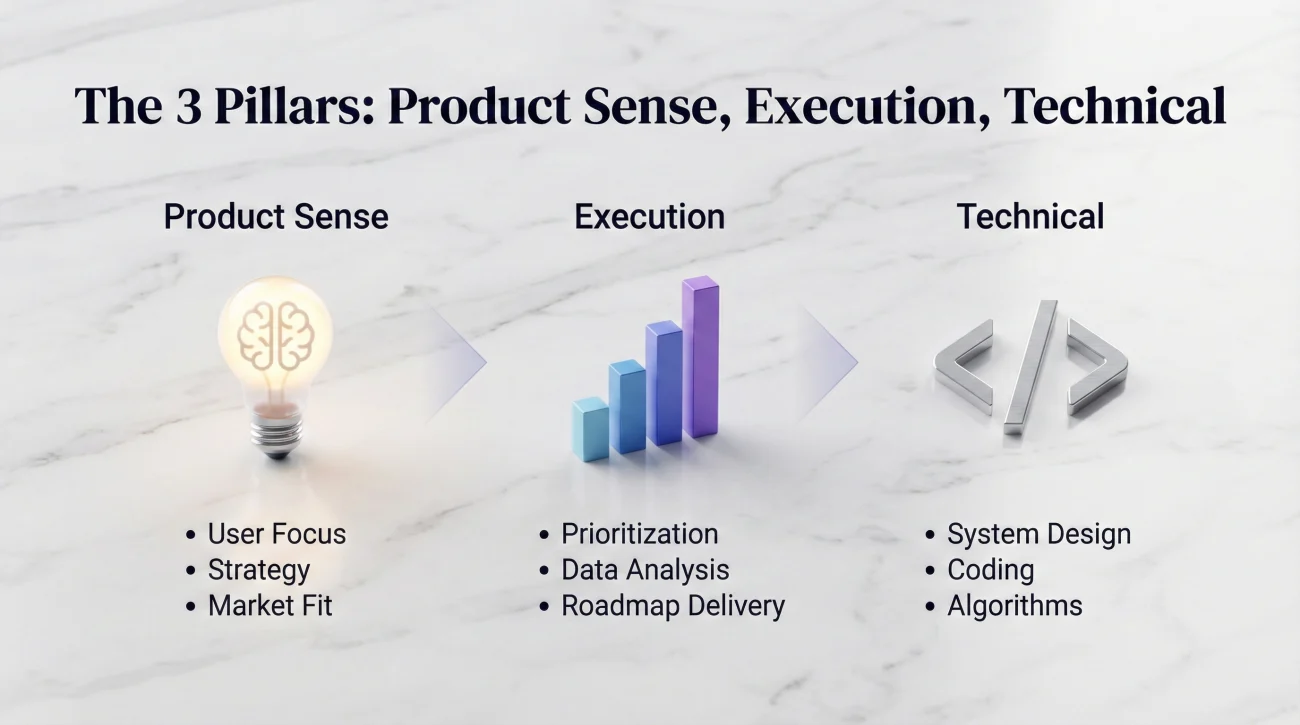
1. Product Sense (For PMs, Designers, Marketers)
What it tests: Product thinking, user empathy, prioritization, and ability to drive clarity from ambiguity.
Format: Open-ended product questions with no single right answer. Interviewers want to see your thought process.
Example questions:
“How would you improve Facebook Stories?”
“Design a product for small business owners on Instagram.”
“Should WhatsApp add a feature for scheduling messages?”
How to approach: Clarify the goal, identify users, understand problems, propose solutions, prioritize based on impact, discuss trade-offs, and define success metrics.
2. Execution / Analytical (For Data, Operations, Analytics)
What it tests: Data fluency, analytical thinking, ability to make decisions from ambiguous information, and execution skills.
Format: Metrics-focused questions, case studies requiring data analysis, or operational problems.
Example questions:
“Instagram engagement dropped 15% last week. How do you investigate?”
“How would you measure the success of Facebook Marketplace?”
“Design a dashboard for Meta’s content moderation team.”
How to approach: Define key metrics, structure your analysis, ask clarifying questions, walk through your logic, make data-driven recommendations, and acknowledge limitations.
3. Technical / Coding (For Engineers, Data Scientists)
What it tests: Coding ability, system design, algorithm knowledge, and technical problem-solving.
Format: Live coding exercises, system design discussions, debugging scenarios.
Example questions:
“Design a news feed ranking algorithm.”
“Implement a function to detect cycles in a graph.”
“How would you design Instagram’s photo upload system at scale?”
How to approach: Think out loud, ask clarifying questions, discuss trade-offs, optimize iteratively, and explain your reasoning.
For comprehensive interview preparation strategies, see our complete interview guide.
Behavioral Questions (The “Ninja” Interview)
All Meta candidates face behavioral interviews evaluating alignment with Meta’s five core values.

Meta’s 5 Core Values
- Move Fast: Bias toward action over perfect planning
- Focus on Impact: Prioritize what matters most
- Be Bold: Take risks and think big
- Be Open: Transparency and directness in communication
- Build Social Value: Create products that benefit people globally
Common Behavioral Questions
Move Fast:
“Tell me about a time you had to make a decision with incomplete information.”
“Describe a situation where you shipped something imperfect to meet a deadline.”
Focus on Impact:
“Tell me about a time you had to prioritize between multiple important projects.”
“Describe your biggest career achievement and its impact.”
Be Bold:
“Tell me about a time you took a significant risk.”
“Describe a project where you pushed for an unconventional solution.”
Be Open:
“Tell me about a time you had to deliver difficult feedback.”
“Describe a situation where you disagreed with your manager.”
Build Social Value:
“Why do you want to work at Meta?”
“How would you use technology to solve a global problem?”
How to Answer
Use STAR format but emphasize speed and impact:
Situation: “We had 2 weeks to ship a feature before a major launch.”
Task: “I needed to balance quality with deadline constraints.”
Action: “I scoped an MVP with core functionality, cut nice-to-have features, and coordinated daily syncs with design and engineering to move quickly. We shipped 3 days early with 80% of the original spec.”
Result: “The feature drove 25% increase in engagement. We added the remaining features in the next iteration based on user feedback. This demonstrates Move Fast – we shipped quickly and iterated based on real data rather than trying to perfect everything upfront.”
Always connect answers back to Meta’s values explicitly.
Deep Dive: Product Sense Questions
Product roles at Meta heavily emphasize product sense. Here’s how to structure answers.
Example Question: “How would you improve Facebook Stories?”
Step 1: Clarify the Goal
“Before I answer, I want to clarify: Are we optimizing for user engagement, creator retention, or a specific business metric? And are we focused on a particular user segment or all Facebook users?”
Step 2: Identify the User
“Let’s focus on casual content creators – people who post Stories occasionally but aren’t power users. I’ll assume our goal is increasing posting frequency.”
Step 3: Understand Problems
“The main barriers I see: friction in creation, uncertainty about audience interest, and limited discovery of their Stories.”
Step 4: Propose Solutions
“Three potential solutions:
1. Templates for quick Story creation (reduces friction)
2. Engagement analytics showing who viewed Stories (reduces uncertainty)
3. Better distribution to close friends (increases reach)”
Step 5: Prioritize
“I’d prioritize templates first – highest impact, lowest development cost. Analytics second for retention. Distribution last as it requires more infrastructure.”
Step 6: Define Success Metrics
“Success metrics: Stories posted per user per week, creator retention at 30 days, and time spent creating Stories.”
The Framework
For any product question:
- Clarify goal and constraints
- Define target user
- Identify user problems
- Generate solutions
- Prioritize by impact and feasibility
- Define success metrics
- Discuss trade-offs
For more product interview strategies, explore our interview preparation guide.
3 Things Meta Hates (And How to Avoid Them)

1. Analysis Paralysis
What it looks like:
“Before making any decisions, I would conduct extensive research, run multiple focus groups, analyze competitors for 6 months, and create a comprehensive 50-page strategy document.”
Why Meta hates it: This signals slowness and over-planning. Meta values moving quickly with good-enough information.
What to say instead:
“I’d start with a hypothesis based on available data, build a quick prototype, test with a small user group, and iterate based on feedback. We can gather more data as we go rather than trying to know everything upfront.”
2. Playing It Safe
What it looks like:
“I prefer low-risk projects with proven ROI where we know exactly what will happen.”
Why Meta hates it: Meta wants bold thinking and willingness to take calculated risks.
What to say instead:
“I proposed we try an unconventional approach that had 50/50 odds of success. We ran a small experiment to validate the concept before scaling. It succeeded and became our most effective growth channel.”
3. Lack of User Focus
What it looks like:
“We built this feature because leadership wanted it and it was technically interesting to implement.”
Why Meta hates it: Meta obsesses over user value and data-driven decisions.
What to say instead:
“We saw in user research that 40% of people struggled with X. We tested 3 solutions, measured which one reduced friction most, and shipped the winner. Post-launch data showed 35% improvement in the target metric.”
Meta-Specific Interview Tips
Emphasize Speed and Iteration
Meta wants to hear about shipping quickly and learning from users, not perfecting things in isolation.
Be Data-Driven
Every answer should reference metrics, user research, or experiments. Meta’s culture is quantitative.
Think at Scale
Meta products serve billions of users. Show you understand challenges of scale and global products.
Focus on Impact
Don’t just describe what you did – emphasize measurable business or user impact.
Be Direct and Honest
Meta values “Be Open” – don’t sugarcoat failures or avoid admitting mistakes. Show what you learned.
FAQ
Meta Wants Builders Who Ship
Meta’s interview process evaluates one fundamental question: Are you someone who builds products quickly, learns from users, and iterates based on data?
Master the three interview types relevant to your role: Product Sense for product-focused positions, Execution/Analytical for data and operations roles, and Technical/Coding for engineering positions. All roles include behavioral assessment against Meta’s five core values.
In behavioral interviews, explicitly connect your stories to Move Fast, Focus on Impact, Be Bold, Be Open, and Build Social Value. Use STAR format but emphasize speed, data, and measurable outcomes.
For product questions, follow the framework: clarify goals, define users, identify problems, propose solutions, prioritize by impact, and define success metrics. Think at scale and be data-driven.
Avoid the three things Meta hates: analysis paralysis, playing it safe, and lack of user focus. Instead, show bias toward action, willingness to take calculated risks, and obsession with user value.
Meta interviews move quickly and expect clear, concise answers. Practice delivering structured responses in under 2 minutes. Be direct, honest about failures, and always explain what you learned.
For additional Meta interview resources, check out our comprehensive career guide.