

- Main point: Your LinkedIn headline must connect your past experience to your new direction, not pretend the past does not exist.
- Best formula: Past background → Transferable skills → Target role, so recruiters instantly understand the pivot.
- What to include: A short past label, 1 to 2 transferable skills, and a clear target role statement that matches what you are applying for.
- Mistakes to avoid: Overusing “Aspiring”, Mentioning unemployment, Being vague, Or hiding your past completely.
- Make it coherent: Pair the headline with a 3 paragraph About that explains why you are switching, what you have done to prepare, and what roles you want.
Your Headline Must Bridge Past and Future
Career changers face a unique LinkedIn challenge: your past experience doesn’t match your future goals. Your resume shows one thing, but you’re pursuing another.
The worst approach: pretending your past doesn’t exist or hiding it entirely. This creates confusion and raises red flags. Recruiters wonder why there’s a gap between your headline and your experience.
The best approach: acknowledge where you’ve been while clearly signaling where you’re going. Your headline should connect your transferable skills from your old career to your new direction.
This guide shows exactly how to write headlines that make career transitions clear and compelling.
The “Pivot” Formula for Career Change Headlines
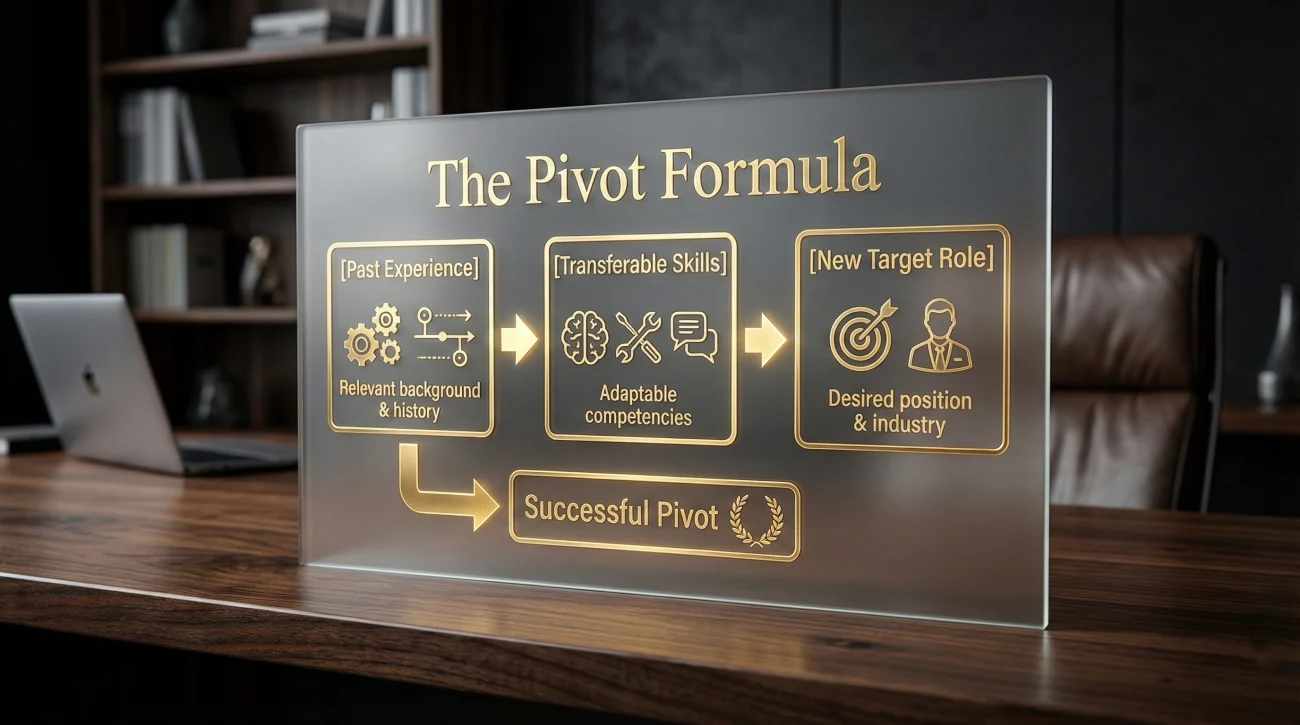
The formula: [Past Experience/Background] → [Transferable Skills] → [New Target Role]
This structure accomplishes three things:
- Acknowledges your background (recruiters see it anyway)
- Highlights relevant transferable skills
- Signals your new career direction clearly
Breaking Down Each Component
Past Experience: Brief reference to your background (e.g., “Former Teacher,” “Ex-Finance,” “Sales Background”)
Transferable Skills: Skills from old career that apply to new one (e.g., “Data Analysis,” “Communication,” “Project Management”)
New Target Role: What you’re pursuing now (e.g., “Transitioning to UX Design,” “Aspiring Data Scientist,” “Seeking Marketing Roles”)
Formula in Action
Generic version:
“Looking for new opportunities in tech”
Pivot formula version:
Former High School Teacher | Skilled in Communication & Problem-Solving | Transitioning to Software Engineering
The second version tells a story: you have relevant skills from teaching, and you’re intentionally moving into software engineering. It invites conversation rather than confusion.
For comprehensive career transition guidance, see our complete career change guide.
10+ Real Career Change Headline Examples

1. Teacher → Software Engineer / Tech
Former Biology Teacher | 8 Years in Education | Transitioning to Software Engineering via Bootcamp | Python, JavaScript, React
Why it works: Shows depth of teaching experience (credibility), mentions specific bootcamp training (commitment), lists relevant tech skills (searchable).
2. Sales → Marketing
Sales Professional Pivoting to Marketing | 5 Years B2B Sales | Strong in Customer Insights & Strategy | Seeking Marketing Roles
Why it works: Emphasizes transferable skills (customer insights, strategy), shows B2B experience carries over, clear about new direction.
3. Finance → Data Science
Ex-Financial Analyst | Transitioning to Data Science | Python, SQL, Machine Learning | Building Portfolio Projects
Why it works: Finance background suggests analytical skills, lists data science tools, “building portfolio” shows active transition.
4. Engineer → Product Management
Software Engineer Moving into Product Management | 6 Years Building Products | Technical Background + Business Strategy
Why it works: Engineering background is valuable for PM roles, combines technical + business skills, clear career progression.
5. Nurse → UX Design
Registered Nurse Transitioning to UX Design | Patient Advocacy → User Advocacy | Completing Google UX Certificate
Why it works: Draws clear parallel (patient advocacy = user advocacy), mentions formal training, creative framing of career change.
6. Military → Operations Management
US Army Veteran | 10 Years in Logistics & Operations | Seeking Operations Manager Roles in Supply Chain
Why it works: Military logistics directly translates to operations, quantifies experience, specific about target role.
7. Lawyer → Compliance / Risk
Former Attorney | 7 Years Corporate Law | Transitioning to Compliance & Risk Management | JD + Business Acumen
Why it works: Legal background is highly relevant to compliance, emphasizes business understanding, credential (JD) adds credibility.
8. Marketing → Data Analytics
Marketing Analyst Moving to Data Science | 4 Years with Google Analytics & SQL | Completing Data Science Bootcamp
Why it works: Already has analytical tools (GA, SQL), bootcamp shows commitment, natural progression from marketing analytics.
9. Customer Service → Sales
Customer Success Manager Transitioning to Sales | 6 Years Client Relations | Strong Communication & Relationship Building
Why it works: Customer success is adjacent to sales, highlights transferable skills, logical career progression.
10. Journalist → Content Marketing
Former Journalist | 8 Years Storytelling & Content Creation | Transitioning to Content Marketing & Brand Strategy
Why it works: Journalism skills (storytelling, content) directly apply to marketing, emphasizes content creation expertise.
11. Accountant → Financial Planning
CPA Transitioning to Financial Planning | 5 Years in Tax & Accounting | Pursuing CFP Certification | Helping Individuals Plan
Why it works: CPA credential adds credibility, shows progression within finance, pursuing relevant certification (CFP).
12. HR Generalist → Technical Recruiter
HR Professional Moving into Tech Recruiting | 4 Years Talent Acquisition | Learning Software Engineering to Better Source Talent
Why it works: HR experience is foundation for recruiting, “learning software engineering” shows extra effort to understand tech roles.
For more career change strategies, explore our career transition resources.
4 Mistakes That Kill Career Change Headlines
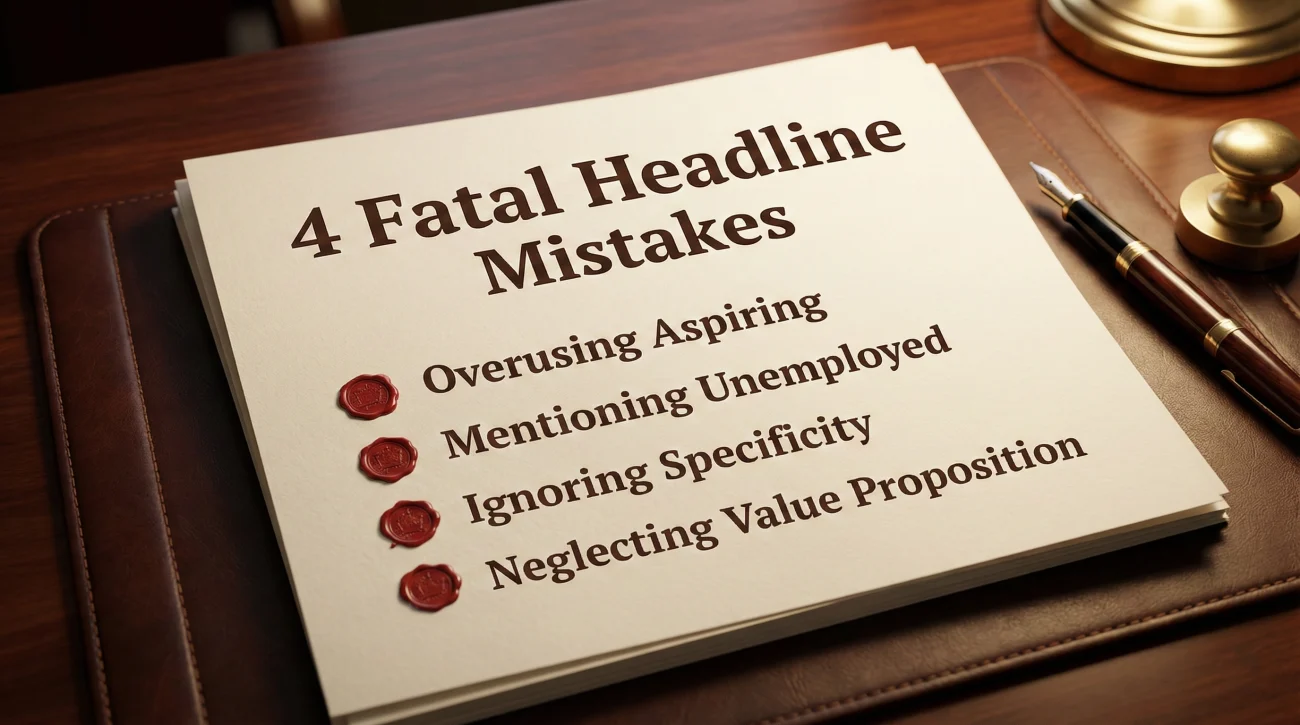
1. Overusing “Aspiring”
One “aspiring” is fine. Multiple aspirational words sound uncertain:
“Aspiring Data Scientist | Hoping to Break Into Tech | Seeking Entry-Level Opportunities”
This sounds desperate and unconfident. Better:
Transitioning to Data Science | Python, SQL, Statistics | Building Portfolio Projects
“Transitioning” is active. “Building portfolio” shows you’re doing the work, not just hoping.
2. Mentioning “Unemployed” or “Looking for Work”
Never include these in your headline:
“Unemployed Marketing Professional Seeking Opportunities”
This signals desperation. Focus on your skills and target, not your employment status:
Marketing Professional | SEO, Content Strategy, Analytics | Seeking Senior Marketing Roles
3. Being Too Vague About Direction
“Open to Anything | Exploring New Opportunities | Fast Learner”
This suggests you don’t know what you want. Be specific about your target:
Finance Analyst Transitioning to Product Management | MBA Candidate | Seeking Associate PM Roles
4. Hiding Your Past Completely
“Junior Software Developer | Learning Python and JavaScript”
If you have 10 years as a teacher but your headline says “Junior Developer,” recruiters will be confused when they see your experience. Better to acknowledge the transition:
Former Teacher Transitioning to Software Development | Completed Coding Bootcamp | Python, JavaScript, React
This creates coherence between headline and experience section.
Using Your Summary to Tell the Career Change Story
Your headline signals the transition. Your About section tells the story of why and how.

3-Paragraph Structure for Career Changers
Paragraph 1: The transition and why
After 8 years teaching high school biology, I’m transitioning into software engineering. I’ve always been drawn to problem-solving and building things – teaching was about breaking down complex concepts, and now I’m applying that same analytical thinking to code.
Paragraph 2: What you’ve done to prepare
I completed a full-stack web development bootcamp where I built 5 portfolio projects using React, Node.js, and MongoDB. I’m comfortable with JavaScript, Python, Git, and responsive design. Currently working on a task management app and contributing to open-source projects.
Paragraph 3: What you’re looking for
Seeking junior software engineering roles where I can contribute to a team, continue learning, and build products that solve real problems. Particularly interested in edtech or companies with strong mentorship programs.
Key Elements
- Acknowledge the change upfront (don’t hide it)
- Explain your motivation (makes it relatable)
- Show what you’ve done to prepare (demonstrates commitment)
- Connect old skills to new role (transferable value)
- Be specific about what you want (helps recruiters place you)
FAQ
Career Changes Require Clear Signaling
Career changers can’t afford vague headlines. Your past experience doesn’t match your future goals, which creates natural confusion. Your headline needs to bridge that gap explicitly.
The pivot formula works: [Past Experience] → [Transferable Skills] → [New Target Role]. This structure acknowledges where you’ve been, highlights what carries over, and signals where you’re going.
The 12 examples above show this formula in action across different transitions. Use them as templates, adapting to your specific background and goals.
Avoid the four common mistakes: overusing “aspiring,” mentioning unemployment, being too vague about direction, or hiding your past completely. Each of these creates problems rather than solving them.
Pair your headline with a compelling About section that tells the story of your transition: why you’re changing careers, what you’ve done to prepare, and what you’re looking for. This combination – clear headline + compelling story – makes your career change understandable and attractive to recruiters.
Update your headline today using the pivot formula. Then use your About section to tell the fuller story. That’s how you turn a career change from a liability into an asset.
For additional career transition resources, check out our comprehensive career change guide.