

- Core idea: Upward feedback is risky but necessary when your manager’s behavior blocks your effectiveness.
- Where and when: Always do it in private 1 on 1s, wait 24 to 48 hours after an incident, and ask permission before you start.
- Best structure: Use SBI, Situation, Behavior, Impact, so the feedback stays specific, factual, and solvable.
- How to phrase it: Use “I” statements and make it collaborative by proposing a better workflow, not attacking their personality.
- How to handle outcomes: Stay calm if they get defensive, reinforce improvement if they change, and if they dismiss it, adjust what you can and decide if the role is still sustainable.
Upward Feedback Is Scary – But Necessary
Your manager does something that undermines your effectiveness. Maybe they micromanage, communicate poorly, or make decisions without input. You’re frustrated, but giving feedback to your boss feels risky.
What if they get defensive? What if it damages your relationship? What if it affects your performance review or career prospects?
These fears are valid. Upward feedback – giving constructive criticism to someone with power over you – requires careful navigation. But avoiding it entirely has costs too: resentment builds, problems persist, and your work suffers.
Good managers want feedback. They know they have blind spots and value employees who help them improve. The key is delivering feedback in ways that make it easy to receive and act on.
Here’s how to give your manager constructive feedback effectively and professionally.
When and Where to Give Feedback
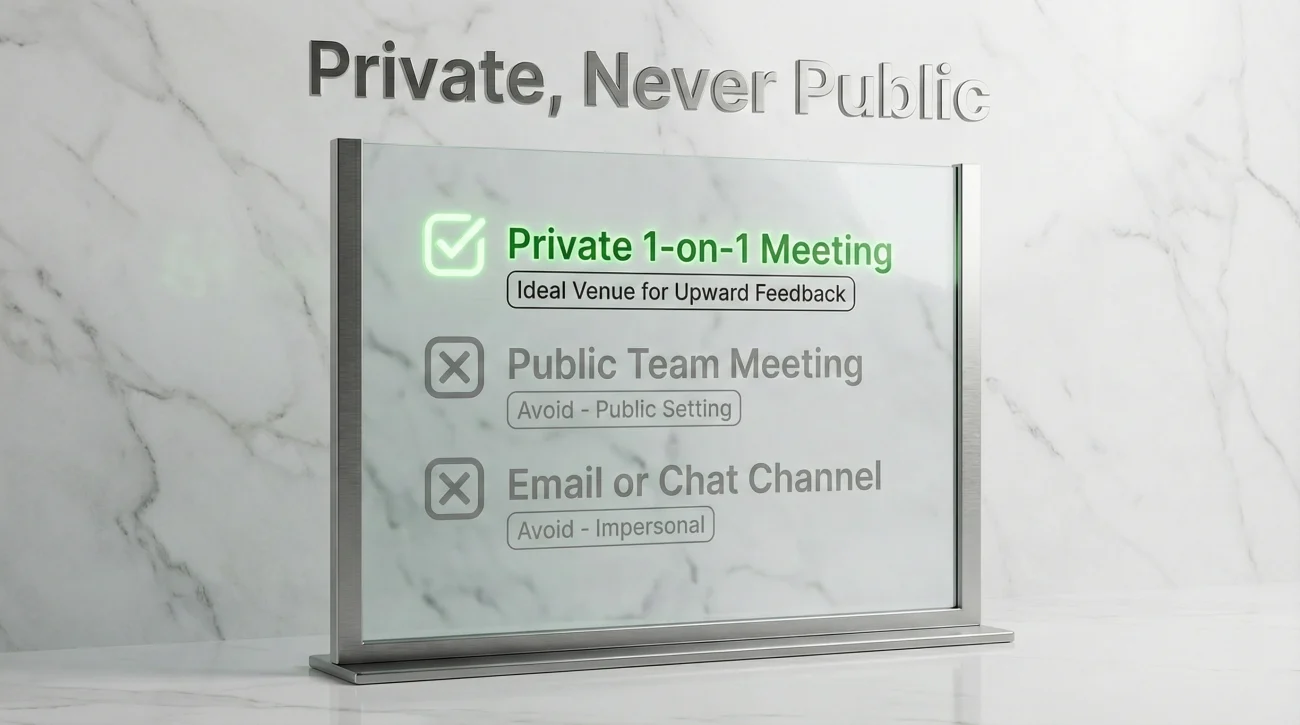
Always Private, Never Public
Give feedback in 1-on-1 meetings, never in group settings. Public criticism of your manager is career suicide, even if you’re right.
Good venues:
- Scheduled 1-on-1 meetings
- Private conversation requested specifically for feedback
- Private Slack or email (though in-person is better)
Never give critical feedback:
- In team meetings
- In front of their manager or peers
- Via CC’d emails
- In public channels or forums
Pick the Right Timing
Don’t give feedback when you’re angry or immediately after an incident. Wait 24-48 hours to cool down and think through how to frame it constructively.
Also avoid giving feedback during obviously stressful periods – end of quarter, major deadlines, or when your manager is visibly overwhelmed.
Ask Permission First
Set the context rather than ambushing them:
“I have some feedback about how we’re working together. Is now a good time, or should we schedule a separate conversation?”
This gives them a chance to prepare mentally and shows respect.
For comprehensive workplace communication strategies, see our complete career guide.
The SBI Formula: Situation-Behavior-Impact
Structure your feedback using the SBI framework. This keeps it specific, objective, and focused on behavior rather than character.
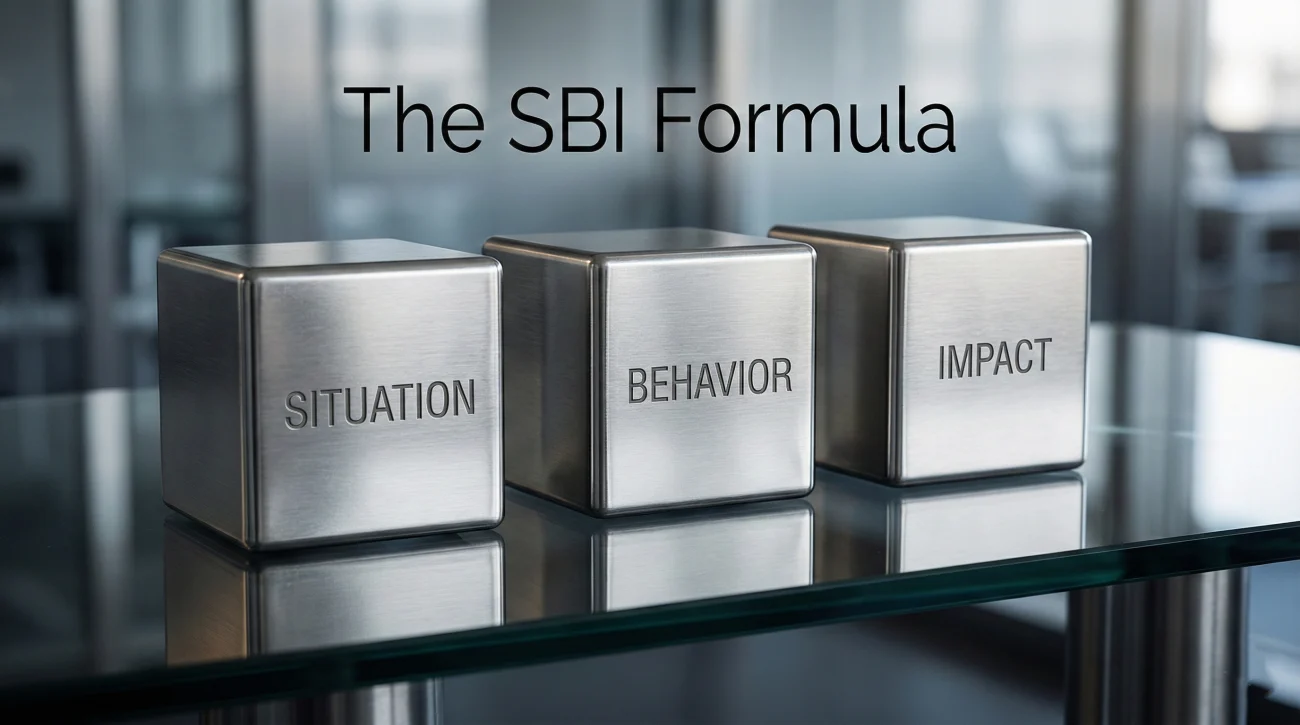
S – Situation (The Context)
Describe when and where the behavior occurred:
“In last Tuesday’s client meeting…”
“During the Project X planning phase…”
Specific situations are easier to discuss than vague generalizations.
B – Behavior (What They Actually Did)
Describe the specific, observable behavior without judgment:
“You interrupted me three times while I was presenting…”
“You checked in on the task five times in one day…”
Focus on what they did, not your interpretation of why.
I – Impact (How It Affected You or the Work)
Explain the effect of the behavior:
“I lost my train of thought and the client seemed confused about our position.”
“I felt like you didn’t trust me to handle the task independently, which made it harder to focus.”
This helps them understand why the behavior matters.
Complete SBI Example
Bad feedback (vague and accusatory):
“You micromanage me and don’t trust my work.”
Good feedback (specific and constructive):
“In the website redesign project last week (Situation), you asked for updates three times per day and wanted to review every small decision before I proceeded (Behavior). This made me feel like you didn’t trust my judgment and slowed down my ability to make progress (Impact). I’d like to discuss how we can find a check-in frequency that gives you visibility without slowing me down.”
The SBI structure makes feedback concrete and solvable.
How to Frame Feedback (Use “I” Statements)
Frame feedback around your experience, not accusations about their character or intentions.

Focus on Your Feelings and Needs
Bad framing (accusatory):
“You don’t listen to my input.”
Good framing (your experience):
“I feel like my perspective isn’t being considered when decisions are made. I’d like to understand how I can contribute more effectively to these discussions.”
Make It Collaborative
Position feedback as solving a problem together:
“I’m struggling with [situation]. Can we talk about how to adjust our workflow?”
This frames it as a mutual challenge, not their failure.
Examples of Good Framing
For micromanagement:
“I work best with more autonomy and check-ins at key milestones rather than daily. Could we try that approach and see if it gives you the visibility you need while letting me work more independently?”
For poor communication:
“I’m finding it hard to prioritize my work when objectives shift without explanation. It would help me if I understood the reasoning behind priority changes so I can make better decisions.”
For lack of feedback:
“I’d really value more frequent feedback on my work. Without it, I’m not sure if I’m meeting your expectations or where I should focus on improving.”
What to Avoid
- Don’t use “you always” or “you never” (absolute statements are rarely true and trigger defensiveness)
- Don’t compare them to other managers (“My last manager did it differently”)
- Don’t make it about their personality (“You’re too controlling”)
- Don’t gather complaints from other team members (“Everyone thinks…”)
Handling Specific Feedback Scenarios

Addressing Micromanagement
“I’ve noticed you check in on my progress multiple times per day. I understand you want visibility, but I work best when I can focus for longer stretches. Could we try daily end-of-day updates instead? That way you stay informed and I can work more efficiently.”
When They Make Decisions Without Input
“I want to understand the thinking behind the decision to change our approach on Project X. When decisions shift without context, it’s hard for me to execute effectively. In the future, could we discuss major changes before finalizing them?”
When They Take Credit for Your Work
“In yesterday’s leadership meeting, the presentation I created was shared without attribution. I’d appreciate if my contributions were credited when my work is presented to leadership. It helps build visibility for my role.”
When Expectations Are Unclear
“I’m getting mixed messages about what to prioritize. Last week you said A was critical, but this week it seems like B is the focus. Can we establish a clear prioritization framework so I’m spending time on what matters most?”
When Workload Is Unrealistic
“I want to deliver quality work on everything you’ve assigned, but the current workload requires 60-hour weeks to complete. Can we discuss what’s most critical and what could be deprioritized or reassigned?”
For more workplace communication strategies, explore our professional development guide.
How to Handle Their Response
If They Get Defensive
Stay calm and empathetic:
“I’m not trying to criticize you. I genuinely want us to work together more effectively. Can we talk about what might work better for both of us?”
If they remain defensive, don’t push. End gracefully:
“I appreciate you hearing me out. Let’s both think about it and revisit in our next 1-on-1.”
If They Receive It Well
Acknowledge their openness:
“Thank you for being open to this conversation. I appreciate that we can discuss these things directly.”
Then follow up on any commitments made to change behavior.
If They Dismiss the Feedback
You tried. Don’t keep pushing if they’re clearly not receptive. Focus on what you can control:
- Adjust your own behavior to work within their style
- Document the feedback and your attempts to address it
- Consider whether this is a deal-breaker for staying on the team
If They Actually Change
Acknowledge improvement explicitly:
“I wanted to say thank you for giving me more autonomy on the recent project. That approach worked much better for me.”
Positive reinforcement encourages continued change.
FAQ
Do It Privately and Respectfully
Giving feedback to your manager feels risky because they have power over your career. But avoiding feedback entirely means problems persist and resentment builds.
The approach that works: give feedback privately in 1-on-1s, use the SBI formula to make it specific and behavioral, frame it with “I” statements focused on your experience, and position it as solving a problem together.
Never give feedback publicly, through third parties, or when you’re angry. Wait 24-48 hours to cool down, think through how to frame it constructively, and ask permission before launching into criticism.
Good managers appreciate employees who help them improve. They want to know when their behavior undermines the team. Bad managers get defensive and retaliate – which tells you important information about whether you want to work for them long-term.
Remember: you’re not attacking them personally. You’re sharing how their behavior affects your ability to do your job effectively. Frame it that way and most managers will receive it well.
Start with smaller feedback on less sensitive topics to build comfort with the process. As trust develops, you can tackle harder conversations.
Your manager isn’t perfect. Neither are you. Creating space for mutual feedback makes both of you better.
For additional workplace communication resources, check out our comprehensive career guide.