

- Main idea: Your manager’s success depends on yours, so rapport is built through clarity and reliability, not schmoozing.
- Start with priorities: Ask what “success” looks like, what goals and KPIs matter, then frame your work and updates around those targets.
- Match communication style: Confirm preferred channel, update cadence, decision loop, and whether they want problems with proposed solutions.
- Make 1 on 1s count: Bring an agenda with wins, blockers, feedback request, and next week alignment, then ask how you can help them.
- Build trust fast: Send proactive weekly updates and request specific feedback early, respond without defensiveness, and apply it quickly.
Your New Manager Wants You to Succeed – Help Them Help You
Here’s something most new employees don’t realize: your manager’s success depends on your success. If you perform well, they look good. If you struggle, it reflects poorly on them.
This means your manager is inherently motivated to help you succeed. They want to give you the resources, guidance, and support you need. But you have to make it easy for them.
Building rapport with a new manager isn’t about being likeable or schmoozing. It’s about establishing clear communication, understanding their priorities, and proving you’re someone who doesn’t require constant hand-holding.
These five tips will help you build a strong working relationship from day one.
Tip 1: Understand Their “Why” (Their Goals and KPIs)
Your manager has specific goals they’re measured on. These might be team metrics, project deadlines, revenue targets, or strategic initiatives. Your work should contribute to these goals.
If you don’t know what your manager cares about most, you’ll waste time on things that don’t matter and miss opportunities to help with things that do.
Questions to Ask
In your first week, ask your manager directly:
- “What are your top priorities for the team this quarter?”
- “What metrics or outcomes are you measured on?”
- “What would make this quarter a success for you?”
- “What keeps you up at night about the team or our work?”
These questions show you’re thinking strategically about how to contribute.
How to Use This Information
Once you understand their priorities, align your work to support them:
- Proactively take on tasks that directly support their goals
- Frame your updates in terms of progress toward their priorities
- Suggest ideas that help them hit their targets
- Avoid spending time on work that doesn’t connect to what they care about
When your manager sees you’re helping them succeed, they’ll invest more in helping you succeed.
For comprehensive new job strategies, see our complete career guide.
Tip 2: Ask About Their Communication Style

Some managers prefer Slack for quick questions. Others want everything in email. Some like daily updates; others prefer weekly summaries. Some want to be looped in on everything; others only want to know about problems.
Working with the wrong communication style creates friction. Too many updates annoy managers who prefer autonomy. Too few updates worry managers who like visibility.
Questions to Ask
“What’s the best way to communicate with you – Slack, email, or in person?”
“How often would you like updates on my projects – daily, weekly, or only when there’s a blocker?”
“Do you prefer to be looped in on decisions before I make them, or after?”
“Should I bring problems to you with potential solutions, or discuss them before trying to solve them?”
Adapt to Their Style
Once you know their preferences, match them:
- If they like Slack → use Slack for quick updates
- If they want weekly summaries → send a consistent Friday update
- If they prefer autonomy → make decisions and update them after
- If they like visibility → keep them informed proactively
Don’t force your manager to adapt to your style. You adapt to theirs.
Tip 3: Make Your 1-on-1 Meetings Valuable

Most new employees treat 1-on-1s as status updates or check-ins. This wastes the time and doesn’t build rapport.
1-on-1s should be strategic discussions where you get guidance, feedback, and alignment on priorities.
How to Prepare for a 1-on-1
Come with an agenda. Don’t make your manager drive the conversation:
My 1-on-1 Agenda:
1. Quick wins this week: [2-3 accomplishments] 2. Blockers or questions: [specific things you need help with] 3. Feedback request: [area where you want coaching] 4. Alignment check: [confirm priorities for next week]
Send this agenda 24 hours before the meeting. This shows you’re organized and respect their time.
Questions That Build Rapport
Use 1-on-1s to understand your manager better:
- “What’s been the most challenging thing for you this week?”
- “Is there anything I can take off your plate?”
- “Am I prioritizing the right things, or should I adjust?”
- “What’s one thing I could do better?”
These questions show you care about their workload and are open to feedback.
What to Avoid
- ❌ Showing up without an agenda
- ❌ Only talking about status updates (send those async)
- ❌ Complaining without suggesting solutions
- ❌ Canceling unless absolutely necessary
Tip 4: Send Proactive Updates (Don’t Make Them Ask)
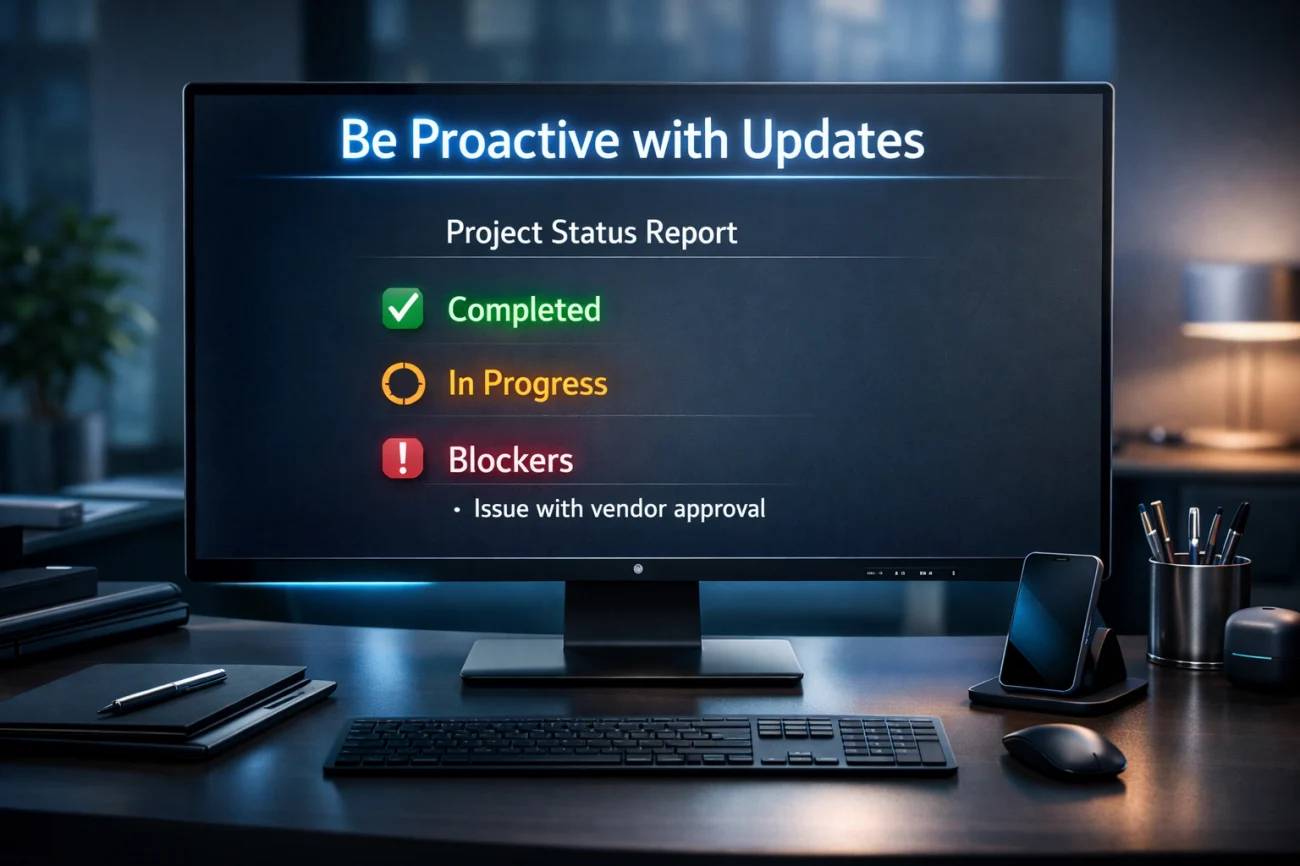
Bad employees make managers chase them for updates. Good employees proactively share progress without being asked.
Proactive updates build trust because they show you’re on top of your work and don’t require micromanagement.
Weekly Update Format
Send a brief weekly update every Friday (or whatever cadence your manager prefers):
Subject: Weekly Update – [Your Name]
Completed this week:
• [Specific accomplishment with outcome] • [Specific accomplishment with outcome] • [Specific accomplishment with outcome]In progress / Next week:
• [Priority task with timeline] • [Priority task with timeline]Blockers:
• [Specific blocker and what you need] (or “None”)
Keep it under 150 words. Managers don’t want essays – they want clarity.
When to Send Updates
- Weekly: Standard update every Friday
- After completing deliverables: “The [project] is complete and live”
- When hitting blockers: “I’m stuck on [X] and need [Y] to proceed”
- Before missing deadlines: “This will take an extra 2 days because [reason]”
Never let your manager be surprised by missed deadlines or problems.
For more communication strategies, explore our professional development guide.
Tip 5: Ask for Feedback Early and Often

Most employees avoid feedback because they’re afraid of criticism. Smart employees seek feedback proactively because it shows they’re committed to improving.
Asking for feedback early builds rapport because it shows humility, self-awareness, and desire to meet your manager’s expectations.
How to Ask for Feedback
Don’t ask vague questions like “How am I doing?” Ask specific questions about concrete work:
“I just finished [specific project]. What’s one thing I could have done better?”
“I want to make sure I’m communicating effectively. Is the level of detail in my updates helpful, or should I adjust?”
“I’m working on improving my [specific skill]. Do you have any advice based on what you’ve seen so far?”
When to Ask
- Week 2: “Based on my first two weeks, what’s one thing I should focus on improving?”
- After deliverables: “What could I have done differently on [project]?”
- Month 1: “What’s going well so far, and where should I focus my development?”
- Before formal reviews: “Any surprises I should know about before my 90-day review?”
How to Respond to Feedback
When you receive feedback:
- Don’t get defensive or make excuses
- Ask clarifying questions if needed
- Thank them for the feedback
- Act on it immediately
- Follow up later: “I’ve been working on [feedback area] – is this better?”
Managers love employees who accept feedback and improve quickly.
The Ultimate Goal: Be “Easy to Manage”
The best compliment a manager can give: “They’re easy to manage.”
This doesn’t mean you’re passive or lack initiative. It means:
- You communicate proactively without being asked
- You solve problems independently but escalate when appropriate
- You understand their priorities and align your work accordingly
- You’re open to feedback and adjust quickly
- You don’t create unnecessary work or drama
The five tips above make you easy to manage:
- Understanding their goals → you work on what matters
- Matching their communication style → no friction in updates
- Valuable 1-on-1s → they get strategic help, not status updates
- Proactive updates → they never have to chase you
- Seeking feedback → you improve without extensive coaching
Be this person and your manager will invest in your growth, give you more responsibility, and advocate for your advancement.
FAQ
Your Manager Is Your Most Important Relationship
Your relationship with your manager determines your experience at the company more than any other single factor. Good managers accelerate your growth. Bad relationships with managers derail careers.
Building rapport isn’t about being liked – it’s about establishing clear communication, proving reliability, and making their job easier.
The five strategies work because they align with what managers actually need: employees who understand priorities, communicate proactively, come prepared to meetings, don’t require constant oversight, and improve based on feedback.
Start implementing these in your first week. Understand their goals and communication preferences. Prepare for 1-on-1s. Send proactive updates. Ask for feedback early. Do this consistently and you’ll build a strong relationship that sets you up for long-term success.
Remember: your manager wants you to succeed. Help them help you by being someone who’s easy to manage and aligned with what they care about.
For additional manager relationship resources, check out our comprehensive career guide.