

- Core message: Getting promoted to manager means proving you can already do the job, not just asking for it.
- Readiness signs: You mentor others, own team problems, lead projects without authority, get pulled into strategy, and prefer team outcomes over solo work.
- Five steps: Act like a manager now, master your current role, tell your boss your timeline, earn a sponsor, and practice delegation early.
- How to move the process: Use 1 on 1s for a gap analysis, build a development plan, and revisit progress quarterly.
- Reality check: This is an identity shift, so be honest about whether you want people leadership or the IC leadership track instead.
Getting Promoted to Manager Requires More Than Asking
Many strong individual contributors want to become managers but don’t understand what it actually takes. They assume that doing excellent work and asking for the promotion is enough.
It’s not. Management is a fundamentally different job from individual contribution. Companies promote people to manager roles when they demonstrate they can already do the job – not when they express interest in learning how.
This means you need to start acting like a manager before you have the title, prove you can succeed in the role, and build support from leaders who will advocate for your promotion.
This guide covers the signs you’re ready for management and the five strategic steps to position yourself for promotion.
Signs You’re Ready for a Manager Role
Before pursuing management, honestly assess whether you’re actually ready. These signals indicate management readiness:
You’re Already Mentoring Others
Junior teammates come to you for guidance without being told to. You naturally coach people through problems rather than just solving problems yourself.
If you enjoy developing others and they improve under your guidance, you have the foundational management skill.
You Take Ownership Beyond Your Role
You see problems affecting the team and solve them even when they’re not your responsibility. You think about team outcomes, not just your individual tasks.
Managers think about the collective – individual contributors think about their deliverables.
You Successfully Lead Projects
You’ve run cross-functional initiatives where you coordinated people without formal authority. They delivered results and stakeholders trusted your leadership.
Project leadership is management practice without the title.
You’re Included in Strategic Decisions
Leadership asks for your input on team direction, hiring, and planning. They value your perspective on problems beyond your immediate work.
This signals they already see you as someone who thinks strategically.
You’re Less Excited by Individual Work
The thought of spending all day coding, writing, or designing sounds less appealing than helping a team succeed collectively.
If you still prefer heads-down individual work to people development, you might not actually want management.
For comprehensive career advancement strategies, see our complete career guide.
Step 1: Start Acting Like a Manager (Before You Have the Title)
Don’t wait for the promotion to develop management skills. Start demonstrating them now.
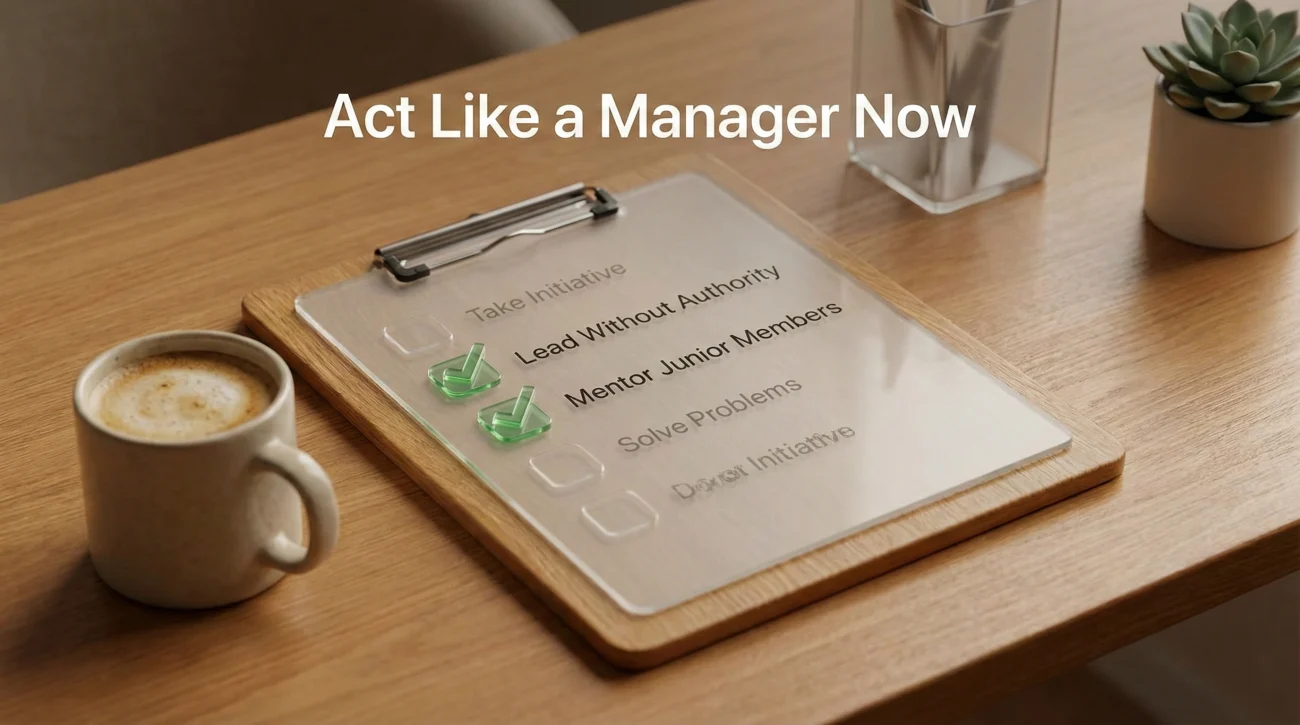
Lead Without Authority
Volunteer to lead projects, working groups, or initiatives:
- Coordinate cross-functional work
- Run retrospectives or planning sessions
- Organize team processes or documentation
- Facilitate meetings and decision-making
This proves you can influence without positional power.
Mentor Junior Team Members
Proactively help less experienced colleagues develop:
- Offer to review their work and provide feedback
- Share knowledge through documentation or training
- Help them navigate company politics and norms
- Advocate for their contributions in meetings
Your manager will notice if junior people credit you for their growth.
Think About Team Success
In meetings, focus on team outcomes rather than just your work:
“I finished my piece, but I notice the project is blocked because design hasn’t finalized the mockups. How can I help unblock that?”
This shows you think like a manager, not just an individual contributor.
Solve Team-Level Problems
Address issues that affect everyone but no one owns:
- Improve documentation everyone complains about
- Streamline inefficient processes
- Organize knowledge scattered across tools
- Clarify ambiguous responsibilities
Managers solve systemic problems, not just individual tasks.
Step 2: Master Your Current Role First
You can’t get promoted to manager if you’re struggling as an individual contributor. Excellence in your current role is the baseline.

Consistently Exceed Expectations
Be the person who:
- Delivers high-quality work on time
- Requires minimal oversight
- Solves problems independently
- Makes others’ jobs easier
If your manager still needs to closely manage your work, you’re not ready for promotion.
Become the Expert
Be recognized as one of the strongest individual contributors on the team. People should come to you for technical or domain expertise.
Companies promote proven performers, not people still figuring out the basics.
Get Strong Performance Reviews
Consistently high ratings over multiple review cycles prove sustained excellence. One good quarter isn’t enough – show a pattern.
Step 3: Tell Your Boss Explicitly
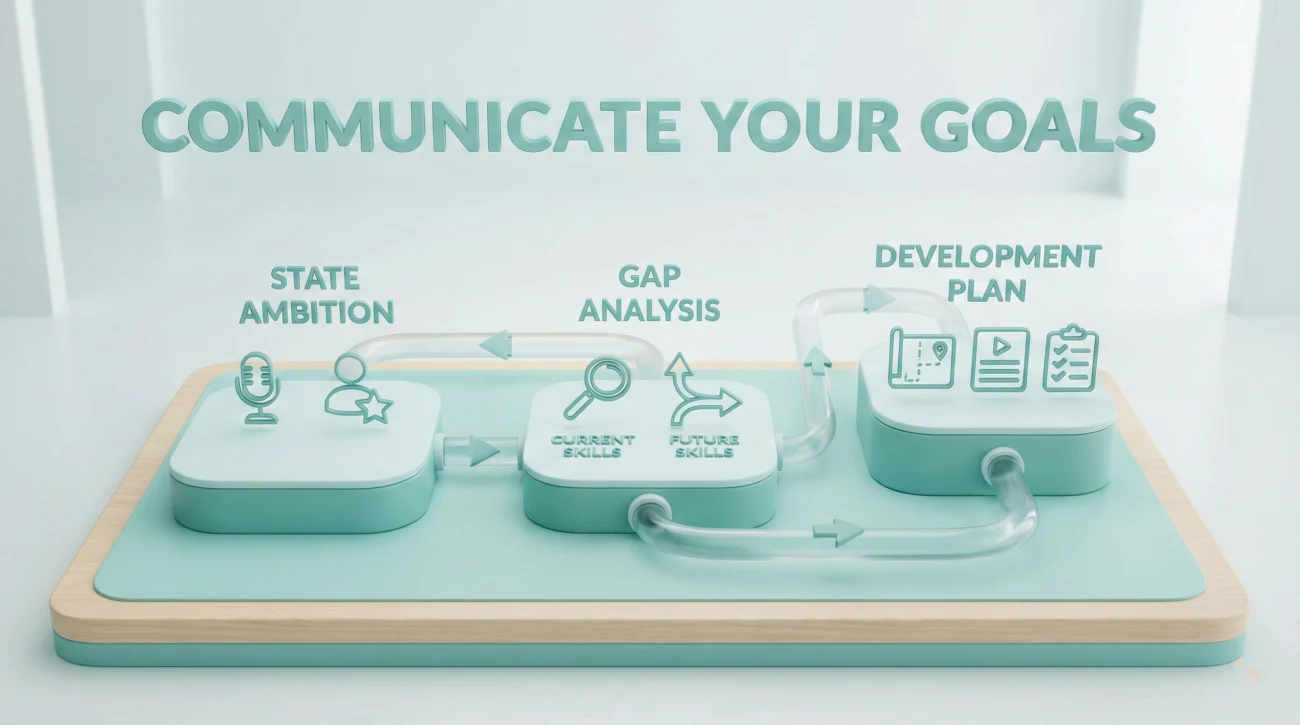
Don’t assume your manager knows you want to move into management. Many people don’t. Be direct about your goals.
How to Start the Conversation
In a 1-on-1, raise it as a development discussion:
“I wanted to talk about my career development. I’m interested in moving into a management role in the next 12-18 months. What skills or experiences would I need to develop to be considered for that path?”
This frames it as long-term development, not demanding immediate promotion.
Ask for the Gap Analysis
Get specific feedback on what stands between you and promotion:
“What’s the gap between my current performance and what you’d expect from someone ready for a manager role?”
This gives you a concrete roadmap for improvement.
Create a Development Plan
Work with your manager to build a plan:
- Skills to develop (delegation, giving feedback, strategic thinking)
- Projects to lead that demonstrate management readiness
- People to shadow or learn from
- Timeline for reassessing readiness
Document this plan and track progress in your 1-on-1s.
Revisit Regularly
Check in quarterly on progress toward management readiness. Don’t let it become a one-time conversation that gets forgotten.
For more career conversation strategies, explore our professional development guide.
Step 4: Find a Sponsor
Mentors give advice. Sponsors actively advocate for your promotion in rooms you’re not in. You need both, but sponsors matter more for promotions.

Who Makes a Good Sponsor
Look for senior leaders who:
- Have influence in promotion decisions
- Know your work well enough to advocate credibly
- Have successfully sponsored others’ promotions
- Are invested in your success
Your direct manager can be a sponsor, but having additional sponsors at higher levels is powerful.
How to Earn Sponsorship
You can’t ask someone to be your sponsor – you earn it through performance:
- Deliver exceptional results on high-visibility projects
- Make your potential sponsor look good to their leadership
- Solve problems they care about
- Build trust through reliability and discretion
Sponsorship is granted, not requested.
Increase Visibility
Sponsors can’t advocate for you if they don’t know what you’re doing:
- Volunteer for cross-functional projects with executive visibility
- Present at broader company meetings or forums
- Share accomplishments in appropriate channels
- Build relationships with senior leaders through quality work
Step 5: Learn to Delegate (Now, Not Later)
The hardest management skill for high-performing individual contributors: letting others do work you could do better yourself.
Practice Delegation Before You’re a Manager
Look for opportunities now:
- When mentoring someone, have them do the work with your guidance instead of doing it for them
- When leading a project, distribute tasks rather than taking everything yourself
- When someone asks for help, coach them to the solution instead of providing the answer
Resist the Urge to Perfect Everything
As a manager, your job is ensuring work gets done well enough, not doing everything perfectly yourself.
Practice accepting “good enough” when appropriate. Perfect is often the enemy of done.
Build Trust in Others’ Abilities
If you don’t trust anyone else to do quality work, you’ll struggle as a manager. Start building that trust now by:
- Giving people challenging assignments
- Providing coaching instead of taking over
- Accepting different approaches than yours
- Celebrating when others succeed without your involvement
Measure Success Differently
Individual contributor success: “I shipped X”
Manager success: “My team shipped X, and they learned Y in the process”
Start thinking in terms of team outcomes plus development, not just your personal output.
This Is an Identity Shift, Not Just a Title Change
Moving into management isn’t a simple promotion – it’s a career change. You’re leaving individual contribution behind.
Ask Yourself Honestly
- Do you actually want to manage people, or do you just want the title and pay?
- Are you willing to give up hands-on work to enable others?
- Can you find satisfaction in others’ success rather than your own output?
- Are you prepared to have difficult conversations and make hard decisions?
If the answers are no, consider the individual contributor leadership track instead (senior IC, staff engineer, principal roles).
Management Isn’t Always Permanent
Some people try management and discover they prefer individual contribution. That’s fine – you can go back. The experience still provides valuable perspective.
But go into it with realistic expectations about what the role actually entails.
FAQ
Earn the Promotion Before You Get It
Getting promoted to manager requires proving you can already do the job. Companies promote people who are demonstrably ready, not people who express interest in learning.
The five steps create a strategic path: start acting like a manager before you have the title, master your current individual contributor role completely, tell your boss explicitly about your management goals, find sponsors who will advocate for you, and learn to delegate work now rather than later.
Watch for the signs you’re ready: you’re already mentoring others, taking ownership beyond your role, successfully leading projects, included in strategic decisions, and less excited by pure individual work than by helping teams succeed.
Remember this is an identity shift, not just a title change. Management is a different career from individual contribution. Be honest with yourself about whether you actually want to manage people versus just wanting advancement.
Start today by identifying one project you can lead or one person you can mentor. Build the evidence that you’re ready for management through consistent demonstration, not just conversation.
The promotion will follow when you’ve made it obvious that you’re already performing at the next level.
For additional promotion and career advancement resources, check out our comprehensive career guide.