
- Avelyne used a stylish Canva resume and applied widely with zero replies: The real problem was not her skills, it was that ATS could not read the file correctly.
- Canva resumes fail because they are built like graphic designs: Text boxes, sidebars, icons, headers/footers, and non-standard fonts break the top-to-bottom parsing order.
- The “before” scan shows the damage clearly: Her name got garbled, sections were scrambled, key skills went missing, and the ATS match score dropped to 35%.
- The rebuild fixes it with boring on purpose choices: Single-column layout, standard section headers, universal font, plain-text skills, and result-focused bullets written with a clear X-Y-Z structure.
- The safest takeaway is the two-resume strategy: Use a robot-proof DOCX or text-based PDF for portals, and keep the Canva version only for humans in direct situations.
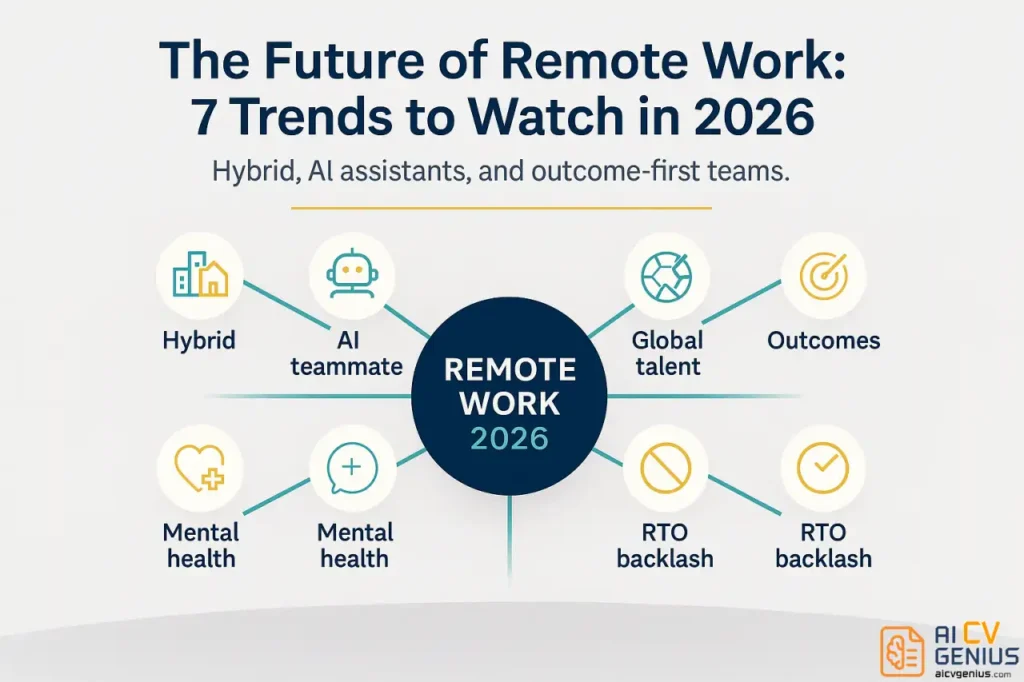
Remote work isn’t going anywhere. But it’s not staying the same either. After years of Zoom fatigue and return-to-office drama, we’re done with the “will it or won’t it” speculation. The future of remote work 2026 isn’t about whether it survives – it’s about how it matures. Some companies are pulling people back to offices. Others are doubling down on flexibility. And most are stuck in the middle, trying to figure out what actually works.
The headlines scream about RTO mandates, but here’s what they don’t tell you: 3 in 10 companies might eliminate remote work by 2026, which means 7 in 10 won’t. Hybrid is the new normal, not a temporary phase. AI is changing how remote teams operate. The biggest shifts aren’t happening at big-name companies – they’re happening at the startups and mid-sized firms building the workplace of tomorrow.
Trend 1: Hybrid Work Wins (But Not the Way You Think)
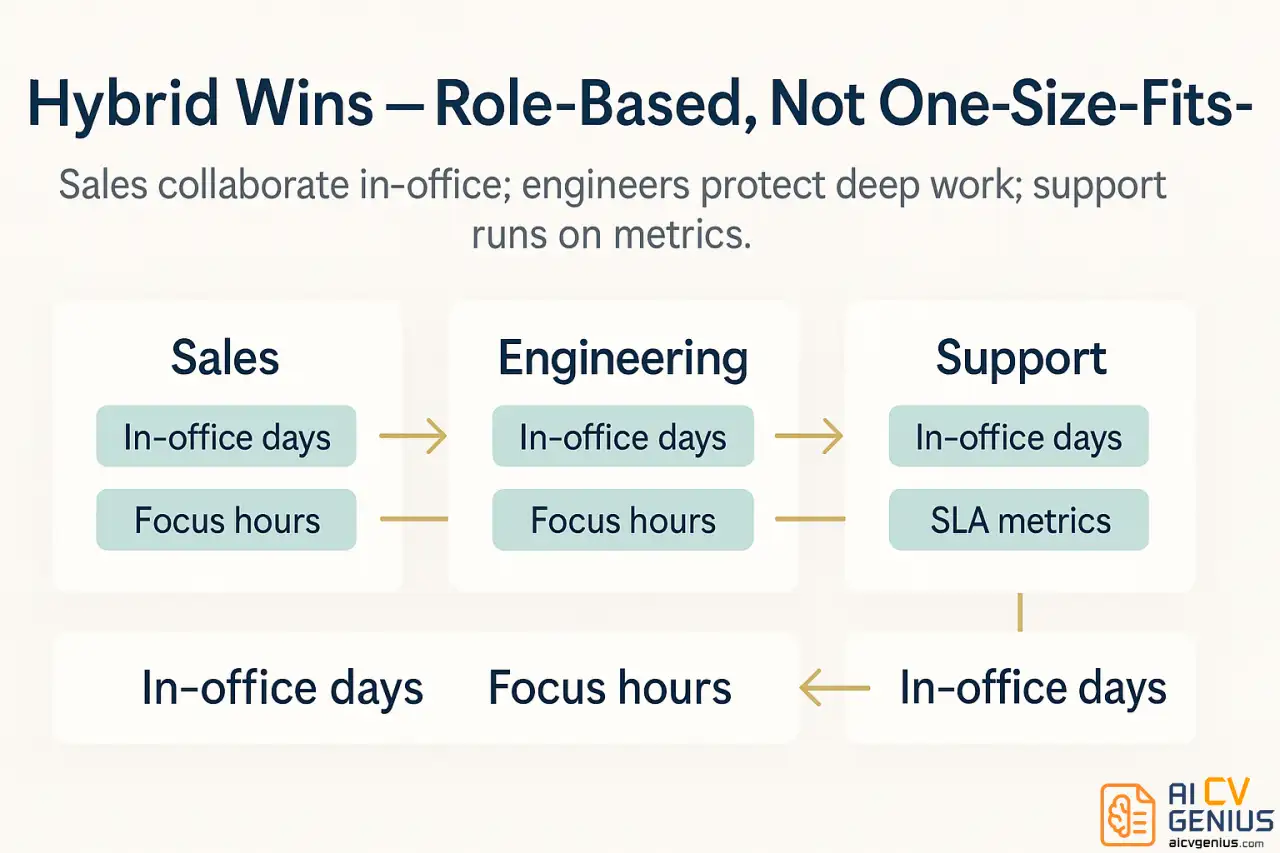
Forget the 50/50 split. The hybrid model that’s actually sticking isn’t “three days in, two days out” for everyone. It’s role-based flexibility: sales teams in the office for collaboration, engineers at home for deep work, and support teams working wherever they hit their metrics.
According to Stanford’s latest data, about 28% of paid work days are now done from home, up from 5% before the pandemic. That number has stayed flat, which tells us the market has found its level. Companies tried full remote and full office; now they’re settling on custom arrangements that match how different jobs get done.
What this means for job seekers: Ask about remote policies during interviews – not just what’s allowed, but what’s common for your specific team. Expect different rules for different positions, even at the same company. The days of one-size-fits-all are over.
Trend 2: AI Becomes Your Invisible Teammate
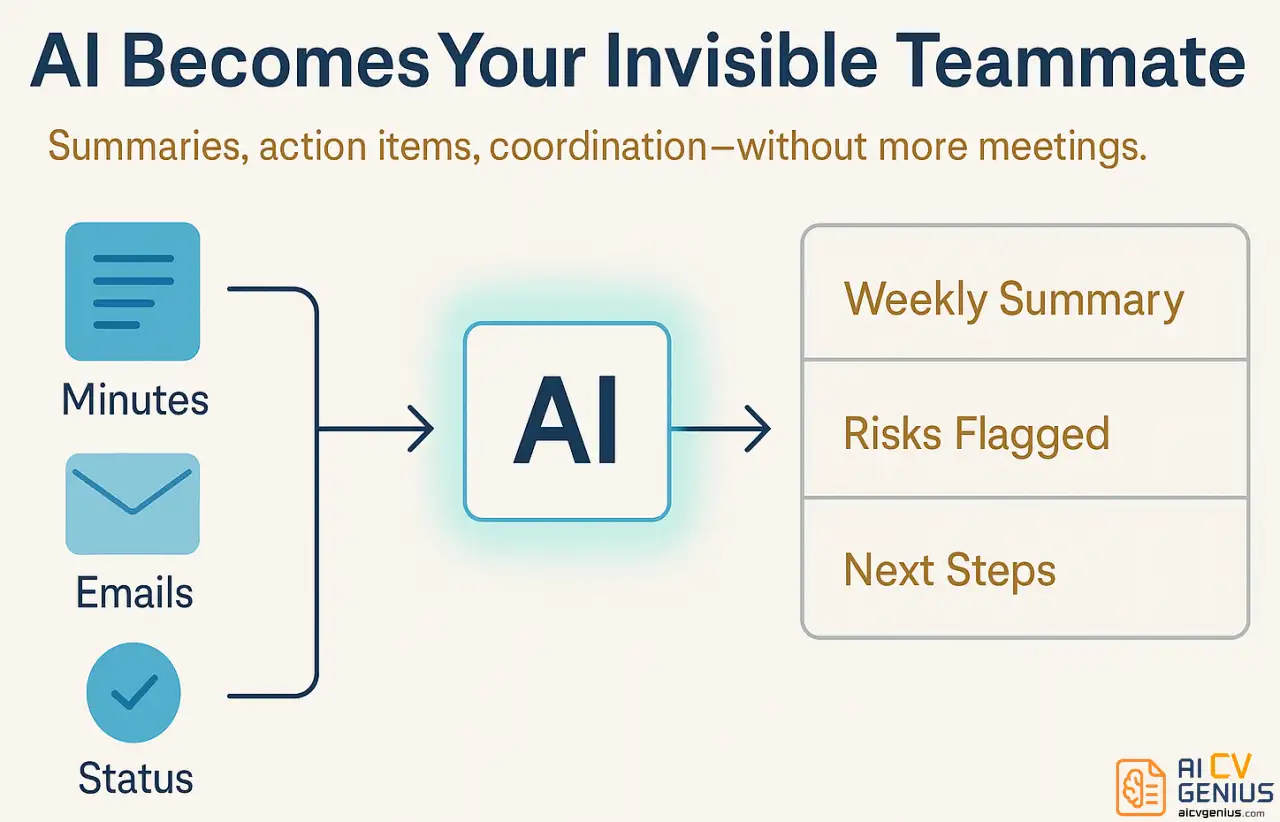
By 2026, AI won’t just be helping you write emails. It’ll be running your meetings. Tools like Fireflies and Otter already transcribe calls and extract action items. The next generation will go further: automatically summarizing week-long email threads, flagging when remote team members seem disengaged, and suggesting optimal meeting times based on deep work patterns.
This matters because the biggest problem with remote work isn’t productivity; it’s coordination. When you’re not in the same room, small miscommunications compound. AI is filling that gap by handling the administrative overhead that used to happen organically in offices.
How AI Changes Remote Management
Managers often dislike remote work because they can’t “see” who’s struggling. AI tools are solving this by tracking patterns – not in a creepy surveillance way, but by flagging things like: “Sarah hasn’t contributed to any documents this week, might want to check in.”
The best remote managers in 2026 won’t be the ones demanding daily standups. They’ll be the ones who use AI to spot problems early and intervene before small issues become big ones.
Trend 3: Global Talent Pools Replace Local Hiring
Here’s the uncomfortable truth: if companies can hire remotely, why pay San Francisco salaries when they can hire equally skilled people in Portugal or Poland for 40% less? By 2026, we’ll see more companies embracing “geo-agnostic” hiring, where your location matters less than your output.
This cuts both ways. American workers now compete globally, but they also have access to global opportunities. Companies in Germany, Australia, and Singapore are hiring remote workers from anywhere. If you’re good at what you do and can work across time zones, your job market just got exponentially bigger.
The catch? Taxes, compliance, and time zones. More countries are introducing digital nomad visas, but they’re also cracking down on cross-border employment tax loopholes.
Curious how to position yourself for international remote opportunities? Our guide on how to write a career-change CV shows you how to translate your experience for different markets.
Trend 4: Companies Focus on Outcomes, Not Hours
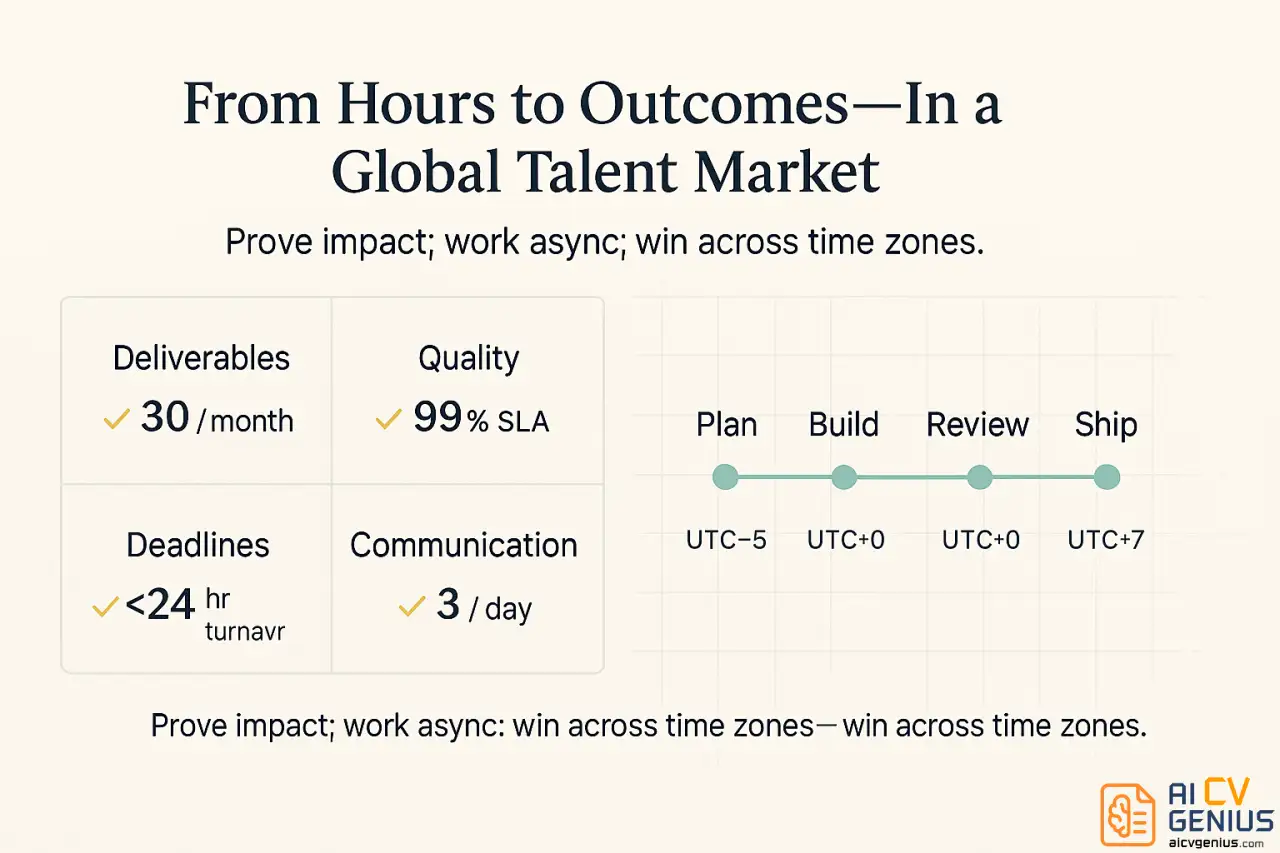
The 9-to-5 is dying in many sectors. Remote work forced companies to rethink the entire concept of “putting in time.” If your colleague in Berlin finishes their work by 2 PM, who cares if they log off early? If your designer ships the project two days ahead of schedule, does it matter when they did the work?
By 2026, more companies will shift to results-only work environments (ROWE), where you’re judged by what you deliver, not when you’re online. This is great news for high-performers but terrible news for people who mistake “being busy” for “being productive.”
How to thrive in an outcomes-based culture:
- 1️⃣ Document everything: If no one sees you working, you need clear proof of what you’ve done.
- 2️⃣ Set your own deadlines: Don’t wait to be asked. Propose timelines proactively.
- 3️⃣ Communicate impact, not effort: “I shipped the feature” beats “I worked really hard on this.”
The shift from hours to outcomes rewards people who can self-manage. If you need external structure to stay productive, remote work in 2026 is going to be harder, not easier.
Trend 5: The Loneliness Problem Gets Real
Remote work is great for avoiding commutes. It’s terrible for human connection. By 2026, the mental health costs will be impossible to ignore. Studies already show remote workers report higher rates of isolation, especially younger employees.
Companies are responding with “connection budgets” – stipends for coworking spaces, quarterly team meetups, or coffee with colleagues. But throwing money at loneliness doesn’t fix it. The remote workers who thrive are the ones who proactively build social structures outside of work.
What Actually Helps With Remote Work Isolation
Based on what’s working for long-term remote workers:
- ✅ Join coworking spaces, even if your company doesn’t require it.
- ✅ Schedule regular in-person meetings with local industry peers.
- ✅ Find communities outside of work – sports leagues, book clubs, volunteer groups.
- ✅ Set boundaries so “work from home” doesn’t become “live at work.”
The employees who struggle most with remote work are the ones who expected it to replace their social life. It won’t. You need to build that separately.
Looking for more strategies to stay balanced? Check out our post on work-life balance tips for remote workers.
Trend 6: New Tools Emerge for Async Collaboration
Zoom meetings are not the future. Asynchronous (async) work is. By 2026, expect to see more tools designed for collaboration that doesn’t require everyone to be online at the same time. Think: video messages instead of calls, threaded discussions instead of meetings, and collaborative documents that track contributions.
The companies that figure out async work will have a massive competitive advantage. They’ll hire across time zones without forcing anyone to work weird hours. They’ll make better decisions because people have time to think instead of reacting in real-time. And they’ll waste less time in meetings where half the attendees don’t need to be there.
If you’re job hunting in 2026, knowing how to work asynchronously is as important as knowing how to write a good email. Companies will expect you to communicate clearly without real-time back-and-forth.
Trend 7: Return-to-Office Mandates Backfire
The data is in, and it’s not pretty for companies forcing people back. A recent study of 137 S&P 500 firms found that RTO mandates led to no improvement in financial performance or company value. What did change? Employee satisfaction tanked, work-life balance scores dropped, and turnover increased.
By 2026, we’ll see two paths. Some companies will stubbornly require five-day office weeks and lose their best talent to competitors who don’t. Others will embrace flexibility as a recruiting tool and poach those disgruntled workers. The question isn’t whether remote work will survive – it’s which companies will survive the transition.
Nearly half of remote workers say they’d quit if forced back full-time. That’s not a bluff. Companies that ignore this will pay for it in recruitment costs and lost institutional knowledge.
Worried about how RTO mandates might affect your career? Our guide on career resources for navigating job transitions can help you plan your next move.
What This Means for Job Seekers in 2026
The job market is splitting. On one side: companies that get flexible work and use it to attract top talent. On the other: companies clinging to 2019 and wondering why no one wants to work there. You need to decide which side you’re betting on.
Skills that matter more in a remote-first world:
- 1️⃣ Self-direction: Can you work without someone checking in every day?
- 2️⃣ Written communication: If you can’t explain your work clearly in writing, you’ll struggle.
- 3️⃣ Digital fluency: Can you collaborate in Notion, Figma, GitHub, or whatever tools your field uses?
- 4️⃣ Proactive communication: Waiting to be asked is a career killer in remote work.
If you’re applying to remote jobs, your resume and cover letter need to show you understand how remote work actually works. Don’t just say “comfortable with remote work.” Show it. Mention tools you’ve used or describe how you’ve collaborated across time zones.
Need help positioning yourself as a remote-ready candidate? Start by reading our article on how to improve your CV for today’s job market.
2026 Remote Work Landscape: What’s Changing
Here’s how the remote work landscape is shifting from where we are now to where we’re heading.
| Aspect | 2025 Reality | 2026 Trend |
|---|---|---|
| Hybrid Model | 3 days in office standard | Role-based flexibility |
| Management Style | Presence-based oversight | Outcome-focused metrics |
| Collaboration | Zoom-heavy sync meetings | Async-first with AI tools |
| Hiring | Regional talent pools | Global remote hiring |
| Mental Health | Ignored or tokenized | Connection budgets & support |
FAQ
Final Thoughts
The future of remote work 2026 isn’t a battle between home and office. It’s about companies figuring out what actually works for their teams and having the courage to build around that. Some industries will go back to offices. Most will land somewhere in the middle with hybrid models that make sense.
For job seekers, this creates opportunity. The companies struggling with remote work will lose talent to the ones who’ve figured it out. If you can demonstrate that you thrive in flexible environments, you’ll have options. The key is being honest about what you need and choosing accordingly.
The next few years will separate the companies that adapt from the ones that don’t. Pay attention to how organizations talk about flexibility and ask current employees what remote work really looks like day-to-day.
Ready to position yourself for the future of work? Start by making sure your application materials reflect modern workplace realities. Our guide on creating a standout resume will help you show you’re ready for whatever comes next. The future of remote work is here. It’s hybrid. It’s powered by AI. And it rewards the people who can work effectively no matter where they are.