
- Core answer: Bad cover letters are dead, Strategic ones still change outcomes in 2026.
- Why most get ignored: Recruiters are overloaded, Generic letters repeat the resume and add zero signal.
- What the effective 10% does: Specific research, Clear narrative for gaps or pivots, And a value pitch tied to their pain points.
- When to skip: If the posting says no cover letter, If there is no upload field, Or if you cannot customize without going generic.
- How to write one fast and strong: Research first, Use a tight 3 paragraph arc, Show proof with numbers, And run strict proofreading before sending.
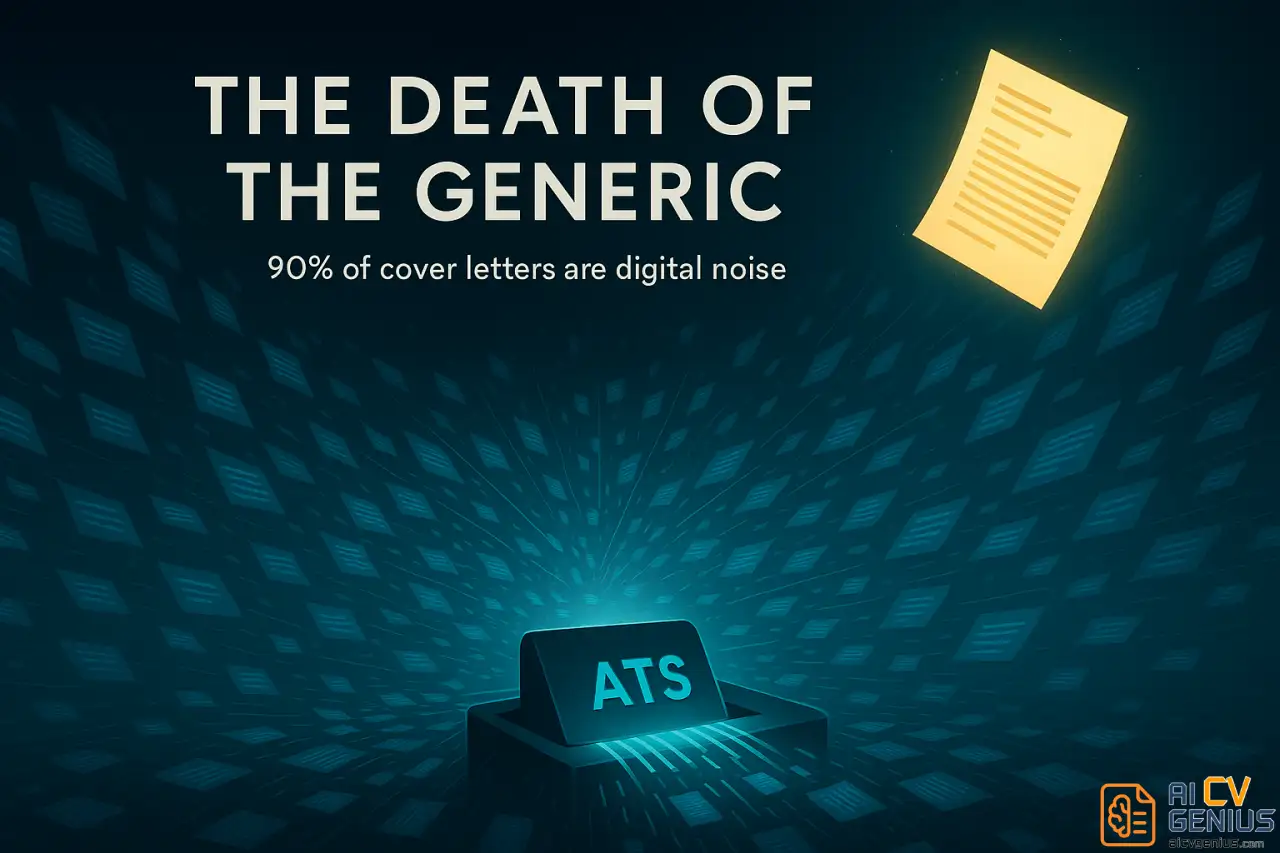
Let’s confront the persistent question haunting job seekers: are cover letters dead in 2026? The uncomfortable, nuanced truth is this: Bad cover letters are not only dead, they were never truly alive. They are the generic, template-driven, resume-regurgitating documents that clog recruiter inboxes and elicit exasperated sighs. Estimates suggest a staggering 90% fall into this category – wasted digital paper. But the remaining 10%? The ones crafted with intention, specificity, and genuine insight? Those cover letters are potent career accelerators. They transform lukewarm candidates into compelling prospects, bridge experience gaps, and turn skeptical hiring managers into advocates pushing for an interview.
The real conversation isn’t about the existence of cover letters, but the abysmal quality of the vast majority. When a recruiter publicly declares, “I don’t read cover letters,” the unspoken subtext is almost always, “I don’t waste time on bad cover letters that tell me nothing new.” And if you were faced with hundreds of applications, you wouldn’t either. The signal-to-noise ratio is often discouragingly low.
This article won’t try to persuade you that every submitted cover letter holds inherent value – most demonstrably don’t. Instead, we will dissect why most fail so spectacularly, illuminate the specific elements that make the rare effective ones resonate deeply, and provide a strategic framework for deciding when investing the effort to write a good one is not just beneficial, but crucial. Because in the competitive landscape of 2026, submitting a mediocre cover letter is often more detrimental than submitting none at all. It signals carelessness, a lack of genuine interest, or an inability to communicate value – red flags no applicant can afford.
Decoding Recruiter Fatigue: Why Most Cover Letters Get Ignored
To understand the cover letter’s precarious status, we must first empathize with the recipient. Recruiters and hiring managers are often inundated. A single corporate job posting can attract hundreds, sometimes thousands, of applications. Their primary task is efficient filtration – identifying qualified candidates quickly. Anything that slows this process without adding significant value is perceived as friction.
While studies like ResumeLab’s highlight that 83% of recruiters believe a great cover letter is important, pragmatic realities often intervene. The same report notes 26% admit to skipping them when volume peaks. This isn’t hypocrisy; it’s triage. Faced with 200 applications and limited time, they prioritize the documents most likely to yield critical information efficiently: the resume and perhaps a quick LinkedIn scan. A cover letter only earns its read-time if it promises unique insight.
The Unforgivable Trinity: Why Bad Cover Letters Fail
Most rejected cover letters commit one or more of these fundamental errors, instantly signaling low effort and low potential value to the reader:
- ❌ Sin 1: The Echo Chamber Effect (Resume Redundancy): The most common and fatal flaw. If your cover letter merely paraphrases bullet points already present on your resume (“As you can see from my resume, I possess five years of marketing experience, including social media management and content creation…”), you have actively wasted the recruiter’s time. They’ve likely already scanned your resume. Your cover letter’s job is to add context, narrative, and persuasive arguments that the resume’s format cannot accommodate, not to provide a less efficient summary of it.
- ❌ Sin 2: The Generic Void (Lack of Specificity): Opening lines like “I am writing to express my enthusiastic interest in the [Job Title] position advertised on [Platform]” are the written equivalent of elevator music – bland, forgettable, and interchangeable. If your letter could be addressed to any company within the industry by simply changing the name, it lacks the specificity needed to make an impact. This signals either a lack of genuine interest in this specific role or a fundamental misunderstanding of the cover letter’s purpose.
- ❌ Sin 3: The Self-Centered Narrative (Focusing on “Me” Not “Them”): Cover letters filled with phrases like “I am seeking an opportunity to grow my skills,” “This role represents the next logical step in my career,” or “I believe your company can provide me with valuable experience” fundamentally misinterpret the transaction. While your career goals are valid, the cover letter is a sales document. Its primary function is to persuade the employer that hiring you will solve their problems, meet their needs, and advance their mission. Frame your skills and aspirations in terms of the value you will deliver to the organization.
A seasoned HR director shared this litmus test: “If I read a cover letter and can’t immediately pinpoint 1) why this candidate wants to work here specifically and 2) what unique problem they believe they can solve for us, it goes in the ‘no’ pile. It tells me they haven’t done their homework or thought strategically about the role.”
The Recruiter’s Wishlist: What a Valuable Cover Letter Provides
When recruiters do invest time in reading a cover letter (which, according to various sources including LinkedIn data, happens roughly 50-60% of the time, especially for roles requiring strong communication skills or for candidates on the cusp), they are actively seeking information that transcends the resume:
- Proof of Genuine Interest & Research: Have you moved beyond the job description? Can you mention a specific company initiative, a recent news article, a particular value proposition of their product/service, or even insights gleaned from an informational interview with a current employee? Demonstrating you understand their context is paramount.
- Narrative Context & Gap Bridging: The resume presents facts; the cover letter provides the story. Are you making a significant career pivot? Returning to the workforce after a break? Relocating? Explaining a non-traditional career path? The cover letter is the designated space to proactively address potential questions or perceived weaknesses in your resume, framing them positively.
- Alignment with Mission & Culture (Especially Nonprofits/Startups): For mission-driven organizations or companies with strong cultural identities, the cover letter is crucial for assessing alignment. Can you articulate why their specific mission resonates with you (beyond generic platitudes)? Do you understand their operating environment (e.g., resource constraints in nonprofits, fast pace in startups)?
- Demonstration of Communication Skills: For many roles (marketing, sales, management, consulting, etc.), the cover letter itself is a work sample. Is it well-written, clear, concise, persuasive, and free of errors? How you communicate about yourself is indicative of how you’ll communicate for the company.
- Enthusiasm Tailored to Them: Not just “I’m excited,” but “I’m excited by the challenge of scaling your user base, particularly given my experience in [specific relevant achievement]” or “I’m deeply impressed by your commitment to sustainability, which aligns with my volunteer work in…” Specificity transforms generic excitement into credible motivation.
Consider this powerful statistic: 82% of hiring managers surveyed by Robert Half indicated that a well-written cover letter could persuade them to interview a candidate whose resume alone might not have made the cut. Conversely, 51% admitted a poorly written cover letter could disqualify an otherwise strong candidate. The cover letter acts as a significant qualifier or disqualifier, especially in competitive applicant pools.
Anatomy of the Effective 10%: What Makes a Cover Letter Work
The cover letters that survive the initial skim and genuinely influence hiring decisions aren’t necessarily literary masterpieces. They are, however, strategically crafted documents that excel in three key areas: specificity, authenticity, and a relentless focus on delivering value.
1. Hyper-Specificity: Beyond Surface-Level Research
Effective cover letters demonstrate more than just a quick website glance. They incorporate concrete details that prove genuine engagement and understanding.
- Reference Specific Initiatives/Products: Instead of “Your company is innovative,” try “The recent launch of your ‘Project Nightingale’ AI diagnostic tool particularly caught my attention, as my Master’s thesis explored similar machine learning applications in healthcare.”
- Quote or Paraphrase Company Values/Mission: Show you’ve read their “About Us” page and understand their core principles. “Your stated value of ‘radical transparency’ resonates deeply with my management style, which prioritizes open communication, as demonstrated when I…”
- Mention Recent News or Achievements: “Congratulations on securing Series B funding last quarter; I believe my experience in scaling marketing operations during post-funding growth phases at [Previous Company] would be directly applicable here.”
- Connect to Industry Trends/Challenges: Show you understand their market position. “As the regulatory landscape for fintech evolves, my background in compliance-focused product development could help navigate…”
- Referencing an Employee/Referral: “My former colleague, Jane Doe, encouraged me to apply, citing the collaborative engineering culture she enjoys on the platform team.”
This level of detail requires effort, which is precisely why it works. It signals that this application isn’t one of fifty sent out today; it’s a targeted effort towards a role and company the candidate genuinely desires.
2. Strategic Authenticity: Addressing the Narrative
A great cover letter embraces the candidate’s unique story, including potential perceived weaknesses, and reframes them constructively. It doesn’t ignore the elephant in the room; it explains it.
- Career Changers: Don’t apologize for lack of direct experience. Highlight transferable skills and explicitly state why you’re making the change (a career pivot) and what specific steps you’ve taken to prepare (e.g., certifications, projects). “While my background is primarily in hospitality management, the core principles of exceptional client service, team leadership under pressure, and meticulous operational planning are directly transferable to the Account Manager role. My recent completion of the HubSpot Sales Certification demonstrates my commitment to mastering the necessary technical skills.”
- Employment Gaps: Briefly and professionally address significant gaps, focusing on productive activities undertaken (e.g., further education, caregiving, skill development, travel that broadened perspective). “Following a planned sabbatical focused on [Activity], I am now eager to re-enter the [Industry] sector with renewed energy and [New Skill/Perspective].” Avoid over-explaining or sounding defensive.
- Perceived Over/Under Qualification: Address it head-on. If overqualified: Explain your motivation for seeking this specific role (e.g., better work-life balance, passion for the mission, desire to mentor). If underqualified on paper: Acknowledge the gap but emphasize rapid learning ability, relevant adjacent skills, and strong motivation, providing evidence where possible.
Authenticity builds trust. Acknowledging your unique path, rather than trying to fit into a perfect mold, often resonates more strongly with hiring managers looking for genuine, resilient individuals.
3. Value Proposition Clarity: Solving Their Problems
The core message of an effective cover letter is not “Here’s why I’m great,” but “Here’s how my greatness solves your specific problems or helps you achieve your specific goals.” Every skill mentioned, every achievement highlighted, should be implicitly or explicitly linked back to the employer’s needs as outlined in the job description or understood through research.
- Identify Their Pain Points: Read the job description carefully. What challenges are implied? Are they trying to scale, improve efficiency, enter a new market, enhance customer retention?
- Frame Your Skills as Solutions: Instead of “Proficient in data analysis,” write “My proficiency in data analysis can help you optimize campaign spend, just as I did at [Previous Company] where I identified inefficiencies that led to a 15% cost reduction while maintaining lead volume.”
- Speak Their Language: Use terminology common in their industry and company culture (gleaned from their website, job description, news articles).
- Quantify Impact Whenever Possible: Numbers cut through ambiguity. “Increased X by Y%,” “Reduced Z by $X,” “Managed budget of $Y,” “Trained X people.”
Shift your mindset from applicant to consultant. You are proposing a solution (yourself) to their business challenge. Your cover letter is the executive summary of that proposal.
Illustrative Contrast: The Generic vs. The Strategic Cover Letter
Let’s examine concrete examples to solidify the difference. Imagine applying for a Social Media Manager role at a sustainable fashion brand.
The Bad Example: The Template Trap
Dear Hiring Manager,
I am writing to express my strong interest in the Social Media Manager position I saw advertised on LinkedIn. With my extensive experience in digital marketing and passion for fashion, I believe I possess the skills necessary to excel in this role and contribute significantly to your team.
In my previous roles, I was responsible for managing various social media platforms, creating engaging content, developing campaign strategies, and analyzing performance metrics. I am proficient in tools such as Hootsuite, Buffer, and Google Analytics. I am a creative, detail-oriented, and results-driven professional eager to apply my expertise in a dynamic environment like [Company Name]. I am confident that my abilities align well with the requirements outlined in the job description.
Thank you for your time and consideration. I have attached my resume for your review and welcome the opportunity to discuss my qualifications further. I look forward to hearing from you soon.
Why it fails: Utterly generic. Zero mention of sustainability or the brand’s specific values. Lists responsibilities, not achievements. Buzzwords (“results-driven,” “dynamic environment”) without proof. Could be sent to any company. Offers no unique insight or personality.
The Good Example: Tailored, Tangible, and Targeted
Dear [Hiring Manager Name, if found, otherwise omit],
As a long-time admirer of [Company Name]’s commitment to circular fashion – particularly your innovative ‘Renew & Rewear’ program launched last quarter – I was thrilled to see the opening for a Social Media Manager. My passion isn’t just for fashion, but for proving that sustainability and style can powerfully amplify each other, a philosophy I see reflected in your brand’s narrative.
In my current role managing social channels for EcoThreads Collective, I focused on translating complex sustainability initiatives into engaging, shareable content. For instance, I developed an Instagram Stories series explaining our recycled material sourcing process, which resulted in a 300% increase in engagement on related posts and drove a 15% uplift in traffic to our ‘Materials Matter’ landing page. I also grew our TikTok presence from zero to 50K followers in 8 months by creating authentic, behind-the-scenes content featuring our artisans – something I believe would resonate strongly with [Company Name]’s audience, who clearly value transparency (based on comments on your recent posts about factory partners).
The job description emphasizes needing someone skilled in both community building and performance tracking. At EcoThreads, I implemented a data-driven approach using Sprout Social analytics, allowing us to increase follower growth rate by 40% while simultaneously fostering a highly engaged community (average comment rate doubled). I’m adept at turning analytics into actionable content strategies that drive both brand love and measurable results – like the campaign that boosted sales for our upcycled denim line by 25%.
I am eager to bring my specific experience in sustainable fashion social media strategy to [Company Name] and contribute to amplifying your crucial message. I’d appreciate the chance to discuss how my data-informed creativity could help further engage your conscious consumer base. I am available at your earliest convenience via [Phone Number] or [Email Address]. Thank you for considering my application.
Why it works: Specific mention of a company program. Connects personal passion to the brand’s niche (sustainability). Provides quantified achievements directly relevant to the role (engagement increase, follower growth, sales uplift). References required skills (community building, performance tracking) with concrete examples. Demonstrates research (“based on comments…”) and understanding of their audience. Ends with a confident, value-focused call to action.
Strategic Omission: When Skipping the Cover Letter is the Smarter Move
Despite the potential impact of a great cover letter, there are scenarios where investing the time is unnecessary or even counterproductive. Knowing when not to write one is as important as knowing how to write one well.
1. Explicit “Do Not Include” Instructions
This is the clearest signal. If the application portal or job posting explicitly states “Do not submit a cover letter,” “Cover letters will not be reviewed,” or similar, then respect the instruction. Trying to circumvent this (e.g., emailing it separately) can be perceived negatively, suggesting an inability to follow directions. Some high-volume recruiters or specific industries deliberately omit them to standardize and speed up screening.
However, carefully parse the language. “Cover letter optional” is not the same as “Do not include.” As discussed, “optional” often implies “recommended for serious candidates.” Only skip if the prohibition is explicit.
2. Technical Impossibility: No Submission Field
Many online application systems (ATS) are rigid. If there is simply no designated field or upload option for a cover letter, do not attempt to force it. Pasting it into the resume field, appending it to your resume PDF, or shoehorning it into irrelevant text boxes will likely confuse the ATS parsing algorithms and potentially garble your application. In such cases, the system design dictates that a cover letter is not part of their standard process for that role.
The caveat: If the application process involves emailing materials directly, the email body itself should serve as a concise cover letter – introducing yourself, stating the role, highlighting 1-2 key qualifications, and expressing enthusiasm. Never send a resume attachment with a blank email.
3. The High-Volume, Low-Customization Scenario
This is the most controversial but pragmatically important reason. If your job search strategy involves applying to a large number of similar roles (e.g., 50+ applications for entry-level positions) and you realistically lack the bandwidth to research each company and write a truly customized, high-quality cover letter for every single one, then strategically omitting it for some applications may be necessary.
Rationale: A generic, poorly customized cover letter actively harms your application more than having no cover letter at all. It signals low effort and wastes the recruiter’s time. In a high-volume application scenario, your time might be better invested in:
- Perfecting your resume and ensuring it’s highly optimized for ATS.
- Thoroughly customizing your LinkedIn profile.
- Networking or seeking referrals for key target companies.
- Saving your cover letter writing energy for your top 5-10 most desired roles, where you can invest the time to make it exceptional.
This isn’t an excuse for laziness; it’s a strategic allocation of limited resources. One outstanding, tailored application (resume + cover letter + optimized LinkedIn) to a dream job is worth more than twenty generic applications sprayed across the internet.
Nuance: Internal Applications & Strong Referrals
Even in these cases, a cover letter can be beneficial but might be less critical.
- Internal Applications: A cover letter helps frame your interest and highlight relevant internal experience, but internal hiring often involves known quantities and different processes. Focus on addressing specific internal needs and demonstrating growth.
- Strong Referrals: If a respected senior employee has personally recommended you, their word carries significant weight. A cover letter is still advisable to make your own case, but the referral might somewhat lessen the pressure on it being the sole document to make a first impression. Still, tailor it!
The Playbook: Crafting a Cover Letter That Commands Attention
Assuming you’ve determined a cover letter is strategically advantageous, how do you ensure yours falls into the impactful 10%? Follow this concise, battle-tested process.
1. Pre-Writing Reconnaissance (15-20 Minutes Minimum)
Do not type a word until you’ve investigated. Go beyond the homepage.
- Recent News/Blog: What have they announced lately (products, funding, initiatives, awards)?
- Mission/Values Deep Dive: Understand their “why.” How do they talk about their impact?
- Product/Service Understanding: If applicable, try their product or understand its core value proposition. Read customer reviews.
- Key Personnel (LinkedIn): Research the hiring manager, potential team members, or executives. Look for common connections, shared backgrounds, or recent posts.
- Job Description Deconstruction: Identify the top 3-5 required skills/experiences and implied challenges. What problem are they hiring this role to solve?
Your goal: Find 1-2 specific, concrete points of connection or insight that you can weave into your letter.
2. Master the Strategic 3-Paragraph Arc
Brevity and structure are key.
Paragraph 1 – The Specific Hook (Why Them):
Immediately establish relevance. Reference your research. State why this company and why this role specifically appeal to you, connecting it briefly to your core value proposition. Avoid generic openings at all costs. Example: “Having followed [Company Name]’s pioneering work in [Specific Area], particularly the recent [Specific Initiative/Product], I was compelled to apply for the [Job Title] role, as my background in [Your Key Skill/Experience] aligns directly with the challenges outlined…”
Paragraph 2 – The Value Proposition (Why You):
This is your evidence section. Select 1-2 key requirements from the job description. For each, provide a concise, compelling example (ideally using STAR method implicitly) demonstrating how you’ve successfully met similar challenges or delivered relevant results in the past. Quantify whenever possible. Explicitly connect your past success to their future needs. Example: “The posting emphasizes the need for scaling user acquisition. At [Previous Company], I developed and executed a content marketing strategy that increased qualified leads by 70% in 12 months by focusing on [Specific Tactic]. I’m confident I can adapt this data-driven approach to accelerate [Company Name]’s growth trajectory.”
Paragraph 3 – The Confident Close (The Next Step):
Reiterate your enthusiasm succinctly, link your core strength back to their mission/goal one last time, and propose the next step (a conversation). Provide clear contact info. Project confidence, not desperation. Example: “I am eager to discuss how my expertise in [Your Core Strength] can contribute to [Company Name]’s mission of [Their Mission/Goal]. I am available for an interview at your earliest convenience and can be reached at [Phone] or [Email]. Thank you for your consideration.”
Aim for ~300 words total. Quality trumps quantity.
3. Embody “Show, Don’t Tell”
Replace vague adjectives with concrete examples and results.
| Instead of | Try |
|---|---|
| “I am highly organized.” | “I successfully managed project timelines for three simultaneous product launches, coordinating deliverables across five departments and ensuring all milestones were met on or ahead of schedule.” |
| “Excellent communication skills.” | “My monthly performance reports, which translated complex data into clear, actionable insights, were adopted as the standard format for executive briefings.” |
Evidence builds credibility where claims alone fail.
4. Execute Flawless Quality Control
Treat your cover letter like a final deliverable to your most important client.
- Multiple Proofreads: Read it forward, backward (yes, sentence by sentence from the end), and out loud.
- Use Tools: Leverage Grammarly, Hemingway App, or similar tools, but don’t rely on them exclusively.
- Fresh Eyes: Ask a trusted friend or mentor (ideally with strong writing skills) to review it for clarity, typos, and tone.
- Fact-Check Names/Titles: Triple-check the spelling of the hiring manager’s name, their title, and the company name. Getting these wrong is an instant disqualifier for many.
- Verify Customization: Do a final read-through specifically asking: “Is there anything in here that couldn’t apply to another company?” If so, refine it.
An error-free letter demonstrates professionalism and attention to detail – critical attributes for almost any role.
Frequently Asked Questions: Cover Letter Relevance in 2026
The Verdict: Bad Cover Letters Are Dead. Strategic Ones Thrive.
So, let’s revisit the core question: are cover letters dead in 2026? The answer remains a firm ‘no’ for the right kind of cover letter, and an emphatic ‘yes’ for the lazy, generic majority.
The templated, resume-rehashing, self-focused letters that dominated applications past? They are unequivocally obsolete, actively detrimental in an era where recruiter time is scarce and AI can spot lack of effort. Sending one signals that you either don’t understand the norms or don’t care enough to tailor your approach.
However, the strategic cover letter – the one born from genuine research, articulating specific value, telling a compelling narrative, and addressing the employer’s unique context – remains a powerful differentiator. It’s your opportunity to inject personality, explain nuances, demonstrate critical thinking, and build a human connection before the first interview. In increasingly automated hiring funnels, that human touch, when executed well, is more valuable than ever.
Your Strategic Imperative: Don’t write a cover letter out of obligation. Write one out of opportunity. Write one when you have a specific, compelling story to tell that your resume, LinkedIn profile, and portfolio cannot fully convey on their own. Write one when you’ve done the research and can articulate precisely why this role at this company is the right fit, and why you are the right solution.
If you cannot commit to that level of specificity and customization? Your time is better spent refining your resume, optimizing your LinkedIn, or networking. In the modern job search, a targeted, high-quality application package always trumps high volume, low-quality spam.
The irony persists: the perceived decline of the cover letter, driven by the deluge of bad examples, only increases the impact of the truly exceptional ones. Master the art of the strategic cover letter, and you’ll find it’s far from dead – it’s a critical tool for cutting through the noise.
Need inspiration for crafting that standout letter? Check out our curated guide on effective cover letter examples or dive deeper into application strategies with our full suite of career resources.