

- Why it matters: Your first 1-on-1 sets expectations, communication norms, and what “good” looks like in the role.
- Role questions: Ask for 30/60/90 success markers, top priorities, performance metrics, and the team’s biggest challenges.
- Process questions: Confirm how to communicate, how often to send updates, what decisions you own, and the 1-on-1 cadence.
- Relationship and team questions: Learn feedback style, pet peeves, availability, how to support them, and who to build relationships with first.
- Do this, not that: Bring 6 to 8 questions, send a short agenda, take notes, follow up with a summary email, and avoid perk questions in week one.
This Meeting Sets the Foundation
Your first 1-on-1 with your new manager happens within your first week. This isn’t just a get-to-know-you chat – it’s the most important conversation you’ll have in your first 30 days.
This meeting establishes how you’ll work together, what your manager expects, and how you’ll communicate going forward. Get this right and you set yourself up for success. Waste it on small talk and you’ll spend weeks guessing at what matters.
Most new employees show up to their first 1-on-1 unprepared, waiting for their manager to drive the conversation. This is a missed opportunity. Come prepared with strategic questions that help you understand expectations, priorities, and how to succeed.
These questions, organized into four categories, will help you maximize your first 1-on-1.
Category 1: The “Role” Questions
Start by understanding what success looks like in your role. You need clarity on expectations, priorities, and how you’ll be evaluated.
Question 1: What Does Success Look Like?
“What does success look like for me in the first 30, 60, and 90 days?”
Why this works: This question forces specificity. You’re not asking vaguely about expectations – you’re asking for concrete milestones at specific intervals.
Good managers will give you clear outcomes: “By 30 days, you should be independently handling customer support tickets. By 60 days, you should be leading the weekly team sync. By 90 days, you should be proposing process improvements.”
Question 2: What Should I Prioritize?
“If you had to pick the top 3 priorities for me to focus on, what would they be?”
Why this works: Everything feels important when you’re new. This question identifies what actually matters most to your manager.
Use their answer to guide where you spend your time. If they say “building relationships with the sales team” is priority one, don’t spend all your time perfecting spreadsheets.
Question 3: How Will I Be Measured?
“What metrics or outcomes will you use to evaluate my performance?”
Why this works: This reveals what your manager actually cares about. If they measure you on project completion, speed matters. If they measure you on quality and thoroughness, perfection matters more than pace.
Knowing this upfront prevents misalignment where you’re optimizing for the wrong thing.
Question 4: What Are the Biggest Challenges?
“What are the biggest challenges facing our team right now?”
Why this works: This shows you’re thinking about the team’s problems, not just your individual tasks. It also helps you identify where you might be able to contribute beyond your core responsibilities.
For comprehensive onboarding strategies, see our complete new job guide.
Category 2: The “Process” Questions
Understand how your manager likes to work. Communication preferences, decision-making processes, and workflows vary dramatically between managers.
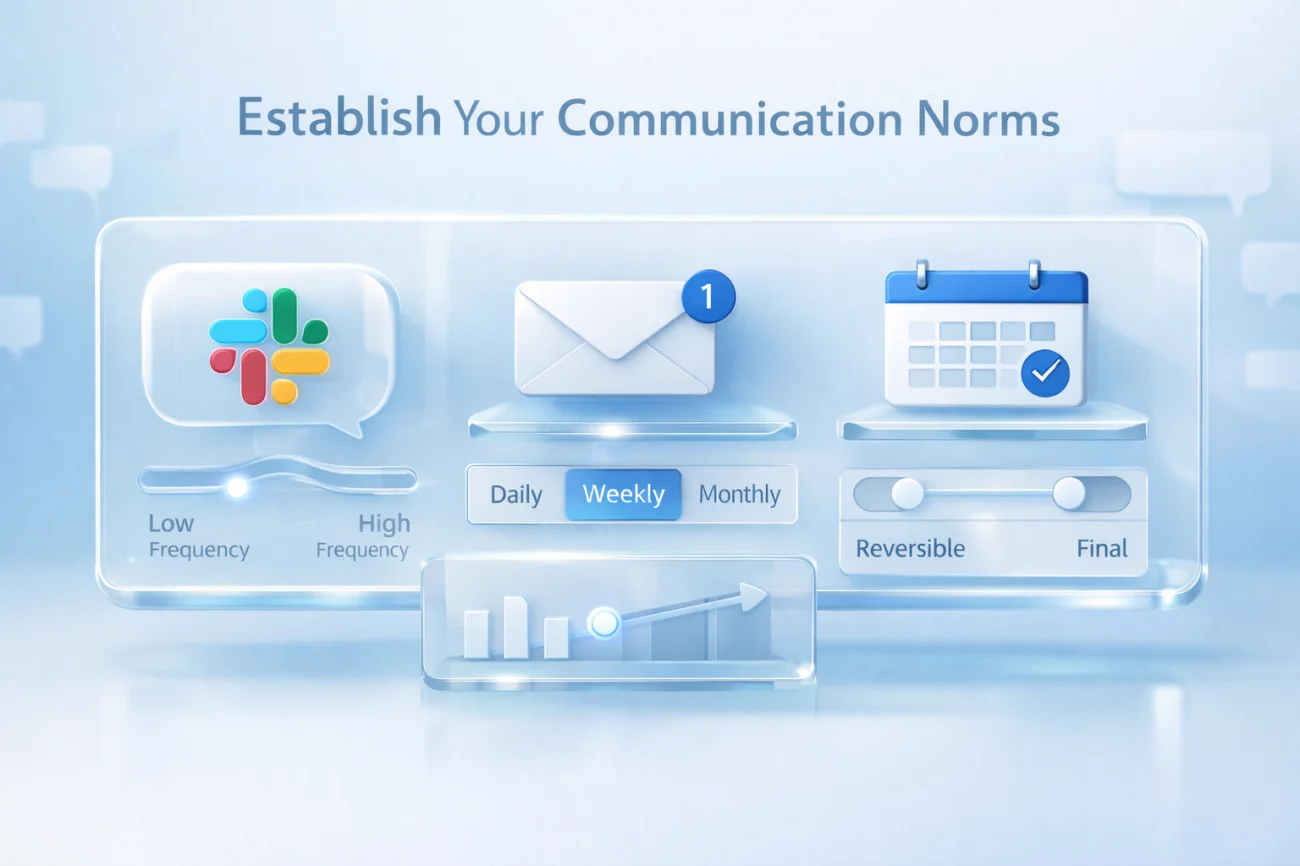
Question 5: Communication Preferences
“What’s the best way to communicate with you – Slack, email, or in person? And for what types of issues?”
Why this works: Some managers want quick Slack messages for everything. Others prefer formal emails. Some want face-to-face conversations for important topics.
Matching their preferred communication style eliminates friction and shows you’re adaptable.
Question 6: Update Frequency
“How often would you like updates on my work – daily, weekly, or only when there’s a blocker?”
Why this works: Some managers want daily visibility. Others prefer autonomy and weekly summaries. Giving too many updates annoys hands-off managers. Giving too few worries hands-on managers.
Ask directly and match their preference.
Question 7: Decision-Making Autonomy
“What decisions should I run by you first, and what can I make independently?”
Why this works: This clarifies boundaries. You don’t want to bother your manager with decisions you should make yourself, and you don’t want to make decisions that require their approval.
Their answer gives you a framework for when to escalate vs. when to proceed.
Question 8: Meeting Cadence
“How often should we have 1-on-1s, and what should we use them for?”
Why this works: Establishes the rhythm of your ongoing relationship. Weekly? Bi-weekly? Monthly? And are these status updates, coaching sessions, or strategic discussions?
Lock in a consistent schedule now rather than trying to schedule ad hoc later.
Category 3: The “Relationship” Questions
Understand how your manager gives feedback, what they value, and how to build a strong working relationship.

Question 9: Feedback Style
“How do you prefer to give feedback – in the moment, during 1-on-1s, or in writing?”
Why this works: Some managers give real-time feedback when they notice issues. Others save it for 1-on-1s. Some prefer written feedback so there’s documentation.
Knowing this helps you interpret their silence. If they give feedback in the moment, their silence means you’re doing fine. If they save it for 1-on-1s, don’t assume silence means approval.
Question 10: Pet Peeves
“What are your biggest pet peeves or things that frustrate you about working with people?”
Why this works: Everyone has pet peeves. Some managers hate surprises. Others can’t stand when people don’t take initiative. Some are sticklers for punctuality.
Asking this directly prevents you from unknowingly triggering frustrations.
Question 11: Working Style
“What does your typical day or week look like? When are you most available?”
Why this works: Understand their schedule. If they’re in back-to-back meetings all afternoon, don’t try to catch them at 4pm. If they’re most responsive in mornings, reach out then.
Respecting their rhythm makes you easier to work with.
Question 12: How to Help Them
“What would make your job easier? Is there anything I can take off your plate?”
Why this works: This flips the usual dynamic. Instead of only asking for help, you’re offering it. Managers appreciate this mindset.
They might not have an immediate answer, but asking signals you’re thinking about their workload, not just yours.
For more relationship-building strategies, explore our professional development guide.
Category 4: The “Team” Questions
Understand the broader team dynamics and who you need to build relationships with.
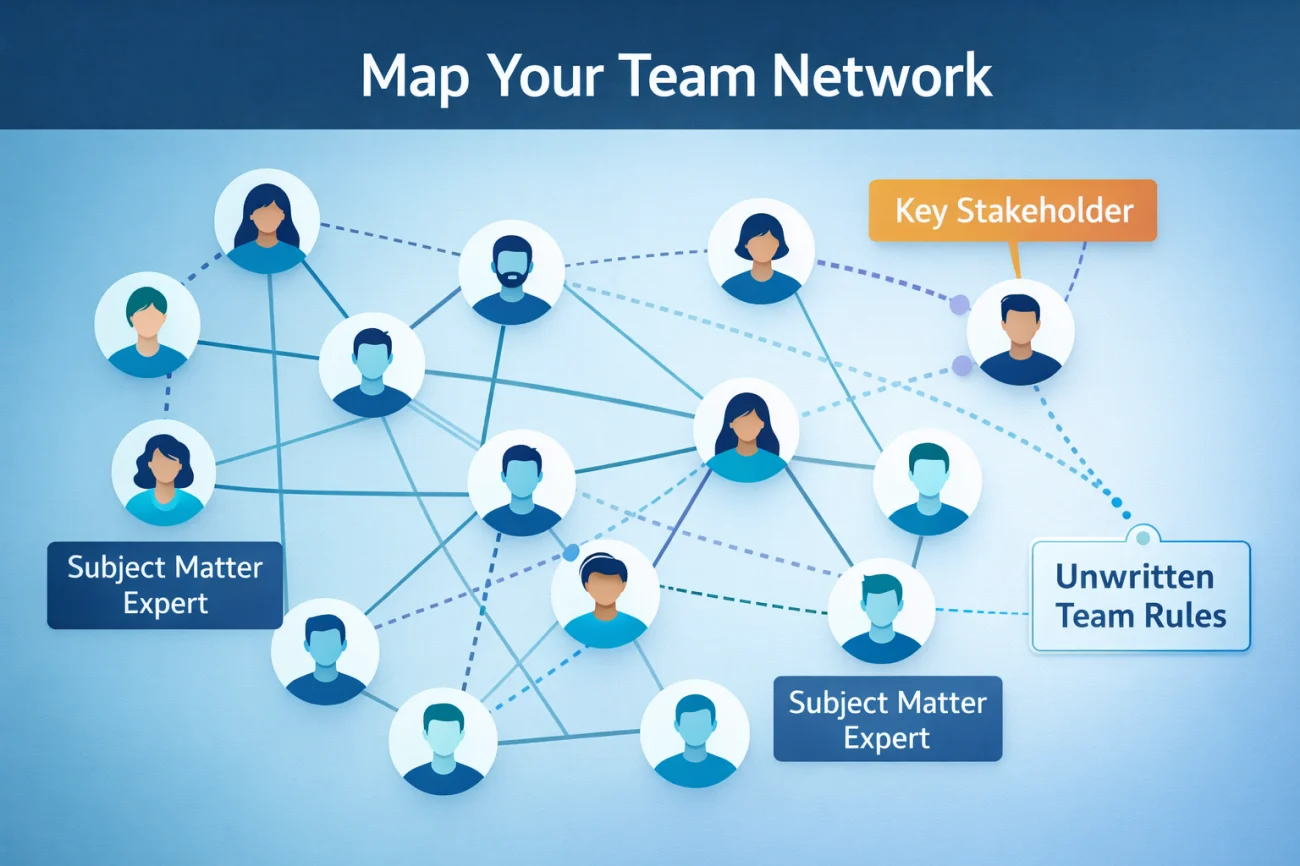
Question 13: Key Relationships
“Who are the key people I should build relationships with early on?”
Why this works: Your manager knows who you’ll work with most frequently. Get their guidance on which relationships to prioritize.
Use this list to schedule 1-on-1s with key stakeholders in your first two weeks.
Question 14: Resources and Support
“Who should I go to for help with [specific areas]? Who are the subject matter experts?”
Why this works: Every team has go-to people for different topics. Marketing questions go to Sarah. Technical issues go to James. Budget questions go to Maria.
Knowing this network saves you time and prevents you from bothering the wrong people.
Question 15: Team Dynamics
“What should I know about team dynamics or how we work together?”
Why this works: This reveals unwritten rules. Maybe the team prefers async communication. Maybe everyone joins the 9am standup even though it’s optional. Maybe there’s tension between two departments you need to navigate carefully.
Your manager will share context that helps you avoid stepping on landmines.
The One Question You Should Never Ask

Don’t ask about perks, vacation policies, or work-from-home flexibility in your first 1-on-1:
“What’s the policy on working from home?”
“How much vacation do I get?”
“Can I leave early on Fridays?”
Why to avoid these: Your first 1-on-1 should focus on how you’ll succeed and add value. Questions about perks signal you’re more concerned with what you get than what you contribute.
These questions are fine after 60-90 days when you’ve proven yourself. In week one, they create the wrong impression.
Exception: If you need to clarify something urgent (childcare pickup schedule, medical appointments), address it directly but briefly: “I need to leave by 5pm Tuesdays for a standing appointment. Will that be an issue?” Then move on.
FAQ
Come Prepared, Leave Aligned
Your first 1-on-1 with your manager is too important to wing it. This conversation sets expectations for your entire working relationship.
The four categories of questions – role, process, relationship, and team – give you a framework to understand what matters, how to work together, and who to connect with.
Role questions clarify success metrics and priorities. Process questions establish communication norms and decision-making boundaries. Relationship questions reveal feedback styles and pet peeves. Team questions identify key connections and resources.
Come to the meeting with 6-8 questions prepared. Send a brief agenda beforehand. Take notes during the conversation. Follow up with a summary email confirming key points.
This preparation shows you’re serious, organized, and thinking strategically about how to succeed. It also ensures you get the clarity you need to hit the ground running.
And remember: avoid questions about perks and policies in your first meeting. Focus on how you’ll add value, not what you’ll get. There’s plenty of time to ask about vacation days after you’ve proven yourself.
For additional new job resources, check out our comprehensive career guide.