

- Mindset shift: Your job is enabling the team, not doing the work, so stop being the bottleneck.
- Weekly 1-on-1s: Set them up immediately, keep them consistent, and use them for blockers, coaching, and growth.
- Managing peers: Acknowledge the awkwardness, set fair boundaries, and have hard conversations early when needed.
- Oversight and feedback: Avoid micromanaging or disappearing, set clear milestones, and give timely specific feedback.
- Umbrella leadership: Filter chaos, take accountability publicly, credit the team, and ask for feedback so you improve fast.
You Just Got Promoted – Now What?
You were good at your job. You delivered results, showed initiative, and demonstrated leadership. So you got promoted to manager.
Now you’re responsible for other people’s work instead of just your own. Your success depends on their success. The skills that got you promoted – individual contribution, technical expertise, getting things done yourself – are no longer the primary job.
Most new managers struggle with this transition because no one teaches them how to manage. They’re “accidental managers” – promoted for being good individual contributors without training on how to lead people.
These seven tips help first-time managers navigate the transition from doing the work to enabling others to do the work.
Tip 1: Your Job Is No Longer “Doing” – It’s Enabling
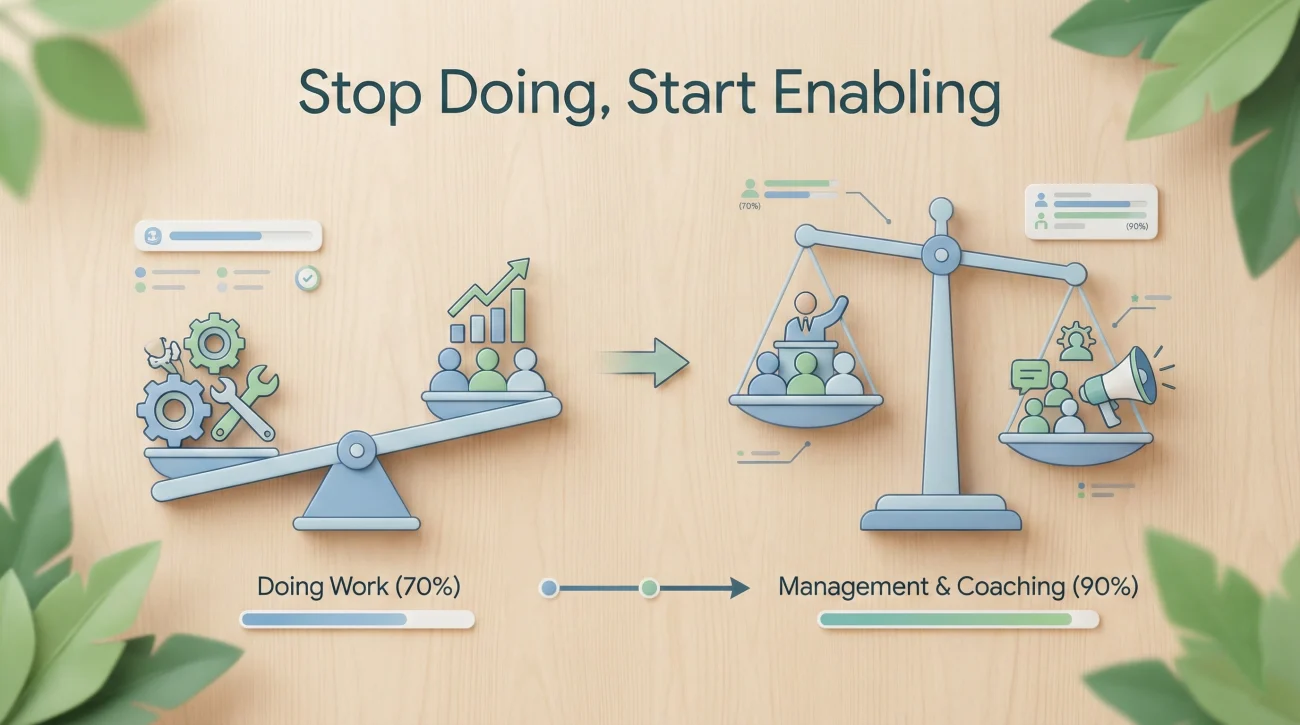
The hardest mindset shift: you’re no longer measured primarily on your individual output. You’re measured on your team’s collective output.
Resist the Urge to Do Everything Yourself
When something needs to be done, your instinct is to do it yourself because that’s faster and you know it’ll be done right. This is a trap.
Your job is to ensure work gets done, not to do it all yourself. If you do everything, you become a bottleneck and your team doesn’t develop.
What to Do Instead
Your new responsibilities:
- Clarify priorities: Help the team understand what matters most
- Remove blockers: Clear obstacles preventing the team from succeeding
- Provide context: Explain the why behind decisions and direction
- Develop people: Coach team members to improve their skills
- Make decisions: When the team is stuck or unclear, provide direction
These are your priorities now, not cranking out work yourself.
The 70/30 Rule
In your first few months, you might still do 30% hands-on work while transitioning to 70% management. That’s fine temporarily.
But by month 3-6, aim for 90% management activities and only 10% individual contribution. If you’re still doing most of the work yourself, you’re not managing – you’re just an overworked individual contributor with a fancier title.
For comprehensive leadership strategies, see our complete career guide.
Tip 2: Set Up Weekly 1-on-1s Immediately
The most important management tool: regular one-on-one meetings with each person you manage.

How to Structure 1-on-1s
- Frequency: Weekly for 30 minutes (bi-weekly minimum)
- Ownership: This is their meeting, not yours – they set the agenda
- Consistency: Same day/time each week, rarely canceled
- Format: Mix of status updates, problem-solving, coaching, and career development
What to Cover
Let them bring topics, but have backup questions:
“What’s on your mind this week?”
“What’s blocking you from making progress on [project]?”
“What can I do to help you be more effective?”
“What feedback do you have for me as your manager?”
What Not to Do
- Don’t make it purely status updates (those can be async)
- Don’t dominate the conversation talking about your priorities
- Don’t cancel regularly – this signals their development isn’t important
- Don’t skip career development discussions entirely
1-on-1s build trust, catch issues early, and show you care about people’s growth.
Tip 3: Managing Former Peers (The Hardest Transition)
If you were promoted from within, you’re now managing people who were your peers last week. This is awkward for everyone.
Acknowledge the Awkwardness
Don’t pretend nothing changed. Address it directly in your first team meeting:
“I know this transition is weird. Last week we were peers, now I’m your manager. I’m still figuring this out, and I want to make sure we maintain good working relationships while also being clear about my new responsibilities.”
This transparency diffuses tension.
Set New Boundaries
Some things have to change:
- Venting sessions: You can’t participate in complaining about leadership anymore – you are leadership
- Social dynamics: Some friendships may need more professional distance
- Decision authority: You now make final calls on team decisions
- Information sharing: You’ll know things you can’t share with the team
This doesn’t mean being cold or distant. It means being clear about your new role.
Treat Everyone Fairly
Don’t give special treatment to close friends. If anything, hold them to the same or higher standards to avoid perceptions of favoritism.
Document decisions consistently, give feedback equally, and distribute opportunities fairly.
Have Difficult Conversations Early
If a former peer struggles with the new dynamic, address it:
“I’ve noticed some tension since my promotion. Can we talk about how we make this work? I value our working relationship and want to figure this out together.”
Most issues improve with direct conversation.
Tip 4: Don’t Be a Micromanager (Or a Ghost)
New managers struggle to find the right balance of oversight. They either micromanage everything or disappear completely.
Signs You’re Micromanaging
- You need to approve every small decision
- You rewrite people’s work instead of coaching them
- You check in multiple times per day on the same task
- Your team waits for your approval before proceeding
- People stop taking initiative because you’ll just redo it anyway
Signs You’re a Ghost Manager
- Your team doesn’t know your priorities
- People are stuck on problems for days without your input
- You don’t know what team members are working on
- Feedback comes too late to be useful
- The team makes decisions you have to reverse later
The Right Balance
Set clear expectations upfront, then trust people to deliver. Check in at reasonable intervals:
“For this project, I want you to own the day-to-day decisions. Check in with me at these milestones: [list]. If you hit blockers, come to me immediately. Otherwise, you have autonomy to proceed.”
This gives clarity on when oversight is needed versus when they should proceed independently.
For more management strategies, explore our leadership development guide.
Tip 5: Learn to Give Feedback (Early and Often)
Many new managers avoid giving critical feedback because it’s uncomfortable. This is a mistake – delayed feedback makes problems worse.
Give Feedback Quickly
Don’t wait for formal reviews. Address issues within 24-48 hours when possible:
“I noticed in the meeting today you interrupted Sarah twice. I don’t think it was intentional, but it shut down her contributions. Can we talk about how to avoid that?”
Timely feedback is specific and correctable.
Be Specific, Not Vague
Bad feedback:
“You need to communicate better.”
Good feedback:
“I need you to send me a brief update every Friday by EOD on project status. Right now I’m having to chase you for updates, which creates delays. Can you commit to that Friday summary?”
Specific feedback tells people exactly what to change.
Balance Positive and Constructive
Don’t only give feedback when things go wrong. Regularly acknowledge good work:
“Great job handling that difficult client situation today. Your calm approach and clear communication prevented escalation.”
This makes constructive feedback easier to receive because people know you notice their strengths too.
Tip 6: Ask Your Team for Feedback
You’re new at this. You’ll make mistakes. Create channels for your team to tell you when you’re screwing up.

How to Ask
In 1-on-1s, ask directly:
“What’s one thing I could do differently as your manager that would make your job easier?”
“I’m still learning how to manage. What feedback do you have for me?”
Make It Safe to Give You Critical Feedback
If someone gives you criticism, thank them genuinely:
“Thank you for telling me that. I hadn’t realized I was doing that. I’m going to work on it.”
Then actually change based on their feedback. This shows you’re serious about improvement.
Don’t Get Defensive
Your instinct when criticized: explain why you did something or justify your decisions.
Resist this. Just listen, ask clarifying questions if needed, and thank them. Process it later.
Tip 7: Be an Umbrella, Not a Pelican

This metaphor explains good management better than most advice:
The Umbrella Manager
Protects the team from organizational chaos and politics. Filters out noise so the team can focus on work. Shields them from unnecessary pressure while still communicating important context.
When things go wrong, takes responsibility publicly and coaches privately. When things go well, credits the team publicly.
The Pelican Manager
Regurgitates everything from leadership down to the team without filtering. Creates panic by sharing every concern or criticism. Takes credit for team wins while blaming team members for failures.
What This Looks Like
When leadership panics about a deadline:
Pelican: “Leadership is freaking out about this deadline! We’re all going to be in trouble if we don’t finish!”
Umbrella: “This deadline is important. Here’s why it matters to the business. Let’s make a plan to hit it without working 60-hour weeks.”
When a team member makes a mistake:
Pelican (to leadership): “Alex messed up the report.”
Umbrella (to leadership): “We had an issue with the report. I’m working with the team to prevent this going forward.”
Then privately to Alex: “Let’s talk about what happened and how to avoid this next time.”
Be the umbrella. Filter pressure, provide context, take accountability publicly, coach privately.
FAQ
Management Is Learned, Not Innate
Getting promoted to manager doesn’t automatically make you good at managing. It’s a completely different skill set from individual contribution, and most people receive zero training.
The seven tips provide a framework: shift from doing to enabling, set up regular 1-on-1s, manage former peer relationships carefully, find the right oversight balance, give feedback early and often, seek feedback from your team, and protect them from organizational chaos while providing necessary context.
You’ll make mistakes. Everyone does. The difference between good and bad new managers isn’t perfection – it’s self-awareness, willingness to learn, and genuine care about team members’ success.
Your success is now measured by your team’s output and development, not your individual achievements. Make that mental shift and everything else follows.
Start with weekly 1-on-1s and direct communication with former peers. Build from there. Management skills develop through practice and feedback, not overnight transformation.
Be patient with yourself while holding yourself to high standards. You were promoted because someone believed you could do this. They were probably right.
For additional management and leadership resources, check out our comprehensive career guide.