
- What has changed in 2026 hiring: AI now screens, ranks, and supports interviews, so candidates need to write for systems and humans.
- What AI looks for first: Clear structure, machine readable formatting, job relevant skills, and measurable outcomes that signal real impact.
- How to optimize your application: Use standard section headings, avoid layouts that break parsing, and weave job keywords naturally into sentences.
- Where AI still affects you after the resume: Scheduling, chatbots, and video assessments can be AI assisted, so clarity and calm delivery matter.
- What to watch long term: Bias and transparency are real issues, but candidates who pair AI literacy with human warmth stay ahead.
AI Is Changing How We Get Hired
Job applications in 2026 look nothing like they did five years ago. Recruiters aren’t manually scanning every resume anymore – algorithms do the heavy lifting. Understanding how ai impacts job applications is no longer optional; it’s a critical part of modern job hunting. The key is learning to work with AI, not against it.
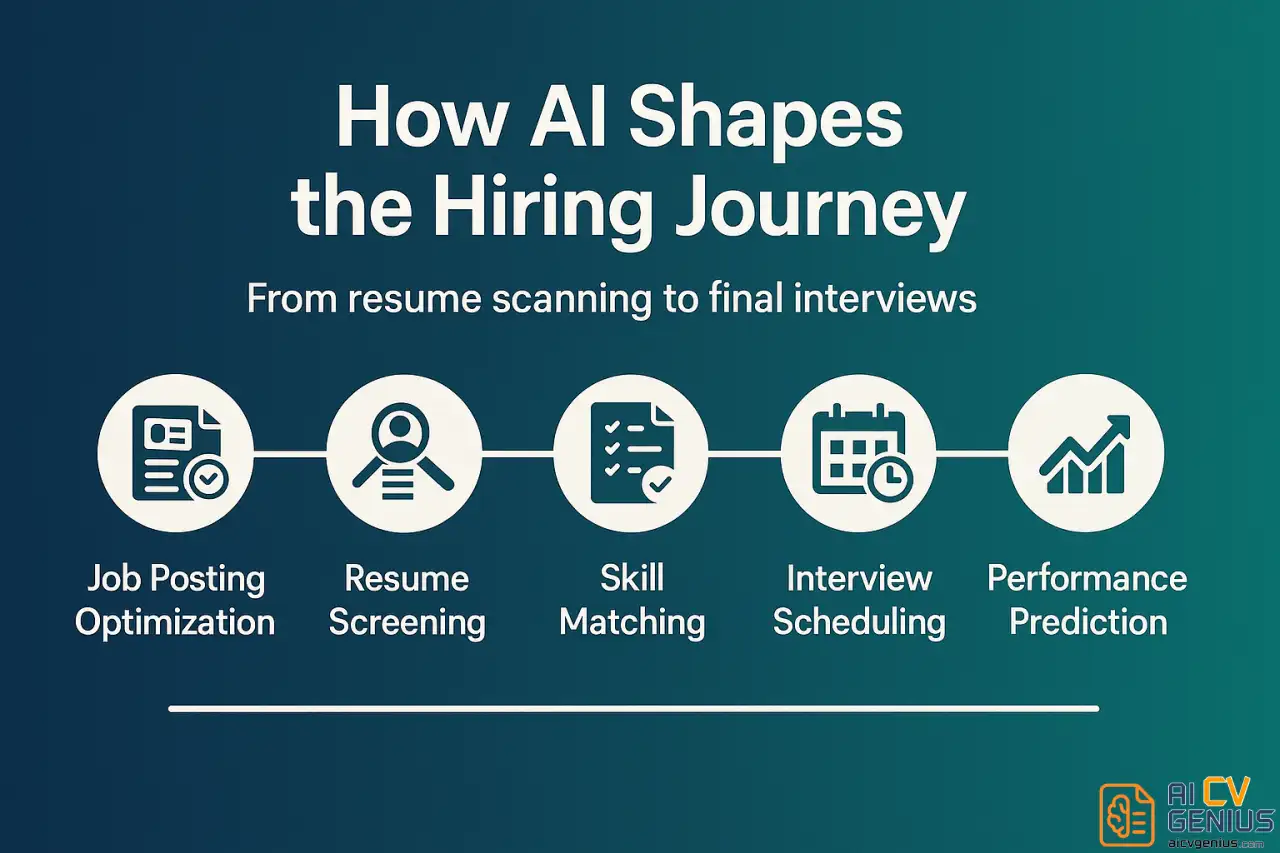
Artificial intelligence now touches nearly every stage of hiring: job posting optimization, resume screening, candidate ranking, and even video interview analysis. While this sounds intimidating, it also creates new opportunities for candidates who understand how to navigate the system intelligently.
Why Companies Use AI in Hiring
Recruiters are under pressure to fill roles faster than ever. With thousands of applicants per position, AI tools help sort data efficiently. Systems like applicant tracking software (ATS) analyze keywords, match skills, and even evaluate tone.
The result? Companies save time – and you, as a candidate, need to adapt your strategy.
How AI Analyzes Your Application
The Rise of Applicant Tracking and AI Screening
Before a human ever reads your resume, it’s likely scanned by an AI system. These systems look for patterns: skills that match the job description, clean formatting, and measurable results. If your document isn’t machine-readable, you might get filtered out instantly.
That’s why understanding applicant tracking systems and ai screening is crucial. The smarter you format your resume, the better your chances of being shortlisted. Tools like Jobscan or Rezi simulate these filters, helping you see what recruiters (and algorithms) see.
What AI Looks For in Resumes
AI doesn’t judge creativity – it looks for structure. It analyzes job titles, skill frequency, and quantifiable outcomes. A line like “Increased sales by 15% using CRM data” signals both soft and hard skill alignment. This dual readability makes your resume stand out to both systems and recruiters.
AI in Recruitment and Hiring Process
Let’s break down the current ai in recruitment and hiring process into its main stages:
| Stage | AI Function | Candidate Impact |
|---|---|---|
| Job Posting | Algorithmic wording optimization | More inclusive job ads reach diverse applicants |
| Resume Screening | Keyword and skill pattern recognition | Need for strategic keyword use |
| Candidate Ranking | Score-based relevance matching | Higher chance of shortlist if resume structured well |
| Interviews | Video analysis / scheduling automation | Quicker feedback, consistency across candidates |
| Onboarding | Automated documentation, digital learning | Smoother first-day experience |
From Screening to Interview: Where AI Still Plays a Role
Beyond resumes, AI tools now manage interview scheduling, chatbots for candidate FAQs, and even video assessments. Some analyze speech pace, tone, and confidence to estimate suitability.
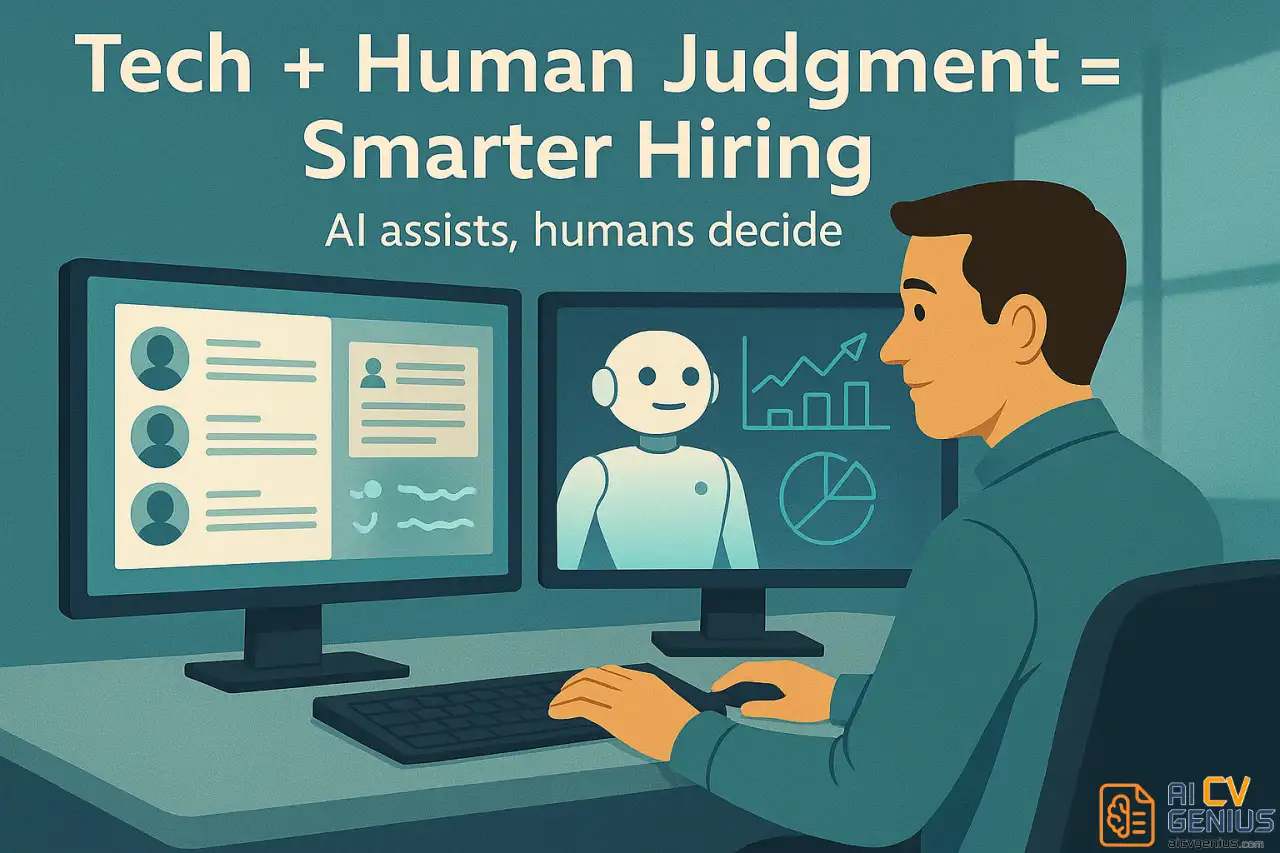
While this sounds futuristic, remember: these tools assist, not replace, human recruiters.
How to Optimize Your Application for AI
How to Optimize Your Resume for AI
When writing for both humans and machines, clarity is everything. Here are key rules to follow:
- ✅ Use standard section titles: “Experience,” “Education,” “Skills.”
- ✅ Avoid tables or graphics that confuse parsing systems.
- ✅ Include keywords from the job description naturally in sentences.
- ✅ Save your resume as .docx or .pdf (not image-based formats).
When you understand how to optimize resume for ai, you can write once and pass both the algorithmic filter and the human eye test.
Example: A Tale of Two Resumes
Imagine two candidates: Alex and Jamie. Both are qualified.
Alex’s resume uses vague terms – “Responsible for managing teams.”
Jamie’s uses metrics – “Led a team of 8 developers delivering 12 projects 10% under budget.”
Who does AI pick? Jamie. Numbers make data visible to machines and humans alike.
“AI doesn’t understand emotion – but it understands structure. Speak its language, and it will listen.”
Tools That Use AI to Help Candidates
The same technology that screens resumes can also empower you. AI-powered platforms like ChatGPT, Kickresume, and LinkedIn Resume Builder suggest better phrasing and detect weak areas.
They don’t replace your story – they enhance clarity. You can even test your resume through free AI resume checker tools to see how algorithms interpret your content.
Preparing for AI-Based Interviews
Some companies now use AI-driven video platforms that record short responses. The algorithm analyzes facial expressions, tone, and timing.
Don’t overthink it – focus on clarity and authenticity. Remember, these systems look for confidence and coherence, not perfection. Practice speaking in concise 60–90 second answers that emphasize results.
Common Mistakes When Applying to AI-Based Systems
- ❌ Using fancy resume templates that confuse scanners.
- ❌ Stuffing keywords unnaturally to trick algorithms.
- ❌ Forgetting that humans still make final decisions.
- ❌ Ignoring job-specific terminology.
Optimizing for Both AI and Humans
The perfect resume strikes a balance: structured for algorithms, expressive for humans. You can achieve that by combining measurable achievements with clean formatting and narrative flow. Example:
“Implemented data visualization tools improving report turnaround by 30%, while collaborating cross-functionally with 4 departments.”
This line satisfies both the machine (numbers, structure) and the recruiter (teamwork, impact).
Example Resume Adjustments
Before: “Assisted in marketing campaigns.”
After: “Supported digital marketing campaigns, using Google Ads and AI analytics tools to optimize conversion rates by 20%.”
This version works because it connects your human creativity with technological literacy.
The Broader Impact and Future of AI Hiring
AI Bias: The Hidden Challenge
While AI promises fairness, it sometimes inherits human bias. If training data reflects unequal hiring patterns, algorithms can unintentionally favor or exclude certain profiles. This is why awareness matters: when you understand how data drives decisions, you can design your resume to counteract bias through clear, objective language.
Job Descriptions Are Becoming Smarter Too
Companies are using AI to write inclusive, bias-free job ads. Some tools scan language for gender-coded words or jargon that may discourage applicants. For job seekers, this means clearer expectations and fewer invisible barriers.
The Ethics of Automated Hiring
Ethical debates now center on transparency. Should candidates know when an AI reviewed their resume? Should they have access to their scores? Governments are starting to regulate this. In 2026, expect companies to disclose AI usage more openly in recruitment. That’s progress – transparency builds trust on both sides.
AI and the Future of Career Coaching
AI is even entering the career coaching space, providing instant resume feedback, keyword suggestions, and interview simulations. It’s democratizing access to mentorship.
The more you experiment, the faster you’ll learn to interpret what hiring technology values – and how to work in harmony with it.
How AI Will Shape Job Hunting in 2026 and Beyond
Expect a hybrid future. AI will handle repetitive filtering, while human recruiters focus on emotional fit. As machine learning models mature, they’ll analyze broader factors – learning habits, adaptability, collaboration patterns – to predict success.
That means your online presence (LinkedIn, GitHub, personal site) will matter as much as your resume.
AI and Emotional Intelligence
Ironically, as algorithms handle data, emotional intelligence becomes your strongest differentiator. Machines can’t replicate empathy, storytelling, or genuine connection. That’s why candidates who blend technical awareness with human warmth win in AI-assisted hiring.
Pros & Cons of AI in Hiring
| Pros | Cons |
|---|---|
|
|
FAQ
Final Thoughts
Understanding how ai impacts job applications isn’t about fearing technology – it’s about leveraging it. The smartest candidates in 2026 aren’t those who fight automation; they’re the ones who use it as a mirror to refine clarity, structure, and self-awareness. In a hiring world guided by algorithms but decided by humans, being both data-savvy and deeply human will always keep you ahead.