
- Core idea: Netflix interviews are scored against the Culture Deck, so treat it as required prep, not optional reading.
- What they value: Freedom with responsibility, radical candor, and the Keeper Test where “adequate” performance is not enough.
- How to answer: Use stories that show judgment over rigid process, direct feedback even to leaders, and measurable impact.
- What to expect: Multi stage loop with recruiter, hiring manager, 3 to 5 team rounds, sometimes an exec round, plus blunt pushback to test candor.
- How to prepare: Read the deck repeatedly, map your examples to each principle, research Netflix’s business, and confirm this culture fits you.
Netflix Interviews Are About the Culture Deck – You Must Read It
Netflix’s famous Culture Deck is required reading before any interview. It’s not corporate fluff – it’s the literal framework interviewers use to evaluate you.
The 125-page document outlines Netflix’s philosophy: hire extraordinary people, give them maximum freedom, expect exceptional results, and part ways quickly if performance drops.
Every interview question maps back to Culture Deck principles. Interviewers don’t just assess your skills – they evaluate whether you’ll thrive in Netflix’s unique high-performance, low-process culture.
Understanding the Culture Deck isn’t optional preparation. It’s the foundation of Netflix’s entire hiring process.
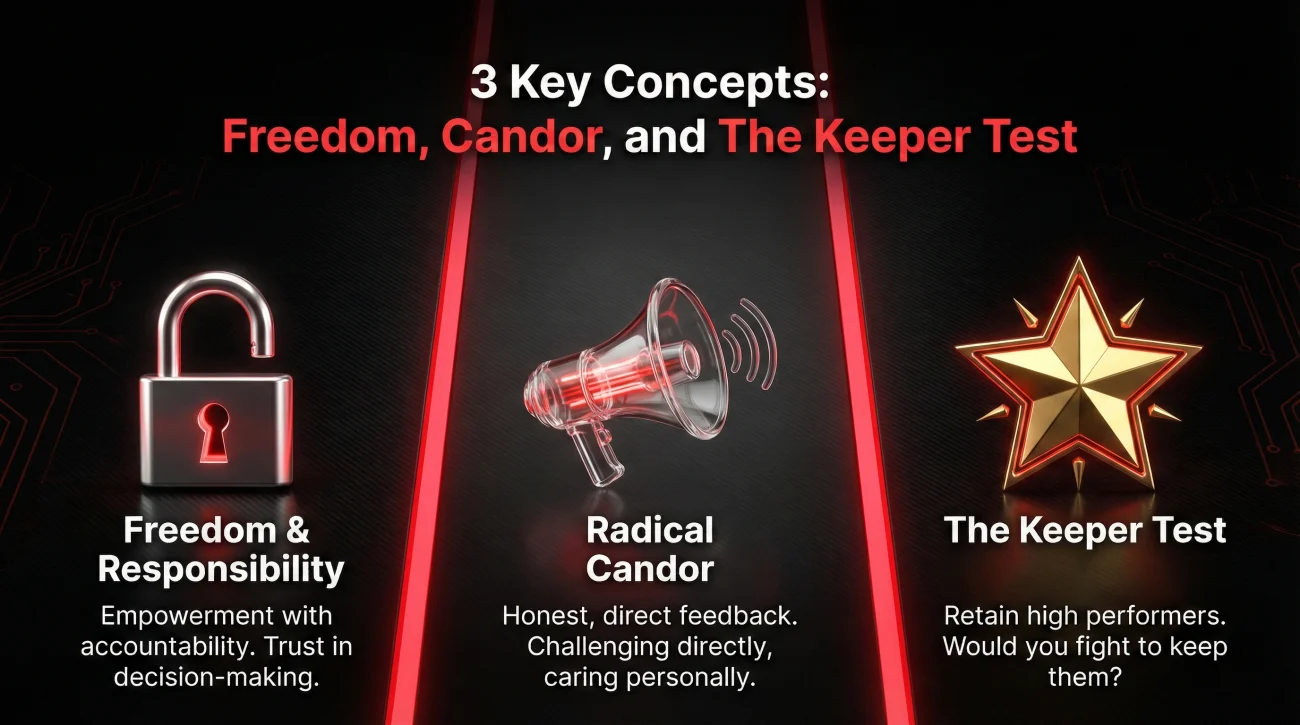
3 Key Culture Deck Concepts
1. Freedom and Responsibility
What it means: Netflix gives extraordinary freedom to employees but expects them to act responsibly without supervision.
No approval processes for expenses. No vacation policy. No rigid processes. Instead, employees are trusted to make good decisions aligned with company interests.
The expectation: You use freedom wisely, make smart trade-offs, and take ownership of outcomes without needing oversight.
What Netflix is testing: Can you handle autonomy? Do you make good decisions without rules? Will you abuse freedom or use it productively?
2. Candor (Radical Honesty)
What it means: Netflix values direct, honest feedback even when it’s uncomfortable. Political correctness and sugarcoating are discouraged.
Employees are expected to give candid feedback to anyone, including their boss and executives. Disagreement is not just tolerated – it’s required when you think something is wrong.
The expectation: You speak up directly, give honest feedback, and challenge ideas respectfully but firmly.
What Netflix is testing: Will you tell the truth or try to please people? Can you handle direct criticism? Do you avoid conflict or engage productively?
3. The Keeper Test
What it means: Netflix managers regularly ask: “If this person told me they were leaving, would I fight to keep them?”
If the answer is no, Netflix parts ways with that employee – even if they’re performing adequately. Netflix wants a team of stars, not a family.
The expectation: You perform at an exceptional level consistently. Adequate is not enough.
What Netflix is testing: Are you exceptional or just competent? Will you continuously raise your performance or plateau?
For comprehensive interview preparation strategies, see our complete interview guide.
Sample Questions Based on Culture Deck

Testing Candor
“Tell me about a time you gave difficult feedback to your boss.”
What they’re looking for: Evidence you speak truth to power, not just complain behind people’s backs.
Good answer structure:
“My manager was micromanaging the team, which slowed our velocity by 40%. I scheduled a 1-on-1 and said directly: ‘I think the frequent check-ins are slowing us down. Can we try weekly updates instead of daily?’ I shared data showing the impact. He appreciated the honesty, we adjusted the approach, and velocity improved 30%.”
Why it works: Shows direct communication, data-driven feedback, and constructive approach to disagreement.
Testing Freedom and Responsibility
“Tell me about a time you made a significant decision without asking for approval.”
What they’re looking for: Ability to act independently while making good judgments.
Good answer structure:
“Our biggest customer was about to churn due to a critical bug. I knew getting approval for a dedicated fix would take 2 weeks through normal channels. I made the call to reassign two engineers immediately to fix it over the weekend. We resolved the issue, saved the $500K account, and I informed leadership afterward with full context. They supported the decision because the outcome justified the autonomy I took.”
Why it works: Shows ownership, good judgment under pressure, and responsible use of freedom.
Testing Keeper Test Mindset
“How do you ensure you remain exceptional at your job?”
What they’re looking for: Continuous improvement mindset and high performance standards.
Good answer structure:
“I set aggressive personal goals beyond what’s expected. I actively seek feedback every month and address gaps immediately. I track my impact metrics and compare against top performers. When I notice my skills getting stale, I proactively learn new technologies. I don’t wait for annual reviews to know if I’m performing exceptionally – I know continuously.”
Why it works: Shows self-awareness, high standards, and proactive improvement.
Other Common Questions
“Tell me about a time you disagreed with a decision and how you handled it.”
“Describe a situation where you had to make a decision with incomplete information.”
“Give an example of when you challenged the status quo.”
“How do you prioritize when everything seems important?”
“Tell me about your biggest professional failure.”
All of these test Culture Deck principles: candor, ownership, good judgment, and high performance.
The Netflix Interview Process
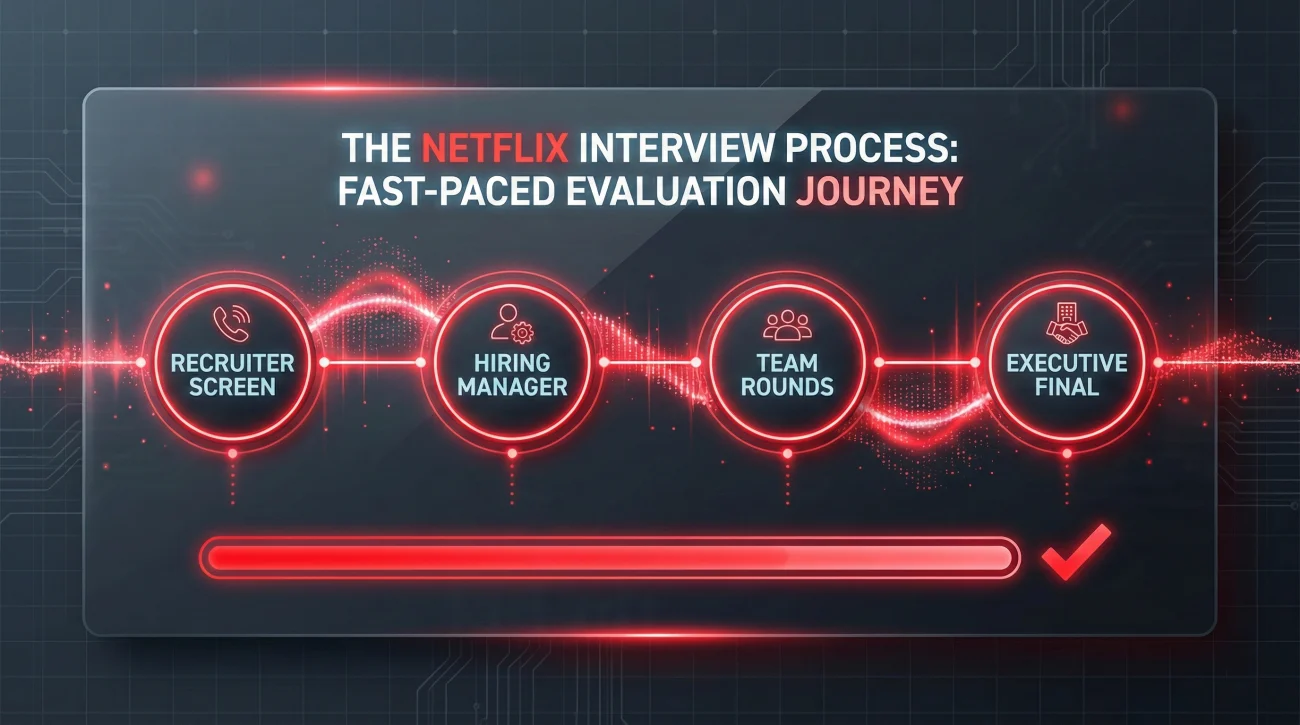
Typical Stages
Stage 1: Recruiter Screen
- Discussion of background and fit
- Introduction to Culture Deck if you haven’t read it
- Assessment of alignment with Netflix values
Stage 2: Hiring Manager Interview
- Deep dive into experience and skills
- Culture Deck alignment questions
- Role-specific competency assessment
Stage 3: Team Interviews (3-5 rounds)
- Each interviewer focuses on different Culture Deck principles
- Mix of behavioral and technical/functional questions
- Expect tough, direct questions
Stage 4: Executive Interview
- Final round with senior leadership
- Strategic thinking and long-term fit
- Cultural alignment at highest level
Timeline
Typically 3-6 weeks from first contact to offer. Netflix moves faster than some tech companies but still evaluates thoroughly.
For more interview process strategies, explore our interview preparation guide.
Critical Mistake: Trying to Be “Nice”
Many candidates fail Netflix interviews by being too agreeable, conflict-avoidant, or focused on being liked.

Don’t Prioritize Being Nice
Bad approach:
“I always try to keep everyone happy and avoid confrontation. I’m a team player who goes along with group decisions.”
Why it fails: Netflix doesn’t want harmony at the expense of honesty. They want people who speak up even when it’s uncomfortable.
Better approach:
“I prioritize being effective over being liked. If I see a problem, I raise it directly even if it creates tension. I care about outcomes, not just smooth relationships.”
Don’t Over-Emphasize Process
Bad approach:
“I believe in following established processes and getting proper approvals before taking action.”
Why it fails: Netflix is allergic to process-heavy thinking. They want judgment, not adherence to rules.
Better approach:
“I use my judgment to determine when to act quickly versus when to consult others. Processes should serve outcomes, not the other way around.”
Don’t Accept Adequate Performance
Bad approach:
“I consistently meet my goals and deliver what’s expected.”
Why it fails: “Adequate” doesn’t pass the Keeper Test. Netflix wants exceptional.
Better approach:
“I don’t aim to meet expectations – I aim to significantly exceed them. Last quarter, my target was 10 new clients. I delivered 18 because I saw an opportunity and took it.”
How to Prepare
Read the Culture Deck Multiple Times
Download and study Netflix’s Culture Deck thoroughly. It’s publicly available. Understand every principle deeply.
Don’t just read – think about how each principle applies to your work experience.
Prepare Stories for Each Principle
Create examples demonstrating:
- Freedom and Responsibility: Times you acted independently and made good decisions
- Candor: Times you gave or received difficult feedback
- Judgment: Times you made good decisions with incomplete information
- Impact: Times you delivered exceptional results
- Innovation: Times you challenged status quo successfully
- Courage: Times you took smart risks
- Passion: Times you went above and beyond
- Selflessness: Times you put company success over personal ego
Be Prepared for Brutal Honesty
Netflix interviewers will be direct, sometimes blunt. They might challenge your answers or push back hard.
This isn’t personal – it’s testing your ability to handle candor. Don’t get defensive. Engage thoughtfully.
Research Netflix’s Business
- Understand their content strategy
- Know their competitive position
- Be familiar with recent initiatives
- Have informed opinions about their products
Netflix expects you to care about and understand their business.
FAQ
Be a Professional Athlete, Not a Family Member
Netflix explicitly rejects the “we’re a family” corporate culture. They describe themselves as a professional sports team – the best players stay, adequate players get cut, and everyone knows the standard.
The Culture Deck isn’t optional reading – it’s the evaluation framework for every interview. Master the three key concepts: Freedom and Responsibility (high autonomy with good judgment), Candor (direct honest feedback even when uncomfortable), and the Keeper Test (exceptional performance is the only acceptable standard).
Prepare stories demonstrating Culture Deck principles explicitly. Show times you acted independently and made good decisions, gave difficult feedback directly, challenged status quo, and delivered exceptional results consistently.
The critical mistake: trying to be nice and agreeable. Netflix doesn’t want harmony over effectiveness. They want people who prioritize outcomes, speak truth even when it creates tension, and use judgment over following processes.
Don’t accept adequate performance standards. Don’t avoid conflict. Don’t wait for permission. Don’t sugarcoat feedback.
Netflix’s culture isn’t for everyone. If you value stability, clear processes, harmony, and job security, other companies will fit better. But if you thrive on autonomy, want to work with exceptional people, and prefer candor over politics – Netflix might be exactly right.
Read the Culture Deck. Really read it. Then ask yourself honestly: do I actually want to work this way?
For additional Netflix interview resources, check out our comprehensive career guide.