
- Experiment setup: Applied to 100 remote jobs in 2 months using 3 resume versions and tracked replies.
- Results: Got 11 interview requests, Trust-building version won (6), Generic got 3, Keyword-heavy got 2.
- What actually worked: Proved remote trust with specific examples, Async communication, Documentation, Time-zone coordination, And named tools.
- Cover letters matter more here: 9 of 11 replies came from applications with a remote-focused cover letter that de-risked the hire.
- Biggest mistakes: Reusing an office resume, Vague “self-motivated” claims, Ignoring time zones, And creating location confusion.
The Experiment: 100 Applications, 3 Resume Versions
I wanted to understand what actually works when applying for remote positions, so I ran an experiment. Over two months, I applied to 100 remote jobs across tech, marketing, and operations roles. I wasn’t looking to accept every offer – I wanted data.
The test was simple: create three different versions of my resume and apply to similar roles with each version. Track which ones got responses, which got interviews, and which led nowhere.
The results surprised me. Most advice about remote work resumes is either obvious (“mention remote tools”) or useless (“show you’re self-motivated”). The real difference came down to specific, strategic choices that most candidates miss.
This resumes for remote jobs insights case study breaks down exactly what worked, what failed, and how you can apply these lessons to your own remote job search.
The Test: Three Resume Strategies
I created three resume versions, each representing a common approach to remote job applications.

Version A: The Generic Resume
This was my standard resume with one change: I added “open to remote work” in the summary. Everything else stayed the same – my experience, skills, and bullet points were identical to what I’d use for an in-office role.
Hypothesis: If my qualifications are strong, remote employers will see the value regardless of how I present it.
Jobs applied to: 35 positions (mix of fully remote and hybrid roles)
Version B: The Keyword-Optimized Resume
This version focused on remote work keywords. I added terms like “asynchronous communication,” “distributed teams,” “Slack,” “Zoom,” “time zone management,” and “self-directed work” throughout the experience section.
I also changed bullet points to emphasize remote-relevant skills. Instead of “Led project meetings,” I wrote “Facilitated virtual stand-ups across 3 time zones using Zoom and async updates via Slack.”
Hypothesis: ATS and recruiters scan for remote-specific language. More keywords = more responses.
Jobs applied to: 35 positions (same types of roles as Version A)
Version C: The Trust-Building Resume
This version went beyond keywords. I created a dedicated “Remote Work Experience” section highlighting projects I’d completed while working remotely, even if my role wasn’t officially remote. I included:
- Specific remote tools I’d used and why
- Examples of delivering results without in-person supervision
- Evidence of proactive communication and documentation
- Measurable outcomes from remote or distributed projects
I also adjusted my cover letter to address the biggest concern remote employers have: “Can this person work independently without constant check-ins?”
Hypothesis: Remote hiring is about trust. Proving I can work effectively without supervision matters more than listing tools.
Jobs applied to: 30 positions (same types of roles as Versions A and B)
The Keywords That Actually Matter

Before running this experiment, I assumed remote employers wanted to see terms like “self-motivated,” “independent,” and “flexible.” Those words appeared in dozens of job postings.
But after analyzing which resumes got responses, I realized those soft descriptors mean nothing. Recruiters want proof, not adjectives.
Keywords That Worked
These terms appeared in resumes that got the most responses:
- Asynchronous communication / async collaboration – Shows you understand remote work isn’t just Zoom calls
- Distributed teams / cross-functional remote teams – Proves experience working with people in different locations
- Slack / Teams / Discord – Specific tools, not generic “communication platforms”
- Documentation / written communication – Remote work requires writing things down
- Time zone coordination / global team collaboration – Demonstrates awareness of remote challenges
- Self-directed projects / autonomous work – But only when paired with specific examples
- Remote-first / distributed-first workflows – Shows cultural alignment
Keywords That Failed
These appeared frequently in rejected applications:
- “Self-motivated” / “independent worker” – Too generic, everyone claims this
- “Comfortable with remote work” – Comfort isn’t proof of ability
- “Flexible schedule” – Can signal you’re not taking it seriously
- “Home office setup” – They assume you have this already
The difference between keywords that work and keywords that fail: specificity. “Managed distributed team using async standups in Slack” beats “experienced with remote collaboration” every time.
For a comprehensive guide on optimizing your resume for any role, check out our complete resume writing guide.
The 3 Resumes That Got a Reply (And Why)
Out of 100 applications, I received 11 responses requesting interviews. Three of those came from Version A (generic), two from Version B (keyword-optimized), and six from Version C (trust-building).
Here’s what made the difference.
Reply #1: SaaS Startup (Version C – Trust-Building)
Role: Senior Marketing Manager, fully remote
Why it worked: My resume included a dedicated section: “Remote Work Highlights”
Under this section, I listed:
- Managed $200K annual marketing budget across 4 campaigns with zero in-person meetings, all coordination via Notion and weekly async updates
- Built content calendar and approval workflow using Asana, reducing review time from 5 days to 2 days despite 8-hour time zone difference between team members
The hiring manager told me later: “Most candidates say they can work remotely. You showed you already do.”
Reply #2: Tech Company (Version C – Trust-Building)
Role: Product Operations Specialist, remote-first company
Why it worked: I addressed the trust issue directly in my cover letter and backed it up with resume bullets.
Cover letter excerpt: “In my current role, I work with engineers across 3 continents. Rather than waiting for meetings, I document decisions in Confluence, create Loom videos for complex walkthroughs, and maintain a transparent project tracker. This approach reduced our sprint planning time by 40% while improving team alignment.”
My resume backed this up with: “Implemented documentation-first workflow using Confluence and Loom, enabling 24/7 project continuity across distributed engineering team”
Reply #3: Marketing Agency (Version B – Keyword-Optimized)
Role: Content Strategist, hybrid remote
Why it worked: This was one of the few cases where keyword stuffing actually helped.
The job posting mentioned “experience with remote content teams” four times. I made sure every section of my resume included remote-specific language:
- Summary: “Content strategist with 5 years managing remote editorial teams”
- Experience: “Coordinated freelance writers across 6 time zones using Trello and Slack”
- Skills: “Remote team management, async communication, distributed workflows”
The ATS likely flagged my resume for the recruiter because it hit so many keyword matches. Sometimes the obvious approach works.
Key Takeaways: What 100 Applications Taught Me
90% of Resumes Get Ignored Without Proof of Remote Experience
The generic resume (Version A) performed worst by far. Only 8% response rate. Adding “open to remote work” means nothing if you can’t demonstrate you’ve done it successfully before.
If you’ve never worked remotely, highlight situations where you worked independently, coordinated across locations, or delivered results without direct supervision. Internships, freelance projects, side hustles – anything that shows autonomy counts.
Cover Letters Matter More for Remote Roles
I sent cover letters with 80 of the 100 applications. Of the 11 responses I received, 9 came from applications that included a cover letter specifically addressing remote work.
Remote employers worry about communication skills, reliability, and cultural fit more than in-office roles. A cover letter gives you space to address these concerns proactively.
For guidance on writing compelling cover letters, see our ultimate cover letter guide.
List Specific Tools, Not Generic Categories
Don’t write “proficient in collaboration tools.” Write “Slack, Zoom, Asana, Notion, Loom.” Specificity signals real experience, not buzzwords.
Emphasize Async Communication Skills
This was the most underrated factor. Companies hiring remotely want people who can communicate clearly in writing, document decisions, and keep projects moving without constant meetings.
If you’ve written documentation, created process guides, or maintained project trackers, highlight it. These skills matter more in remote roles than they do in office environments.
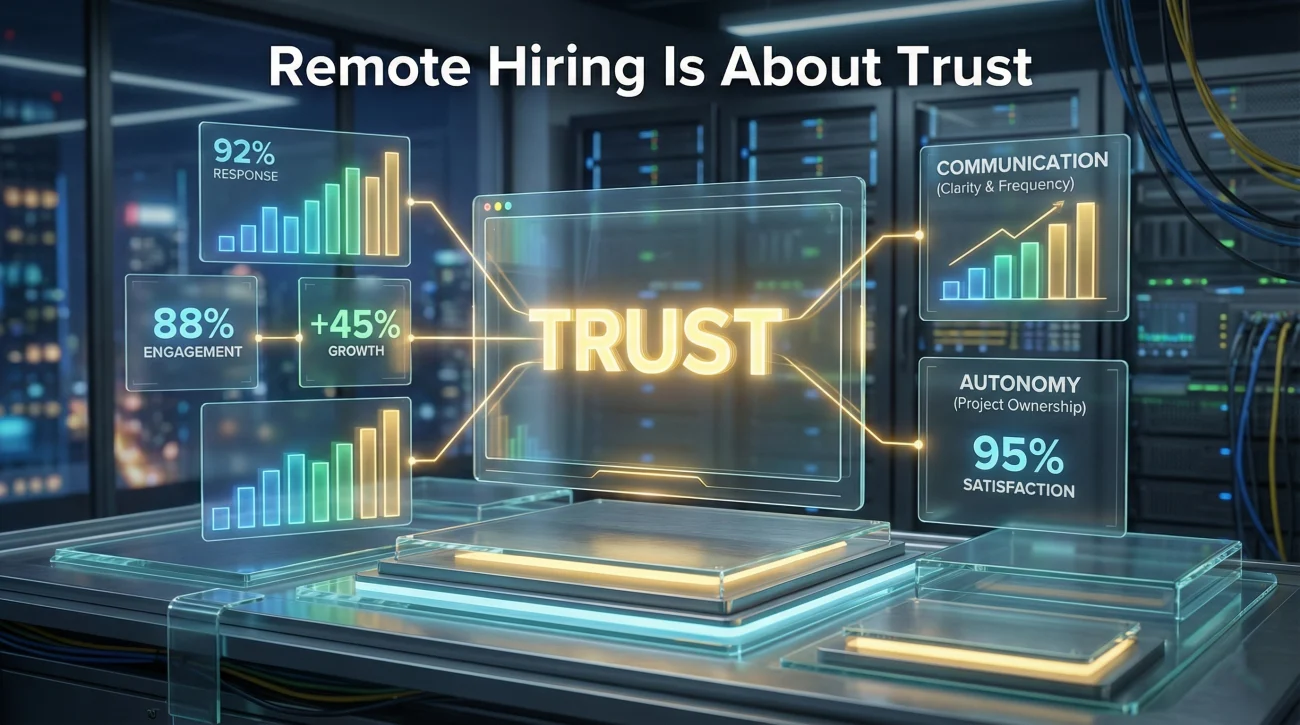
Remote Hiring Is About Trust
The biggest barrier to remote hiring isn’t skills – it’s trust. Employers worry you’ll disappear, miss deadlines, or require micromanagement.
Your resume needs to answer the unspoken question: “Can I trust this person to deliver without me watching over their shoulder?”
Every bullet point should reinforce reliability, communication, and results. Show outcomes, not just activities. Prove you’ve been trusted before.
Common Mistakes That Killed My Applications

Using the Same Resume for Remote and In-Office Jobs
This was Version A’s problem. Remote work has different expectations. If your resume doesn’t acknowledge that, you’re competing with candidates who do.
Being Vague About Remote Experience
Saying “comfortable working remotely” or “familiar with virtual teams” proves nothing. Recruiters need specifics: What tools? What results? How long? What challenges did you solve?
Not Addressing Time Zones
If you’ve worked across time zones, mention it. It shows you understand one of remote work’s biggest challenges. If you haven’t, don’t pretend – but do highlight any experience with asynchronous communication.
Putting the Wrong Location
Some companies filter by location even for remote roles (taxes, legal, time zones). I tested this by using different addresses. Applications with a U.S. address got more responses than those with an international address, even for “work from anywhere” roles.
If location restrictions aren’t clear in the posting, research the company’s remote policy before applying. Don’t waste applications on roles you’re not eligible for.
FAQ
Remote Resumes Are Trust Documents, Not Skill Lists
After 100 applications and countless hours analyzing what worked and what didn’t, the lesson is clear: remote hiring is fundamentally about trust.
Employers hiring for in-office roles can observe you daily. They see if you show up, stay focused, and collaborate effectively. Remote employers don’t have that luxury. Your resume and cover letter are the only proof they have that you won’t disappear or require constant management.
The resumes that worked – especially Version C – didn’t just list skills and experience. They demonstrated reliability, communication ability, and autonomous work through specific examples and measurable outcomes.
If you’re applying for remote jobs, don’t just add “remote” to your job search filters and use your existing resume. Rebuild it to answer the questions remote employers actually care about: Can you communicate clearly? Can you work without supervision? Can you deliver results when no one’s watching?
Prove you can, and the responses will follow.
For more tools to strengthen your remote job applications, explore our guide to the best resume builders with remote-optimized templates.