
- A remote resume has a different job than a standard one: It must prove trust, self-management, and clear communication, not just list skills.
- Make remote or hybrid experience impossible to miss by labeling roles directly, even if it was only part of the time.
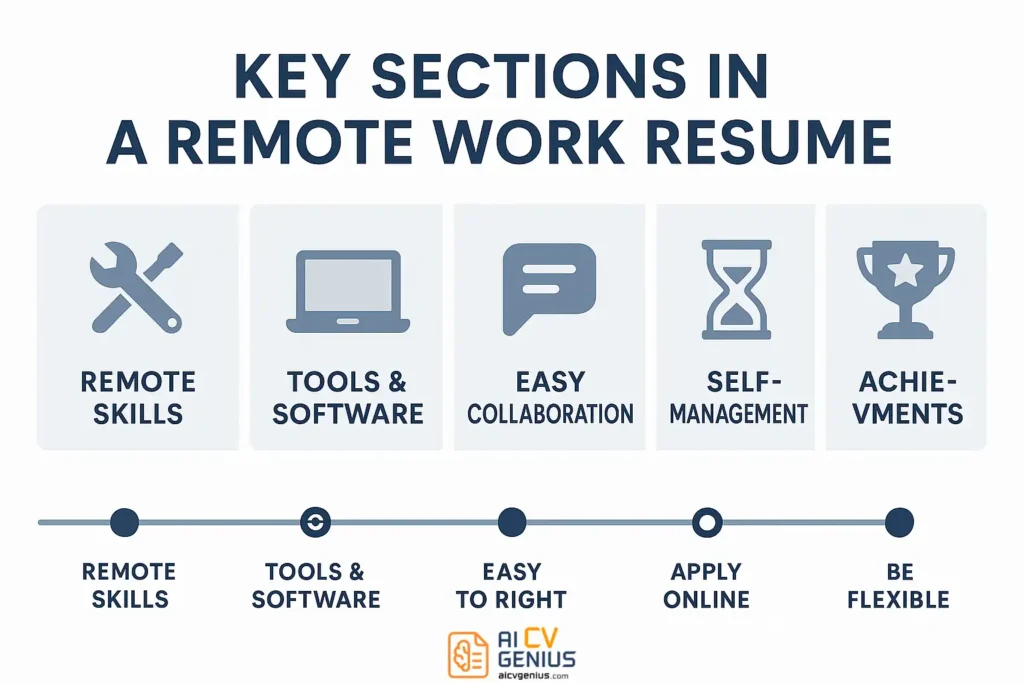
- Add a tight remote competencies section and name the exact collaboration tools you use, then back it up inside achievement bullets.
- Quantify results in a remote context, including time zones, distributed teams, and outcomes, so “remote readiness” reads like evidence.
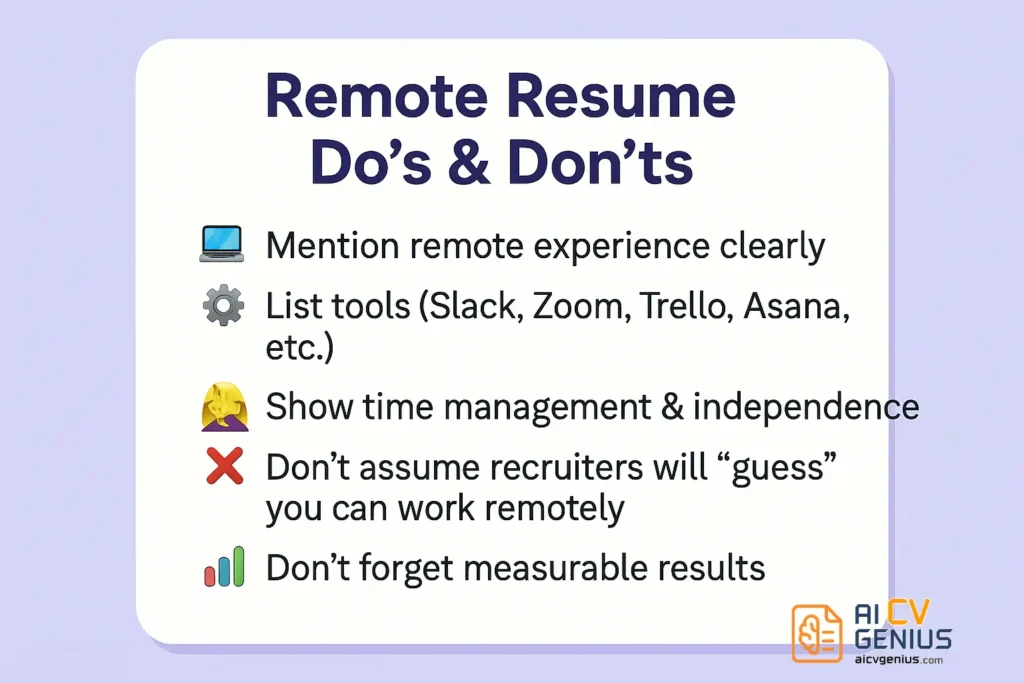
- Use the final checklist mindset: Highlight do’s and don’ts, rewrite traditional bullets into remote-friendly ones, and keep your summary explicitly remote-focused.
Remote work has rapidly transformed from a niche perk into a global standard for many industries. Whether you’re targeting a fully remote position, a flexible hybrid arrangement, or embracing the digital nomad lifestyle, your resume must convincingly demonstrate your ability to thrive and deliver results outside the traditional office structure. Many qualified applicants inadvertently fail in their remote job search not due to a lack of skills, but because their resume doesn’t explicitly showcase remote-readiness.
This guide will thoroughly unpack everything you need to know: from strategically highlighting the essential tools and soft skills crucial for remote success, to structuring your professional achievements in a way that unequivocally convinces employers you are the self-motivated, communicative, and effective candidate capable of delivering exceptional results anytime, anywhere.
Why Remote Work Demands a Different Resume Approach
A resume tailored for remote work requires a distinct focus compared to a traditional, office-centric one. Employers hiring for remote roles aren’t just assessing your technical skills; they are fundamentally evaluating your capacity for autonomous productivity, proactive communication, and effective collaboration across distances – they’re hiring trust. They need tangible proof that you can remain motivated without direct supervision, collaborate seamlessly across different time zones using digital tools, and communicate clearly and effectively without relying on face-to-face interactions. Therefore, your resume must strategically emphasize:
- ✅ Explicit mention of prior remote or hybrid work experience (even partial).
- ✅ Demonstrated proficiency with essential remote collaboration and project management tools (e.g., Slack, Zoom, Microsoft Teams, Asana, Trello, Jira, Notion, Google Workspace).
- ✅ Highlighting key soft skills critical for remote success: self-discipline, time management, adaptability, proactive communication (especially written/asynchronous), and independent problem-solving.
- ✅ Quantifiable results achieved while working within distributed or remote team structures.
Let’s delve into the specific steps to optimize your resume for remote opportunities.
Step 1: Explicitly Showcase Remote & Hybrid Experience
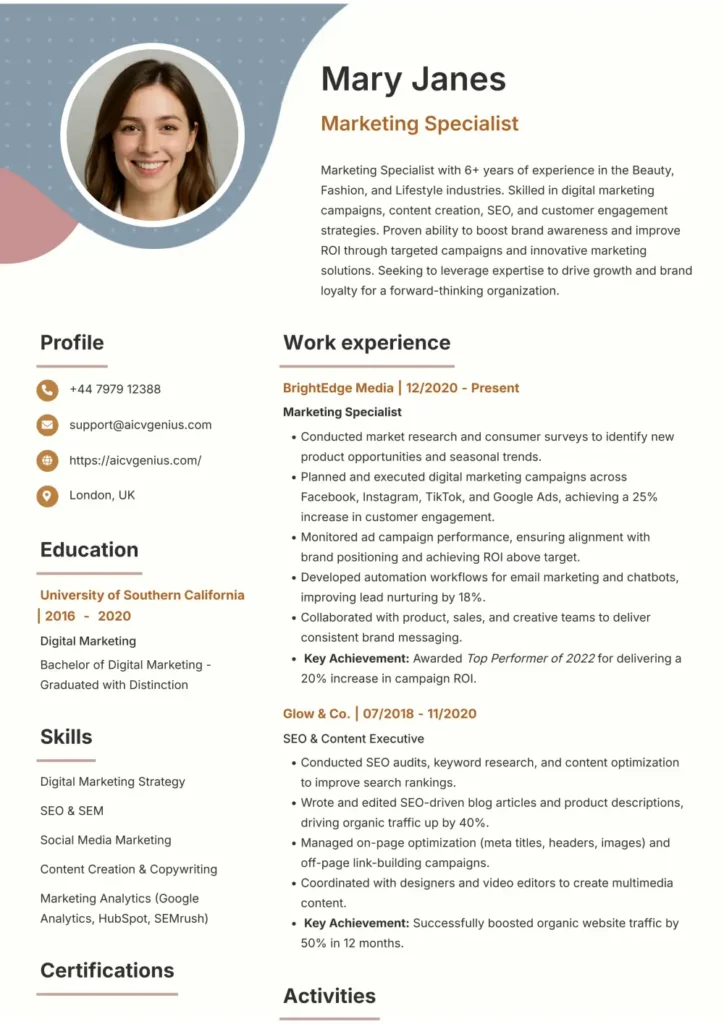
Don’t assume recruiters will infer your remote capabilities. Make it obvious. Clearly indicate the nature of your work arrangement directly alongside your job title or location:
- Standard Format: Marketing Specialist, ABC Corp, Anytown, USA (2019–2021)
- Remote-Optimized Format: Marketing Specialist – Fully Remote, ABC Corp (Based in Anytown, USA) (2019–2021)
- Hybrid Format Example: Project Manager – Hybrid (3 Days Remote/Week), XYZ Inc., Sometown, CA (2020–Present)
Even if only part of your tenure was remote or if the role was hybrid, explicitly stating this detail matters significantly. Recruiters often scan resumes in mere seconds; ensure the “Remote” or “Hybrid” keyword is easily visible to immediately signal your relevant experience.
Step 2: Consider a Dedicated “Remote Work Competencies” Section
While integrating skills throughout is essential, creating a dedicated skills subsection specifically highlighting your remote work capabilities can be highly effective. This acts as a powerful keyword-rich summary that directly addresses employer concerns. Example:
Remote Work Competencies: Asynchronous Communication Protocols, Cross-Time Zone Collaboration (EST to PST), Virtual Team Leadership, Independent Project Management (Asana, Jira), Proactive Status Reporting, Self-Motivation & Discipline, Cloud-Based Collaboration Platforms (Google Workspace, Microsoft Teams, Notion), Video Conferencing Facilitation (Zoom, Google Meet).
This approach moves beyond implication; it explicitly declares your readiness and proficiency in operating effectively within a distributed work environment.
Step 3: Detail Proficiency with Remote Collaboration Tools & Technologies
Remote teams rely heavily on a specific ecosystem of digital tools for communication, project management, and collaboration. Listing your proficiency demonstrates you can integrate seamlessly without extensive tool-specific training:
Key Tools to Include (if applicable):
- Communication: Slack, Microsoft Teams, Zoom, Google Meet, Discord
- Project Management: Asana, Trello, Jira, Monday.com, Basecamp
- Collaboration & Documentation: Google Workspace (Docs, Sheets, Slides), Microsoft 365 (Word, Excel, PowerPoint, SharePoint), Notion, Confluence, Miro, Figma
- Version Control (for technical roles): GitHub, GitLab, Bitbucket
Effective Resume Bullet Point Example: “Managed complex software development sprints for a distributed team of 8 engineers across 4 time zones, utilizing Jira for task tracking, Slack for daily communication, and Confluence for documentation, resulting in a 97% on-time feature delivery rate.” This demonstrates not just tool knowledge, but successful application within a remote context.
Step 4: Craft a Remote-Focused Resume Summary
Your opening professional summary is prime real estate. Explicitly mention your remote work capabilities or experience here to capture attention immediately. Example:
“Results-driven Senior Software Engineer with 5+ years of proven success contributing to and leading fully remote development teams. Highly skilled in Agile methodologies, architecting scalable backend systems (Python/AWS), and fostering effective cross-time-zone communication to deliver complex projects consistently ahead of schedule.”
Step 5: Quantify Achievements within a Remote Context
Generic statements lack impact. Provide concrete evidence of your effectiveness while working remotely by quantifying results whenever possible:
- Instead of: “Managed online marketing campaigns.”
Try: “Boosted online campaign lead generation by 42% over 6 months while managing budgets and coordinating strategy for a 6-person fully remote marketing team using Asana and weekly Zoom syncs.” - Instead of: “Provided IT support.”
Try: “Delivered Tier 2 remote IT support via Zoom screen-sharing and remote desktop tools to 400+ employees distributed across 3 continents, maintaining an average issue resolution time of under 30 minutes.” - Instead of: “Improved team workflow.”
Try: “Designed and implemented a new cloud-based project workflow using Notion and Slack integrations for a distributed design team, resulting in an 18% reduction in project completion delays within the first quarter.”
These examples explicitly link achievements to the remote work environment, directly addressing employer needs.
Case Study 1: Lisa the Remote Marketer Emphasizes Global Coordination
Lisa’s previous resume simply listed her campaign management duties. Recognizing the need to highlight remote expertise for global roles, she revised key bullet points.
Original: “Managed content creation.”
Revision: “Led a fully remote content team distributed across 3 continents (North America, Europe, Asia), utilizing Asana for project tracking and Slack for asynchronous communication, to produce 150+ high-quality SEO articles annually, achieving a 25% faster average content delivery time compared to previous benchmarks.”
This explicit framing of remote coordination and quantifiable efficiency gains made her resume highly attractive to remote-first startups and global agencies. Within weeks of applying with the updated version, she landed interviews at three international marketing firms.
Case Study 2: Raj the IT Specialist Reframes Existing Experience
Raj had never held a job explicitly titled “remote support,” but his role involved significant virtual assistance. He reframed his experience to highlight these capabilities.
Original: “Provided technical support to company employees.”
Revision: “Delivered comprehensive Tier 1 & 2 technical support primarily via Zoom screen-sharing, phone, and remote desktop tools (e.g., TeamViewer) to a distributed workforce of 300+ employees across multiple office locations and home offices, consistently resolving 90%+ of tickets within established SLAs.”
By emphasizing the remote methods and distributed nature of the workforce he supported, recruiters immediately recognized his relevant capabilities for dedicated remote IT roles, even without the explicit “remote” job title.
Checklist: Remote Resume Do’s & Don’ts
| Do’s | Don’ts |
|---|---|
| ✅ Explicitly add “Remote” or “Hybrid (X days/week)” designation to relevant job titles or locations. | ❌ Don’t assume recruiters will automatically infer your remote work capabilities or experience. Be direct. |
| ✅ Mention proficiency with specific remote collaboration tools (Slack, Zoom, Asana, Teams, Jira, etc.). | ❌ Don’t just list tools – briefly demonstrate how you used them effectively within achievements (e.g., “coordinated project using Trello”). |
| ✅ Quantify achievements and results obtained while working remotely whenever possible (%, $, #). | ❌ Don’t neglect soft skills; explicitly highlight independence, self-motivation, time management, and written/asynchronous communication aptitude. |
| ✅ Highlight experience collaborating effectively across different time zones or with international teams. | ❌ Don’t forget to include your current location/time zone, even for remote roles, as some companies have location or time zone constraints. |
Table: Transforming Traditional Bullets into Remote-Friendly Achievements
Subtle changes in framing can make a significant difference:
| Traditional Resume Bullet | Remote-Friendly Resume Bullet |
|---|---|
| “Managed project timelines and deliverables.” | “Managed complex, multi-stage remote projects across 3 international time zones using Asana for task tracking and weekly Zoom syncs; successfully reduced average project delays by 15%.” |
| “Collaborated with team members on marketing campaigns.” | “Led asynchronous collaboration efforts across a distributed marketing team (5 countries) using shared documents in Notion and proactive Slack updates, ensuring alignment on campaign messaging and achieving a 95% on-time launch rate.” |
| “Provided routine IT support to employees.” | “Delivered effective remote IT support primarily via Zoom screen-sharing & remote desktop tools to a workforce of 400+ employees working from home offices globally, maintaining a 98% user satisfaction rating.” |
Advanced Tips for Crafting Standout Remote Resumes
Go beyond the basics with these strategies:
- Create a Dedicated “Remote Work Experience” or “Distributed Team Collaboration” Section: If you have multiple significant remote roles, consolidating them under a specific heading can powerfully emphasize this pattern of experience.
- Showcase Asynchronous Communication Wins: Provide concrete examples of how you successfully used documentation, detailed status updates, or asynchronous tools to drive projects forward without relying solely on real-time meetings. Example: “Developed comprehensive project documentation in Confluence that served as the primary source of truth for an asynchronous development team, reducing clarification requests by 30%.”
- Explicitly Mention Cross-Cultural Work Experience: Highlight successful collaboration with diverse international teams, demonstrating cultural sensitivity and adaptability in communication styles.
- Integrate Freelance or Contract Remote Gigs Strategically: Don’t dismiss freelance work. Frame these experiences to highlight independence, client management, project completion, and proficiency with digital communication tools – all highly relevant for remote roles.
Example: Dedicated Remote Experience Section
Here’s a sample structure you can adapt:
Remote & Distributed Team Experience
- Content Strategist – Freelance (Fully Remote, Global Clients, 2021–Present): Successfully produced 50+ high-quality client blog articles monthly, managing assignments and feedback asynchronously across multiple time zones using Trello and Slack for coordination. Maintained a 98% client satisfaction rate.
- Project Manager – XYZ Startup (Fully Remote, Team across US/Europe, 2019–2021): Coordinated complex software product sprints across distributed teams spanning EST and GMT time zones using Jira and daily asynchronous stand-ups via Slack, achieving a consistent 95% deadline success rate over two years.
Story: From Local Freelancer to Global Remote Employee
Anna, initially a freelance graphic designer working primarily with local businesses, wanted to secure a stable, fully remote role with an international company. She strategically reframed her freelance experience on her resume. Instead of just listing clients, she focused on the remote aspects: “Delivered comprehensive branding packages and web design projects to international clients (US, UK, Australia), managing all communication, feedback cycles, and final deliveries effectively via email, Zoom, and Figma collaboration tools.” This subtle but crucial shift explicitly highlighted her ability to manage client relationships and complex projects entirely remotely across borders. Within three months of targeting global remote design roles with this updated resume, she landed a full-time contract position with a U.S.-based SaaS company – all while maintaining her desired lifestyle living abroad in Bali.
FAQ: Remote Work Resume Tips
Final Thoughts: Proving Your Remote Readiness
Securing remote job opportunities isn’t merely about showcasing your core professional skills; it’s fundamentally about proving you possess the unique competencies required to thrive and deliver exceptional results independently, often across geographical boundaries and asynchronous communication channels. Your resume serves as the primary stage for demonstrating this crucial remote-readiness.
By explicitly adding a dedicated Remote Skills section or weaving remote context throughout, strategically reframing job titles and experiences, quantifying achievements obtained within distributed teams, and clearly showcasing proficiency with essential collaboration tools, you send an unambiguous message to potential employers: “I am fully equipped to excel in a remote environment, capable of working anywhere, anytime, while consistently delivering excellence.”
Implementing these targeted tips transforms your resume from a simple application document into a powerful testament to your adaptability and effectiveness in the modern, distributed world of work, significantly increasing your competitiveness at the global level.