

- Main idea: Ask for feedback at 30 days, not 90, so you fix small issues before they become a reputation.
- Why it works: It shows initiative, proves coachability, catches problems early, and reduces stress from guessing.
- How to ask: Send a short request for a 15 to 20 minute check in and make the goal clear, Meeting expectations and improving fast.
- What to ask in the meeting: Am I meeting expectations, What should I start, What should I stop, What should I continue.
- How to handle tough feedback: Listen without defending, ask for examples, act immediately, then follow up in 2 to 3 weeks with visible progress.
Don’t Wait for 90 Days – Ask After 30
Most companies have formal reviews at 90 days. This is too late. If you’re doing something wrong or missing expectations, waiting three months to find out means you’ve spent three months building the wrong habits.
Asking for feedback after 30 days accomplishes three things: it shows initiative and self-awareness, it catches problems while they’re still small and fixable, and it demonstrates you’re coachable and open to improvement.
But most new employees don’t ask because they’re afraid of what they’ll hear. This is backwards. Early feedback is a gift – it tells you what to adjust before anyone forms lasting negative impressions.
Here’s exactly how to ask for feedback after your first month, what questions to ask, and how to receive criticism constructively.
Why Ask for Feedback at 30 Days?
It Shows Proactive Self-Awareness
Most new employees wait to be told how they’re doing. Seeking feedback proactively signals you’re self-aware, committed to improvement, and not waiting for someone to hold your hand.
Managers appreciate employees who take ownership of their development rather than needing constant guidance.
You Catch Issues While They’re Small
At 30 days, problems are fixable course corrections. At 90 days, they’re patterns that require significant effort to change.
If your manager thinks you’re communicating too infrequently, adjusting this in week 5 is easy. Changing it after three months of under-communicating is much harder.
It Proves You’re Coachable
Being coachable – willing to receive feedback and act on it quickly – is one of the most valuable traits in new employees. Asking for feedback early demonstrates this trait immediately.
Managers invest more in people who show they can improve based on guidance.
It Reduces Anxiety
Not knowing how you’re doing creates stress. Are you meeting expectations? Are there concerns you don’t know about? Asking for feedback eliminates this uncertainty.
Even if the feedback includes criticism, knowing is better than wondering.
For comprehensive feedback strategies, see our complete career guide.
How to Ask (The Template)
Don’t ask vaguely. Use specific language that makes it easy for your manager to give you useful feedback.
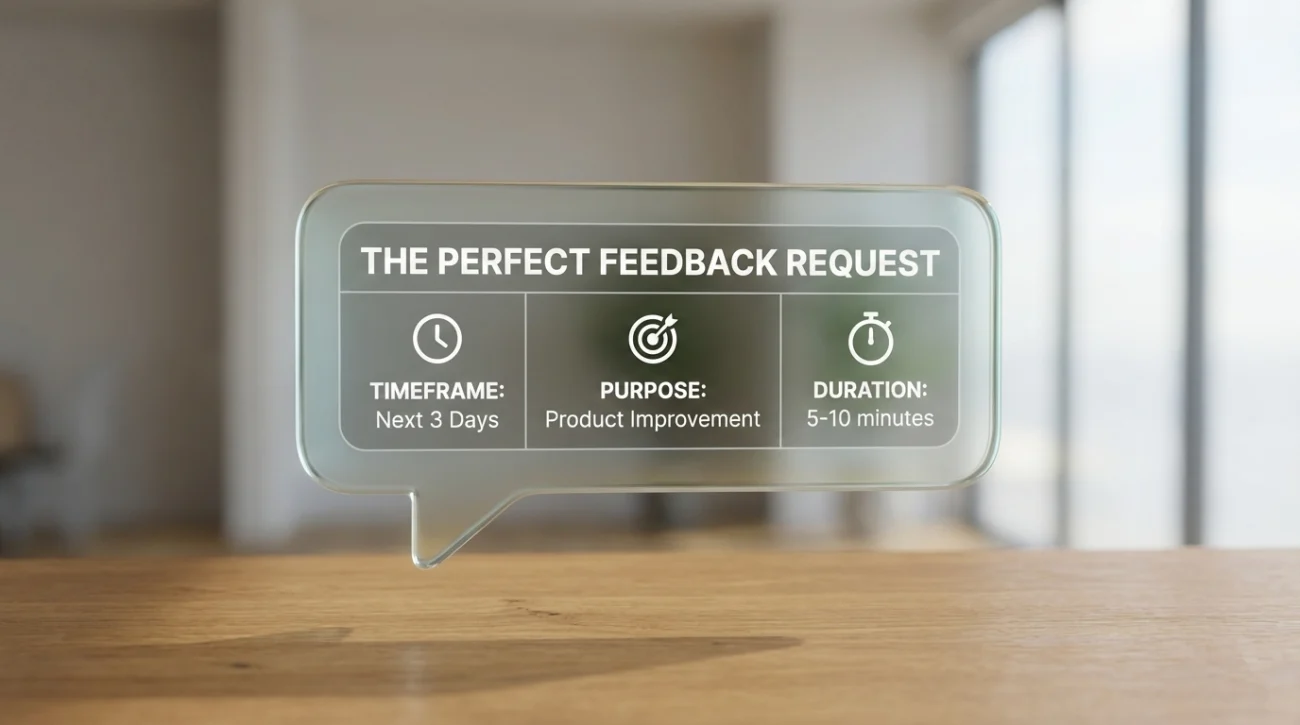
Request Template (Email or Slack)
Hi [Manager],
I’ve been here about a month and would love to get your feedback on how things are going. Would you have 15-20 minutes this week for a quick check-in?
I want to make sure I’m meeting expectations and understand what I should focus on improving going forward.
Thanks,
[Your Name]
Why this works:
- Specific timeframe (“about a month”)
- Limited time commitment (15-20 minutes)
- Clear purpose (feedback and improvement)
- Shows initiative without being demanding
Alternative: In-Person Ask
If you see your manager regularly, ask in person:
“I’ve been here about a month now. Would you have time this week for a quick check-in on how things are going? I’d love to get your feedback and make sure I’m on the right track.”
When to Ask
Between day 28-35. This is late enough that your manager has observations to share, but early enough that it’s clearly not waiting for the formal 90-day review.
Don’t ask during obviously busy periods (end of quarter, major project deadlines). Pick a normal week.
4 Questions to Ask During the Feedback Conversation
Come prepared with specific questions. Don’t make your manager figure out what to say.

Question 1: “Am I Meeting Expectations So Far?”
“Based on my first month, am I meeting your expectations for the role?”
Why this matters: This is the big-picture question. Are you fundamentally on track or are there concerns?
If the answer is yes, great – you have confirmation. If it’s qualified (“mostly, but…”), you’ve identified areas needing attention.
Question 2: “What Should I Start Doing?”
“What’s one thing I should start doing that would make me more effective?”
Why this matters: This reveals gaps. Maybe you should start attending a certain meeting, communicating more frequently, or taking on a specific type of task.
This is forward-looking and action-oriented rather than dwelling on past mistakes.
Question 3: “What Should I Stop Doing?”
“Is there anything I’m doing that I should stop or do less of?”
Why this matters: This surfaces bad habits early. Maybe you’re over-communicating, asking too many questions in meetings, or spending time on low-priority work.
Stopping ineffective behaviors frees up energy for what actually matters.
Question 4: “What Should I Continue Doing?”
“What am I doing well that I should make sure to continue?”
Why this matters: This identifies your strengths so you can leverage them. It also ensures the conversation isn’t only critical – you hear what’s working too.
Knowing what to keep doing is as important as knowing what to change.
The Start-Stop-Continue Framework
These three questions (start, stop, continue) give your manager a clear framework for feedback. It’s easier for them to think through than “how am I doing?” which is vague.
Plus, asking about both strengths (continue) and areas for improvement (start/stop) creates a balanced conversation.
How to Receive Feedback (Even When It’s Critical)
Asking for feedback is easy. Receiving it well – especially criticism – is hard but crucial.
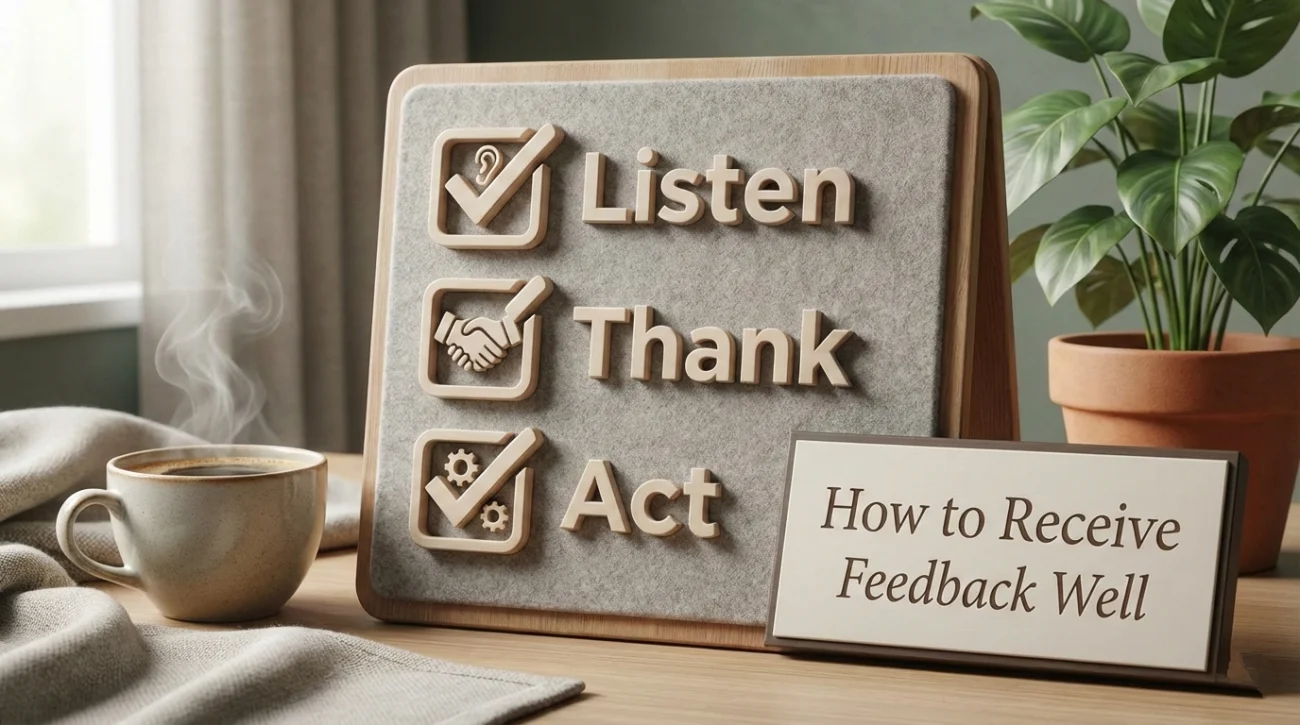
Listen Without Defending
Your instinct when hearing criticism: defend yourself, explain why you did things that way, or provide context.
Resist this urge. Just listen and take notes.
If you need clarification, ask questions:
“Can you give me an example of when I did that?”
“What would it look like if I did this better?”
But don’t argue or make excuses. Defensiveness shuts down honest feedback.
Say Thank You
After receiving feedback, especially critical feedback:
“Thank you for the feedback. This is really helpful. I’m going to work on [specific thing] and check back with you in a few weeks.”
Thanking someone for criticism feels counterintuitive, but it shows maturity and makes them more willing to give you honest feedback in the future.
Ask for Specifics
If feedback is vague, ask for concrete examples:
Vague: “You need to communicate more.”
Ask: “Can you help me understand what that looks like? Should I send daily updates, attend certain meetings, or check in more frequently on projects?”
Get specific action items you can implement immediately.
Act on It Quickly
The best response to feedback is immediate action. If your manager says you should start sending weekly updates, send the first one that Friday.
Then follow up in 2-3 weeks:
“I’ve been sending weekly updates since our conversation. Is this what you were looking for, or should I adjust the format?”
This shows you listened, acted, and care about getting it right.
For more feedback strategies, explore our professional development guide.
What If the Feedback Is Really Negative?
Sometimes 30-day feedback reveals serious concerns. How you respond determines whether this is recoverable.

Stay Calm
Don’t cry, get angry, or shut down in the meeting. If you need a moment to process, say:
“I appreciate you being direct with me. Can I take some time to think about this and follow up tomorrow?”
This gives you space to process emotions privately.
Create an Action Plan
If feedback reveals you’re significantly off track, propose a specific improvement plan:
“Based on your feedback, here’s what I’m going to focus on over the next 30 days:
1. [Specific action addressing concern 1] 2. [Specific action addressing concern 2] 3. [Specific action addressing concern 3]
I’ll check in with you weekly on progress. Does this sound like the right approach?”
This shows you’re taking it seriously and have a plan to improve.
Follow Up Consistently
Don’t just improve silently. Update your manager on progress weekly for the next month:
“Quick update: I’ve been implementing [the change we discussed]. This week I [specific example]. Let me know if you’re seeing improvement.”
Visible progress on feedback demonstrates coachability.
FAQ
Feedback Is a Gift
Most new employees avoid asking for feedback because they’re afraid of criticism. But waiting until your 90-day review means three months of potentially doing things wrong without knowing it.
Asking for feedback after 30 days shows initiative, catches problems early, proves you’re coachable, and reduces anxiety about how you’re performing. These benefits far outweigh the discomfort of potentially hearing criticism.
Use the template to request a 15-20 minute conversation. Come prepared with the four key questions: Am I meeting expectations? What should I start doing? What should I stop doing? What should I continue doing?
When you receive feedback, listen without defending, ask for specific examples, thank your manager for their honesty, and act on the guidance immediately. Follow up in 2-3 weeks to show progress.
If the feedback is seriously negative, stay calm, create an action plan, and provide weekly updates on improvement. Recovering from tough feedback is possible if you respond with immediate, visible changes.
Remember: feedback is a gift. It’s information that helps you succeed. People who seek it proactively and act on it quickly advance faster than those who avoid it or get defensive.
Ask after 30 days. Listen carefully. Act immediately. Your career will thank you.
For additional feedback and performance resources, check out our comprehensive career guide.