

- What the study did: Analyzed 50 marketing resumes from people hired in the last six months to find repeatable patterns.
- What every winner had: Quantified impact, often mixing metrics like growth, timeline, volume, and method in one bullet.
- What keywords worked: Specific tools and disciplines (GA4, HubSpot, SEO/SEM, automation, A/B testing), not vague buzzwords.
- What structure showed up: Hybrid resumes plus a portfolio link, with a consistent section order that makes scanning easy.
- The X factor: Side projects or personal brands that prove initiative and current experimentation without overshadowing the main job.
What Do Winning Marketing Resumes Actually Look Like?
Most resume advice is theoretical. “Use action verbs.” “Quantify your results.” “Keep it to one page.” All true, but not particularly useful without seeing what actually works in practice.
We wanted real data, so we collected 50 marketing resumes from people who recently got hired – not people looking for jobs, but people who’d successfully landed roles in the last six months. These resumes had been tested in the market and won.
We analyzed everything: word count, keywords, formatting choices, how they described results, what skills they emphasized, even the order of sections. The goal was simple: find patterns that separate resumes that get offers from resumes that get ignored.
This hired marketer resume analysis breaks down exactly what we found – four insights that showed up in nearly every successful resume, and one surprising X-factor that most candidates miss.
Insight 1: They All Use Metrics (But Not Always Percentages)

Every single resume in our sample – 100% of them – included quantified results. Not vague claims about “improving performance” or “driving engagement.” Specific numbers that proved impact.
The Types of Metrics That Appeared Most
| Metric Type | Frequency | Example |
|---|---|---|
| Growth percentages | 92% | “Grew followers by 45%” |
| Revenue/budget figures | 78% | “Managed $200K annual budget” |
| Volume/scale metrics | 84% | “Published 50+ articles” |
| Time-based results | 66% | “Within 6 months” |
| Team/project scope | 72% | “Led team of 5” |
But here’s what surprised us: the most effective bullets didn’t just include one metric – they combined multiple types.
Effective example: “Increased email open rates from 18% to 31% over 4 months by implementing A/B testing across 15+ campaigns, reaching 50K+ subscribers”
This single bullet includes:
- 📈 Growth metric (18% to 31%)
- ⏱️ Timeline (4 months)
- 🔢 Volume (15+ campaigns, 50K+ subscribers)
- 🛠️ Method (A/B testing)
The combination makes the accomplishment tangible and credible. You can visualize the scope, timeline, and approach – not just the outcome.
What Weak Metrics Looked Like
In the comparison group (resumes that didn’t get jobs), we saw vague quantification:
“Managed social media accounts and saw positive engagement”
“Increased website traffic significantly”
“Responsible for campaigns that performed well”
These might be true, but they don’t prove anything. “Significantly” and “well” mean nothing without context.
For comprehensive guidance on quantifying marketing achievements, see our complete resume writing guide.
Insight 2: The Same Keywords Appear Repeatedly (And They’re Specific)
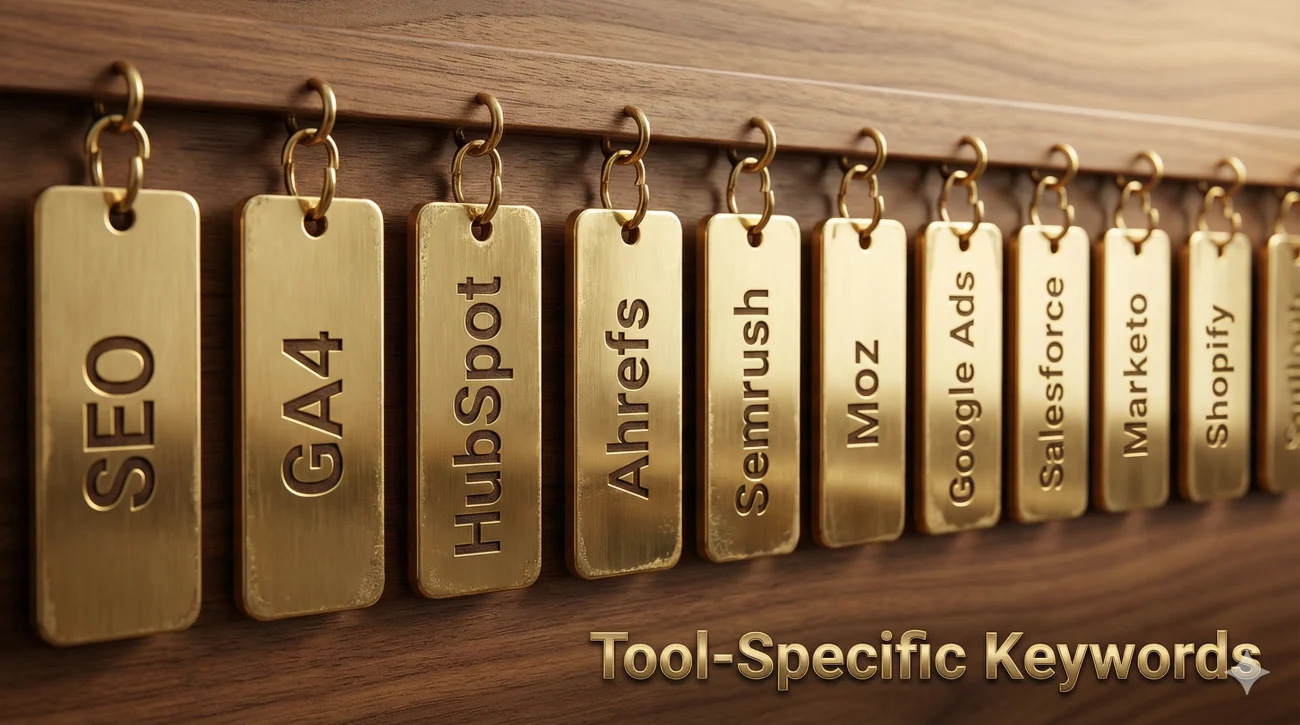
We compiled every keyword that appeared in at least 30 of the 50 resumes. The results showed clear patterns in what marketing employers look for.
The “Hot” Marketing Keywords
Tools & Platforms (appeared in 90%+ of resumes):
- Google Analytics / GA4
- HubSpot
- Salesforce
- SEO / SEM
- Social media platforms (Facebook Ads, LinkedIn, Instagram)
- Email marketing tools (Mailchimp, Constant Contact)
Marketing Disciplines (appeared in 75%+ of resumes):
- Content marketing / Content strategy
- Demand generation / Demand gen
- Marketing automation
- Brand management
- Digital marketing
- Growth marketing
Skills & Approaches (appeared in 60%+ of resumes):
- A/B testing
- Campaign management
- Data analysis / Analytics
- MarTech stack
- Conversion optimization
- Customer journey mapping
Generic Terms That Appeared Less Often
Interestingly, vague marketing buzzwords appeared far less in hired resumes:
- “Marketing communications” (only 24%)
- “Brand awareness” (only 18%)
- “Creative campaigns” (only 12%)
- “Thought leadership” (only 8%)
The pattern was clear: successful marketing resumes use specific, tool-based language. They mention HubSpot, not “marketing platforms.” They say “SEO,” not “online visibility strategies.”
Insight 3: Most Use a Hybrid Format With Portfolio Links
We analyzed the structural choices in these 50 resumes and found surprising consistency.
Resume Format Breakdown
| Format Type | Percentage | When Used |
|---|---|---|
| Hybrid (skills + chronological) | 68% | Most common for mid-level marketers |
| Chronological | 26% | Senior roles with clear progression |
| Functional (skills-focused) | 6% | Career changers into marketing |
The hybrid format works for marketing because it allows candidates to highlight both their skills (SEO, content strategy, paid media) and their progression through increasingly responsible roles.
Portfolio Links Were Almost Universal
86% of hired marketers included a portfolio, personal website, or published work samples. This makes sense – marketing is a show-your-work field. Saying you’re good at content marketing is less convincing than linking to 10 articles you’ve written.
Common portfolio formats:
- Personal website with case studies (42%)
- LinkedIn articles or published content (38%)
- Google Drive folder with samples (24%)
- Behance or similar portfolio sites (18%)
The key wasn’t the platform – it was having something tangible to show.
Section Order That Worked
The most common structure among hired resumes:
- Contact information + portfolio link
- Professional summary (3-4 lines)
- Core competencies or skills (keyword-optimized)
- Professional experience (reverse chronological)
- Education + certifications
Notice what’s missing: objective statements (outdated), references (assumed), and lengthy “about me” paragraphs (save it for the cover letter).
Insight 4: The “X-Factor” – 90% Had Side Projects or Personal Brands

This was the most unexpected finding. When we dug deeper into these 50 resumes, we noticed that 45 of them mentioned something beyond their day jobs:
- Personal blog or newsletter
- Freelance consulting or side clients
- Speaking engagements or webinars
- Community building (Slack groups, forums)
- Open-source marketing projects
- Published articles on industry sites
Why This Matters
Side projects signal three things employers value in marketers:
- Initiative: You don’t wait to be told what to do
- Passion: You care enough about marketing to do it outside work hours
- Current knowledge: You’re experimenting with new platforms and strategies on your own
One resume included this bullet under a “Projects” section:
“Built personal newsletter on marketing automation from 0 to 2,500 subscribers in 8 months using SEO, LinkedIn outreach, and content partnerships”
This shows hands-on experience with audience growth – exactly what employers want to see. And it came from a side project, not a job.
How to Include Side Projects Without Overshadowing Your Job
The successful resumes didn’t make side projects the main story. They included them in one of three ways:
- Dedicated “Projects” or “Additional Experience” section at the bottom
- Brief mention in the summary (“Marketing manager by day, newsletter writer by night”)
- Incorporated into skills section (“Grew personal blog to 10K monthly visitors”)
The goal is to show depth of interest and hands-on experimentation, not to distract from your professional track record.
For more on building a complete marketing profile, explore our cover letter and application guide.
3 Things You Can Apply to Your Resume Today

1. Combine Multiple Metrics in Each Bullet
Don’t just say you “increased engagement by 40%.” Add context: timeline, volume, method. Make it visual and credible.
“Increased Instagram engagement by 40% in 6 months by launching user-generated content campaign reaching 100K+ followers”
2. Use Tool-Specific Language, Not Generic Terms
Replace “email marketing” with “Mailchimp” or “HubSpot email automation.” Replace “analytics” with “Google Analytics 4” or “Mixpanel.” Specific tools signal real experience.
3. Show Your Work (Portfolio or Side Projects)
If you don’t have a portfolio, create one this week. Write 3 LinkedIn articles about marketing topics you know well. Build a simple personal website with case studies. Start a small newsletter.
The effort signals that you’re not just someone who shows up for a paycheck – you’re someone who thinks about marketing even when you’re off the clock.
FAQ
The Pattern Is Clear: Specificity Wins
After analyzing 50 marketing resumes that successfully landed jobs, the common thread wasn’t creativity or clever phrasing. It was specificity.
Specific metrics (not “increased engagement” but “increased engagement by 40% in 6 months across 15 campaigns”). Specific tools (not “marketing software” but “HubSpot, Salesforce, Google Analytics”). Specific results (not “drove traffic” but “grew organic traffic from 5K to 20K monthly visitors”).
The resumes that worked also showed evidence of continuous learning and experimentation. Nearly all of them included portfolio links or mentioned side projects. This signaled to employers that the candidate didn’t just clock in and out – they were genuinely interested in marketing as a discipline.
If your marketing resume currently uses generic language, vague metrics, or focuses only on your 9-to-5 responsibilities, you’re competing with candidates who are being more specific and showing more initiative. The fix isn’t complicated – it just requires honesty about your actual impact and willingness to show your work.
Quantify your results. Use tool-specific keywords. Link to your portfolio. Mention a side project if you have one. These four changes alone will move your resume closer to the pattern of resumes that actually get jobs.
For more tools to build a standout marketing resume, check out our guide to the best resume builders with marketing-specific templates.