
- What is changing fast: Work is being reinvented as skills evolve and core job tasks shift by 2030.
- How AI is reshaping careers: Automation removes routine work but creates demand for people who can use and supervise AI.
- What hiring is prioritizing now: Skills and adaptability are outweighing degrees in many roles and industries.
- What new roles and formats are rising: Green transition jobs are expanding and remote plus hybrid teams are becoming normal.
- How to future proof yourself: Focus on AI literacy, data skills, communication, and a consistent upskilling habit.
The Shifting Work Landscape
Introduction – Work Is Being Reinvented
The global job market is shifting faster than at any point in modern history. According to the World Economic Forum’s Future of Jobs Report 2025, 44% of workers’ core skills will change by 2030, while 170 million new positions could emerge across technology, sustainability, and healthcare. The future of work 2026 is not defined by job loss – it’s defined by skill evolution.
“Technology isn’t replacing people; it’s redefining what people do best.”
– World Economic Forum, Future of Jobs Report 2025
From AI-driven automation to hybrid teams that span continents, adaptability and lifelong learning are becoming the new currency of professional success.
The AI Revolution: From Threat to Multiplier
Artificial Intelligence is reshaping every industry. Routine and repetitive tasks are increasingly automated, while new jobs emerge that blend technical literacy with human judgment. In an August 2024 feature, Forbes described AI-skilled workers as “the new currency of the labor market,” noting that demand for professionals who can both operate and supervise AI systems has skyrocketed.
“AI-skilled professionals are the new currency of the labor market.”
– Jack Kelly, Forbes, 2024
Instead of fearing automation, forward-looking professionals are learning to collaborate with it – using AI tools to analyze data, enhance creativity, and optimize workflows. The real winners are not those who compete with algorithms but those who know how to guide them.
Skills-First Hiring: The End of the Degree-Only Era
Employers worldwide are shifting their hiring focus from formal credentials to demonstrated skills. LinkedIn CEO Ryan Roslansky explained this transformation during the release of LinkedIn’s Global Talent Trends 2025, stating that adaptability and curiosity now outweigh even elite degrees.
“Adaptability beats Ivy League. The future of work is about learning faster, not knowing more.”
– Ryan Roslansky, LinkedIn Global Talent Trends 2025
This trend aligns with data from McKinsey & Company, which found that 40% of employers globally struggle to find workers with the right skills mix – especially digital fluency and soft skills like collaboration and leadership. In response, many companies, including IBM and Google, have removed degree requirements from thousands of positions to expand access to qualified talent.
“Employability today depends less on tenure and more on your capacity to keep learning.”
– McKinsey Global Institute, Reskilling Insights 2025
Emerging Trends and New Roles
Emerging Roles and the Green Transition
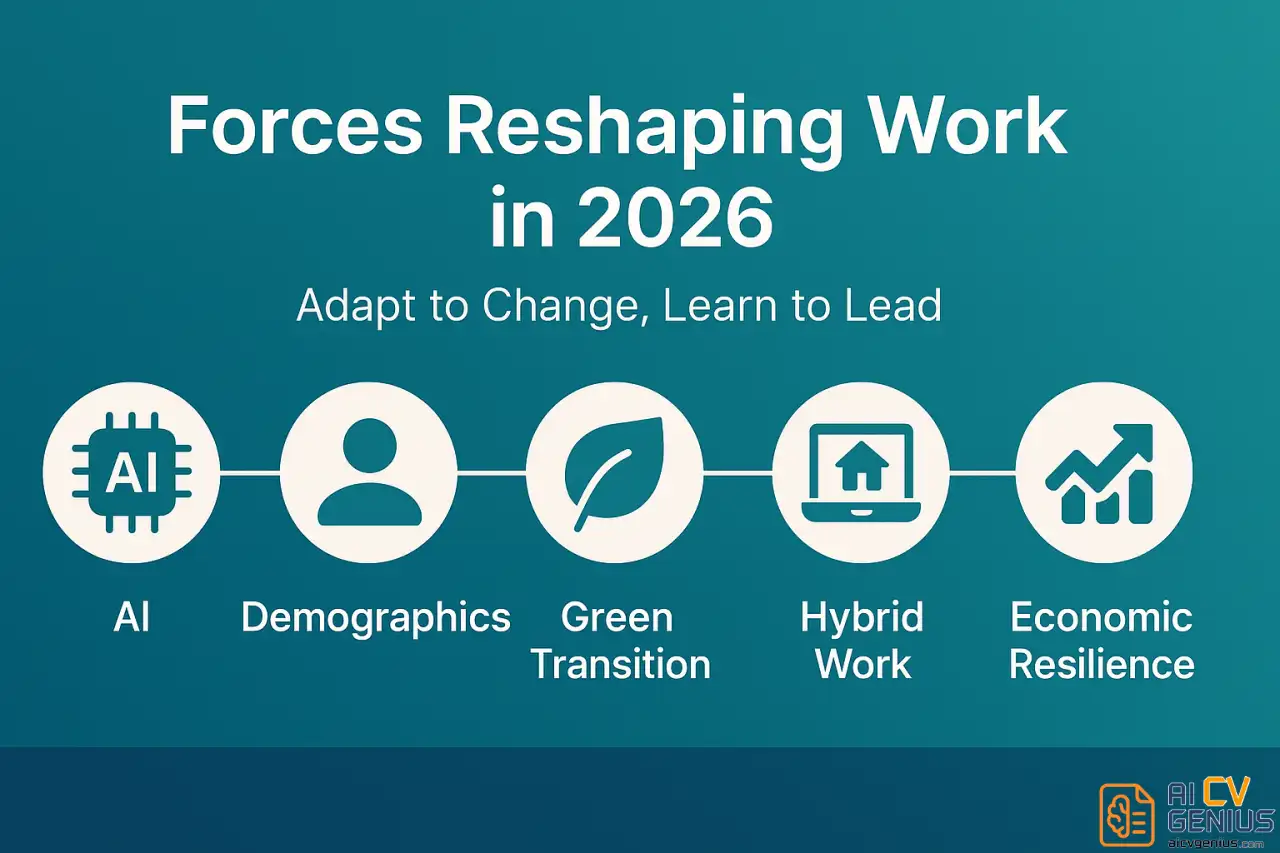
Automation may replace certain jobs, but it’s creating new ones at an even faster pace. Data scientists, AI ethicists, sustainability analysts, and healthcare technologists are among the fastest-growing professions. The World Economic Forum highlights the “green transition” as one of the top employment drivers, predicting 30 million new roles in renewable energy and climate adaptation by 2030.
The Financial Times reported that sustainability-focused roles are expanding faster than tech jobs in parts of Europe and Asia, as companies race to meet carbon-neutral goals and ESG standards. This marks a global shift from profit-driven growth to purpose-driven work.
The New Normal: Remote, Hybrid, and Borderless Teams
Flexibility has become a baseline expectation. Forbes projects that by 2026, 35% of knowledge workers will be fully remote and another 50% hybrid. This opens a global talent marketplace where employers hire across borders, and professionals compete internationally.
For job seekers, this means crafting globally optimized application materials. Use the Resume Templates Finder to align your resume and cover letter with international readability standards.
Diversity, Demographics, and Inclusion
For the first time, four generations – from Baby Boomers to Gen Z – are working side by side. Employers are discovering that generational diversity sparks creativity. Bloomberg Economics reports that aging workforces in developed nations will increase demand for healthcare, while younger regions like Africa and South Asia will drive growth through innovation and entrepreneurship.
Companies that build inclusive environments – allowing for remote flexibility, intergenerational mentoring, and equitable pay – will attract top global talent.
Future-Proofing Your Career
Human Skills Are the Real Competitive Edge
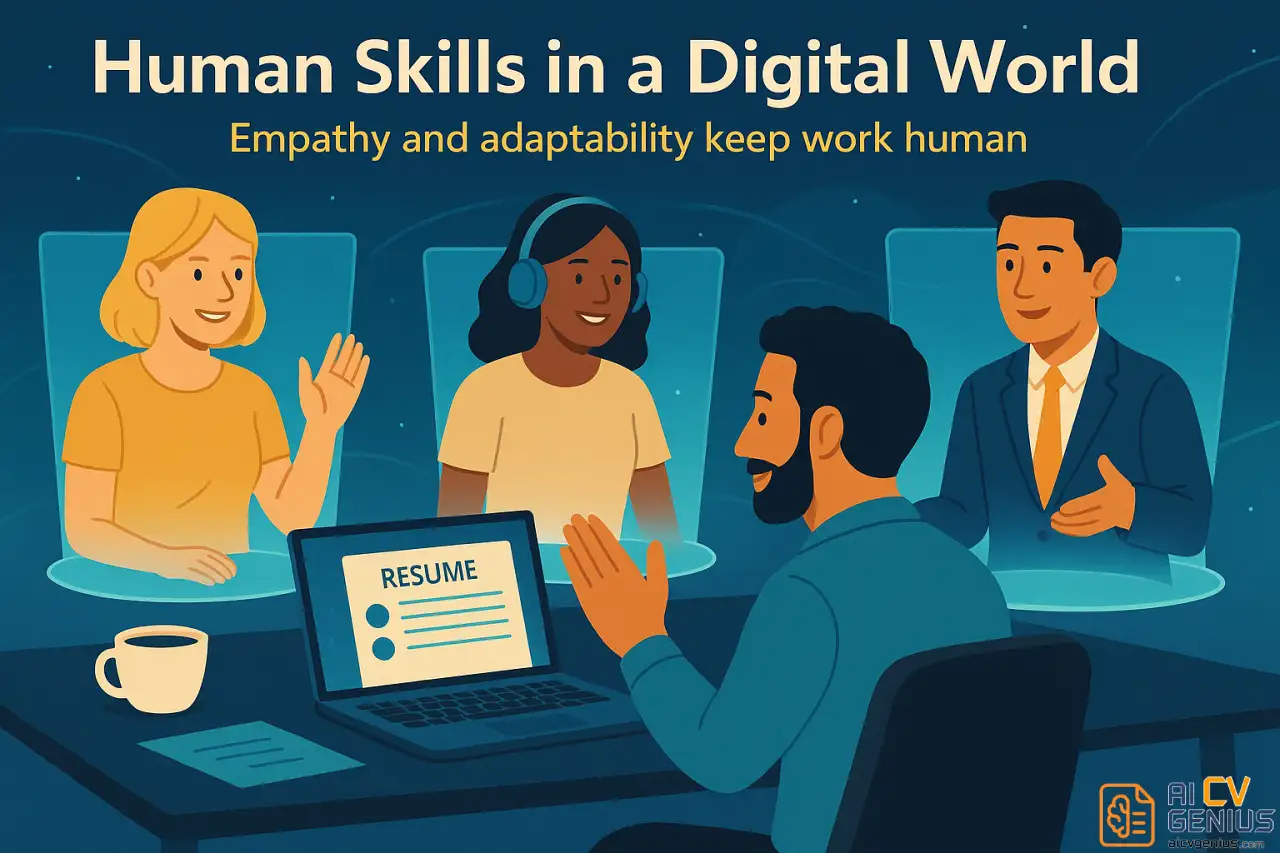
While AI excels at pattern recognition and prediction, humans still dominate in empathy, ethics, and innovation. In its February 2025 feature “The Work Ahead,” Harvard Business Review emphasized that leaders of the future must balance digital mastery with emotional intelligence.
“Emotional intelligence and adaptability are the new hard skills.”
– Harvard Business Review, 2025
As work becomes more automated, skills like creativity, storytelling, and cross-cultural communication will determine who thrives. The best employees of the AI era are those who can combine data-driven reasoning with genuine human understanding.
The Lifelong Learning Revolution
Continuous learning has replaced job stability as the foundation of career security. According to LinkedIn Learning’s data, 79% of employees believe that consistent upskilling directly impacts their earning potential. McKinsey’s research supports this, noting that regular learners earn up to 25% more on average.
To stay employable, treat learning like a long-term investment. Dedicate time each month to new tools, certifications, or cross-disciplinary knowledge. The Career Resources section of FreeResumeHub offers curated paths for AI literacy, communication, and personal branding.
How to Future-Proof Your Career
- ✅ Master data literacy and AI fundamentals by 2026.
- ✅ Strengthen communication, adaptability, and ethical awareness.
- ✅ Refresh your resume and cover letter every 6 months using tools in Cover Letters.
- ✅ Build a “skills inventory” – a record of courses, projects, and achievements.
- ✅ Embrace microlearning: one online course or certification per quarter.
Conclusion: The Road Ahead
The Road Ahead – 2030 and Beyond
By 2030, we may no longer define work by office hours or titles. Instead, careers will be built around problem-solving, creativity, and social value. AI will manage logistics and analysis, while humans focus on vision, empathy, and trust.
“The future of work isn’t a destination – it’s a discipline.”
– Harvard Business Review, 2025
Conclusion – The Human Future of Work
The future of work 2026 is not about humans versus machines. It’s about collaboration between them. Technology amplifies human potential; it doesn’t erase it. Success in the next decade will belong to those who keep learning, stay adaptable, and lead with empathy.
Because in the end, progress is not about automation – it’s about humanity evolving together with its tools.