

- Core problem: Remote work blurs home and office, which creates routine drift, distractions, communication gaps, and isolation.
- Daily structure: Use a simple work-mode ritual, protect a dedicated workspace, and plan tasks around your energy peaks.
- Team execution: Rely on asynchronous updates, clear writing, and documented decisions so progress does not depend on instant replies.
- Sustainable output: Take short breaks, build intentional connection, run a shutdown routine, and measure results instead of hours.
- Common pitfalls: Too many tools, skipping rest, letting flexibility turn into chaos, and undercommunicating with managers and teammates.
The Rise of Remote Work and the Productivity Paradox
Working from home used to sound like a dream – no commute, flexible hours, pajamas all day. But after the novelty fades, the reality sets in: distractions multiply, routines blur, and motivation can slip away. That’s why understanding and applying the right remote work productivity tips has become essential for professionals everywhere.
Over the past few years, companies worldwide have learned that productivity isn’t tied to office walls – it’s tied to habits, mindset, and structure. You don’t need a fancy workspace to perform well, but you do need systems that help you focus, communicate, and recharge effectively.
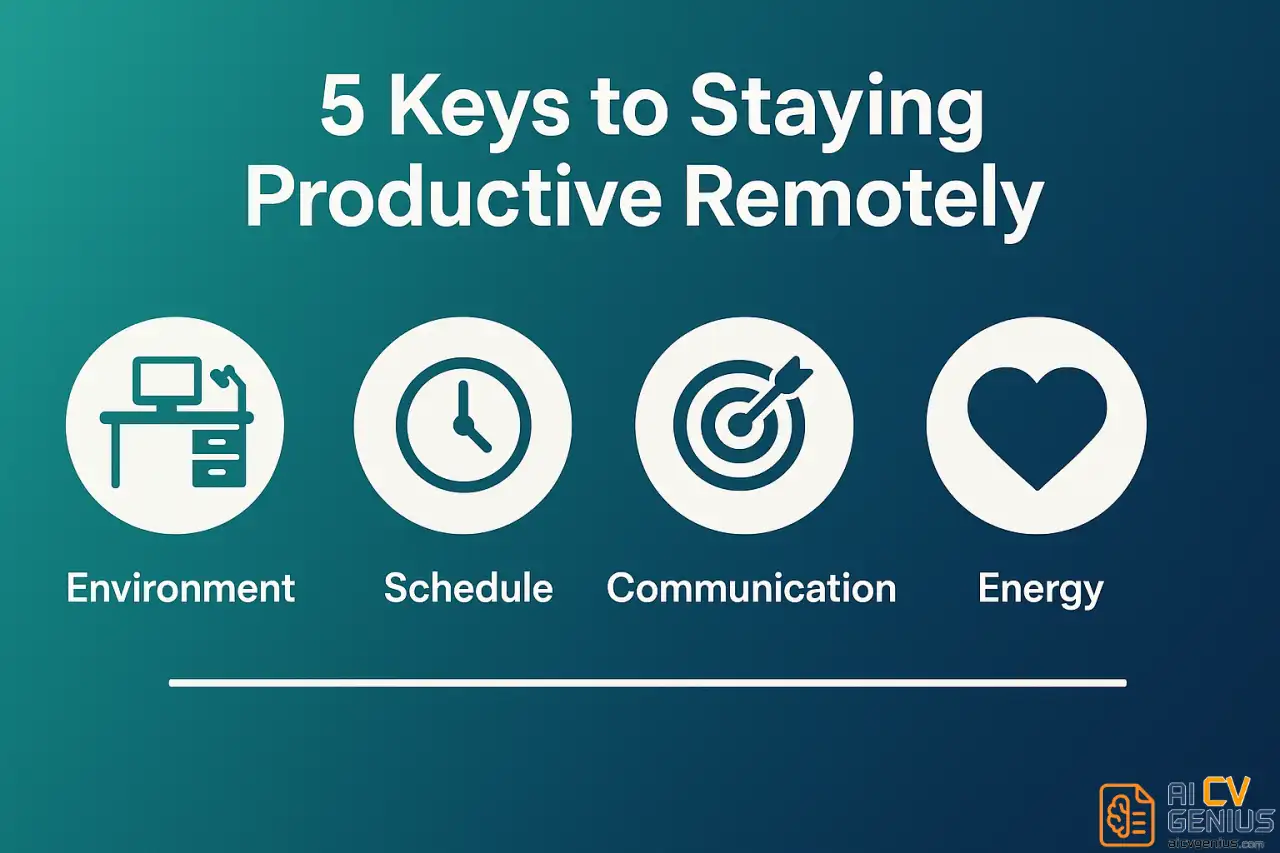
Why Productivity Drops in Remote Settings
When you remove the physical boundaries of an office, your personal and professional worlds collide. The same desk might host your lunch, laptop, and laundry. That overlap can confuse your brain about when to focus and when to rest. The trick isn’t to work harder – it’s to work smarter within flexible boundaries.
Let’s break down the core problems remote professionals face and how to fix them.
- ✅ Lack of routine → Solution: establish rituals, not rigid schedules.
- ✅ Communication gaps → Solution: overcommunicate intentionally.
- ✅ Distractions → Solution: structure your workspace and use focus timers.
- ✅ Isolation → Solution: recreate social connections virtually.
Core Strategies for Remote Productivity
Build a Morning Routine That Signals “Work Mode”
Remote workers often roll out of bed and straight into meetings. That’s efficient but unhealthy. Create a pre-work ritual that primes your brain for focus. It doesn’t have to be long – stretching, making coffee, journaling, or reviewing your plan for the day works wonders. If you need more structure, our Career Resources library includes morning routine templates used by top remote professionals.
Your brain loves consistency. The more predictable your start, the smoother your mental transition from home to work mindset.
Design a Workspace That Protects Focus
It’s not about having the biggest home office – it’s about intentional space. Even a corner counts if it’s dedicated to focus. Clear your desk before starting, eliminate visual clutter, and personalize it lightly – a plant, a small lamp, or a framed photo can make the area feel inviting without distraction.
If you share space with others, use simple signals: headphones on = “deep work.” You’ll be surprised how quickly small boundaries preserve energy throughout the day.
Plan Your Day Around Energy, Not Hours
We all have different productivity rhythms. Morning people should tackle complex tasks early, while night owls thrive later. Instead of rigid hours, build your day around energy peaks. A simple way to start is by mapping tasks to focus intensity:
| Energy Level | Ideal Tasks |
|---|---|
| High (Morning) | Creative, strategic, or problem-solving work |
| Medium (Afternoon) | Meetings, collaboration, light analysis |
| Low (Evening) | Planning, reading, routine documentation |
This approach prevents burnout by aligning work with your body’s natural flow. Over time, you’ll find you get more done in fewer hours.
Master Asynchronous Communication
Remote teams succeed when communication doesn’t depend on instant replies. Asynchronous tools like Notion, ClickUp, or Slack threads allow teammates to share updates without constant interruptions. Write clearly, document decisions, and assume your message might be read later. Clarity saves everyone time.
If your company uses video calls often, suggest short “stand-up” meetings or shared daily logs. These habits keep everyone aligned without draining energy through endless calls.
Use Technology Intentionally
Productivity tools help – until they become noise. Pick a few and master them instead of chasing the next app. Try integrating calendars, to-do lists, and trackers into one ecosystem. For instance, combining Google Calendar, Notion, and Trello covers planning, notes, and execution efficiently.
These productivity tools for remote teams only work if your habits support them. Apps are supplements, not solutions.
Breaks Are Fuel, Not Laziness
Working remotely often blurs the line between rest and procrastination. But your brain needs downtime to sustain focus. Short breaks (5–10 minutes every hour) and longer pauses (lunch away from screen) actually restore clarity.
Research from productivity experts shows that “micro-rests” prevent burnout far better than marathon work sessions.
- ✅ Take 5-minute walks between calls.
- ✅ Do a quick stretch every 90 minutes.
- ✅ Leave your desk completely during lunch.
Fight Isolation with Structured Connection
Working remotely doesn’t mean working alone. Schedule casual catch-ups or “virtual coffee” sessions with colleagues. They don’t have to be long – 10 minutes can rekindle a sense of belonging. Feeling connected isn’t a luxury; it’s a performance multiplier.
Outside work, join online communities related to your field. You’ll learn faster, stay inspired, and reduce loneliness – all while expanding your professional circle.
Learn to Switch Off
Remote workers often struggle with work-life balance because the office never “closes.” Set a shutdown ritual to mark the end of the day. It could be reviewing tomorrow’s tasks, turning off notifications, or simply closing your laptop. Symbolic actions signal your brain it’s time to rest.
These boundaries are vital for balancing work and life when working remotely. Remember: rest is not a reward; it’s part of sustainable productivity.
Advanced Tips and Mindset Shifts
Recreate Commute Moments
The daily commute once served a psychological purpose – it separated work from home. In remote life, replace it with something symbolic: a short walk, a podcast, or stretching. That small “transition ritual” can reset your mind more effectively than caffeine ever will.
Embrace Continuous Learning
Remote workers thrive when they stay curious. Enroll in short online courses, read industry blogs, or listen to podcasts that sharpen your thinking. This keeps your motivation high and combats the monotony of repetitive tasks. You can explore curated learning ideas in our Career Resources section tailored for upskilling professionals.
Story: The Designer Who Rebuilt Her Routine
Take Mia, a remote UX designer who used to burn out after lunch. Her fix wasn’t new software – it was discipline. She blocked her mornings for creative work, meetings after noon, and gym in the evening. After two weeks, she was producing more and feeling less drained. Her secret? Simplicity and consistency.
“Remote productivity isn’t about squeezing hours – it’s about shaping habits that last.”

Measure Results, Not Time
Old office metrics like “hours worked” don’t matter anymore. Remote excellence is outcome-based. Track deliverables completed, not minutes logged. A completed project beats a 10-hour day of distraction every time.
Simple performance indicators – like goals per week or quality feedback – build confidence and transparency in remote teams.
Mindset Shift: From “Work From Home” to “Work From Focus”
Remote work isn’t a perk anymore; it’s a professional skill. Treat it like one. The ability to manage yourself, plan your time, and maintain mental energy is what separates high performers from everyone else. Build daily discipline through micro-habits and reflection.
Common Pitfalls and Analysis
Common Mistakes Remote Workers Make
- ❌ Ignoring rest – thinking constant work equals output.
- ❌ Using too many tools, creating digital clutter.
- ❌ Letting flexible schedules drift into chaos.
- ❌ Undercommunicating with managers and teammates.
Pros & Cons of Remote Productivity
| Pros | Cons |
|---|---|
|
|
FAQ
Final Thoughts
Mastering remote work productivity tips isn’t about perfection – it’s about intention. The best remote workers don’t work nonstop; they work with clarity, balance, and boundaries. With a few mindful tweaks, you can turn any corner of your home into a space where focus flows and fulfillment grows.