
- Cover letters still matter: Recruiters use them to judge writing quality, attention to detail, and why you fit this specific role.
- Keep the format clean and short: Match your resume header, use standard margins and readable fonts, and stay on one page with 3 to 5 paragraphs.
- Personalize the start: Address the hiring manager directly when possible, then open with specific enthusiasm and a clear value statement tied to the company.
- Make the middle do the work: Use 1 to 2 relevant achievements to connect your skills to the job needs, and show real company interest through concrete details.
- Close confidently and polish details: Add a clear call to action, proofread carefully, submit as a PDF with a professional filename, and only mention salary if the posting asks.
A truly effective cover letter transcends mere formality – it functions as your critical first handshake, establishing connection and demonstrating professionalism before you even enter the room. Learning how to write a cover letter isn’t about rigidly adhering to outdated templates; it’s about strategically showcasing your personality, clearly articulating your purpose, and conveying unwavering professionalism within a concise format, typically 300 words or less.
Consider your cover letter the compelling trailer for the feature film that is your resume – it strategically highlights your most relevant moments and unique value proposition without revealing the entire narrative. Let’s systematically walk through how to craft a cover letter that compels hiring managers to pause their rapid screening process and genuinely engage with your application.
What Is a Cover Letter (and Why It Still Matters Significantly)
In an era dominated by rapid online applications and initial screening often conducted by Applicant Tracking Systems (ATS), many job seekers mistakenly assume cover letters have become obsolete. This assumption is frequently incorrect and potentially detrimental. A thoughtfully written, tailored cover letter remains a powerful tool for differentiation, capable of setting you apart from dozens of candidates presenting similar qualifications on their resumes – particularly when your unique story, career transition, or specific motivation requires context beyond standardized bullet points.
Recruiters utilize cover letters not just as supplementary documents, but as crucial tools to gauge your written communication skills, meticulous attention to detail, genuine enthusiasm for the specific role and company, and overall professional demeanor. It represents your prime opportunity to articulate directly: “Here’s precisely why I am an excellent fit for this specific opportunity at this particular organization.”
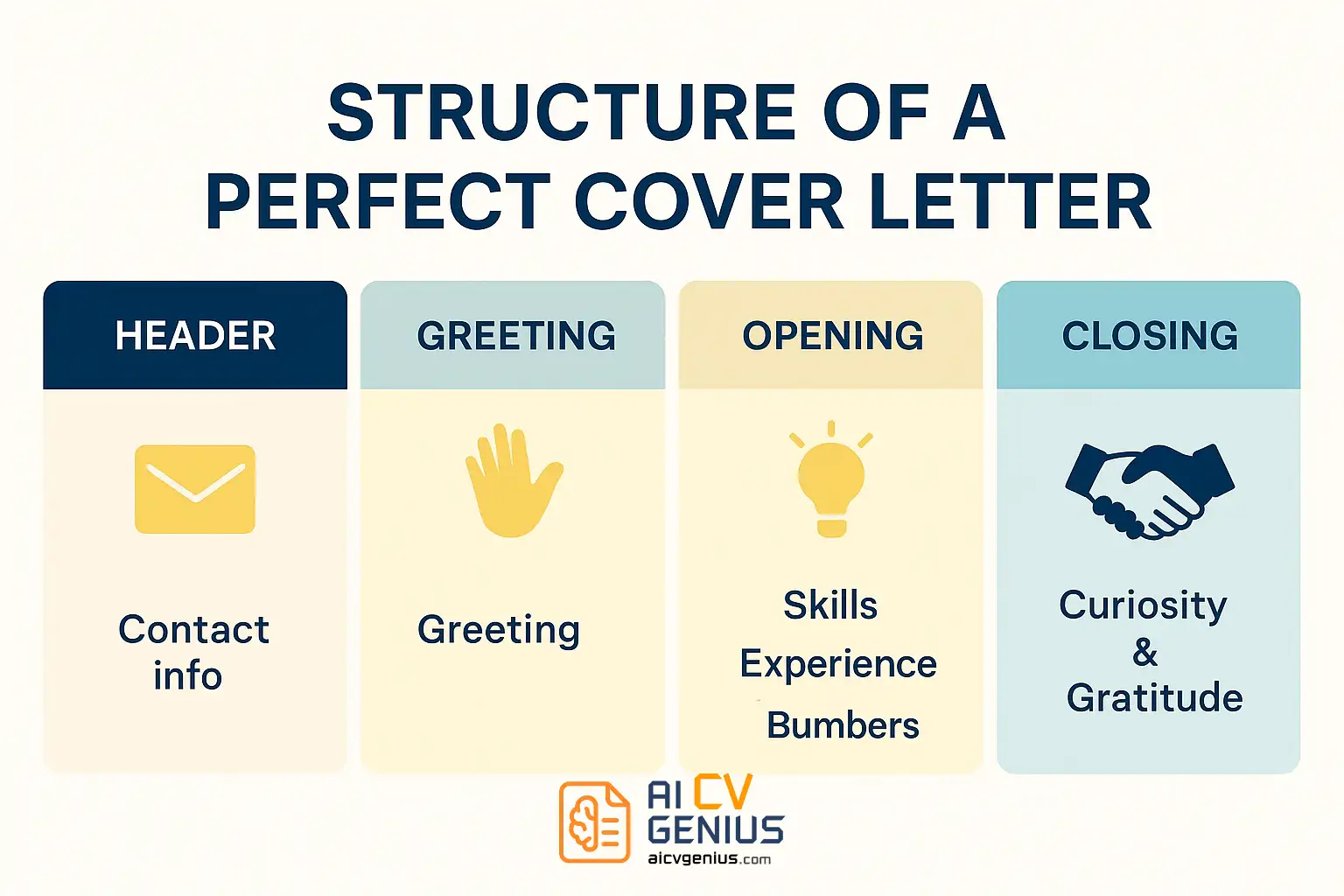
How to Write a Cover Letter That Actually Works: A Step-by-Step Guide
Step 1: Start with a Clean, Professional Format
Before composing a single sentence, ensure your document’s layout establishes immediate credibility. A disorganized or visually cluttered presentation can undermine even the most compelling message. Adhere to professional standards:
- ✅ Use the identical header style (fonts, layout) as your resume for consistent personal branding.
- ✅ Maintain standard professional margins (typically 1 inch on all sides).
- ✅ Choose a clean, easily readable professional font (e.g., Lato, Calibri, Roboto, Georgia, Times New Roman) in a standard size (10–12 points).
- ✅ Strictly adhere to a single page – aim for 3–5 concise paragraphs maximum. Brevity demonstrates respect for the reader’s time.
To bypass formatting complexities and ensure a polished foundation, consider utilizing pre-designed, recruiter-approved templates available in our Cover Letters section or explore complementary designs within our Resume Templates Finder.
Step 2: Replicate Your Resume Header Precisely
Your cover letter header must include your essential contact information, perfectly mirroring the header on your resume. This consistency reinforces your personal brand and allows recruiters to instantly recognize your application documents as a cohesive set.
Example:
Jane Miller
janemiller.pro@email.com | (123) 456-7890 | LinkedIn.com/in/janemiller | New York, NY
Omit your full street address; city and state provide sufficient geographical context for most applications today. Ensure all information is current and accurate.
Step 3: Address the Hiring Manager Directly (When Possible)
The salutation sets the initial professional tone. Generic greetings like “To Whom It May Concern” or “Dear Sir/Madam” feel impersonal, outdated, and suggest a lack of effort. Whenever feasible, address the letter to a specific individual.
- Best option: “Dear [Mr./Ms./Mx. Hiring Manager’s Last Name],” (e.g., “Dear Ms. Chen,”)
- Acceptable alternatives if name is unknown: “Dear Hiring Team,” “Dear [Department Name] Hiring Manager,” (e.g., “Dear Marketing Hiring Manager,”)
Invest a few minutes researching the hiring manager’s name via LinkedIn, the company website (staff directory), or even a polite phone call to the HR department. This small effort demonstrates genuine initiative and attention to detail.
Step 4: Craft an Opening Paragraph That Immediately Hooks Attention
Your first paragraph is critical – it must capture interest instantly and compel the reader to continue. Avoid bland, formulaic openings. Instead, lead with genuine enthusiasm, a clear connection to the role, and a concise statement of your core value proposition.
Weak Opening:
“I am writing to express my interest in the Marketing Assistant position advertised on LinkedIn.”
Stronger Opening:
“As a passionate marketing professional with two years of experience transforming social media analytics into compelling brand storytelling opportunities, I was genuinely excited to discover the Marketing Assistant opening at BrightEdge, a company whose innovative approach to [mention specific campaign or value] I deeply admire.”
The objective is to make the reader immediately think: “This candidate understands our company and possesses relevant skills.” Mention the company by name and briefly reference something specific that genuinely resonates with you – their mission, a recent project, their company culture, or a core value.
Step 5: Develop Body Paragraphs That Showcase Value, Not Just Restate Facts
The middle section (typically 1–2 paragraphs) serves as the core of your argument. Do not simply regurgitate bullet points from your resume. Instead, use this space to connect your key skills and most relevant achievements directly to the specific needs and challenges outlined in the job description. Explain the significance of your accomplishments.
Example connecting experience to needs:
“In my previous role managing social media at Greenfield Media, I successfully increased average post engagement by 40% within three months by implementing a data-driven content strategy focused on A/B testing headlines and visual formats. I believe this experience directly aligns with BrightEdge’s stated goal of enhancing audience interaction and would allow me to contribute effectively to your team’s content optimization efforts from day one.”
Focus each example on demonstrating how your past successes translate into future value for them. Cut any details that don’t actively support this central theme – how you can help solve their problems or achieve their goals.
Step 6: Demonstrate Genuine Company Interest Through Specificity
Recruiters can instantly detect generic, mass-mailed cover letters. They prioritize candidates who demonstrate authentic interest and have clearly done their research. Show you understand their specific organization:
- ✅ Mention a recent company achievement, project, product launch, industry award, or specific company value that genuinely resonates with your professional interests or values.
- ✅ Clearly articulate how your specific skills or experiences align with their mission, current initiatives, or challenges mentioned in the job description or recent news.
- ✅ Avoid generic flattery (“Your company is amazing”). Instead, offer specific, insightful observations (“I particularly admire your recent campaign focused on [specific topic] because it aligns with my expertise in [relevant skill]…”).
This step transforms your letter from feeling like a generic template into a personalized, compelling message indicating genuine interest.
Step 7: Conclude with a Confident Call to Action
Your final paragraph should briefly reiterate your enthusiasm, thank the reader for their time and consideration, and confidently express your interest in discussing your qualifications further. Avoid passive or uncertain language.
Example Closing:
“I am highly enthusiastic about the possibility of bringing my blend of creative energy and analytical rigor to the Marketing Specialist role at BrightEdge. Thank you for considering my application. I have attached my resume for your review and welcome the opportunity to discuss in an interview how my skills and experience can directly benefit your team’s upcoming campaigns.”
Then, use a professional closing:
- Sincerely,
- Best regards,
- Respectfully,
Followed by your typed full name below your signature space (if sending electronically).
Step 8: Proofread Meticulously – Then Proofread Again
Typos or grammatical errors in a cover letter are often considered more detrimental than on a resume because the letter directly showcases your written communication skills. A single mistake can signal carelessness and undermine your entire application. Before submitting:
- Read the letter slowly aloud to catch awkward phrasing or missed errors.
- Utilize grammar and spell-checking tools (like Grammarly), but always critically review their suggestions for context and accuracy.
- Ask a trusted friend, mentor, or career advisor with strong writing skills to review it for clarity, tone, and any remaining errors. Fresh eyes are crucial.
- Double-check names (hiring manager, company), titles, and any specific details mentioned for absolute accuracy.
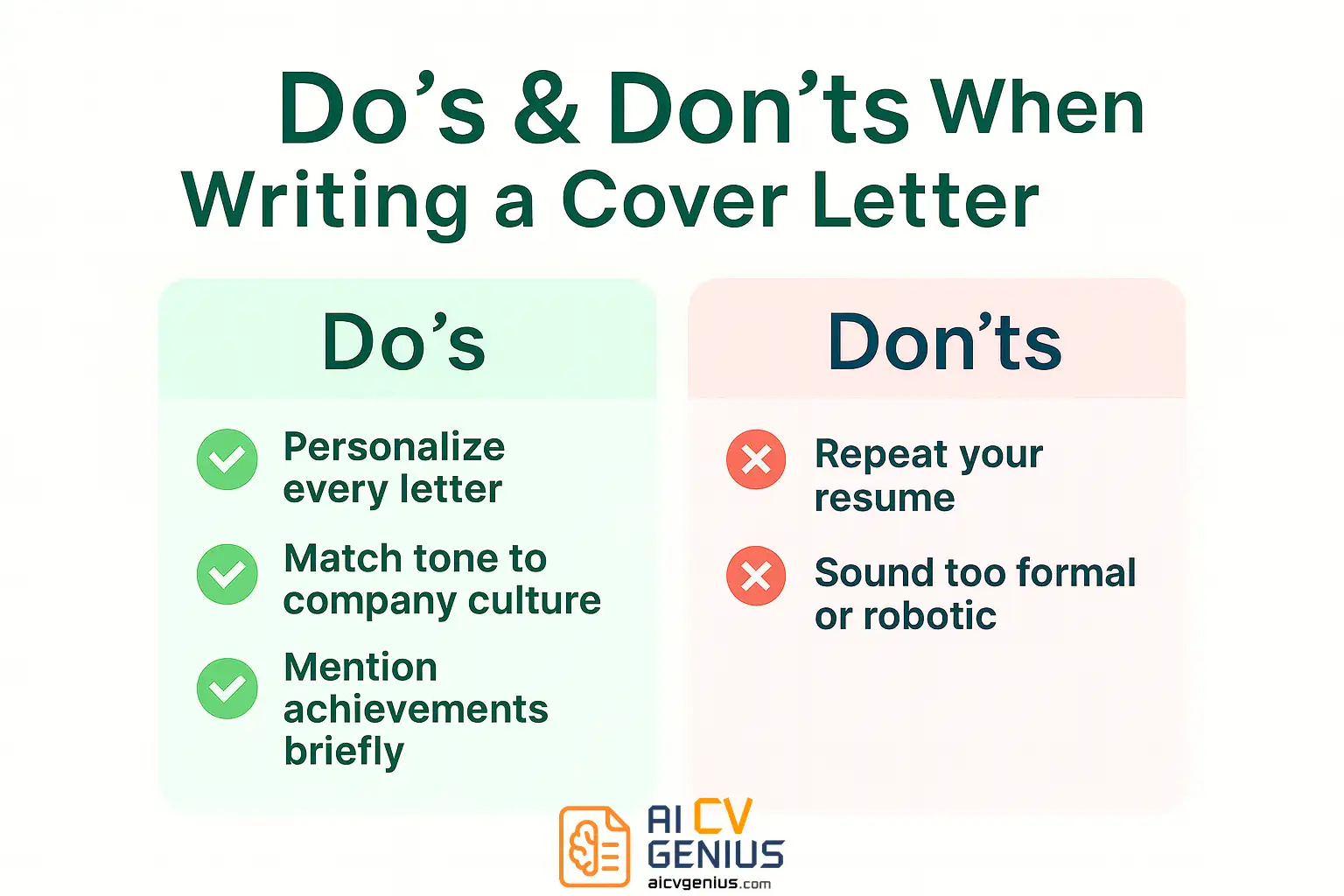
Step 9: Align Your Tone with the Company Culture
Adapt your writing style to match the perceived culture of the organization. Research their website, social media presence, and recent communications to gauge their typical tone.
- Formal / Corporate (e.g., Law Firm, Bank): Use formal language, traditional structure, and a highly professional tone. “I am eager to contribute my expertise…”
- Startup / Creative Agency: A slightly more conversational, energetic, and personality-driven tone may be appropriate. “I’d be thrilled to bring my passion for innovative campaigns…”
- Non-Profit / Mission-Driven: Emphasize alignment with their values and mission. “I am deeply committed to [Organization’s Cause] and believe my skills in…”
Matching the tone demonstrates cultural awareness and enhances perceived fit.
Step 10: Save and Submit as a Professional PDF
Unless specifically instructed otherwise by the application system, always save and submit your cover letter as a PDF file. This preserves your formatting perfectly across all devices and platforms, ensuring a professional appearance.
Use a clear, professional file naming convention: FirstNameLastName_CoverLetter_CompanyName.pdf (e.g., JaneMiller_CoverLetter_BrightEdge.pdf)
Avoid generic or confusing file names like “CoverLetter_Final_v3.pdf.” Professional naming signals organization.
Sample Cover Letter (Annotated for Key Elements)
Let’s see these steps integrated into a concise, impactful example:
[Your Name]
[Your Phone] | [Your Email] | [Your LinkedIn URL] | [City, State] [Date][Mr./Ms./Mx. Hiring Manager Name] (Addressed specifically)
[Hiring Manager Title] [Company Name] [Company Address]Dear [Mr./Ms./Mx. Last Name], (Professional Salutation)
(Opening Hook – Enthusiasm & Connection)
As a data-driven marketing professional with 3 years of experience transforming analytics into actionable growth strategies, I was genuinely excited to discover the Marketing Specialist opening at BrightEdge advertised on [Platform]. I have long admired BrightEdge’s innovative approach to [mention specific aspect, e.g., leveraging AI in SEO], a methodology that strongly aligns with my own focus on measurable results.(Body Paragraph 1 – Connecting Skills & Achievements)
In my current role at Greenfield Media, I successfully led several content optimization projects that directly resulted in a 35% increase in organic search traffic and contributed to a 20% reduction in customer churn rates within one year. My expertise spans SEO strategy, content creation informed by keyword research (using SEMrush and Ahrefs), and performance analysis using Google Analytics (GA4).(Body Paragraph 2 – Demonstrating Company Understanding & Fit)
I understand BrightEdge is currently focused on expanding its reach within the [Target Market/Industry]. My proven ability to develop targeted content strategies that resonate with niche audiences, combined with my hands-on experience in managing paid social campaigns (Meta & LinkedIn), would enable me to contribute effectively to achieving this expansion goal.(Closing – Confident Call to Action)
I am highly enthusiastic about the potential to bring my blend of creativity and analytical rigor to BrightEdge’s dynamic team. Thank you for considering my application. My resume, attached for your review, provides further detail on my qualifications. I welcome the opportunity to discuss in an interview how my skills can directly benefit your upcoming marketing initiatives.Best regards, (Professional Closing)
[Your Typed Name]
This example is concise (under 300 words), specifically tailored, demonstrates relevant skills with implied results, shows company knowledge, and concludes with a confident call to action.
Pros & Cons of Using Cover Letter Templates
Templates offer a valuable starting point but require careful personalization:
| Pros | Cons |
|---|---|
| ✅ Provides a professional, structured layout quickly, saving significant time on formatting. | ❌ High risk of sounding generic, impersonal, or robotic if placeholder text isn’t thoroughly customized with specific details and authentic voice. |
| ✅ Ensures all essential components (header, salutation, body, closing) are included in the correct order. | ❌ May inadvertently limit creativity or discourage deviation from the template’s structure, potentially hindering unique expression. |
| ✅ Helps maintain visual consistency between your cover letter and resume, reinforcing personal branding. | ❌ Overused or easily recognizable templates might make your application appear less original compared to others. |
| ✅ Excellent resource for beginners learning standard professional correspondence structure. | ❌ Still requires significant effort to research the company/role and craft compelling, tailored content specific to each application. The template only provides the shell. |
FAQs: Mastering the Cover Letter
Final Thoughts: Your Voice Before the Interview
Writing an effective cover letter isn’t an optional chore – it represents your crucial strategic advantage in a competitive job market. It’s the single component of your application package that allows your authentic professional voice, specific motivations, and genuine enthusiasm to resonate directly with the hiring manager before you ever meet. A compelling cover letter transforms your application from a static list of qualifications into a dynamic, personalized conversation starter.
Remember: prioritize clarity over complexity, demonstrate genuine interest through specificity, and always maintain unwavering professionalism. You’re not merely trying to sound technically impressive – you’re aiming to sound like the capable, thoughtful, and genuinely engaged future colleague they are seeking.
Explore diverse examples and ready-to-edit templates designed for impact in our curated Cover Letters gallery, or refine your strategic approach by delving deeper into structure, tone, and common pitfalls within our comprehensive Cover Letters Tips hub. For complementary advice on ensuring your resume effectively supports your narrative, visit our extensive Career Resources section.
Your thoughtfully crafted words serve as your initial handshake – ensure they make a strong, positive, and lasting impression.