

- Reframe the review: Performance reviews are a chance to advocate for yourself, not a test you quietly wait to pass.
- Build a brag sheet: Track wins year round with dates, what you did, impact metrics, and any positive feedback.
- Write a strong self assessment: Use STAR for major wins, lead with numbers, and organize by themes so it is easy to scan.
- Show proof, not vibes: Bring specific examples and data, and avoid vague claims that your manager cannot defend to others.
- Handle feedback like a pro: Stay calm, ask for concrete examples, propose an action plan, and follow up to show progress.
Performance Reviews Are Your Chance to Sell Your Accomplishments
Most people approach performance reviews as a test they hope to pass. They wait nervously to hear what their manager says, hoping for positive feedback and dreading criticism.
This is the wrong mindset. Performance reviews aren’t about being judged – they’re about advocating for yourself. Your manager has been busy all year managing multiple people and projects. They don’t remember every good thing you did. You need to remind them.
Well-prepared employees walk into reviews with documented accomplishments, specific examples, and clear goals. They drive the conversation instead of passively receiving feedback. This preparation often makes the difference between strong ratings and mediocre ones.
Here’s how to prepare strategically for performance reviews so you get proper credit for your work.
The “Brag Sheet”: Track Wins Year-Round
The biggest mistake: trying to remember your accomplishments the week before your review. You’ll forget half of what you did and undersell yourself.
What Is a Brag Sheet?
A running document where you record accomplishments, positive feedback, and key contributions throughout the year. Update it weekly or monthly – not once annually.
What to Include
Track these items as they happen:
- Projects completed: What you delivered, when, and the outcome
- Problems solved: Challenges you addressed and how you resolved them
- Metrics and data: Revenue generated, costs saved, efficiency gains, quality improvements
- Positive feedback: Compliments from managers, peers, clients, or stakeholders
- New skills learned: Training completed, certifications earned, tools mastered
- Leadership moments: Times you mentored others, led initiatives, or went beyond your role
Simple Format
Keep it straightforward:
Date: March 2024
What: Led migration of customer database to new CRM system
Impact: Reduced data errors by 40%, saved team 5 hours/week on manual entry
Feedback: Manager said: “This was a complex project and you handled it excellently”
This takes 5 minutes per entry. Do it weekly and you’ll have a comprehensive record by review time.
Why This Works
Your brag sheet becomes your self-assessment foundation. Instead of scrambling to remember what you did, you have documented evidence ready to reference.
It also helps during informal conversations about raises, promotions, or new opportunities.
For comprehensive career documentation strategies, see our complete career guide.
How to Write Your Self-Assessment
Many companies require written self-assessments. Even if yours doesn’t, prepare one anyway – it structures your thinking and gives you talking points.
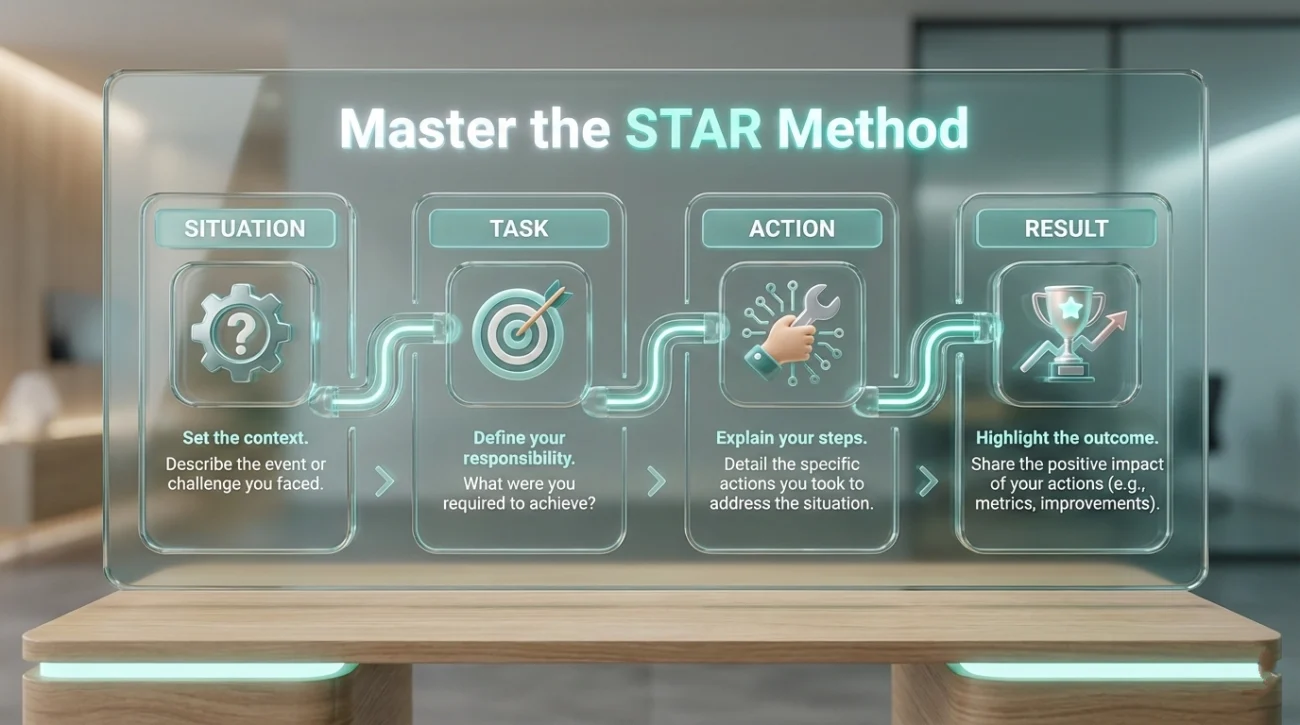
Use the STAR Method
For each major accomplishment, use STAR format:
- Situation: The context or challenge
- Task: What you needed to accomplish
- Action: What you specifically did
- Result: The measurable outcome
This gives concrete evidence rather than vague claims.
Lead With Data
Quantify impact whenever possible:
- Revenue generated or increased
- Costs saved or reduced
- Time saved through efficiency improvements
- Error rates decreased
- Customer satisfaction scores improved
- Team productivity gains
Numbers make accomplishments concrete and memorable.
Organize by Categories
Structure your self-assessment by themes:
- Major projects and deliverables
- Process improvements
- Team collaboration and leadership
- Skills development
- Goals for next period
This makes it easy for your manager to digest and reference during the actual review.
Good vs. Bad Self-Assessment Examples

Bad Example: Vague and Unquantified
“I worked hard this year and completed all my assigned projects. I’m a team player who communicates well and always meets deadlines. I think I deserve a strong rating.”
Why this fails: No specific examples, no data, generic claims anyone could make. This doesn’t help your manager justify a strong rating.
Good Example: Specific and Data-Driven
Major Projects:
Q2: Led the customer onboarding redesign project. Reduced onboarding time from 14 days to 7 days, resulting in 30% faster time-to-value for new customers. Received positive feedback from 12 customers specifically mentioning the improved experience.
Q3: Automated the monthly reporting process using Python scripts. This saved the team approximately 20 hours per month (240 hours annually) previously spent on manual data compilation. Reports now generate in 2 minutes vs. 4 hours.
Q4: Mentored 2 junior team members on SQL and data analysis. Both successfully completed their first independent analysis projects and received positive feedback from stakeholders.
Why this works: Specific projects with measurable outcomes, quantified impact, evidence of leadership and mentorship.
Before and After Comparison
Before (weak):
“I improved our customer support response times.”
After (strong):
Identified that our average response time of 24 hours was causing customer frustration. Implemented a ticket prioritization system and trained the team on response templates. Reduced average response time from 24 hours to 4 hours, leading to a 25% increase in customer satisfaction scores (CSAT improved from 72% to 90%).
The difference: context, action, and measurable results.
Pre-Review Checklist: What to Prepare
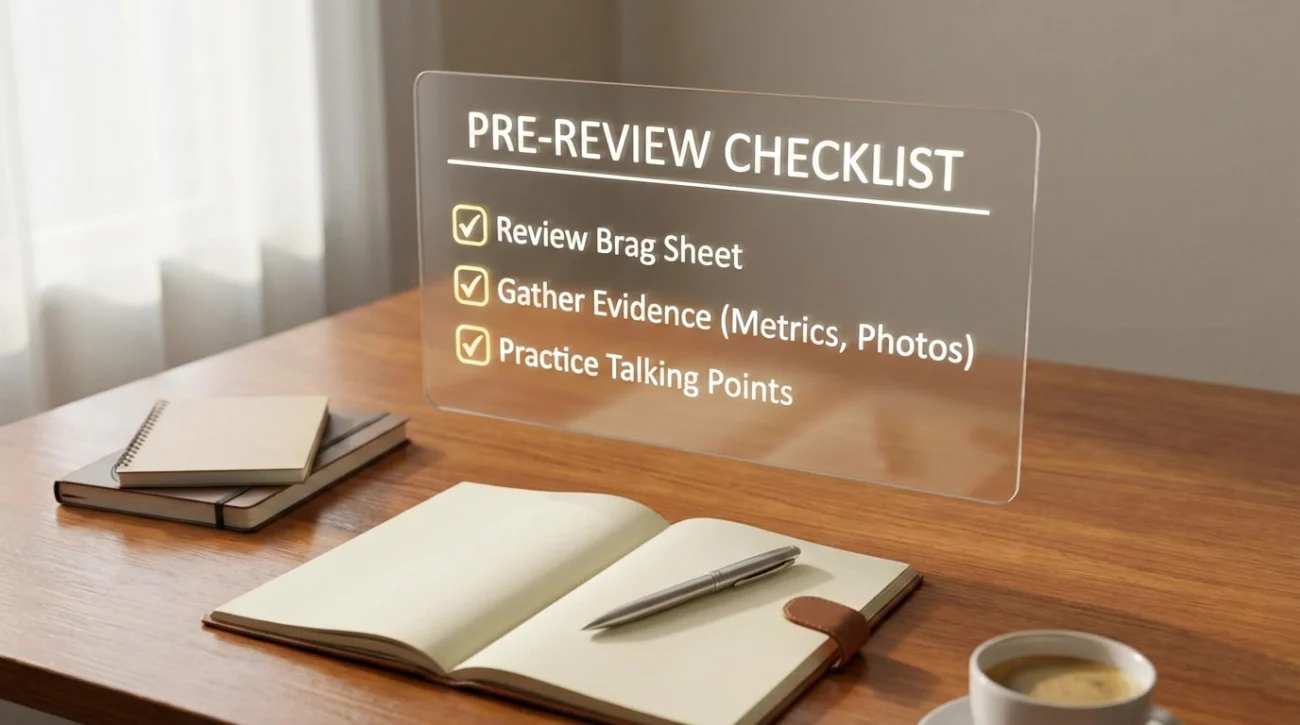
One Week Before
- Review your brag sheet and identify top 5-7 accomplishments
- Write out examples using STAR format
- Gather any supporting data, emails, or feedback
- Review your job description and goals set at last review
- Prepare questions about career development and next steps
What to Bring to the Meeting
- Your written self-assessment (even if not required)
- List of accomplishments with data
- Examples of positive feedback received
- Goals for the next review period
- Questions about your development and advancement
Questions to Ask Your Manager
Don’t just receive feedback – drive the conversation:
“What should I focus on developing to be ready for [next role or promotion]?”
“Where do you see my biggest opportunities for growth?”
“What skills or experiences would make me even more valuable to the team?”
“Are there any concerns about my performance I should address?”
These questions show you’re thinking about long-term growth, not just this year’s rating.
For more career development strategies, explore our professional growth guide.
During the Review: Be Proactive, Not Defensive

Advocate for Yourself
Your manager will share their assessment. Listen, but also contribute:
“I appreciate that feedback. I also want to highlight a few accomplishments I’m particularly proud of this year…”
Then reference your prepared examples. Don’t assume your manager remembers everything.
Handle Criticism Gracefully
If you receive critical feedback:
- Don’t argue or get defensive
- Ask for specific examples to understand clearly
- Thank them for the feedback
- Propose an action plan to improve
“I appreciate you bringing this up. Can you give me an example of when this happened so I can better understand? I want to make sure I address this going forward.”
If the Rating Seems Unfair
Don’t argue emotionally. Reference your documented accomplishments:
“I’m surprised by this rating given [specific accomplishments with data]. Can you help me understand what I would need to do differently to achieve [higher rating]?”
This frames it as seeking clarity, not challenging their judgment.
Discussing Compensation
If raises or promotions are part of the review, reference market data and your contributions:
“Based on my research and the impact I’ve had this year – particularly [specific high-value accomplishment] – I’d like to discuss [compensation adjustment].”
Have specific numbers ready. Vague requests get vague responses.
FAQ
Don’t Be Defensive – Be Proactive
Performance reviews determine your rating, compensation, and advancement opportunities. Treating them as passive events where you wait to be judged is a mistake.
Preparation makes the difference. Keep a brag sheet year-round documenting accomplishments as they happen. Write a self-assessment using STAR format and concrete data. Come to the review with documented evidence of your contributions.
During the meeting, advocate for yourself by highlighting accomplishments your manager may have forgotten. Handle criticism gracefully by asking for examples and proposing improvement plans. Ask questions about development and advancement opportunities.
The employees who get strong ratings and advancement aren’t always the ones who did the best work – they’re the ones who effectively communicated their accomplishments and impact.
Start your brag sheet today. Update it weekly. When review time comes, you’ll have comprehensive documentation ready while others scramble to remember what they did six months ago.
Performance reviews are your opportunity to sell your accomplishments. Come prepared to make your case.
For additional performance and career resources, check out our comprehensive career guide.