
- The article explains how AI in hiring is already a standard “first gatekeeper,” covering resume screening via AI-powered ATS, chatbot screening, video interview analysis, and candidate matching.
- It lays out the upside for employers and candidates: Faster screening, more scalable hiring, and always-on access, especially for high-volume roles.
- It also highlights the risks: Algorithmic bias from bad training data, low transparency on rejections, over-reliance on exact keywords, and privacy concerns with video analysis.
- The practical playbook is to work for two audiences: Keep an ATS-friendly resume format, tailor keywords per job, prep specifically for AI video interviews, and keep LinkedIn aligned because systems may crawl it too.
- Four case studies make the point tangible: A Canva-heavy resume fails ATS until simplified, a mid-career analyst improves AI video scores through practice, a career changer translates experience into recognized keywords, and a freelancer bypasses AI through networking.
Artificial Intelligence (AI) has already changed the way we shop, communicate, and learn. Now, it’s reshaping how companies hire. If you’re a job seeker in 2025, chances are your resume will be scanned by an algorithm before a human recruiter ever looks at it. You may even face a video interview where AI tracks your eye contact and tone of voice. The future of hiring isn’t just human anymore – it’s hybrid. This guide explains what you need to know about AI in hiring, how it works, the opportunities and risks it creates, and how you can adapt your job search strategy to succeed in an AI-driven world.
How AI Is Used in Hiring Today
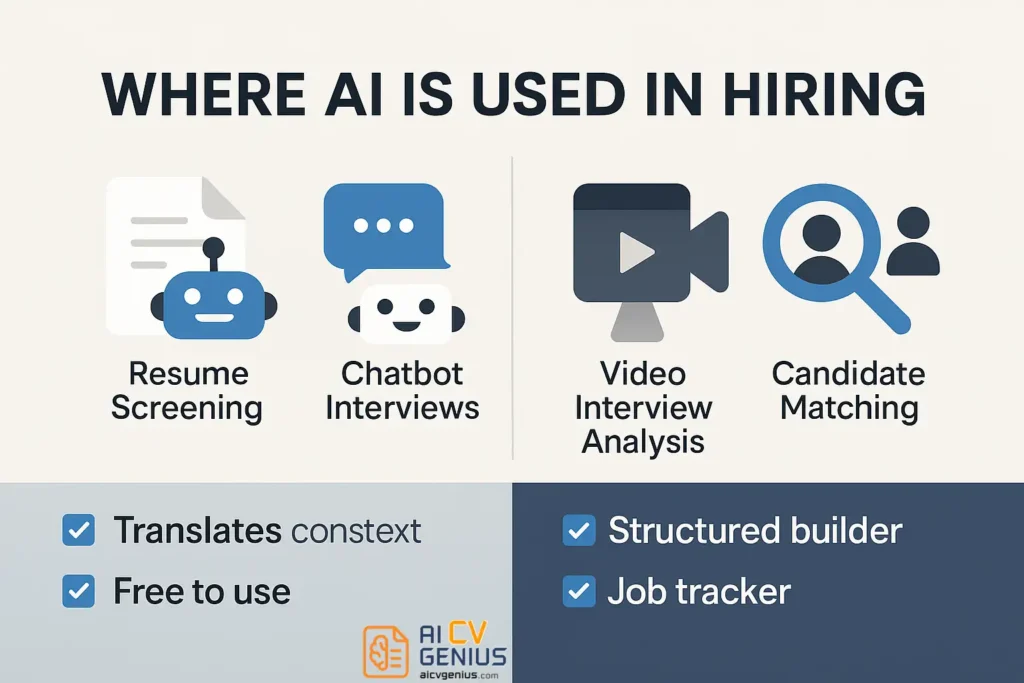
AI in recruitment is no longer experimental – it’s standard practice. Companies use AI systems at nearly every stage of hiring. Here are the most common ways:
- Resume Screening: Applicant Tracking Systems (ATS) powered by AI scan resumes for keywords, skills, and formatting. If your resume doesn’t match, you’re filtered out automatically.
- Chatbot Interviews: Some companies use AI chatbots to ask initial screening questions. These bots can handle thousands of candidates at once.
- Video Interview Analysis: AI tools analyze facial expressions, tone, and even word choice in recorded interviews to predict candidate fit.
- Candidate Matching: AI matches job seekers with open roles based on skills, past experience, and even cultural fit predictions.
In short, AI is the first “gatekeeper” you’ll encounter in modern hiring.
The Pros of AI in Hiring
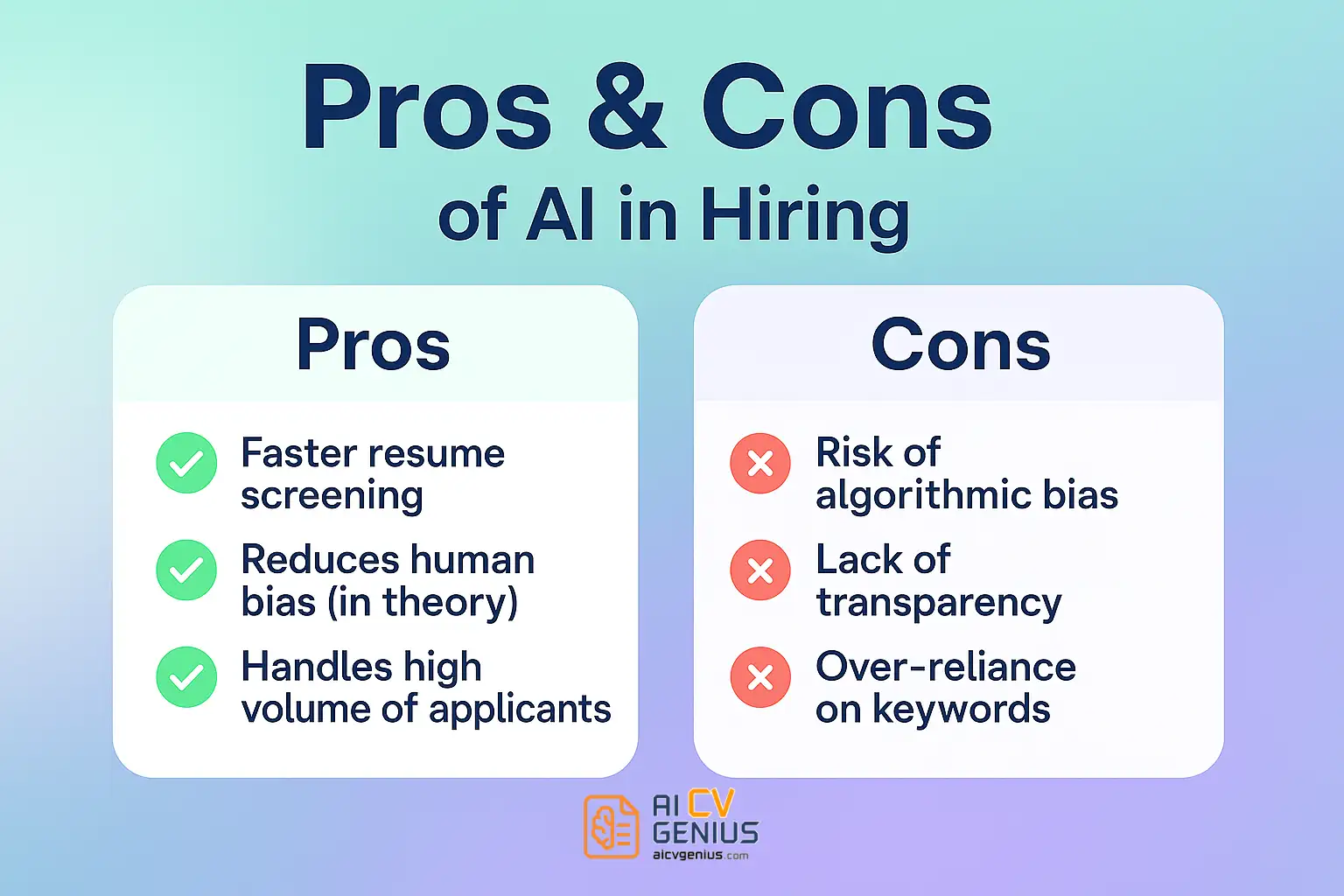
Despite concerns, AI offers several benefits to both recruiters and candidates:
- Speed: AI can review thousands of resumes in seconds, cutting weeks from the hiring timeline.
- Reduced Bias (in theory): Algorithms don’t “see” gender, race, or age unless trained poorly. Ideally, they focus on skills and experience.
- Efficiency for Job Seekers: Many platforms recommend jobs that fit your profile, saving you time in your search.
- 24/7 Accessibility: Chatbots can answer candidate questions or conduct screenings outside office hours.
For high-volume industries like retail, customer service, and tech support, AI has made hiring faster and more scalable.
The Cons and Risks of AI in Hiring
However, AI isn’t perfect – and sometimes its flaws directly hurt candidates.
- Algorithmic Bias: If an AI system is trained on biased data (e.g., resumes from mostly male candidates), it may reinforce discrimination rather than reduce it.
- Lack of Transparency: Candidates often don’t know why they were rejected. Was it missing keywords? Wrong file type? AI rarely explains.
- Over-reliance on Keywords: Resumes that don’t use exact phrasing from the job posting may be filtered out – even if the candidate has the skills.
- Privacy Concerns: Video interview AI can analyze your expressions and even micro-movements, raising questions about fairness and consent.
In other words, AI can be both gatekeeper and gatecrasher. The trick is learning how to work with it, not against it.
How to Succeed in an AI-Driven Job Market
Optimize Your Resume for ATS
Use a simple, clean format. Avoid graphics, tables, or text boxes that confuse scanners. Stick to standard fonts (Arial, Calibri, Times New Roman). Include relevant keywords directly from the job description – both hard skills (e.g., “Python programming”) and soft skills (e.g., “collaboration”).
Tailor Each Application
AI rewards precision. Don’t send the same resume everywhere. Adjust keywords and phrasing to match each role’s requirements. Jobscan and similar tools can help you measure your keyword match.
Prepare for AI Video Interviews
Even if you’re talking to a screen, treat it like a real interview. Look directly at the camera for eye contact. Speak clearly, vary your tone, and avoid long pauses. Practice with a mock recording to get comfortable.
Strengthen Your LinkedIn Profile
AI doesn’t stop at resumes – many systems crawl LinkedIn. Make sure your profile is keyword-rich, up to date, and matches your resume. Recruiters often search LinkedIn as a secondary screening tool.
Stay Human
AI may dominate early stages, but humans still make final decisions. Networking, referrals, and direct conversations remain powerful ways to bypass the algorithm. Don’t forget the human side of hiring.
Case Studies: Real Candidates in the AI Era
Case 1: The Graduate
Emma applied to 40 jobs with a Canva-designed resume full of icons. She got zero responses. After switching to an ATS-friendly template and adding keywords, she started getting callbacks. AI didn’t hate her skills – it just couldn’t read her file.
Case 2: The Mid-Career Analyst
Robert faced AI video interviews for two tech firms. He practiced recording himself to improve tone and clarity. One recruiter later admitted his AI scores were “excellent,” giving him an edge in final rounds.
Case 3: The Career Changer
Sofia moved from teaching to HR. AI systems didn’t recognize her experience at first. With keyword optimization (“classroom management” → “training facilitation”), she passed ATS filters and landed interviews.
Case 4: The Freelancer
Liam, a designer, relied on networking instead of ATS. He sent Canva resumes directly to clients, bypassing AI. The lesson: different strategies work depending on your path.
AI in Hiring vs Human Judgment
AI isn’t replacing recruiters – it’s reshaping their roles. Humans still handle final interviews, cultural fit, and negotiation. The future is a hybrid model: AI screens and filters; humans decide and connect. For job seekers, that means preparing for both audiences: the algorithm and the recruiter.
Pros & Cons Recap
| Pros | Cons |
|---|---|
| ✅ Faster screening saves time for all. | ❌ May reinforce bias if trained poorly. |
| ✅ Reduces (some) human bias. | ❌ Lacks transparency. |
| ✅ Can match candidates to roles more accurately. | ❌ Over-focus on keywords can block good candidates. |
FAQ
Final Thoughts
AI in hiring is here to stay. It speeds up recruitment, helps companies manage thousands of applications, and – when done right – can reduce bias. But it also introduces new challenges for job seekers, from keyword filters to opaque algorithms. The smartest approach is to embrace both worlds: optimize your resume for AI, but connect with humans for the win. In the end, jobs aren’t given by machines – they’re given by people. Your task is to make sure you reach them.