
- Empathy is the core selling point: Show you can listen, stay calm under pressure, and turn frustration into trust, loyalty, and retention.
- Start strong and human: Skip generic “I’m applying for…” openings and lead with a specific philosophy plus one concrete proof point that signals credibility.
- Structure it like a great service interaction: Open with alignment, prove 1 to 2 achievements in the body, then close with a clear value recap and a confident ask.
- Use one short story and real metrics: Tell a brief STAR-style example that shows de-escalation and cross-team problem-solving, then back claims with numbers like CSAT, resolution time, volume, churn, or escalation rate.
- Keep tone warm and formatting clean: One page, readable layout, no buzzword soup, proofread hard, and personalize the closing to the company’s service values.
Why Empathy Is Your Best Selling Point: When it comes to customer service, the most powerful tool isn’t a script or a predetermined system – it’s genuine empathy. An exceptional Customer Service Cover Letter transcends a mere list of duties; it compellingly demonstrates how you actively listen, communicate effectively, and consistently transform customer frustration into lasting satisfaction and loyalty.
This guide will walk you through every essential step to craft a cover letter that resonates as human, confident, and genuinely caring – mirroring the feeling of truly outstanding service itself.
Step 1 – Understand What Employers Genuinely Seek
Before composing your letter, recognize that hiring managers seek more than just individuals capable of answering calls or responding to emails. They prioritize candidates who demonstrably possess the ability to:
- Communicate with clarity and composure, especially under pressure.
- Accurately perceive and effectively manage customer emotions and expectations.
- Represent the company’s brand consistently with patience, professionalism, and positivity.
- Skillfully convert dissatisfied customers into staunch brand advocates through effective problem resolution.
Analyze the job description meticulously – highlight critical keywords such as “problem-solving,” “CRM tools proficiency” (e.g., Zendesk, Salesforce), “cross-department collaboration,” “customer retention strategies,” or “conflict resolution.” These identified terms will form the strategic backbone of your tailored letter.
Step 2 – Initiate with a Warm, Confident Opening Paragraph
Move beyond generic, formulaic openings like “I am writing to apply for the Customer Service Representative position advertised on [Platform].” Instead, begin with a concise statement or specific insight that immediately reflects your professional philosophy, relevant experience, and genuine enthusiasm.
“Having successfully resolved over 2,000 diverse customer inquiries during the past year alone, I’ve consistently observed that exceptional service hinges less on possessing every answer immediately and more on cultivating genuine trust through active listening and transparent communication with every single response.”
This opening achieves three critical objectives simultaneously: it quantifies your experience level, humanizes your professional approach by highlighting core values, and establishes an empathetic, customer-centric tone right from the outset.
Step 3 – Structure Your Letter Logically, Like an Effective Conversation
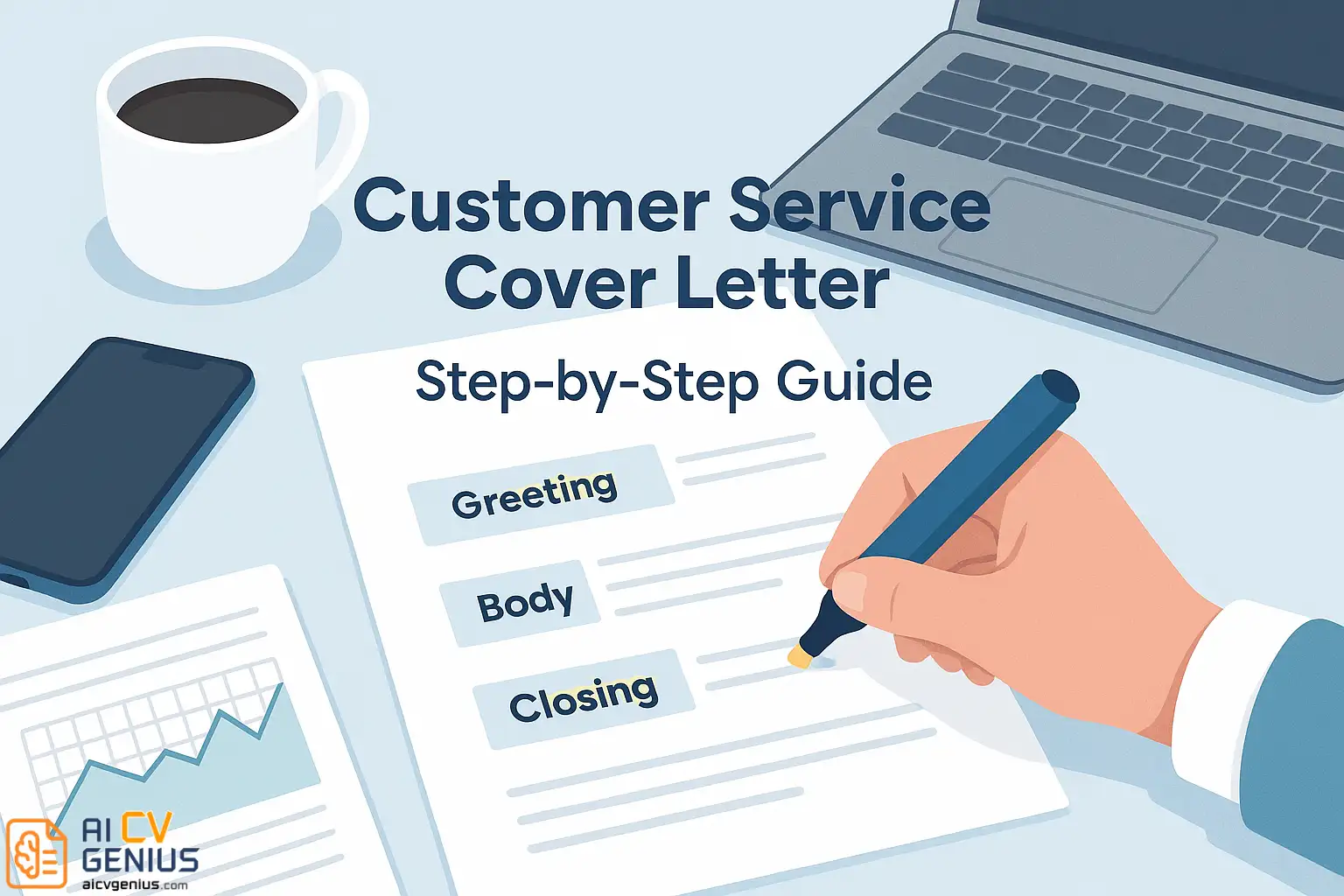
A compelling cover letter mirrors the natural flow of a positive, productive customer interaction: it begins with a friendly and professional greeting, demonstrates a clear understanding of the recipient’s needs (the role requirements), and proposes a thoughtful, value-driven resolution (your candidacy). Structure your letter concisely across three core paragraphs:
- Introduction: Briefly state who you are professionally, mention the specific role you are applying for, and concisely express why your core values or experience align with effective customer service at their organization.
- Body Paragraph(s): Showcase 1-2 of your most relevant achievements, providing specific examples that demonstrate key skills (like problem-solving or conflict resolution) and quantifiable customer impact where possible. Directly connect these examples to requirements mentioned in the job description.
- Conclusion: Reiterate your strong enthusiasm for the specific opportunity and company, briefly summarize your key value proposition, and confidently express your interest in discussing your qualifications further in an interview.
Step 4 – Illustrate Your Approach with a Specific, Compelling Story
Utilize one concrete example to vividly demonstrate your empathy, problem-solving skills, and commitment in action. Avoid generic buzzwords; instead, narrate a brief, impactful story using the implicit STAR method (Situation, Task, Action, Result).
“For instance, a long-term client once contacted our support team, understandably frustrated about a recurring billing error that previous attempts had failed to resolve. Instead of escalating immediately or offering a standard scripted apology, I initiated a direct phone call to actively listen to their full history of the issue. I then personally investigated the root cause across two internal systems, identified the configuration error, coordinated the fix with our finance team, confirmed the resolution, and followed up with the client to explain the steps taken and ensure their complete satisfaction. That client subsequently renewed their annual contract and specifically mentioned the personalized attention received in resolving that complex issue as a key factor in their decision.”
This specific narrative demonstrates tangible impact – not merely because procedures were followed, but because you demonstrated genuine care, initiative, and effective cross-functional problem-solving to achieve a positive outcome.
Step 5 – Strategically Highlight Key Customer Service Competencies
Emphasize a balanced blend of essential soft skills (interpersonal abilities) and relevant technical proficiencies. Employers highly value candidates who demonstrate both strong emotional intelligence and operational efficiency. Tailor this list based on keywords from the job description:
- ✅ Active Listening & Empathetic Communication
- ✅ Problem-Solving & Critical Thinking
- ✅ Conflict Resolution & De-escalation Techniques
- ✅ Patience, Adaptability & Resilience Under Pressure
- ✅ Proficiency with CRM and Ticketing Systems (e.g., Zendesk, HubSpot Service Hub, Salesforce Service Cloud – be specific!)
- ✅ Clear Written & Verbal Communication Skills (Multilingual abilities if applicable)
- ✅ Time Management & Prioritization
- ✅ Data Entry Accuracy & Feedback Reporting
- ✅ Product/Service Knowledge Acquisition
Step 6 – Quantify Your Impact with Numbers and Results
Even within a highly people-focused role like customer service, incorporating specific metrics provides concrete evidence of your performance and effectiveness. Use simple, relevant data points demonstrating efficiency gains, customer satisfaction levels, issue resolution speed, retention impact, or training contributions:
- Consistently handled 100+ diverse customer inquiries daily across chat, email, and phone channels while maintaining an average 95% customer satisfaction (CSAT) rating.
- Successfully reduced average issue resolution time from 48 hours to under 18 hours through implementing improved internal knowledge base utilization.
- Achieved 100% compliance in accurately documenting customer feedback and escalating critical issues according to established protocols.
- Developed and delivered onboarding training on empathy-based communication techniques for 4 new team members, receiving positive feedback on session effectiveness.
- Contributed to a 10% decrease in customer churn rate for assigned accounts through proactive relationship management and swift issue resolution.
Step 7 – Maintain a Consistently Positive and Personable Tone
Effective customer service hinges significantly on attitude and approach. Ensure your cover letter reflects warmth, professionalism, and genuine helpfulness – avoiding overly stiff, corporate, or generic language. Use “I” statements naturally and confidently; this conveys ownership and sounds more human than passive phrasing.
“I genuinely believe in treating every customer interaction, regardless of complexity, as a vital opportunity to reinforce brand trust and demonstrate unwavering commitment to their satisfaction.”
This type of statement feels authentic, relatable, and effectively showcases emotional intelligence and professional maturity.
Step 8 – Conclude with a Strong, Forward-Looking Paragraph
End your letter by explicitly connecting your personal service philosophy and key qualifications to the specific company’s mission, values, or stated customer service goals (gleaned from your research). Maintain a conversational yet highly professional tone.
“Your organization’s clearly stated commitment to fostering meaningful, long-term customer relationships aligns perfectly with my own professional philosophy: that every interaction represents a crucial opportunity to build lasting loyalty through empathy and effective solutions. I am eager to bring my proven communication skills, patience, and unwavering customer-first mindset to your dedicated team at [Company Name].”
Step 9 – Adhere to Professional Formatting and Presentation Standards
Ensure your cover letter looks as polished and easy to read as your communication style aims to be:
- ✅ Strictly adhere to one page maximum (aim for 300–400 words for optimal conciseness).
- ✅ Utilize clean, professional sans-serif fonts (e.g., Inter, Lato, Calibri, Arial) in a readable size (10-12 points).
- ✅ Use standard left alignment for text. Ensure ample white space between paragraphs for enhanced scannability. Avoid dense blocks of text.
- ✅ Maintain visual consistency by matching the header style (font, layout) used on your accompanying resume.
- ✅ Always save and submit the final document as a PDF file to preserve formatting integrity across all devices and platforms.
Step 10 – Example: Compelling Customer Service Cover Letter Opening
“Dear [Mr./Ms./Mx. Hiring Manager Name],
For me, exceptional customer service transcends simply resolving issues – it fundamentally involves creating positive, memorable experiences that reinforce brand trust, even amidst challenging situations. With over three years of dedicated experience managing complex client inquiries within high-volume B2B support environments, I have honed the ability to blend genuine empathy with efficient problem-solving, consistently transforming potential escalations into opportunities for relationship building.”
Step 11 – Example: Impactful Body Paragraph Showcasing Skills & Results
“At BrightDesk Solutions, I effectively managed inquiries across live chat, phone, and email channels concurrently, consistently maintaining a 98% customer satisfaction score while successfully reducing issue escalation rates by 20% through proactive troubleshooting and clear communication. My most rewarding moments invariably involved navigating complex technical problems alongside frustrated clients, patiently guiding them towards resolution, and ultimately converting their initial dissatisfaction into expressed gratitude and renewed confidence in our services – because I firmly believe every resolved issue represents a powerful opportunity to build long-term trust and loyalty.”
Step 12 – Example: Confident and Enthusiastic Closing Paragraph
“Thank you sincerely for considering my application for the Customer Success Specialist role. I am genuinely excited by the prospect of bringing my proven communication skills, unwavering patience, and dedicated customer-first mindset to your highly regarded team at [Company Name]. I am confident that together, we can continue to create customer experiences that foster not just satisfaction, but lasting loyalty. I look forward to the possibility of discussing my qualifications further.”
Pros & Cons: Leveraging the Customer Service Cover Letter
Understanding the strategic advantages and potential pitfalls:
| ✅ Strengths | ⚠️ Pitfalls to Avoid |
|---|---|
| Effectively showcases crucial soft skills (empathy, communication, patience) often difficult to convey fully on a resume. | Risk of sounding generic, cliché, or insincere if lacking specific examples or authentic voice (“Passionate team player…”). |
| Provides an opportunity to demonstrate strong written communication abilities directly through the letter’s quality and tone. | Overuse of industry buzzwords (“synergy,” “customer-centric paradigm”) can obscure meaning and feel impersonal. |
| Allows for personalization, showing genuine interest in the specific company and its service philosophy. | Failure to include measurable results or specific achievements (CSAT scores, resolution times) can make claims less credible or impactful. |
| Helps explain career transitions or address potential resume gaps with relevant context. | Typos, grammatical errors, or inconsistent formatting undermine professionalism and attention to detail – critical traits for CS roles. |
Step 13 – Inject Personality While Maintaining Professionalism
Subtly incorporating your authentic voice or perspective can make your letter more memorable, provided it remains relevant and professional. Focus on expressing your service philosophy genuinely.
“I believe truly effective customer support should feel less like interacting with a process and more like conversing with a knowledgeable, trusted advisor – calm, clear, and genuinely invested in finding the best solution.”
This type of statement reveals more about your professional values and approach than generic clichés about “multitasking capabilities” ever could.
Step 14 – Final Meticulous Checklist Before Sending
Perform this crucial review:
- ✅ Double-checked company name and hiring manager’s name/title spelling for absolute accuracy.
- ✅ Read the entire letter aloud – does it flow naturally? Does the tone sound friendly, professional, and genuinely enthusiastic?
- ✅ Ensured the overall tone aligns appropriately with the perceived company culture (e.g., formal corporate vs. energetic startup vs. mission-driven non-profit).
- ✅ Confirmed inclusion of specific examples, quantifiable results where possible, and relevant keywords from the job description.
- ✅ Considered adding a brief, impactful Postscript (P.S.) line if appropriate and adds unique value (e.g., “P.S. I was particularly impressed by [Company Name]’s recent initiative focused on [Specific Customer Success Area], as it aligns directly with my expertise in proactive client engagement strategies.”) Use sparingly.
- ✅ Meticulously proofread multiple times for any typos, grammatical errors, or formatting inconsistencies.
Step 15 – Emphasize Continuous Learning and Improvement
The customer service landscape evolves rapidly with new technologies and changing customer expectations. Briefly signaling your commitment to ongoing professional development demonstrates adaptability and forward-thinking – highly valued traits. Stay genuinely curious about advancements in CRM platforms, AI-driven support tools, evolving communication best practices, and deeper insights into customer psychology. A demonstrable learning mindset often proves to be the most compelling skill you can showcase in any interview setting.
Need inspiration for structuring your cover letter layout to perfectly complement your resume? Explore diverse professional examples in Cover Letter Examples, discover harmonizing resume designs in the Resume Templates Finder, or access broader strategic advice within our extensive Career Resources hub for comprehensive formatting and content guidance.