

- What this article covers: It explains workplace culture, then shows how toxic culture often appears through quiet patterns before it becomes an obvious crisis.
- Red flags to watch: Lack of transparency, high turnover or constant restructuring, micromanagement, values that do not match behavior, blame and fear around mistakes, gossip and cliques, burnout treated like a badge, and no safe space for feedback.
- How to spot it before you join: Pay attention to interview energy and body language, ask what employees like most and least, notice whether answers are clear or evasive, and read reviews for repeating themes rather than obsessing over ratings.
- What to do if you are already inside: Document patterns for clarity, set boundaries, communicate calmly, find allies, and if leadership refuses to change, plan a clean exit instead of waiting to be “fixed” by the environment.
- What healthy culture looks like: Clear communication, psychological safety, recognition and growth, and leaders who model empathy and accountability, the takeaway is to choose workplaces that help you build, not survive.
We all want to believe our new job will be the one – the place where we’ll learn, grow, and finally feel valued. But sometimes, that excitement fades fast. Maybe you notice that people whisper when a manager walks by, or that your ideas get brushed aside. These are more than bad days – they might be signs of a deeper problem: a toxic workplace culture.
In this article, we’ll break down the subtle red flags that signal an unhealthy company culture – and how to recognize them before they start affecting your confidence and career path.
Defining Culture & Identifying Core Red Flags
What Is Workplace Culture?
Workplace culture is the invisible atmosphere that shapes how people interact, make decisions, and handle pressure. It’s the blend of behaviors, values, and unspoken rules that tell you whether employees feel safe, supported, and respected.
Good culture feels like a rhythm: people communicate openly, celebrate wins together, and handle mistakes without fear. Toxic culture feels like walking on glass – everything looks fine on the surface, but tension sits just underneath.
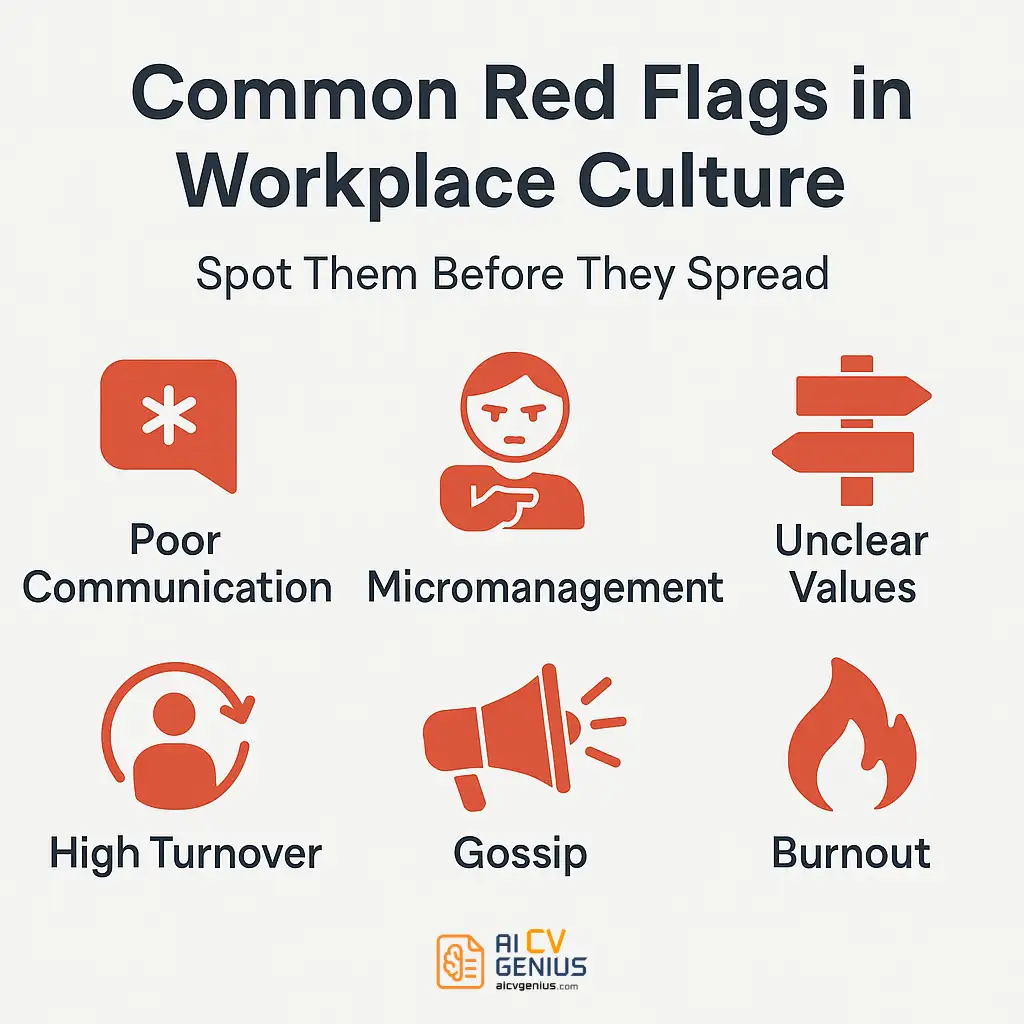
Lack of Transparency
If management keeps decisions behind closed doors or avoids explaining changes, that’s a classic red flag. Transparency isn’t just about sharing numbers – it’s about trust. When leadership hides information, employees start filling the gaps with rumors and fear.
Healthy companies explain not only what decisions are made, but why. They invite feedback and communicate consistently, even when news isn’t good.
- ✅ Healthy culture: “Here’s the reason for our new process.”
- ❌ Red flag: “Just do it. Don’t ask questions.”
High Turnover and Constant Restructuring
When good employees keep leaving, it’s rarely about money alone. High turnover usually means people feel undervalued or exhausted. You can sense it even during interviews – vague answers about why previous staff left, or overly polished talk about “new leadership vision.”
Some turnover is normal. But when you hear, “We’ve had a few team changes lately,” it might actually mean “half the department quit.” Always trust patterns more than promises.
Micromanagement
Micromanagement kills trust faster than anything. It’s when every decision, task, or message needs approval, and autonomy disappears. You’ll notice it when you stop feeling ownership of your work.
A good manager supports and coaches. A micromanager controls and corrects. Over time, employees stop taking initiative – they start waiting for instructions, afraid to make mistakes. That’s when growth stalls, and innovation dies.
- ✅ Empowering culture: “I trust your judgment. Let’s review after.”
- ❌ Red flag: “Copy me on every email.”
Unclear Values or Vision
Some companies proudly display their values on posters, but those words mean nothing if behavior doesn’t match. Watch how leaders act under pressure – that’s where true values show. If they preach “work-life balance” but reward late-night emails, that’s not balance; that’s branding.
Ask yourself: does this company know what it stands for, or is it just chasing trends? A team without direction drifts into burnout faster than you think.
Blame Culture and Fear of Mistakes
In a healthy workplace, mistakes are learning moments. In a toxic one, they’re ammunition. When employees are punished or publicly shamed for small errors, fear spreads – people start hiding problems instead of solving them.
That silence eventually snowballs into inefficiency, resentment, and disengagement. You’ll notice fewer questions in meetings, robotic agreement, and that sinking feeling that honesty isn’t safe here.
Gossip and Cliques
Every workplace has social circles, but when gossip replaces collaboration, it’s a warning sign. Toxic gossip thrives where communication is poor – it’s how people make sense of unclear rules or favoritism.
Cliques create invisible hierarchies. Newcomers feel excluded; promotions feel political. Over time, good employees either conform or leave quietly. Both outcomes hurt culture deeply.
Burnout as a Badge of Honor
If exhaustion is glorified – “We’re hustlers!” “We never sleep!” – run. Hustle culture may sound inspiring, but long-term burnout drains creativity and morale. In healthy environments, hard work is celebrated, but rest is respected.
Ask yourself: do people take vacations without guilt? Do leaders model balance or brag about working weekends? Those details reveal everything.
No Room for Feedback
When employees can’t share opinions safely, improvement stops. Toxic environments treat feedback as criticism, not contribution. You’ll notice leaders who dismiss suggestions or retaliate against honest conversations.
Healthy teams ask, “How can we do better?” Toxic ones ask, “Who’s to blame?”

Actionable Advice, FAQs & Final Thoughts
Spotting Red Flags Before You Join
The best time to identify a toxic culture is before you accept the job. Pay attention during interviews – body language, energy, and how questions are answered say more than the job description.
- ✅ Ask what current employees love most and least about their work.
- ✅ Research company reviews, but read between the lines – tone matters more than rating.
- ✅ Notice whether recruiters answer questions transparently or deflect.
Even subtle cues – like rushed communication, unclear roles, or “we’re a family here” clichés – can signal deeper issues. Healthy teams talk about collaboration, not loyalty tests.
How to Respond if You’re Already Inside
If you recognize some of these red flags at your current job, you have options. Start by documenting incidents – not for revenge, but clarity. Knowing what’s actually happening helps you decide whether to address it or plan your exit.
Then, try small changes: set boundaries, communicate openly, and find allies. Sometimes toxicity fades when someone brave models better behavior. But if leadership refuses to change, don’t wait for the environment to heal you – walk toward better spaces.
Building and Choosing Healthy Cultures
Healthy workplaces share a few universal traits:
- ✅ Clear communication and consistent values.
- ✅ Psychological safety – mistakes seen as learning, not failure.
- ✅ Recognition and growth opportunities for all.
- ✅ Leaders who model empathy and accountability.
You can sense it instantly – people smile for real, not because they have to. Energy feels steady, not forced. When you find that, protect it. Good culture is rare, but it changes everything about how you show up at work.
Final Thoughts
Red flags don’t always scream – sometimes they whisper. A raised eyebrow in a meeting, a lack of trust in silence, a gut feeling that you’re not safe to speak up. Listen to that feeling. The longer you ignore it, the more it shapes how you see yourself.
Your career is too valuable to waste in toxic environments. Healthy cultures don’t drain you; they grow you. Learn to read the room early, and you’ll spend your energy building, not surviving.
For more guides on navigating career decisions and self-growth, check out our Career Resources. You can also explore our Blog for more stories on resilience, work-life balance, and career clarity.