

- Core idea: Balance is a skill built as rhythm and prevention, not a recovery fix after burnout.
- Why it breaks: Constant access and blurred boundaries push gradual burnout, with early signals like fatigue, brain fog, irritability, and disconnection.
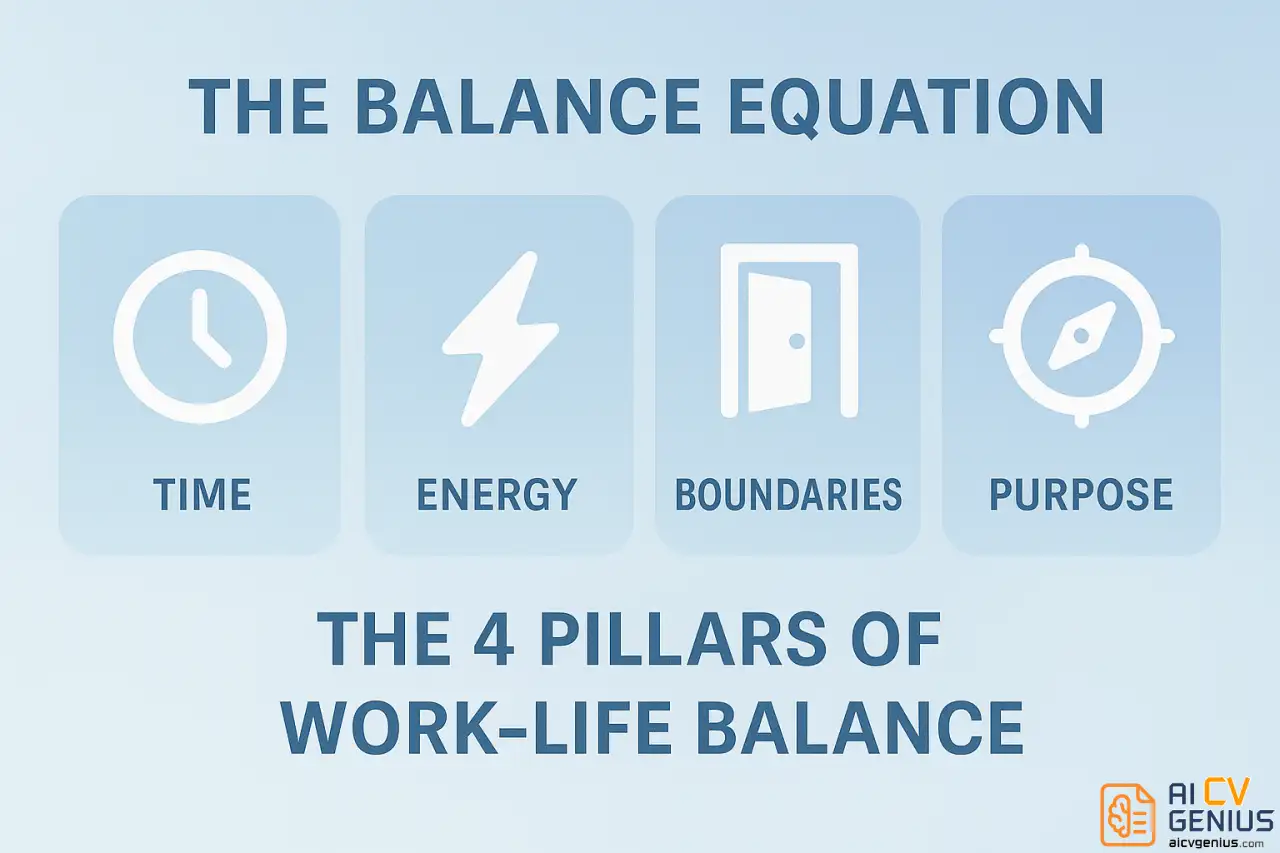
- The system: Time (Schedule priorities first), Energy (Use breaks and recovery), Boundaries (Set micro-guardrails), Purpose (Align what you do with why).
- Start today: Use start/stop rituals, batch similar tasks, say a strategic no, redefine productivity, and build daily micro-recovery.
- Make it stick: Add structure for remote work, leaders should model boundaries, accept seasons not “having it all,” and review your week with a simple checklist plus practical FAQ rules.
Work-Life Balance Is Not a Luxury – It’s a Skill
In today’s culture of constant connection, work-life balance feels like a myth. Slack pings at midnight, “urgent” emails blur weekends, and the line between effort and exhaustion gets thinner by the day. Yet learning work-life balance tips isn’t about cutting work – it’s about creating rhythm.
Balance doesn’t mean equal hours. It means feeling in control of how you spend your time and energy. It means being fully present at work without guilt – and equally present in your personal life without distraction. True balance is self-awareness in motion.
The irony? Many professionals only start thinking about balance after burnout. But balance isn’t a recovery strategy – it’s a prevention system. The earlier you build it, the longer you last.
Why Modern Work Makes Balance Harder
Technology promised freedom, but it delivered constant access. Remote work blurred boundaries; hybrid work added guilt. We can work anywhere – which quietly became “we work everywhere.”
Researchers from the World Health Organization have linked chronic overwork to higher risks of anxiety, heart disease, and disengagement. Yet most people don’t burn out overnight – they fade gradually, one missed walk, one skipped lunch, one “just 10 more minutes” at a time.
Recognizing the Signs of Burnout
Balance begins with awareness. Common early symptoms include:
- ⚠️ Emotional fatigue – feeling drained after simple tasks.
- ⚠️ Cognitive fog – trouble focusing or recalling details.
- ⚠️ Irritability or cynicism about your work.
- ⚠️ Disconnection – withdrawing from friends or interests.
If any of these feel familiar, it’s not weakness. It’s a signal – one your body sends long before your boss ever will.
Building Your Work-Life Balance System
The 4 Pillars of Work-Life Balance
Balance isn’t built overnight. It’s a set of systems that support your well-being. Think of these four pillars as your personal foundation.
1. Time: Schedule Your Priorities
Most people try to “fit” self-care into leftover time – but there’s never leftover time. Flip the equation: schedule personal priorities first, then work around them. Protecting your time protects your focus.
Try the “3 + 1 Rule”: choose three core priorities for the week (one work goal, one personal, one relationship) and one small joy to look forward to. This prevents your calendar from becoming a guilt list.
2. Energy: Manage Inputs, Not Just Hours
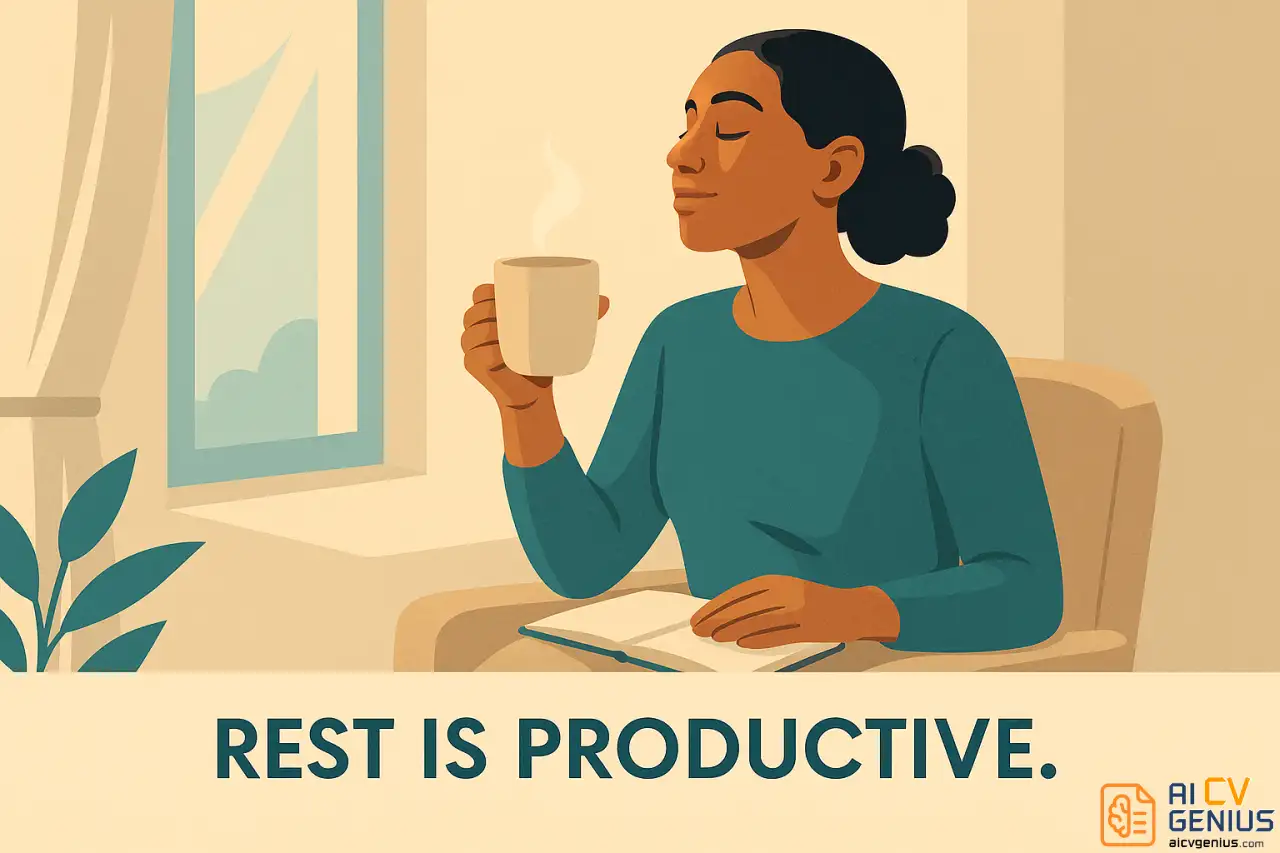
Energy fluctuates – plan your toughest work during high-energy windows and schedule recovery afterward. Short breaks improve output, not reduce it. Even a 10-minute walk resets mental stamina better than coffee.
Remember: productivity isn’t about doing more – it’s about doing meaningfully. You can’t run a marathon on no fuel. You can’t create value from exhaustion.
3. Boundaries: Protect What Matters
Boundaries aren’t walls – they’re guardrails. They protect relationships from resentment and work from chaos.
Try setting micro-boundaries first:
- Turn off notifications after a fixed hour.
- End your workday with a ritual – shut laptop, stretch, change clothes.
- Separate “workspace” and “home space” (even a corner counts).
Boundaries say, “I take both my job and my life seriously.” And that earns respect – not judgment.
4. Purpose: Balance Without Direction Feels Empty
Without purpose, even rest feels restless. Take time to ask: what am I working toward? What does “enough” look like? Balance isn’t the absence of work – it’s alignment between what you do and why you do it.
If you’ve ever wondered why promotions sometimes bring less happiness, revisit why confidence matters more than experience. The same principle applies: inner stability matters more than external titles.
Practical Work-Life Balance Tips You Can Start Today
1. Create Start and Stop Rituals
Begin your day with intention, not emails. End it with closure, not scrolling. Simple bookends – a short walk, a journal note, or even lighting a candle – signal your brain that you’re switching roles. Without rituals, you drift. With them, you reset.
2. Batch Similar Tasks
Constant context-switching drains mental energy. Group similar activities: Reply to messages once per hour instead of constantly checking. Plan meetings in the afternoon; creative work in the morning.
You’ll work less but accomplish more.
3. Embrace the “Strategic No”
Saying no isn’t selfish – it’s strategic. Every “yes” costs time, energy, and focus. Ask yourself: will this matter next month? If not, decline politely. Remember, declining doesn’t mean disconnecting – it means preserving quality for what truly matters.
4. Redefine Productivity
Modern culture glorifies busyness. But busyness isn’t the same as effectiveness. True productivity is progress aligned with purpose. Doing fewer things better often leads to faster advancement than juggling endless tasks.
5. Build Recovery Into Routine
Don’t wait for burnout to rest. Schedule micro-recoveries daily: deep breaths, hydration, brief movement. Think of recovery like brushing your teeth – small, daily, non-negotiable.
Understanding the Context of Balance
The Psychology of Balance
Balance isn’t just about time – it’s emotional regulation. The brain needs contrast. When work and rest blur, we lose perspective and motivation. Dopamine spikes from constant alerts eventually flatten, leaving apathy behind.
Dr. Adam Grant’s research at Wharton shows that employees who take short, meaningful breaks report 30% higher creativity and 40% less emotional fatigue. Rest isn’t reward – it’s requirement.
Balancing Remote and Hybrid Work
Remote jobs were supposed to increase freedom – and they do. But they also erase structure.
Here’s how to maintain balance in a remote job:
- Set a fake “commute” – take a walk before and after work hours to create separation.
- Use different devices or browsers for personal vs. work accounts.
- Block “no meeting” zones for deep focus time.
Discipline creates freedom. Without structure, home becomes “the office that never closes.”
How Leaders Can Support Balance
Work-life balance isn’t only a personal skill – it’s a leadership responsibility. Teams mirror their managers. If you send late-night emails, they’ll feel obligated to reply. If you never take vacation, they won’t either. Culture isn’t declared; it’s demonstrated.
Leaders who promote boundaries build loyalty. They retain talent longer because people stay where they feel human. As one HR leader shared, “Balance is not a perk – it’s protection.”
The Myth of “Having It All”
You can do anything, but not everything – at least not simultaneously. Balance means choosing what matters now and letting go of what can wait. It’s seasonal: early-career focus may tilt toward growth, later years toward family or creativity.
Grace, not guilt, sustains progress.
Real-World Application and FAQs
Real Stories: How Professionals Found Their Balance
Case 1 – The Remote Marketer
Anna worked across three time zones, always online. After a mild burnout, she began “digital sunset hours” – logging off at 7 p.m.
Within a month, her output improved. “I realized rest wasn’t slowing me down,” she said, “it was refueling me.”
Case 2 – The Manager Who Delegated for the First Time
Tom, a perfectionist team lead, used to micromanage everything. After missing his daughter’s recital, he started mentoring instead of managing.
Delegation gave his team autonomy – and gave him his evenings back. Balance became leadership in action.
Checklist: How to Measure Balance Weekly
| Question | Reflection |
|---|---|
| Did I rest enough to think clearly? | If not, what one habit drained me? |
| Did I do one thing for joy outside work? | Fun sustains focus – schedule it intentionally. |
| Did I communicate my limits? | Silence invites assumptions; clarity builds respect. |
| Did I work toward something meaningful? | Purpose protects against burnout. |
FAQ
Final Thoughts
Balance isn’t a finish line – it’s a practice. Some weeks you’ll tilt toward work, others toward life. The key is awareness, not perfection. Your career will always demand effort. But you get to decide how much of that effort costs your peace.
The best professionals aren’t those who never stop working. They’re the ones who know when to pause – and why. Because the goal of success isn’t exhaustion. It’s fulfillment.