

- Why mornings matter: Consistent starts build confidence and structure so your job search stays disciplined instead of drifting.
- Psychology: Predictable routines reduce decision fatigue, boost motivation, and lower stress so you can think clearly.
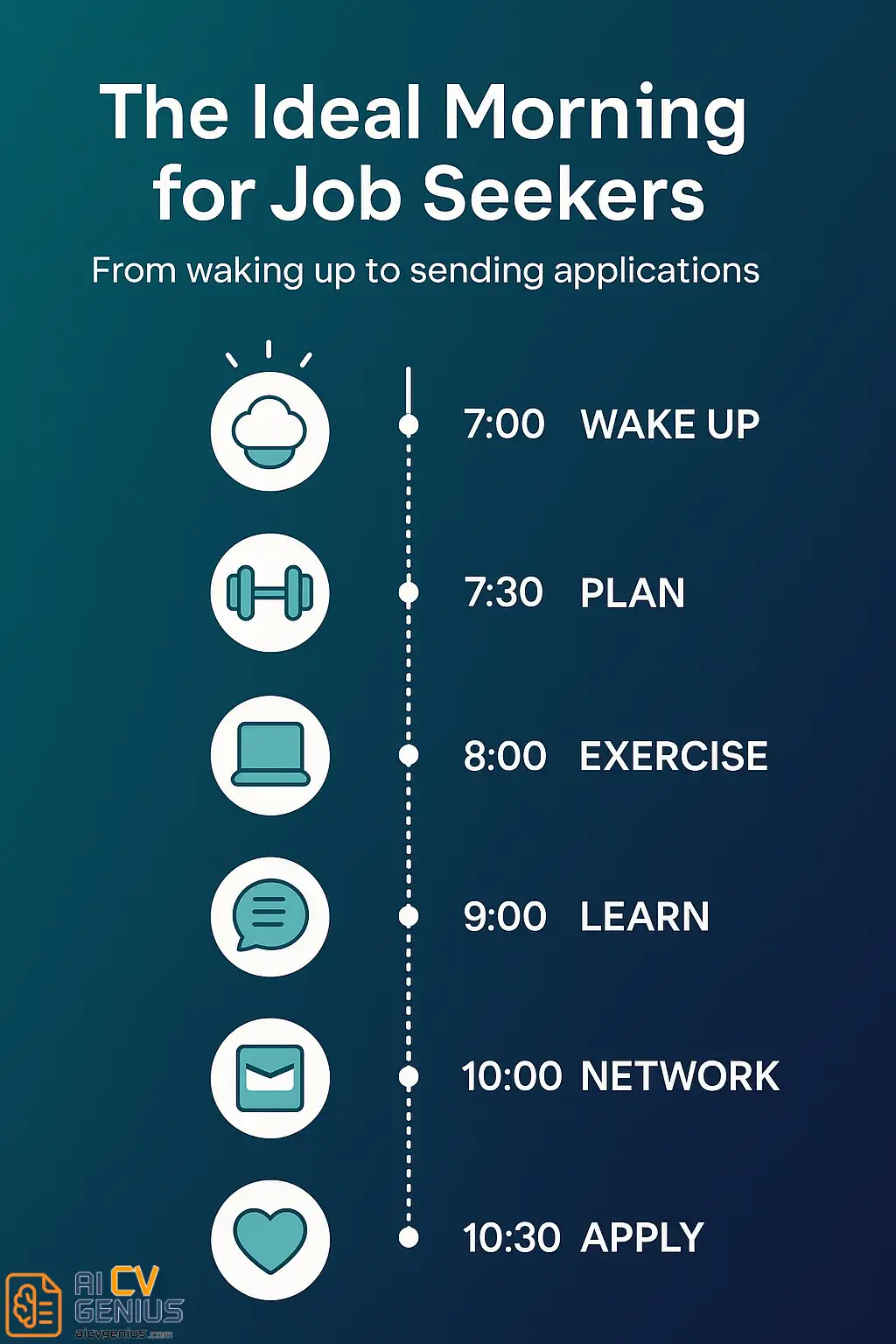
- 5-step framework: Wake intentionally, plan top priorities, move your body, feed your mind, then take one real action early.
- Execution tips: Protect focus hours before 11 a.m., avoid early scrolling, use simple tools to track habits, and add a 1-minute reflection.
- Watch-outs: Do not treat the search like free time, do not start unplanned, avoid checking rejections first, and keep flexibility for low-energy days.
The Job Seeker’s Morning: Why It Matters
Why Mornings Matter More Than You Think
Every day begins with a choice – to drift through it or direct it. For those actively seeking new opportunities, mornings set the tone for confidence and clarity. The most morning routines of successful job seekers don’t revolve around complicated rituals or 5 a.m. wake-up calls. They’re about intention, focus, and structure.
It’s not about doing more; it’s about starting better. When you begin your day grounded, your applications, interviews, and mindset follow the same rhythm. The people who land jobs faster aren’t always the most qualified – they’re the most consistent.
The Psychology Behind Morning Routines
Our brains love predictability. Routines reduce decision fatigue, creating mental space for creativity and strategy. Studies in behavioral psychology show that consistent mornings increase dopamine (motivation) and reduce cortisol (stress).
If you want to feel in control of your job search, start by controlling your morning.
Common Struggles Job Seekers Face in the Morning
Without an office or external schedule, job seekers often lose structure. Time stretches. Motivation fades. Days blur together. That’s why you need personal anchors – small actions that reset your momentum every morning.
- ✅ Waking up without purpose → leads to procrastination.
- ✅ Skipping breakfast → drains focus and energy early.
- ✅ Diving into emails → causes reactive thinking instead of proactive planning.
What Successful Job Seekers Do Differently
After analyzing habits of professionals who successfully transitioned jobs in under 60 days, one pattern appeared again and again: they treated job searching like a job. They set schedules, tracked goals, and created morning rituals that boosted discipline.
These routines don’t need to be perfect. They just need to happen. Consistency beats complexity every time.
A 5-Step Framework for an Effective Morning
The Five Elements of an Effective Morning Routine
Here’s a framework you can adapt, even if you’re not a morning person:
| Stage | Purpose | Example |
|---|---|---|
| Wake Intentionally | Signal focus, not rush | Stretch, hydrate, 3 deep breaths |
| Plan the Day | Define direction | List top 3 priorities |
| Move the Body | Boost energy | Walk, yoga, or short workout |
| Feed the Mind | Learn and grow | Read 10 pages, listen to a career podcast |
| Take First Action | Build momentum | Send one application or LinkedIn message |
Step 1: Wake Intentionally
How you wake shapes your mindset. Avoid reaching for your phone. Instead, take a few seconds to stretch and breathe. This small pause teaches your mind to respond, not react. You start calm, not chaotic.
Step 2: Plan the Day
Before checking notifications, write down your top three priorities. It could be updating your resume, following up on an interview, or learning a new tool. Planning first gives direction – without it, the day dictates you.
If you’re unsure where to start, our Career Resources section includes planning templates for daily job-hunting tasks that prevent burnout.
Step 3: Move Your Body
Exercise isn’t about fitness alone – it’s focus training. Moving your body increases dopamine and endorphins, making problem-solving easier. Even a 10-minute walk can trigger a clear mental reset.
As productivity expert James Clear notes, “Motion creates emotion.”
Step 4: Feed Your Mind
During a job search, mindset determines momentum. Use this part of your morning to absorb knowledge. Read articles, watch short tutorials, or practice a skill. Over time, you’ll build confidence through micro-learning.
Professionals who follow daily habits for job seekers often spend 15–30 minutes improving something tangible – whether it’s LinkedIn writing, Excel shortcuts, or understanding industry trends.
Step 5: Take the First Action
Momentum comes from movement, not motivation. Send one email, reach out to one contact, or apply for one job before noon. It builds a sense of progress that carries throughout the day. Small wins compound faster than occasional bursts of effort.
Productivity Tips, Motivation, and Scheduling
Morning Productivity Tips for Job Seekers
Here are proven morning productivity tips for professionals navigating career transitions:
- ✅ Schedule “focus hours” before 11 a.m. – guard them like meetings.
- ✅ Keep water and healthy snacks nearby – fuel affects focus.
- ✅ Avoid checking social media before finishing your first major task.
- ✅ Play instrumental music or ambient sounds if silence feels heavy.
The Power of Reflection
At the end of your morning block, pause for one minute and ask: “What went well?” Reflection rewires your brain to recognize progress instead of perfection. Over time, this simple habit reinforces resilience and self-trust – critical traits for any job seeker.
Real Story: From Chaos to Calm
Mark, a marketing executive between jobs, once described his mornings as “scrolling and panic.” We restructured his day: 7:00 wake-up, 7:30 walk, 8:00 breakfast, 8:30 applications. In two weeks, he felt more grounded – and within a month, he landed interviews.
His secret wasn’t luck; it was consistency and self-control.
“Mornings don’t make success overnight – they make success inevitable.”
How to Stay Motivated During a Long Job Search
Motivation fades if it depends on results alone. Build identity-based habits instead. Don’t aim to “find a job” – aim to “show up daily like a professional.”
The act of doing resets the emotional weight of waiting.
Tools to Support Your Routine
Use simple apps to track habits and tasks: Google Calendar, Notion, or Habitica.
Combine these with a clear resume and professional branding. You can find structured examples in our Resume Templates Finder section to streamline your workflow.
Balancing Job Search with Life
Don’t let job hunting consume every waking moment. Successful seekers block personal time for family, hobbies, and rest. Those breaks aren’t distractions – they keep you sustainable. Remember, the energy you bring to applications matters more than the hours you put in.

Example Morning Schedule for Job Seekers
| Time | Activity |
|---|---|
| 7:00 AM | Wake up, hydrate, stretch |
| 7:30 AM | Exercise or walk |
| 8:00 AM | Healthy breakfast |
| 8:30 AM | Plan daily goals |
| 9:00 AM | Send applications or follow-ups |
| 10:30 AM | Skill learning or industry reading |
Mindset Over Motivation
The most successful job seekers don’t chase motivation – they build momentum. When you win the morning, you win the day. And when you repeat that consistently, results eventually follow.
Pitfalls, FAQ, and Final Thoughts
Common Mistakes Job Seekers Make
- ❌ Treating job search like free time instead of structured work.
- ❌ Sleeping late and starting unplanned mornings.
- ❌ Checking rejections first thing, killing morale early.
- ❌ Forgetting self-care during transitions.
Pros & Cons of Structured Mornings
| Pros | Cons |
|---|---|
|
|
FAQ
Final Thoughts
The most powerful morning routines of successful job seekers aren’t about perfection – they’re about presence. Each day offers a blank page to rewrite your story, build confidence, and move one step closer to your next opportunity. Start small, stay consistent, and success becomes a habit you live, not chase.