
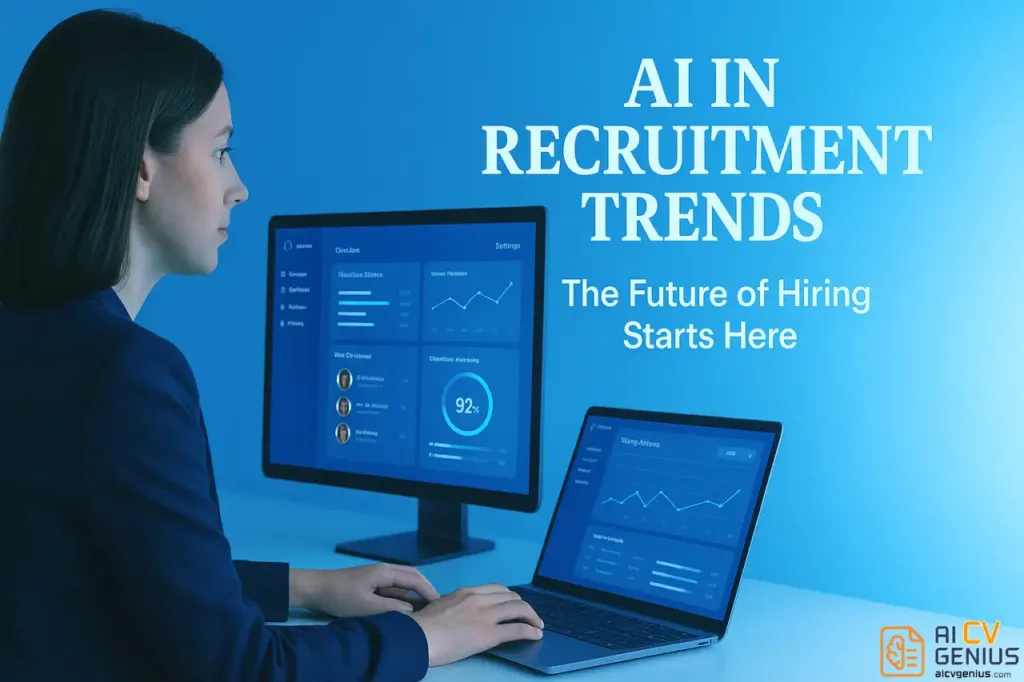
- Where AI shows up: Automated screening, scheduling, and assessments now shape who gets seen first.
- How it evaluates you: Systems scan structure and keywords, then rank relevance at speed using NLP and predictive signals.
- What to do as a candidate: Use clean formatting with standard headings, include job keywords naturally, and still write for humans after you pass the filter.
- 2025 trends to watch: Predictive hiring, skill based matching over titles, generative job descriptions, chatbots, and data driven diversity efforts.
- The bottom line: AI supports recruiters, it does not replace them, so clarity plus human skills like empathy and storytelling are your advantage.
AI Is Changing Recruitment – and You’re Already in It
Five years ago, “AI in recruitment” sounded futuristic. Today, it’s normal. If you’ve applied for a job online in the past year, you’ve already interacted with artificial intelligence – maybe without realizing it. From automated resume scanners to smart video interviews, AI now shapes how employers discover, evaluate, and engage candidates.
But understanding AI in recruitment trends isn’t just for HR professionals. Job seekers, too, must adapt to algorithms that decide which resumes get seen and which don’t. The game has changed – and learning the new rules helps you play smarter.
The Rise of AI in Hiring
The first wave of AI in hiring began with automation – tools that saved recruiters time on repetitive tasks. The second wave, happening now, focuses on decision support: helping employers predict success, reduce bias, and enhance candidate experience.
According to LinkedIn’s 2025 Global Talent Report, over 65% of recruiters already use AI-driven tools for screening, scheduling, or assessment. The next frontier? Personalization – understanding not just who you are, but where you’ll thrive.
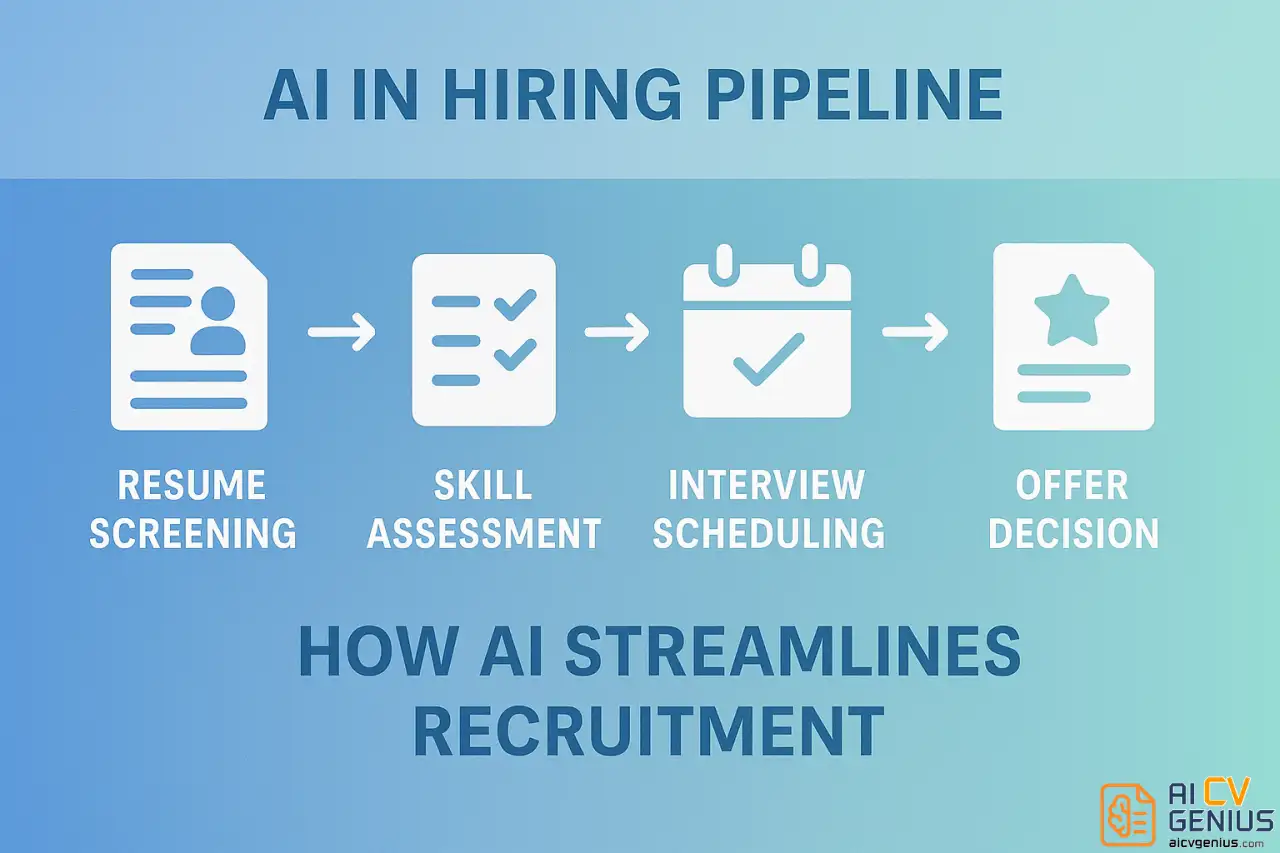
How AI Works Behind the Scenes
Imagine a digital assistant reading 500 resumes in ten minutes. It identifies keywords, ranks relevance, and even flags possible cultural fit based on tone. That’s not science fiction – it’s today’s standard.
Tools like HireVue, Pymetrics, and Eightfold use natural language processing and predictive analytics to evaluate everything from experience to emotional cues in interviews.
Why Companies Love It
- ✅ Saves time – recruiters can focus on top candidates faster.
- ✅ Reduces human bias (when programmed ethically).
- ✅ Improves candidate matching and reduces turnover.
- ✅ Enables global hiring at scale with consistent evaluation.
For employers, AI isn’t replacing judgment – it’s extending it. The difference is speed, scale, and data-backed confidence.
The Candidate’s Perspective: Adapting to Algorithms
For job seekers, AI can feel intimidating. But it can also be empowering if you know how it works. The same systems scanning your resume are also looking for clarity, structure, and relevance – things you can control.
1. Optimize for AI Screening
AI tools don’t “read” like humans; they scan. Use clear formatting, standard section headers (“Experience,” “Education,” “Skills”), and avoid graphics or tables. Include keywords from the job description naturally in your text.
If you’re not sure whether your resume is optimized, test it using our guide on improving your CV – it shows how to make your document both human- and AI-friendly.
2. Write for Humans, Too
AI might shortlist you, but humans make the final decision. Once your resume passes the filter, storytelling matters again. A well-written cover letter still builds emotional connection. For example, check this nursing career change cover letter to see how empathy and clarity shine through even in data-driven hiring.
3. Understand Video AI Interviews
Many companies now use AI-powered video platforms to assess tone, word choice, and facial expressions. To perform well, focus on authenticity and structure. Smile, pause naturally, and use examples that show problem-solving.
Don’t try to “trick” the AI with rehearsed keywords; consistency and confidence score better.
AI Trends Transforming Recruitment in 2025
Let’s look at the most significant AI tools for recruitment and trends shaping how employers hire this year and beyond.
1. Predictive Hiring
AI now goes beyond skill matching to predict future success. By analyzing career patterns and team dynamics, platforms like Eightfold and HiredScore suggest candidates who are likely to excel – even if they don’t fit a traditional checklist.
2. Skill-Based Matching Over Job Titles
Instead of relying on titles like “manager” or “analyst,” AI now categorizes skills into clusters – communication, data analysis, adaptability. This means candidates with non-linear paths (like career changers) finally get fair visibility.
That’s why understanding and framing your transferable skills – as discussed in Professional Goals Examples – can directly improve how algorithms perceive your fit.
3. Generative AI in Job Descriptions
AI now helps employers write clearer, more inclusive job ads. Tools like Textio analyze phrasing to attract diverse candidates and avoid bias. Expect job posts to sound more neutral and human – ironically, because a machine helped write them.
4. Chatbots and Candidate Experience
AI chatbots now guide applicants through the hiring process, answering FAQs and scheduling interviews instantly. These virtual assistants make hiring faster and more personal – a balance that was impossible a few years ago.
5. Data-Driven Diversity Efforts
AI helps identify patterns of exclusion or imbalance across hiring funnels. However, bias can still slip in if datasets are flawed. Ethical AI design – transparent algorithms and diverse data – will define the future of fair hiring.
Real Examples of AI in Recruitment
Companies across industries are already using artificial intelligence to transform hiring:
- Unilever uses AI-driven games to assess problem-solving and emotional intelligence.
- IBM applies predictive analytics to identify internal candidates ready for promotion.
- Amazon uses machine learning to forecast talent needs months ahead of time.
- LinkedIn recommends passive candidates to recruiters based on behavioral data.
These examples show one truth: AI isn’t futuristic – it’s infrastructure. It’s quietly rewriting the rules of who gets noticed.
The Ethical Debate: Friend or Filter?
AI can reduce bias, but it can also replicate it. If past hiring data favored certain demographics, algorithms may unintentionally continue that pattern. The key difference lies in accountability – who audits the AI, and how often.
Transparency and Trust
Governments are catching up. The EU’s 2025 AI Act requires disclosure when algorithms play a role in hiring decisions. Expect more “AI transparency statements” in job applications soon. Candidates have the right to know when and how they’re being evaluated.
What Recruiters Say About AI
Many recruiters see AI as a support tool, not a replacement. It helps them focus on building relationships instead of drowning in admin work. However, they emphasize one thing: soft skills can’t be automated.
“AI can identify potential – but only people can recognize passion,” said Maya Rodriguez, Talent Director at a global healthcare firm. “We still hire humans for human reasons.”
This hybrid future – where machines screen and humans decide – demands balance. The best candidates will learn how to speak both languages: data and empathy.
How Job Seekers Can Stay Ahead
Adapting to AI in hiring doesn’t mean losing authenticity. It means combining clarity with strategy. Here’s how to stand out in an algorithm-driven world:
- ✅ Write clear, keyword-aligned resumes.
- ✅ Build an online presence consistent with your resume.
- ✅ Use measurable results in bullet points (AI loves numbers).
- ✅ Practice concise storytelling for interviews – both live and video-based.
Invest in Human Skills
Ironically, as AI grows, human skills become more valuable. Emotional intelligence, creativity, and leadership remain irreplaceable. The future belongs to candidates who can analyze data but also inspire people.
The Next Wave of AI in HR Technology
Emerging trends point to even deeper personalization. Some platforms now predict not only who will succeed, but how they’ll feel – using sentiment analysis to forecast engagement and retention. Imagine onboarding programs tailored to your personality type before you even start.
Meanwhile, AI-driven internal mobility tools will help employees grow within companies instead of leaving. Career pathing software maps where your skills could take you next – another reminder that AI isn’t about replacement; it’s about redirection.
Will AI Replace Recruiters?
Not likely. AI handles information; recruiters handle relationships. Machines can rank resumes, but only humans can read nuance – the tone of an email, the potential in a personality.
The recruiters who thrive will be those who combine data literacy with empathy, turning technology into insight rather than dependence.
FAQ
Final Thoughts
Artificial intelligence isn’t taking over recruitment – it’s transforming it. The future of hiring will be hybrid: part algorithm, part instinct. For job seekers, that means adapting to structure without losing soul. For recruiters, it means using data to enhance empathy, not erase it.
Understanding AI in recruitment trends isn’t about coding or algorithms. It’s about awareness – knowing how technology shapes perception, and learning how to show up authentically within that system. When you blend human connection with digital fluency, you don’t just survive the future of work. You help shape it.