

- What “side hustle” means in 2026: A signal of initiative, skill-building, and self-direction, not just extra income.
- How to list it on your resume: Treat it like professional experience with a credible title, tight bullets, and relevance to the role.
- How to make it sound real: Show transferable skills and quantify impact with metrics like revenue, growth, engagement, or completed deliverables.
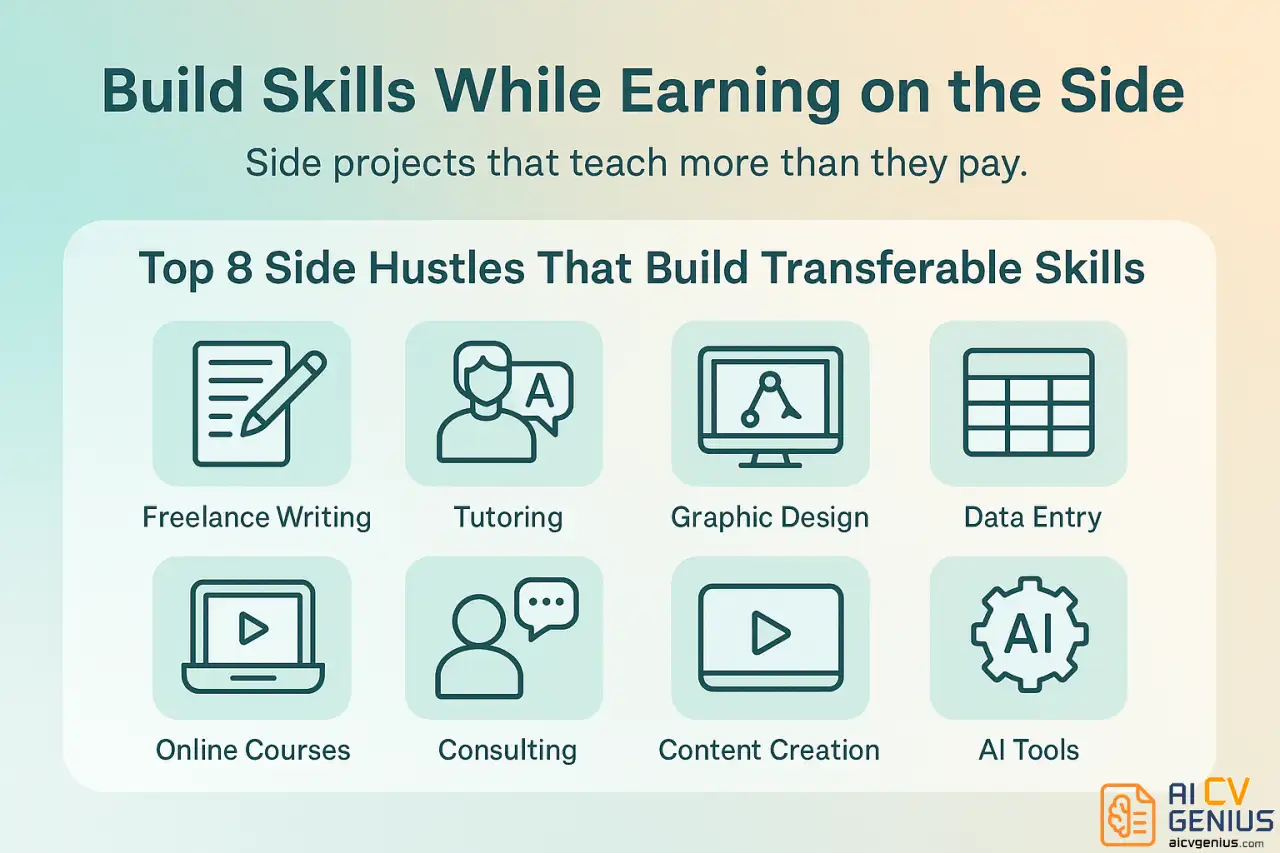
- High-value side hustles to highlight: Include options across tech and AI, creative work, education, operations, and entrepreneurship, framed by the skills they build.
- What to watch for: Avoid conflicts or random unrelated hustles, frame your intent clearly, keep boundaries for balance, and use side work as proof for a future pivot.
Introduction: The Value of Side Hustles
The New Meaning of “Side Hustle”
For years, “side hustle” meant chasing extra income. In 2026, it means something else: freedom, skill-building, and self-direction. Today’s professionals use side projects not just to earn, but to grow – to experiment with ideas, tools, and identities that their 9-to-5s can’t always offer.
Adding a side hustle to your résumé isn’t about bragging that you’re busy. It’s about showing initiative – that you’re the kind of person who keeps learning, even without being told to.
“What you do outside work says as much about you as your job title does.”
Why Side Hustles Belong on a Resume
Hiring managers love self-starters. A side hustle proves curiosity, adaptability, and independence – traits that define high performers. Whether you run a micro business or contribute part-time to a creative project, it shows you can handle responsibility and time management.
In fact, surveys show that 57% of recruiters view side projects as valuable experience, even more than formal internships.
How to Showcase Side Hustles
How to List a Side Hustle Professionally
Treat your side work like a business or consulting project. Add it under “Experience,” with a title that fits your role – for example:
- ✅ “Freelance Designer – Self-Employed (2024–Present)”
- ✅ “Online Tutor – Independent Educator”
- ✅ “AI Content Consultant – Freelance Contract”
Then describe what you did and what results you achieved. Example:
“Created branded visuals for 15+ small businesses using Canva and Adobe tools.”
The Secret: Side Hustles Teach Transferable Skills
Your extra work doesn’t have to match your main job. A teacher who freelances as a writer learns storytelling. A designer who sells online courses gains project management. These are all transferable skills that make your résumé stronger.
“Side hustles aren’t distractions – they’re quiet training grounds for your next chapter.”
How to Fit It Without Overcrowding
If your résumé is tight on space, summarize your side hustle in 1–2 bullets. The key is relevance. Ask: Does this support the story I want to tell?
Example:
If you’re applying for a project management job, include your freelance design experience that involved coordinating timelines, not just creative work.
How to Talk About Side Hustles in Interviews
Don’t downplay them – use them to show initiative and learning. Example answer:
“Outside my full-time role, I manage a small freelance design project. It’s helped me strengthen project management and client communication skills I now use daily.”
That one sentence shows maturity and ambition without sounding unfocused.
How to Measure the Impact of a Side Hustle
Use the same metrics you’d use for your full-time job: growth, revenue, engagement, or learning outcomes.
- ✅ “Built an email list of 1,200 subscribers for my personal blog.”
- ✅ “Created online course with 200+ enrollments.”
- ✅ “Earned $4,000 in freelance projects within six months.”
Numbers make passion sound professional.
How to Get Started (If You Don’t Know What to Do)
Start small – pick something that matches both your curiosity and your skill set. Ask: “What’s one thing people already ask me for help with?” That’s your clue.
Examples:
- ✅ You help colleagues fix formatting → Offer resume editing.
- ✅ You enjoy explaining concepts → Try online tutoring.
- ✅ You love visuals → Create Canva templates or infographics.
Turning Your Side Hustle into Portfolio Proof
Even if your side work doesn’t pay much, it can pay off in credibility. Add deliverables – mockups, testimonials, screenshots – to your personal portfolio or LinkedIn profile. Show the work, not just the word “freelancer.”
Recruiters love seeing initiative visualized.
Types of High-Value Side Hustles
Side Hustles That Actually Add Resume Value
| Side Hustle | Key Skills Gained | Resume Impact |
|---|---|---|
| Freelance Writing | Communication, research, time management. | Shows ability to deliver client-ready work under deadlines. |
| Graphic Design | Creativity, digital tools, brand storytelling. | Demonstrates modern marketing literacy and software skills. |
| Tutoring / Coaching | Leadership, empathy, teaching. | Proves strong communication and mentorship qualities. |
| Social Media Management | Analytics, audience growth, creativity. | Highlights marketing strategy and adaptability to trends. |
| eCommerce / Dropshipping | Entrepreneurship, sales, logistics. | Shows business awareness and initiative. |
| Virtual Assistance | Organization, remote communication, admin tools. | Signals reliability and multitasking. |
| Data Entry / Analysis | Precision, data literacy, Excel/Sheets skills. | Appeals to recruiters in operations or tech roles. |
| AI-Powered Projects | Prompt writing, automation, tech fluency. | Positions you as future-ready in digital work. |
Real Examples from Professionals
- A marketing executive launched a small newsletter about branding – it landed her a senior content strategy role six months later.
- A UX designer started freelancing for nonprofits – the volunteer work became her design portfolio.
- A data entry clerk learned Python to automate his freelance tasks – now he works in analytics full-time.
Each story has one thing in common: initiative. That’s what recruiters notice first.
Which Side Hustles Are Best for 2026
| Category | Examples | What They Build |
|---|---|---|
| Tech & AI | Prompt writing, automation scripts, chatbot building. | Digital fluency and critical thinking. |
| Creative | Content creation, podcasting, digital design. | Brand voice, storytelling, confidence. |
| Education | Tutoring, online courses, workshops. | Communication and mentorship. |
| Operations | Virtual assistance, data entry, bookkeeping. | Organization and system thinking. |
| Entrepreneurial | eCommerce, consulting, small agency work. | Ownership, adaptability, client management. |
The AI-Powered Side Hustle Era
AI has democratized creativity. You can now create templates, summaries, or micro-tools without coding. What used to take weeks now takes hours. The most successful side hustlers aren’t the most technical – they’re the most curious.
If you’re exploring this path, our Career Resources library has guides on using AI tools for writing, design, and job searching – perfect for creative professionals building online income streams.
Strategic Considerations and Pitfalls
Turning a Side Hustle into a Career Pivot
Many full-time transitions start as hobbies. A content writer learns SEO. A data entry freelancer discovers Python. A teacher launches a YouTube channel about learning design – and ends up in edtech. Side projects are low-risk testing grounds for what’s next.
When a pattern of curiosity appears, follow it – your résumé will naturally evolve.
How Recruiters Interpret Side Projects
Recruiters see three kinds of candidates:
| Type | What They See | Resume Advantage |
|---|---|---|
| Pure Hobbyist | Creative curiosity | Shows personality and passion. |
| Part-Time Professional | Discipline and reliability | Signals time management and skill depth. |
| Entrepreneurial Thinker | Initiative and risk-taking | Shows leadership and vision. |
All three are valid. Just frame yours clearly – show intention, not distraction.
When Side Hustles Can Backfire
Only if they conflict with your main job or sound unrelated. Avoid adding things like crypto trading or reselling sneakers unless they build clear, transferable skills. Always align your side work with your professional narrative.
How to Keep Work-Life Balance
Not every extra project should be monetized. The healthiest professionals set boundaries – one evening or weekend day is enough. Side hustles should energize, not exhaust. Balance ambition with rest, so your creativity stays sustainable.
What Side Hustles Teach About Career Resilience
Side projects teach something full-time jobs rarely do – ownership. You learn to set deadlines, handle clients, and face rejection alone. Those lessons build grit, adaptability, and independence – all traits that make you more valuable in any career.
“The best careers aren’t built in boardrooms – they’re built at 10 p.m., one experiment at a time.”
Conclusion and FAQ
Final Thoughts
Side hustles aren’t distractions from your real career – they’re your second education. They teach you initiative, focus, and courage. Whether it’s a blog, freelance gig, or AI project, each one leaves a footprint of growth that recruiters can see.
So the next time you update your résumé, don’t hide your side work. Celebrate it. Because it’s proof that you don’t wait for opportunities – you create them.