

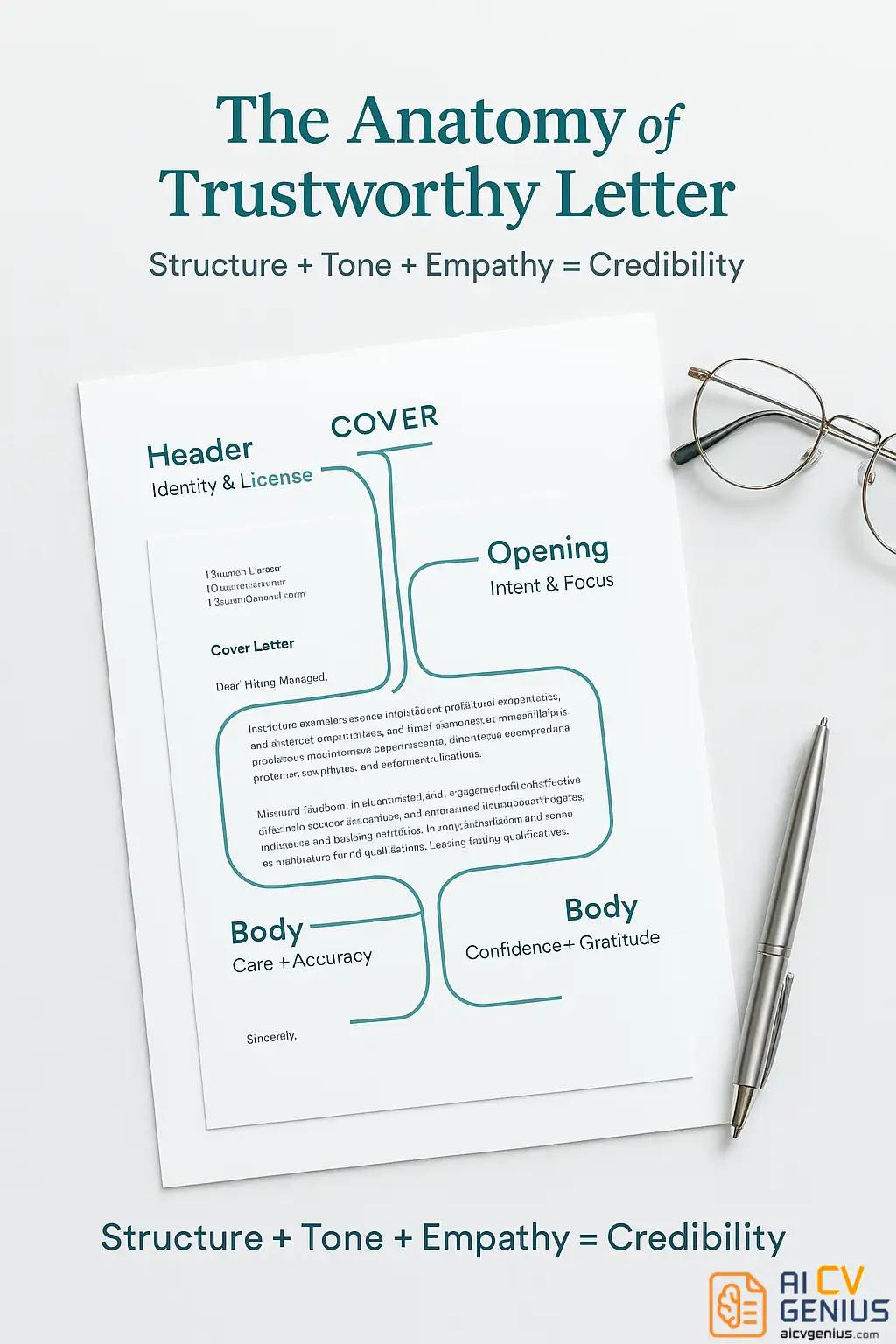
- Core idea: A pharmacist cover letter must prove trust, precision, and patient-first care, not repeat your resume.
- What it communicates: Clean formatting, zero typos, calm confidence, and empathy grounded in real responsibilities.
- Structure: Put your license number up front, lead with a tight hook, then add 1 to 2 STAR micro-stories with metrics.
- Tailoring: Shift emphasis by setting like hospital protocols, retail counseling and speed, industry documentation, or managed-care analysis.
- Avoid and upgrade: Skip generic templates and heavy jargon, name relevant systems, and proofread like medication safety depends on it.
The Heart Behind Every Application: More Than Just Dispensing
Pharmacy isn’t merely about filling prescriptions – it’s fundamentally about establishing trust, ensuring patient safety, and delivering consistent, compassionate care. When you apply for a pharmacy position, your cover letter becomes the first prescription you write: one meticulously crafted to tell potential employers that you embody responsibility, precision, and genuine empathy. A well-written Pharmacist Cover Letter Example transcends a simple list of qualifications; it reveals the professional character behind the lab coat.
Unlike many professions where performance is easily visible, pharmacists are often judged on critical yet invisible qualities: the meticulousness that prevents errors, the composure maintained under pressure, the clarity of communication during patient counseling. This intrinsic focus on detail and trust makes your cover letter far more than a mere formality – it serves as your initial, tangible proof of professionalism and unwavering commitment to patient well-being.
Decoding the Message: What a Great Pharmacist Cover Letter Really Communicates
Many candidates mistakenly treat their cover letter as a condensed version of their resume – a dry recitation of facts and dates. However, perceptive hiring managers, particularly in healthcare, are searching for subtler cues beneath the surface. Your tone, the structure of your arguments, and even your specific word choices implicitly communicate how you think, organize complex information, and whether you possess the requisite attention to detail. In a field where a single misplaced decimal point or overlooked drug interaction can have serious consequences, even a minor typo in your cover letter can inadvertently undermine your credibility.
An effective cover letter subtly conveys:
- ✅ Precision: Demonstrated through clear, concise sentences, immaculate formatting, accurate data points, and flawless grammar.
- ✅ Empathy: Conveying genuine care and patient focus through thoughtful language, without resorting to overly sentimental clichés.
- ✅ Consistency: Maintaining alignment between the tone and information presented in your resume and your cover letter, creating a cohesive professional narrative.
- ✅ Professional Restraint: Projecting quiet confidence through factual statements and measurable achievements, avoiding hyperbole or unsubstantiated claims.
This careful balance – professional warmth grounded in factual accuracy and structured clarity – forms the underlying mindset behind every truly effective pharmacist cover letter sample. It’s about showing, not just telling, that you possess the core attributes of a trustworthy healthcare professional.
The Structure: A Clinical Approach to Cover Letter Writing
Think of structuring your cover letter like meticulously organizing a patient’s medical chart or a pharmacy’s inventory – every section must serve a clear, logical function, contributing to the overall effectiveness and readability of the document.
| Section | Purpose & Function | Writing Style & Tone |
|---|---|---|
| Header | Provides essential contact information clearly and professionally. Includes your full name, phone number, professional email address, city/state, and potentially a LinkedIn profile URL. Crucially, list your pharmacist license number here or in the first paragraph. | Neat, professional font. Spacing and alignment should be consistent with your resume header to create a unified application package. |
| Salutation/Greeting | Addresses the specific hiring manager or HR director by name whenever possible. Demonstrates research and personalization. | Formal and respectful (e.g., “Dear Dr. Kim,” “Dear Ms. Patel,”). If the name is unknown after diligent searching, use a professional title (“Dear Hiring Manager,” or “Dear Pharmacy Director,”). |
| Opening Paragraph (The Hook) | Immediately state the position you are applying for, mention where you saw the advertisement, and concisely introduce your core qualification (e.g., years of experience, specialization). Include one impactful sentence highlighting a key strength or achievement relevant to the role. | Direct, confident, and highly relevant. Capture attention quickly with your most compelling qualification. Keep it brief (2-3 sentences max). |
| Body Paragraph(s) (The Evidence) | Provides 1–2 specific, compelling examples (mini-stories) demonstrating key skills mentioned in the job description (e.g., medication safety protocols implemented, patient counseling success, inventory management improvements). Use quantifiable results whenever possible. Connect your skills directly to the employer’s needs. | Use the STAR method (Situation, Task, Action, Result) implicitly. Focus on action verbs and measurable outcomes. Keep sentences clear and concise. Maintain a professional yet engaging tone. (Typically 1-2 paragraphs). |
| Company Alignment Paragraph (The Connection) | Shows you’ve researched the specific hospital, clinic, or company. Mention their mission, values, a specific program, or recent achievement that resonates with you. Explain why you are interested in them specifically. | Sincere and specific. Avoid generic compliments. Demonstrate genuine alignment between your values/skills and their organization. |
| Closing Paragraph (The Call to Action) | Reiterate your strong interest in the role and the organization. Briefly mention your attached resume. Express enthusiasm for discussing your qualifications further in an interview. Thank the reader for their time and consideration. | Polite, confident, and forward-looking. End with a clear but courteous call to action. |
| Professional Closing | Standard professional closing phrase followed by your typed name. | Formal (e.g., “Sincerely,” “Respectfully,”). |
Each component functions like a precisely measured element in a complex prescription – dosage (brevity), instructions (clarity), and purpose (relevance). Achieving the right balance and structure ensures the overall message is both potent and easily understood.
Crafting the Introduction Paragraph: Making the First Dose Count
Sample Introduction Paragraph
“Dear Ms. Nguyen,
I am writing to express my strong interest in the Clinical Pharmacist position at St. Jude’s Hospital, as advertised on LinkedIn. As a licensed pharmacist (License # [Your License Number]) with over six years of dedicated experience in both high-volume retail and inpatient hospital settings, I have cultivated a deeply disciplined approach to medication safety protocols and patient-centered education. My consistent focus on proactively preventing errors before they occur resulted in leading an initiative that saved my previous department at Mercy General over 300 corrective hours related to medication reconciliation discrepancies in a single year.”
This example of an opening for a cover letter for a pharmacy job works effectively because it immediately establishes context (specific role, license, years/type of experience) and credibility (a quantifiable achievement related to a core pharmacy value – safety). It avoids vague filler and buzzwords, instead offering concrete evidence of care, competence, and impact from the very first lines. It projects a calm, trustworthy, and results-oriented professional persona.
How to Showcase Skills That Matter: Balancing Science and Empathy
Pharmacists operate at the critical intersection of clinical science and human interaction. Your cover letter must effectively demonstrate proficiency in both realms. While technical skills are essential, showcasing your ability to apply them with empathy and clear communication is what truly differentiates outstanding candidates. Mention specific tools, systems (like EHRs – Epic, Cerner; dispensing systems – Pyxis, Omnicell), or quality audits you’ve participated in, but always connect these technical aspects back to tangible patient outcomes, safety improvements, or operational efficiencies.
Examples of Skill Demonstration with Impact:
- ✅ Clinical Acumen & Safety Focus: “Meticulously verified complex dosage calculations for high-risk chemotherapy regimens, collaborating with oncologists to ensure 100% dosing accuracy and patient safety.” (Shows precision, collaboration, safety commitment).
- ✅ Process Improvement & Technology Use: “Initiated and implemented a barcode-driven digital tracking system for controlled substances that reduced potential refill errors by 18% and improved audit readiness.” (Shows initiative, tech proficiency, measurable results).
- ✅ Training & Mentorship: “Developed and delivered training modules for 5 new pharmacy interns on state board compliance standards and sterile compounding techniques, resulting in improved adherence scores.” (Shows leadership, teaching ability, compliance knowledge).
- ✅ Interprofessional Collaboration: “Collaborated proactively with infectious disease physicians to review and adjust hospital-wide antibiotic stewardship protocols based on updated antibiogram data, contributing to optimized patient outcomes.” (Shows teamwork, clinical judgment, strategic thinking).
- ✅ Patient Counseling & Education: “Provided comprehensive counseling on medication adherence and side effect management to over 50 patients daily, utilizing motivational interviewing techniques that contributed to a documented 15% improvement in adherence rates for hypertensive patients in our clinic.” (Shows empathy, communication skills, patient impact).
These examples effectively demonstrate leadership not through authority, but through accuracy, initiative, and a commitment to improving care. Employers reviewing these points recognize a candidate capable of handling significant responsibility – which is the core strength conveyed by a precise and impactful hospital pharmacist cover letter example.
Telling a Story Without Losing Formality: The Power of Micro-Narratives
Effective writing in healthcare prioritizes factual accuracy, yet the most memorable communication often incorporates a subtle narrative rhythm. Use concise “micro-stories” within your body paragraphs that reveal your thought process and problem-solving abilities without sacrificing professionalism. A simple, effective structure follows the implicit STAR method: briefly describe the challenge (Situation/Task), outline your specific action (Action), and state the positive change or outcome (Result).
Example Micro-Story:
“During my tenure at Riverside Community Pharmacy, I identified recurring delays in prescription verification during peak evening shifts, often leading to increased patient wait times. Recognizing the need for better workflow coordination, I proposed and implemented a standardized pre-shift checklist for technicians and initiated brief, 10-minute team huddles to anticipate volume and potential issues. Within one month, this structured approach reduced average prescription processing time during evening hours by 25%, significantly improving patient satisfaction scores. This experience reinforced my belief that effective leadership in pharmacy isn’t about hierarchy – it’s about proactive coordination and clear communication.”
This balance – grounding a quantifiable result within a brief narrative that includes a moment of reflection – makes your writing feel more human and insightful while strictly maintaining a professional tone. It shows you not only achieve results but also learn and grow from your experiences.
Adjusting Your Tone: Tailoring for Different Pharmacy Settings
The optimal tone and focus of your cover letter should subtly shift depending on the specific type of pharmacy environment you are targeting. While core values like accuracy and patient safety remain constant, the emphasis changes:
| Setting | Primary Focus Areas | Recommended Style & Tone |
|---|---|---|
| Hospital Pharmacy (Inpatient/Clinical) | Interprofessional collaboration (doctors, nurses), adherence to complex clinical protocols, medication safety initiatives (e.g., reconciliation, error prevention), formulary management, specialized knowledge (e.g., oncology, critical care, pediatrics). | Formal, highly professional, evidence-driven. Emphasize clinical judgment, protocol adherence, and contribution to patient safety metrics. Use precise clinical language appropriately. |
| Retail/Community Pharmacy | Direct patient interaction and counseling, customer service excellence, operational efficiency (prescription volume, workflow), inventory management, MTM services, immunizations, building patient trust and loyalty. | Professional yet warm and approachable. Highlight communication skills, efficiency metrics (e.g., prescriptions filled per hour), patient satisfaction scores, and experience with specific pharmacy software/systems. |
| Clinical Research / Pharmaceutical Industry / R&D | Data integrity, adherence to research protocols (GCP), meticulous documentation, analytical skills, reporting accuracy, knowledge of regulatory requirements (FDA). | Highly analytical, precise, and objective. Focus on attention to detail, data management skills, understanding of research methodologies, and compliance expertise. |
| Managed Care / PBM / Health Insurance | Formulary development, utilization management, cost-effectiveness analysis, population health initiatives, knowledge of healthcare policy and economics. | Analytical, strategic, and business-oriented. Emphasize data analysis skills, understanding of healthcare systems, cost-saving initiatives, and policy knowledge. |
Pro Tip: If you remain uncertain about the appropriate tone after reviewing the job description, visit the employer’s website. Read their “About Us,” “Mission,” or “Careers” pages. Mirror the language and values they emphasize. Aligning your tone demonstrates cultural awareness and genuine interest.
Putting It Together: Example Mid-Level Pharmacist Cover Letter Snippet
Here’s how a body paragraph might blend measurable success with an authentic, professional tone:
“Dear Hiring Manager,
With a Doctor of Pharmacy degree and five years of comprehensive experience in high-volume community pharmacy settings, I have developed a strong proficiency in both direct patient counseling and efficient operational oversight. I take immense pride in maintaining a personal record of zero dispensing errors over the past three years and consistently receiving positive patient feedback regarding medication education clarity. In my current role as Staff Pharmacist at Sunwell Pharmacy, I played a key role in the successful integration of a new inventory management system (specifically, [Name System like PioneerRx]), which involved training staff and optimizing workflows, ultimately reducing expired stock wastage by 19% annually.
I am particularly drawn to [Target Organization Name]’s well-regarded commitment to evidence-based patient care protocols and its emphasis on continuous professional development for its pharmacy team, values that strongly align with my own professional philosophy. I am eager to contribute my skills in [mention 1-2 key skills like MTM, immunizations, or specific software] to a team that demonstrably values both clinical accuracy and genuine patient compassion.
Sincerely,
Michael Tran”
This structure effectively blends quantifiable success (zero errors, 19% reduction) with a tone reflecting competence and genuine alignment with the organization’s values – achieving the core goal of any pharmacist cover letter sample that aims to truly resonate.
Adapting the Approach: Writing Tips for Pharmacy Technician and Support Roles
If you’re applying for an entry-level position, a pharmacy technician role, or other support staff positions, you can still craft a standout cover letter even without extensive clinical experience. The focus shifts slightly towards demonstrating discipline, consistency, meticulousness, and a strong eagerness to learn and support the team effectively. These pharmacy technician cover letter tips will help:
- ✅ Emphasize Attention to Detail: Highlight experience with tasks requiring precision, such as accurate prescription data entry, meticulous medication labeling, precise inventory stock control, or careful dosage preparation (if applicable and certified).
- ✅ Showcase Teamwork and Support: Provide examples of how you effectively assisted licensed pharmacists, collaborated with colleagues during busy periods, or contributed to a smooth workflow (e.g., “Proactively assisted pharmacists with prescription filling during peak hours, contributing to reduced wait times”).
- ✅ Reference Relevant Systems and Tools: Mention proficiency with specific pharmacy software (e.g., Rx30, QS/1), automated dispensing systems, or inventory tracking tools you have mastered.
- ✅ Express Eagerness for Growth: Clearly state your enthusiasm for learning, pursuing further certification (like CPhT), or engaging in continuous education related to pharmacy practice. This shows initiative and long-term commitment.
- ✅ Highlight Reliability: Mention consistent attendance, punctuality, or ability to follow complex procedures accurately. Reliability is paramount in support roles.
Pharmacy managers highly value technicians and support staff who proactively prevent small mistakes before they escalate. Your cover letter should mirror this diligent mindset – careful, reliable, detail-aware, and committed to supporting the pharmacy’s core mission of safe and effective patient care.
Pros & Cons of Using a Cover Letter Template
Leveraging a template can streamline the writing process, but requires careful personalization to be effective.
| Pros ✅ | Cons ❌ |
|---|---|
| Offers a professional structure and saves significant time, especially for busy applicants juggling multiple applications. | Can feel generic and impersonal if not substantially customized with specific examples and tailored language reflecting the target role and company. |
| Ensures formatting consistency (margins, fonts, spacing) across your application documents (when paired with a matching resume template). | Overly rigid or poorly designed templates may limit your ability to express personality or adequately showcase unique qualifications. |
| Helps maintain appropriate length (typically one page) and ensures all essential sections are included. | Using a very common template might make your application blend in visually if the content isn’t compelling enough to differentiate you. |
| Provides prompts and examples that can guide content creation, reducing writer’s block. | May inadvertently lead to including irrelevant information if you follow the template structure too literally without critical adaptation. |
Recommendation: Use templates primarily as scaffolding – a guide for structure and professional formatting. Once your basic framework is strong, invest significant effort in rewriting key sections (especially the body paragraphs and company alignment) in your own authentic voice, incorporating specific details and achievements relevant to the job. For inspiration on clarity and professional healthcare layouts, browse our Cover Letter Templates section.
Common Mistakes to Avoid in Pharmacy Cover Letters
Steer clear of these frequent errors that can detract from your professionalism:
- ❌ Using Excessive Medical Jargon or Acronyms: While clinical accuracy is important, ensure your language is understandable to HR professionals or managers who may not share your exact clinical background. Define acronyms if necessary or opt for clearer phrasing.
- ❌ Writing Overly Long Paragraphs Lacking Metrics: Keep paragraphs focused (3-5 sentences) and quantify achievements whenever possible to demonstrate tangible impact (e.g., error reduction percentages, efficiency gains, patient satisfaction scores).
- ❌ Skipping Meticulous Proofreading: In a profession demanding precision, even minor typos, grammatical errors, or formatting inconsistencies can significantly damage credibility. Proofread multiple times, read it aloud, and consider using grammar tools.
- ❌ Forgetting Essential Details: Neglecting to include your pharmacist license number (prominently), failing to address the letter to a specific person (if possible), or forgetting a professional sign-off can appear careless.
- ❌ Sending a Generic, Untailored Letter: Failing to customize the letter for the specific role and organization signals a lack of genuine interest. Research the company and mention specific reasons for your application.
FAQ: Pharmacy Cover Letter Queries
Final Thoughts: Prescribing Trust Through Your Words
Ultimately, every successful pharmacy career is built upon a foundation of trust – earned through consistent accuracy, clear communication, and unwavering patient care. That trust-building process begins long before you interact with patients or colleagues; it starts the moment a hiring manager reads your application documents.
When your cover letter demonstrates precision in its structure, expresses compassion through its tone, and projects confidence via its delivery, it effectively communicates to hiring managers that you are a professional they can rely on. This meticulous attention to detail transforms a generic application note into a standout Pharmacist Cover Letter Example – it becomes the authentic voice of someone who genuinely cares enough to get every critical detail right, both on paper and in practice.