
- Why nurses change careers: It is often about long-term fit and identity, and your cover letter must show a purposeful transition, not a panic exit.
- Skill translation step: Convert nursing work into business language, focusing on decisions, coordination, communication, and measurable outcomes.
- Research that makes you credible: Study job descriptions in volume, talk to people in the field, track trends, then mirror the role’s real keywords and priorities.
- Cover letter structure that works: Use a four-paragraph narrative, hook with the target role, bridge skills, prove fit with examples, and close with a clear next step.
- Mistakes and polish to avoid: Do not apologize or over-explain leaving nursing, keep it under one page, use clean formatting, and proofread like it is a safety check.
Why So Many Nurses Are Choosing to Change Careers: Beyond Burnout
For countless nurses, recent years have served as a profound catalyst for introspection. The convergence of long hours, profound emotional exhaustion, and systemic pressures prompted many dedicated professionals to pause and ask a critical question – “What’s next for me?” However, embarking on a career change doesn’t mean erasing your deeply ingrained nursing identity; it signifies a reshaping, a repurposing of invaluable skills. Writing a compelling nursing career change cover letter is your crucial first opportunity to articulate this narrative – presenting yourself not as someone fleeing healthcare, but as a professional expanding its boundaries.
The rigorous demands of nursing cultivate exceptional resilience, deep empathy, and remarkably clear communication under intense pressure. These are not traits confined solely to hospital wards or clinic rooms; they are universally sought-after competencies. Whether your new path leads into health technology, healthcare administration, patient education, technical writing, or corporate communications, your hands-on experience has already equipped you with a far broader skill set than you might initially perceive.
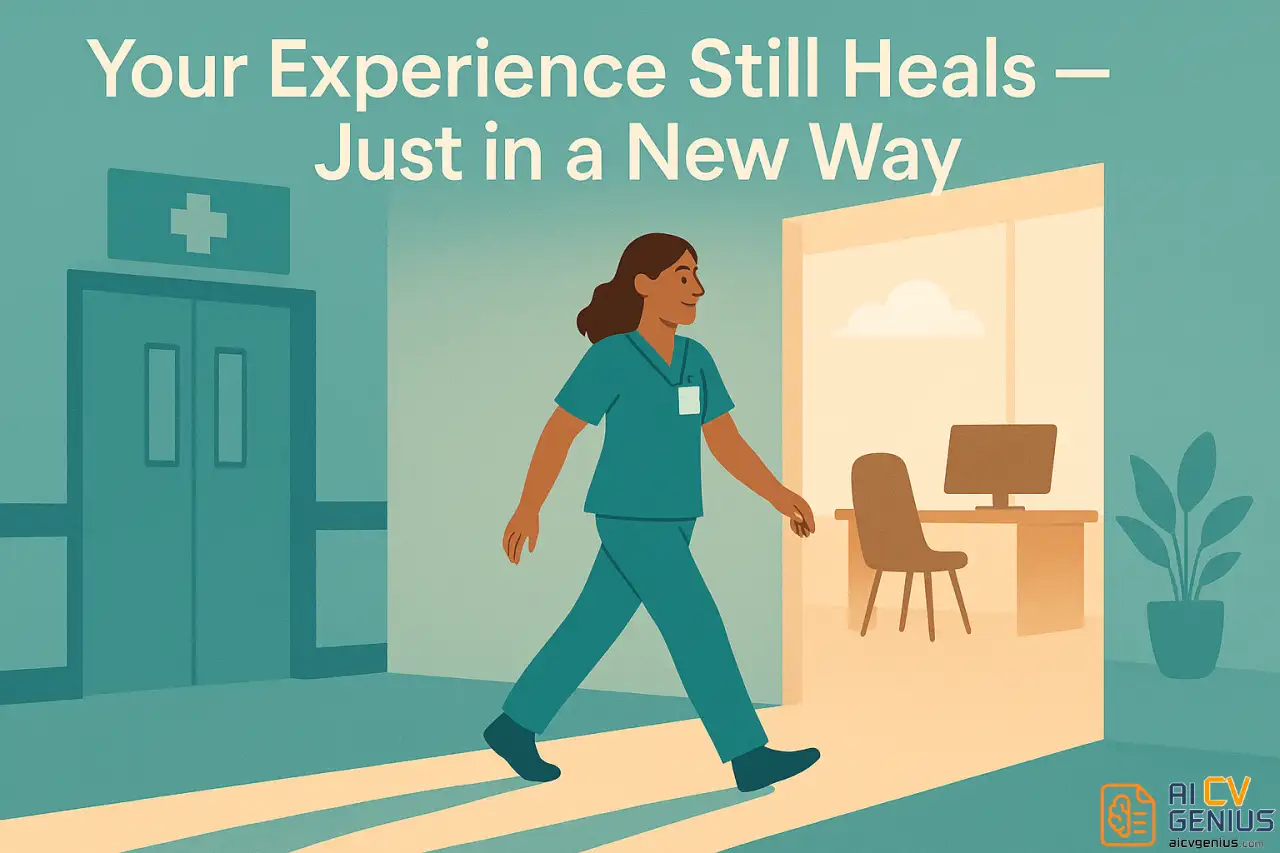
The Mindset of Transition: From Bedside to New Beginnings
Embarking on a career change is a psychological journey that commences long before the first application is submitted. It begins with a fundamental shift in how you perceive yourself and your professional value. Nurses transitioning often grapple with feelings of guilt (“Am I abandoning patients?”) or self-doubt (“Will employers outside a clinical setting take my experience seriously?”). The resounding answer to both is a confident yes – provided you frame your narrative effectively.
Reframing Your Value Proposition
You are not walking away from care; you are redefining its application. The core instincts that made you an exceptional nurse – active listening, critical thinking, rapid problem-solving, maintaining composure in chaos – are precisely the attributes that innovative companies and organizations across diverse sectors desperately crave. What changes is the context of your work, not the inherent value you bring.
Internalizing this reframed mindset directly strengthens your written communication. Employers reviewing your cover letter aren’t looking for apologies or explanations for leaving nursing; they seek clarity, confidence, and a logical connection between your past experiences and their future needs. When you articulate your transition as a conscious evolution driven by growth, not an escape prompted by burnout, your cover letter resonates with self-assurance, not internal conflict.
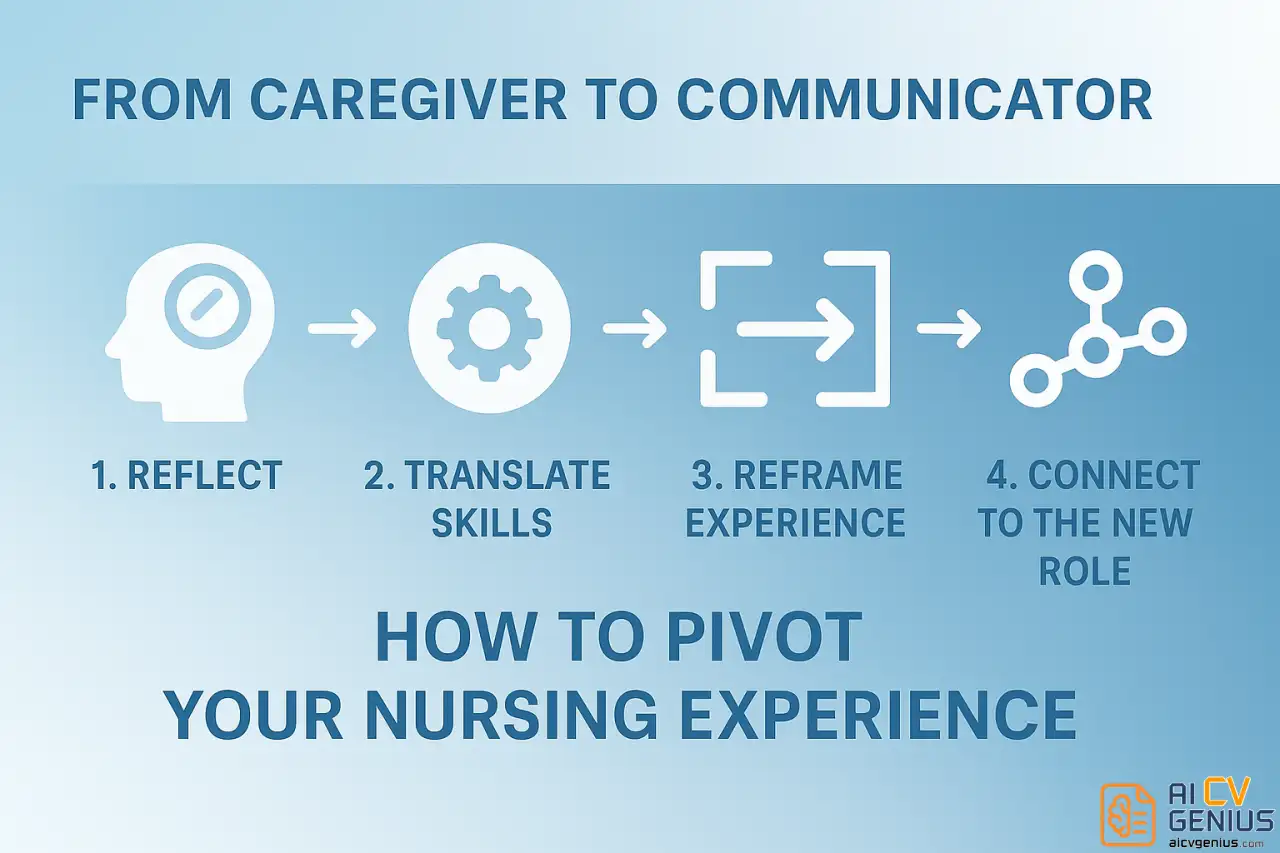
Step 1: Deconstruct and Translate Your Transferable Nursing Skills
Your initial, most critical task is one of translation. You need to deconstruct your day-to-day nursing activities and reframe them using language that resonates with employers outside the clinical sphere. Brainstorm specific instances where you demonstrated abilities beyond technical medical procedures. Consider these examples:
| Clinical Skill/Situation | Transferable Version (Business/Organizational Language) | Potential Target Fields |
|---|---|---|
| Managing patient care under high-pressure, time-sensitive conditions (e.g., Code Blue, rapid response) | High-stakes decision-making, crisis management, and maintaining operational focus in dynamic, unpredictable environments. | Project Management, Operations, Emergency Management, Event Coordination |
| Coordinating care plans with doctors, specialists, therapists, and families. | Cross-functional team collaboration, stakeholder management, conflict resolution, and ensuring alignment across diverse groups. | Project Management, Account Management, Human Resources, Customer Success |
| Meticulous charting, documentation, and adherence to regulatory protocols (HIPAA, JCAHO). | Exceptional attention to detail, data accuracy, compliance management, risk mitigation, and process documentation. | Compliance Officer, Quality Assurance, Technical Writing, Data Analysis, Operations |
| Training new nursing staff, precepting students, or educating patients and families. | Mentorship, leadership development, instructional design, communication of complex information, and creating training materials. | Corporate Training, Education, Health Education, Customer Success, Sales Enablement |
| Implementing new patient care protocols or quality improvement initiatives. | Process improvement, change management, quality assurance implementation, and data-driven performance optimization. | Operations Management, Quality Assurance, Project Management, Health Administration |
| Advocating for patient needs with administration or insurance companies. | Negotiation, advocacy, persuasive communication, and client relationship management. | Sales, Account Management, Patient Advocacy roles, Non-Profit Development |
When drafting your career change cover letter for nurses, consciously employ this translation lens. You’re not merely replacing medical terminology; you’re articulating the underlying competency in a universally understood business or organizational language that directly aligns with the requirements of the new role.
Step 2: Conduct Deep Research on the Field You’re Entering
An exceptional cover letter acts as a logical bridge, seamlessly connecting your past experience to your future aspirations within the new industry. Superficial understanding won’t suffice. Immerse yourself in the target field:
Effective Research Methods:
- Analyze Job Descriptions: Go beyond one or two postings. Read at least 5-10 job descriptions for roles that interest you. Use a highlighter (digital or physical) to mark recurring keywords, required skills, and desired traits. Look for patterns – what competencies are consistently emphasized? (e.g., “project management,” “data analysis,” “client communication,” “stakeholder engagement”).
- Informational Interviews: Reach out to professionals already working in your target field or roles. Use LinkedIn or personal connections. Ask targeted questions: “What does a typical day look like?”, “What skills are most critical for success in this role?”, “How did your previous experience prepare you?”, “What advice would you give someone transitioning from a background like mine?”. This provides invaluable insider perspective.
- Industry Publications & Trends: Read industry blogs, follow key companies or influencers on LinkedIn, and understand the current challenges and opportunities within the sector. Knowing the industry jargon and landscape demonstrates genuine interest.
- Company Research: For specific applications, dive deep into the company’s mission, values, recent projects, and culture (via their website, news articles, LinkedIn). How does your nursing background align with their specific goals or patient/customer focus?
Aligning Your Narrative Based on Research:
Your research findings should directly shape the examples you choose and the overall tone of your cover letter.
- Targeting Health Tech: Emphasize your understanding of clinical workflows, patient empathy, data privacy (HIPAA), and experience with Electronic Health Records (EHR) or other healthcare software. Highlight instances where you identified inefficiencies or suggested tech-based improvements.
- Targeting Education/Training: Focus on experiences precepting new nurses, educating patients/families, developing informational materials, or presenting at staff meetings. Quantify the impact if possible (e.g., “trained 10+ new hires,” “developed patient education materials used hospital-wide”).
- Targeting Corporate/Administrative Roles: Highlight organizational skills, experience managing schedules or resources, handling confidential information, coordinating with multiple departments, and adhering to strict protocols or budgets. Use examples demonstrating leadership, problem-solving, and discretion.
This dedicated research doesn’t just inform your writing; it demonstrates genuine enthusiasm and proactive effort – powerful differentiators that resonate strongly with hiring managers assessing career changers.
Step 3: Structure Your Nursing Career Change Cover Letter for Narrative Impact
Every compelling cover letter follows a simple, effective narrative arc: establishing context (where you’ve been), building the connection (what you’ve learned and how it applies), and projecting forward (why you’re ready for this specific next step). This structure provides clarity and guides the reader logically through your transition story.
A Proven Four-Paragraph Structure:
1️⃣Paragraph 1: The Introduction – State Your Purpose and Enthusiasm
Start directly and positively. Clearly state the position you’re applying for and immediately express your enthusiasm for the role and the company. Briefly introduce your transition, framing it as a deliberate move toward this new field, leveraging your nursing background.
Example Opening:
“I am writing with genuine enthusiasm to express my interest in the [Job Title] position at [Company Name], as advertised on [Platform where you saw the ad]. After several fulfilling years developing critical skills in patient advocacy, communication, and process improvement as a Registered Nurse, I am eager to apply this foundation in a new context within the dynamic field of [Target Industry/Field].”
2️⃣Paragraph 2: The Bridge – Connect Nursing Skills to the New Role’s Requirements
This is where your translation work shines. Select one or two key requirements from the job description. Then, provide a specific, concise example from your nursing experience that demonstrates the equivalent transferable skill. Use the “Situation-Action-Result” (STAR) method implicitly. Focus on impact and relevance.
Example Bridge (Targeting Project Coordination):
“The requirement for exceptional organizational skills and cross-functional collaboration strongly resonates with my experience at Mercy General Hospital. There, I spearheaded a process improvement initiative to streamline patient discharge communication between nursing, pharmacy, and social work. By developing a standardized checklist and facilitating weekly coordination meetings, we successfully reduced average discharge delays by 20% within six months. This experience honed my ability to analyze workflows, manage stakeholder communication, and implement changes that yield measurable improvements – skills I am confident will translate effectively to coordinating projects at [Company Name].”
3️⃣Paragraph 3: Company Alignment – Show You’ve Done Your Research
Demonstrate your genuine interest in this specific company. Reference their mission, a recent project, a specific value, or an aspect of their work that particularly excites you. Explain briefly why you believe your unique background (including your nursing perspective) would be an asset to them.
Example Alignment (Targeting Health Tech):
“I am particularly drawn to [Company Name]’s innovative approach to improving patient engagement through [Specific product/initiative mentioned on their website]. My firsthand experience understanding patient needs and navigating complex healthcare systems provides a unique perspective that I believe would be valuable in developing user-centric technology solutions that truly enhance the patient journey.”
4️⃣Paragraph 4: The Closing – Reiterate Enthusiasm and Call to Action
End with confidence and a clear call to action. Briefly reiterate your strong interest and express your desire to discuss how your skills align further. Thank the reader for their time and consideration.
Example Closing:
“My nursing background, combined with my passion for [Target Field/Industry], makes me eager to contribute to your team’s success. I have attached my resume for your review and would welcome the opportunity to discuss further how my unique blend of clinical understanding and [mention 1-2 key transferable skills] can benefit [Company Name]. Thank you for your time and consideration.”
Mini Story: From Bedside Nurse to Health Educator – A Real-World Example
Consider the case of Jamie, an ICU nurse with eight years of dedicated experience. While she valued patient interaction immensely, the physical and emotional demands led her to seek a transition into a role focused on education, leveraging her deep clinical knowledge. She lacked a formal teaching degree, which initially felt like a barrier.
In her cover letter, instead of focusing on what she lacked, Jamie strategically highlighted experiences that demonstrated her innate teaching abilities:
- She detailed her role in orienting and precepting new graduate nurses, emphasizing her ability to break down complex procedures into understandable steps and provide constructive feedback.
- She mentioned developing and presenting patient safety in-service sessions for her unit, showcasing her presentation and communication skills.
- She described creating simplified checklists and patient education handouts to improve adherence to complex care plans, demonstrating her skill in instructional design and clear communication.
Her narrative framed these activities not just as tasks, but as evidence of her passion and aptitude for education. Within a few months, leveraging this targeted cover letter and a skills-focused resume, Jamie successfully transitioned into a fulfilling role as a hospital-based Clinical Educator. Her story wasn’t about leaving nursing – it was about strategically expanding her impact within healthcare.
This approach – identifying the core function (teaching, coordinating, analyzing) within your nursing experience and highlighting it – is how you frame your own narrative. Your next professional chapter organically grows from the foundation laid by the last one.
Step 4: Sidestep Common Cover Letter Mistakes for Career Changers
Transitioning careers requires careful communication. Avoid these pitfalls that can undermine your application:
- ❌ Writing Defensively or Apologetically: Starting sentences with phrases like “Although I don’t have direct experience in [New Field]…” or “While my background is in nursing…” immediately signals insecurity.
- ✅ Fix: Lead with confidence, focusing on the relevant skills you do possess. Frame your background as an asset, e.g., “My extensive experience in patient communication has equipped me with…”
- ❌ Over-Explaining Why You’re Leaving Nursing: Focusing too much on burnout, dissatisfaction, or the negative aspects of nursing can sound unprofessional or suggest you might be difficult to retain.
- ✅ Fix: Keep the reason for transition brief and positive. Frame it as a proactive move toward a new opportunity that aligns with your evolving goals or strengths, rather than an escape from your previous role. E.g., “Seeking to leverage my analytical skills in a data-focused role…”
- ❌ Using Excessive Clinical Jargon: Filling your letter with medical terms, acronyms, or procedures unfamiliar to those outside healthcare makes your experience seem irrelevant.
- ✅ Fix: Consciously translate clinical experiences into universal business language (see Step 1). Focus on the underlying skill (e.g., “managed complex stakeholder communication” instead of “participated in interdisciplinary rounds”).
- ❌ Generic, Untailored Content: Sending the same cover letter for vastly different roles or industries without customizing it.✅ Fix: Always tailor the introduction, the specific skills/examples you highlight (Paragraph 2), and the company alignment (Paragraph 3) to match each unique job description and organization.
- ❌ Focusing Solely on What You Want to Gain: Writing primarily about your desire to learn new skills or gain experience in the new field without emphasizing what you can contribute.
- ✅ Fix: Balance your enthusiasm for growth with clear statements about the value and skills you bring now. Emphasize how your existing strengths will benefit the employer from day one.
Your cover letter’s tone should project positivity, clarity, confidence, and a forward-looking perspective focused on the value you offer, not the transition anxiety you might feel.
Step 5: Putting It All Together – Example Nursing Career Change Cover Letter (Nurse to Health Tech Project Coordinator)
Here’s a sample integrating the structure and principles discussed:
[Your Name]
[Your Address]
[Your Phone Number] | [Your Email Address] | [Your LinkedIn Profile URL (Optional)][Date]
[Hiring Manager Name] (If known, otherwise use title)
[Hiring Manager Title]
[Company Name]
[Company Address]Subject: Application for Project Coordinator – Leveraging Clinical Insight for Health Technology Innovation
Dear [Mr./Ms./Mx. Hiring Manager Last Name],
I am writing with immense enthusiasm to express my interest in the Project Coordinator position at [Company Name], as advertised on [Platform]. After several rewarding years as a Registered Nurse, developing strong skills in process optimization, cross-functional communication, and managing complex situations under pressure, I am eager to transition into the health technology sector. My hands-on clinical experience, combined with a passion for leveraging technology to improve patient outcomes, aligns perfectly with this opportunity.
At City General Hospital, I actively sought opportunities beyond direct patient care. Notably, I collaborated closely with our IT department and external developers during the pilot implementation of a new digital patient discharge system. My role involved gathering feedback from nursing staff, identifying workflow bottlenecks, and communicating clinical needs to the technical team. This collaboration directly contributed to interface improvements that ultimately reduced documentation errors by 15% and streamlined the discharge process. This experience solidified my interest in health systems innovation and honed my ability to bridge the gap between clinical practice and technological solutions.
What particularly draws me to [Company Name] is your demonstrated commitment to [mention something specific, e.g., “developing user-friendly EHR modules” or “pioneering telehealth solutions for underserved communities,” found from their website or news]. My firsthand understanding of the daily challenges faced by healthcare providers allows me to bring a valuable end-user perspective to your project teams, ensuring that technological advancements translate into tangible improvements in care delivery and efficiency.
My resume, attached for your review, provides further detail on my qualifications and accomplishments. I am confident that my unique blend of clinical expertise, proven organizational skills, and dedication to improving healthcare systems makes me a strong candidate for this role. Thank you for your time and consideration. I look forward to the possibility of discussing how my background can contribute to [Company Name]’s continued success.
Warm regards,
[Your Typed Name]
The Recruiter’s Perspective: Decoding Signals from Career Changers
When recruiters evaluate cover letters from career changers like nurses, they are specifically looking for two crucial signals beyond basic qualifications: self-awareness and transferable logic.
- Self-Awareness: They need assurance that you genuinely understand the skills and demands of your previous role (nursing) and have thoughtfully considered how those competencies apply to the new role. Vague statements don’t work. Demonstrating that you can articulate the specific skills gained from nursing (e.g., crisis management, detailed documentation, patient education) and explicitly connect them to the requirements of the target job shows maturity and realistic self-assessment. Phrases like “This experience taught me the importance of…” or “Through managing [specific nursing situation], I learned to effectively…” work much better than simply listing job duties.
- Transferable Logic & Intentionality: Recruiters need to see a clear, logical reason for the career change. Is this a well-researched, intentional move, or a random leap driven by dissatisfaction? Your cover letter must convincingly argue why this new field is the right next step for you and why your background is relevant. Demonstrating passion for the new field is critical. Mentioning specific aspects of the company’s work, mission, or recent projects (showing you’ve done your homework) helps solidify the connection and proves your interest is genuine, not generic. They want to see that you’re moving towards something specific, bringing valuable, albeit different, experience with you.
A cover letter that successfully conveys both self-awareness and logical intentionality significantly de-risks the hiring decision for the recruiter, making them much more likely to advance your application.
Formatting Tips for a Polished and Professional Cover Letter
Presentation matters. Ensure your cover letter looks as professional and organized as its content.
- ✅ Use a Consistent, Professional Font: Choose a clean, readable font like Inter, Calibri, Arial, Georgia, or Lato. Use a standard size (11–12pt for body text). Ensure the font matches the one used on your resume for visual cohesion.
- ✅ Keep it Concise: Aim for under one page – ideally around 300-400 words maximum. Brevity respects the reader’s time. Use clear paragraphs (3-4 is standard) with adequate white space between them.
- ✅ Align Header with Your Resume: Use the same header format (Name, Contact Info layout) as your resume. This creates a consistent, branded application package.
- ✅ Standard Business Letter Format: Include your contact info, the date, the recipient’s contact info (if known), a professional salutation (e.g., “Dear Mr./Ms./Mx. [Last Name],” or “Dear Hiring Manager,”), your body paragraphs, and a professional closing (e.g., “Sincerely,” or “Warm regards,”).
- ✅ Proofread Meticulously: Typos or grammatical errors can undermine your credibility instantly. Read it aloud, use spell-check and grammar tools (like Grammarly), and consider asking a trusted friend or mentor to review it.
- ✅ Save and Send as PDF: Always save your final cover letter as a PDF file to preserve formatting perfectly. Name the file professionally (e.g., “YourName_CoverLetter_[CompanyName].pdf”). Attach it to your email application unless instructed to paste it into the email body.
Mindset Shift: Embracing Your Value as a Strategic Thinker
Your cover letter serves as more than just an introduction; it’s a declaration of your evolving professional identity. You are demonstrating that the core tenets of exceptional care – empathy, meticulous observation, structured problem-solving, and clear communication – are not confined to patient rooms but are transferable strategic assets.
The modern workplace, regardless of industry, increasingly needs professionals who possess your unique blend of human understanding and composure under pressure. Whether contributing to educational programs, health technology development, corporate wellness initiatives, or administrative efficiency, your nursing background provides a distinct and valuable perspective.
If you’re looking to ensure your resume powerfully mirrors this narrative of transformation, explore resources on how to improve your CV specifically tailored for career transitions. Achieving consistency and alignment between your cover letter and resume doubles the impact of your application, presenting a cohesive and compelling story of your professional evolution.
Final Thoughts: Your Nursing Experience is Your Strength
Changing careers doesn’t require you to abandon your identity as a nurse; it invites you to expand it. The compassion, critical thinking, discipline, and problem-solving abilities honed at the bedside are not confined to hospital walls – they are universal strengths highly valued across professions. Your nursing career change cover letter should be a celebration of this truth, articulating how your unique perspective adds value.
The objective isn’t to pretend you have direct experience you lack, but to compellingly demonstrate that you’ve already mastered the core competencies that truly matter: the ability to care deeply, lead effectively, and communicate clearly, especially under pressure. These form the bedrock of every impactful professional, regardless of their field.
As you embark on this next chapter, remember this: you are not leaving the essence of care behind. You are carrying it forward with you, ready to apply it in a new and meaningful form. Your past experience is not a liability; it’s the foundation upon which your future success will be built.